Amitav Ghosh Reading Order: Where to Start
Amitav Ghosh writes historical fiction that is really an argument about how the Indian Ocean world was made: by opium, indenture, empire and now by a climate his characters cannot name. Start with the two compact novels that show his method without demanding a commitment, then read the Ibis Trilogy in publication order because it is one continuous story, then the other fiction, and finish with the non-fiction, where the argument the novels dramatise is stated outright.
Start Here
BeginnerMeet Ghosh's central move — a private family story that turns out to be a story about borders, empires and ecosystems — in his two most approachable novels.
▸ Study plan for this stage
Pace: 2–3 weeks, ~35 pages/day. The Shadow Lines is 252 pages but reads slower than that suggests — it moves between Calcutta, Dhaka and London across three generations without announcing the jumps, so budget two sittings for the first fifty pages while you work out who is speaking and when. The Hungry Ti
- Ghosh's signature time structure: the narrator remembers forward and backward in the same paragraph, and the reader is expected to assemble the chronology rather than be given it
- The border as an invention — The Shadow Lines is built to show that a line drawn on a map produces the violence it claims to prevent, on both sides of it at once
- Family memory as historical evidence: the private house, the uncle, the inherited anecdote are how Ghosh gets at events no official record covers
- The Sundarbans as a place where land and water refuse to stay separate, which is Ghosh's model for how environment and history behave everywhere else
- Translation and the outsider: The Hungry Tide runs on the gap between Piya the cetologist, Kanai the translator and Fokir the fisherman, none of whom share a language
- Bon Bibi and the tide-country legend — Ghosh treating a folk story as a real form of knowledge about a dangerous landscape, not as local colour
- The unnamed narrator: The Shadow Lines never gives you his name, which keeps the book's attention on what he witnesses rather than who he is
- In The Shadow Lines, what actually happens in Dhaka, and why does the novel withhold it until so late?
- How does Tridib's idea of imagining a place 'with precision' work as the novel's argument about how to know somewhere you have never been?
- What does The Hungry Tide gain by giving Fokir no interiority and no translated speech?
- How does the tide country's daily flooding change what the words 'settlement' and 'refugee' mean in the Morichjhãpi sections?
- What do these two novels share in the way they treat a death that the reader is told about early and understands only late?
- Keep a two-column timeline for The Shadow Lines — page order in one column, chronological order in the other. Rebuilding the sequence yourself is the fastest way to see what Ghosh gained by breaking it.
- Mark every point in The Hungry Tide where Kanai translates for Piya, then ask what he adds or removes each time. The novel's ethics live in those small edits.
- Find the Sundarbans on a map and note how much of the delta is India and how much Bangladesh. The Shadow Lines and The Hungry Tide are both about that line.
- Write 300 words on a place you have never visited, using only what someone told you about it. That is Tridib's method, and the book is testing whether it works.
Next up: You now read Ghosh's time-jumps without effort and you have seen his two recurring obsessions — the arbitrary border and the water that ignores it — at a scale you can hold in one hand, which is exactly what the 1,700-page Ibis Trilogy assumes before it starts.

A Calcutta family, a Dhaka house and a line drawn on a map by Partition. Short, devastating and the best single introduction to Ghosh: it teaches you to read his time-jumps before the long books ask you to.
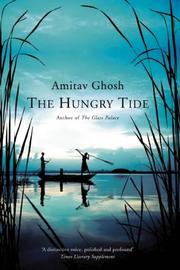
A cetologist, a translator and a fisherman in the Sundarbans. Read second because it introduces the ecological thinking that drives everything he has written since, in his most tightly plotted novel.
The Ibis Trilogy, in Order
IntermediateFollow the opium trade from a Bihar poppy field to the Canton waterfront to the First Opium War, across a cast that scatters and reassembles over three volumes.
▸ Study plan for this stage
Pace: 7–9 weeks for roughly 1,700 pages — Sea of Poppies 543, River of Smoke 522, Flood of Fire 624. Read them consecutively without a long gap; the cast scatters at the end of the first volume and you need to still recognise the names. Budget the slowest going for the first eighty pages of Sea of Poppies
- Indenture as the successor to slavery: the Ibis is a refitted slave ship carrying girmitiya labourers, and the trilogy's opening image is that continuity
- Ghosh's invented shipboard language — lascar English braided with Bhojpuri, Bengali and Portuguese. It is learned once, in Sea of Poppies, and assumed thereafter
- The opium economy as a system: poppy fields in Bihar, Company monopoly, the Canton market, and the war fought to keep it open
- The 'free trade' argument the trilogy dismantles — that a war to force a drug on an unwilling buyer was conducted in the language of open markets
- Ship as social laboratory: caste, race and rank all break down on the crossing, which is why the trilogy's makeshift kinships form aboard
- The Canton foreign enclave in River of Smoke — a world of merchants, painters and botanists that Ghosh reconstructs almost as documentary before he destroys it
- Dispersal and convergence as the trilogy's structure: the cast splits at the end of book one and is reassembled only in the final volume
- What is Deeti's role in Sea of Poppies, and why does Ghosh open the whole trilogy with a woman who has never seen the sea?
- How does the shipboard creole change what the reader can and cannot overhear — and who is excluded from understanding it?
- Why does River of Smoke spend so long on Canton's painters, gardens and merchant houses before any fighting starts?
- What is Bahram Modi's position in the opium trade, and how does the novel treat his self-justification?
- By the end of Flood of Fire, what has the trilogy actually argued about the relationship between commerce and force?
- Which characters end the trilogy in a position they could not have occupied on land in India, and what made that possible?
- Keep a running character list from Sea of Poppies with one line per person and their ship-name. When they resurface hundreds of pages later in another city you will need it.
- Do not look up the creole on the first pass — read fifty pages guessing from context, then check yourself. Ghosh built it to be learnable that way, and readers who reach for a glossary immediately tend to stall.
- Sketch the trade triangle: where the poppy is grown, where the opium is processed, where it is sold, where the silver goes. The trilogy's plot is that diagram.
- After River of Smoke, write a paragraph arguing Bahram's case as he would put it. The novel is much sharper once you can state the position it is refusing.
- Note every scene in Flood of Fire that pays off something planted in Sea of Poppies. The list is long and it is the best evidence for reading all three in order.
Next up: Having carried a cast of dozens across three volumes and two oceans, you can now take on Ghosh's other long historical novel and his odder experiments without being thrown by scale or by a book that changes its own rules midway.
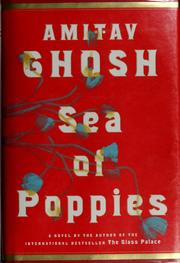
The trilogy opener, aboard a former slave ship refitted to carry indentured labour. Do not skip it: every later thread starts here, and its invented shipboard creole is a language you have to learn once.
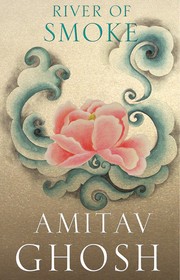
The story moves to Canton and the foreign enclave on the eve of war. The middle volume is the slowest and the richest, and it only pays off if you already know who these people were on the Ibis.

The war itself, and the convergence of every surviving strand. The trilogy's argument — that free trade arrived in Asia at gunpoint — lands only in this volume.
The Other Fiction
IntermediateSee the range outside the trilogy: a colonial epic, a genre-bending medical mystery, and the novel where climate change becomes the plot.
▸ Study plan for this stage
Pace: 5–6 weeks, ~30 pages/day. The Glass Palace (560) is the long one and reads like straight historical narrative — steadier going than the trilogy. The Calcutta Chromosome (309) is short but disorienting and is best read fast, in three or four sittings, since its effect depends on momentum. Gun Island
- The teak and rubber economies as the spine of The Glass Palace — Ghosh telling a century of Burma, Malaya and India through what was cut down and shipped out
- The Indian Army under empire: soldiers recruited to hold a colony, and the moment in the Second World War when that loyalty splits
- Exile and the deposed court — the novel's opening on the Burmese royal family's removal to India sets its whole theme of people relocated by imperial administration
- The Calcutta Chromosome's counter-history: the official story of the malaria discovery retold as a story about the assistants and subjects whose knowledge was used and unrecorded
- Genre as an argument — Ghosh uses science-fiction and thriller machinery precisely because the realist novel cannot hold what he wants to claim about hidden knowledge
- Gun Island's method: a folk legend used as a navigational chart, with the Merchant's story mapping onto contemporary migration routes and extreme weather
- The deliberate return — Gun Island re-enters the tide country of The Hungry Tide, so the same landscape is shown twice, decades and a climate apart
- What does The Glass Palace gain by following a business — timber, then rubber — rather than a single family line?
- At what point does The Glass Palace stop being a novel about prosperity and become a novel about war, and what has changed in the prose?
- Who is actually driving events in The Calcutta Chromosome, and what does the novel suggest about whose knowledge gets credited?
- How does Gun Island use coincidence, and is the improbability a flaw or the point Ghosh is making?
- Reading Gun Island against The Hungry Tide, what has happened to the Sundarbans and to the people who live there?
- Track the three generations in The Glass Palace on a single sheet with dates and places. It is the most conventional structure Ghosh uses and worth seeing plainly.
- After The Calcutta Chromosome, write down what you think happened in one paragraph. Compare it with a second attempt a week later — the book is designed so those two paragraphs differ.
- Read the Bon Bibi passages of The Hungry Tide again alongside the Manasa Devi material in Gun Island and note what Ghosh does with the same kind of legend twenty years apart.
- List every improbable event in Gun Island. Keep the list — it is the exhibit for the argument in the next stage.
Next up: You have now watched Ghosh strain the realist novel to breaking point around coincidence, catastrophe and non-human agency, which is the exact problem The Great Derangement turns round and names directly.

A hundred years of Burma, Malaya and India through a teak family. His biggest conventional historical novel, and the natural next step once the trilogy has trained you on his scale.

A science-fiction thriller about the discovery of the malaria parasite and who really made it. The strangest thing he has written; read it once you trust him enough to follow him somewhere odd.
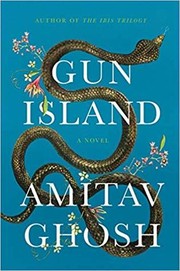
A Bengali folk legend chases a rare-book dealer from the Sundarbans to Venice through wildfires and migration routes. Placed late because it deliberately re-enters the world of The Hungry Tide.
The Non-Fiction
IntermediateRead the essays and reportage that state Ghosh's case directly: on how the Indian Ocean was connected, why the novel cannot see the climate crisis, and how colonialism and extraction are the same story.
▸ Study plan for this stage
Pace: 4–5 weeks. In an Antique Land (393) is the slowest of the three because it braids twelfth-century archival research with 1980s fieldwork — ~25 pages/day, and expect to reread the transitions. The Great Derangement (196) is three lectures and can be done in a week. The Nutmeg's Curse (343) is essayis
- The Cairo Geniza as a source: a synagogue storeroom of discarded documents that preserves an Indian Ocean world of Jewish and Muslim traders, and the slave Bomma who appears in its margins
- Ghosh writing anthropology and history in the same book, in an Egyptian village, so that the fieldwork and the archive comment on each other
- The Indian Ocean as a connected system long before European arrival — the claim underlying every historical novel in this path
- The Great Derangement's core argument: the modern realist novel banished the improbable and the catastrophic to make itself serious, and therefore cannot represent climate change
- The uncanny and non-human agency — Ghosh's insistence that storms, animals and landscapes act, and that literary convention has no room for actors that are not people
- The Nutmeg's Curse's move from climate to conquest: the Banda Islands massacre as the template for treating land and people as inert resource
- Extraction as a single continuous story — nutmeg, opium, fossil fuel — which is how the essays retroactively explain the fiction you have just read
- How does In an Antique Land use Bomma, about whom almost nothing survives, to make an argument about what archives record and what they discard?
- What exactly does Ghosh mean when he says the climate crisis is 'a crisis of culture, and thus of the imagination'?
- Does The Great Derangement's charge stick against Ghosh's own novels — and is Gun Island an answer to it or an illustration of the problem?
- What is the connection The Nutmeg's Curse draws between a seventeenth-century massacre for a spice and twenty-first-century planetary warming?
- Why does Ghosh argue that treating the earth as inert is a specific historical choice rather than an obvious default?
- Having read the fiction first, which novel in this path does The Nutmeg's Curse most change your reading of?
- Go back to your Gun Island improbability list and test each item against The Great Derangement's argument. This is the single most useful thing to do in this stage.
- Write one paragraph stating the strongest objection to The Great Derangement — that plenty of contemporary fiction does address climate — and then Ghosh's likely reply. The book is a polemic and deserves resistance.
- Trace the nutmeg from the Banda Islands to a European table, then do the same for opium from Bihar to Canton using the trilogy. Put the two routes side by side.
- Reread the opening chapter of Sea of Poppies now. Ghosh's non-fiction should have changed what a poppy field looks like on the page.
Next up: This is the end of the path: the essays state directly what the novels dramatise, so the natural next move is a reread of the Ibis Trilogy with the extraction argument in hand rather than another new book.
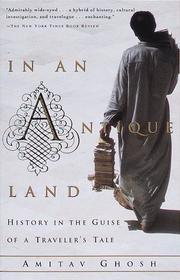
Ghosh the anthropologist in an Egyptian village, braided with the life of a twelfth-century Indian slave found in the Cairo Geniza. The hinge between his scholarship and his fiction, and the earliest statement of his Indian Ocean project.

His argument that the modern novel is structurally unable to represent climate change. Read it after the fiction and it works as a self-indictment and a manifesto at once.

The Banda Islands massacre as the origin story of planetary crisis. The furthest extension of the argument and the right place to stop, because it retroactively explains the whole Ibis Trilogy.
Discussion
Keep reading
Paths that share books, cover the same subject, or open a related topic.