Even the name is contested. The military government changed the country's English name to Myanmar in 1989 without a public process, and for years using one name or the other signalled a political position. That is a useful early warning about how much of the available writing on this country is shaped by advocacy — often for good reasons, but you should read knowing it.
The deeper problem is compression. Myanmar tends to reach outside readers as a sequence of episodes: 1988, the 2007 monk protests, the 2010s opening, the Rohingya expulsions, the 2021 coup. Each is intelligible only against the longer history of a multi-ethnic country whose borders were drawn by British administration and which has been fighting internal armed conflicts almost continuously since 1948.
Start with the long narrative
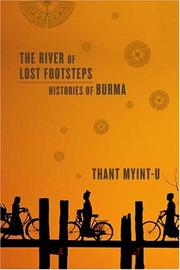
The River of Lost Footsteps by Thant Myint-U is the right first book — a history of Burma woven together with his own family's story, his grandfather being U Thant, the UN Secretary-General. It covers the precolonial kingdoms, the three Anglo-Burmese wars, and the twentieth century, and it argues persuasively that isolation and sanctions policy failed partly because outsiders knew so little of this background.
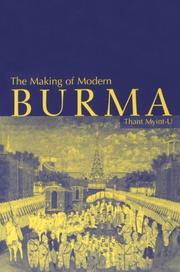
His The making of modern Burma is the academic monograph beneath the popular book: how the colonial state dismantled and rebuilt Burmese administration in the nineteenth century, and what that did to monarchy, sangha, and local authority. Read it second if you want the scholarship; skip it if the narrative history is enough for your purposes.
Then the junta years and the opposition
Burma by Benedict Rogers is a human-rights-focused account of military rule, written by an advocate and explicit about it. It is strongest on the ethnic conflicts in the borderlands, which most general histories underweight.
Perfect Hostage by Justin Wintle is the biography of Aung San Suu Kyi covering her father's assassination, the 1988 uprising, and the long house arrest. Freedom from fear collects her own essays and speeches from that period — the case for nonviolent resistance in her own words. Both were written long before her government's handling of the Rohingya crisis and her appearance at the International Court of Justice, and reading them now is a lesson in how sharply a reputation can be revised. That is worth sitting with rather than resolving.
Then the literature and the reporting
The Glass Palace by Amitav Ghosh is the novel — the fall of the Burmese court at Mandalay in 1885, the teak trade, and the Indian communities the empire moved across the region. It conveys the colonial economy better than most histories.
Finding George Orwell in Burma by Emma Larkin follows Orwell's postings as a colonial policeman while reporting on the country under military rule, using his three Burma-shadowed novels as a structure. Her Everything is broken covers Cyclone Nargis in 2008 and the junta's obstruction of relief, which killed a large share of the roughly 138,000 dead. Both were published under a pseudonym for the safety of her sources — itself a fact about reporting conditions there.
Close with The Rohingyas by Azeem Ibrahim on the citizenship law, the statelessness it produced, and the 2016–17 expulsions into Bangladesh. Ibrahim writes as an advocate for recognition, and the Myanmar government's account differs fundamentally; the international legal proceedings remain unresolved.
Follow the full path to keep the sequence, and browse /discover for the surrounding Asian histories.
Follow the full ordered path here: Best Books on the History of Myanmar and Burma, in Order.