The history of Iceland: books to read, in order
Iceland is the one European country whose founding is documented rather than mythical: a settlement that began around 870, a parliament from 930, no king for three hundred years, and a body of prose literature written about it two centuries later that has no real parallel anywhere. This path takes the Commonwealth and its feud law first, then reads the sagas as historical sources rather than as decoration, then follows six hundred years of Norwegian and Danish rule and rural poverty, and ends on the two things that made and nearly unmade the modern republic — fish and finance.
Settlement and the Commonwealth
BeginnerUnderstand the strangest constitutional arrangement in medieval Europe: an island settled largely from Norway and the Norse Irish Sea colonies, governed by an annual assembly at Thingvellir, with law but no king, no army and no executive to enforce a verdict. Work out how a legal system with no enforcement actually functioned, and why it eventually collapsed into the civil wars that handed the island to Norway in 1262.
▸ Study plan for this stage
Pace: Four to five weeks for 1,129 pages. Karlsson's The History of Iceland (418 pages) is the standard single-volume history by Iceland's leading historian, running from settlement to the modern republic, and it is the chronological spine of the whole path; the same book was published in Britain under a
- Settlement from around 870, largely from Norway and the Norse colonies of the Irish Sea, as a documented rather than mythical founding
- The assembly at Thingvellir from 930 and a legal system operating with no king, no army and no executive
- The chieftaincy as a portable relationship between a chieftain and his followers rather than a territorial office
- Arbitration and settlement as the normal outcome of a dispute, with feud as the enforcement mechanism of last resort
- How a verdict is enforced when no institution exists to enforce it, which is Byock's central problem
- The economics of the arrangement: land, hay, livestock and the constraints of the island
- The concentration of power that ended in civil war and submission to Norway in 1262
- What did a chieftaincy actually consist of, and how could a follower change chieftains?
- How was a judgement enforced, and what happened when the losing party simply refused?
- Why is settlement rather than punishment the normal resolution, and what does that imply about the system's purpose?
- What changed in the twelfth and thirteenth centuries to make the arrangement unsustainable?
- Was the collapse into civil war a failure of the constitution or a consequence of economic concentration?
- Draw the Commonwealth's institutions from Byock as a diagram, with the assembly, the chieftaincies and the courts, and mark on it the points where enforcement depends on private action.
- Take one dispute Byock describes and trace it from offence through arbitration to settlement, recording who did what at each step.
- Write a paragraph on how the compensation system valued injuries, and what the schedule of values implies about the society.
- Set out the sequence from Commonwealth to 1262 using Karlsson, and mark the point at which you think reversal became impossible.
Next up: Byock's account of feud and settlement is the machinery the sagas describe in action, and the next stage puts the primary texts in front of you with that machinery already understood.
The standard single-volume history in English by Iceland's leading historian, from settlement to the modern republic. The same book was published in Britain as Iceland's 1100 Years, so you may find either title; you need only one.
Byock's reconstruction of how the Commonwealth actually worked — chieftaincies, assemblies, arbitration and the economics of a society without a state. The best explanation anywhere of government by feud and settlement.
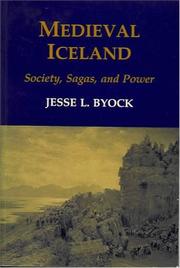
Byock's earlier and shorter book, focused specifically on the feud as a legal and narrative structure and on how the sagas encode it. Read it after Viking Age Iceland as the bridge into the next stage.
The saga age in its own words
IntermediateRead the sagas as the historical sources this path has been preparing you for. They were written in the thirteenth century about the tenth and eleventh, in cool, plain prose with almost no interiority, and historians disagree sharply about how much of what they record is fact and how much is thirteenth-century literary construction. Read at least three and form your own view about what kind of evidence they are.
▸ Study plan for this stage
Pace: Five weeks. These are the primary sources the whole path has been preparing you for, written in the thirteenth century about the tenth and eleventh in cool, plain prose with almost no interiority, and historians disagree sharply about how much is fact and how much thirteenth-century literary constru
- The two-century gap between the events narrated and the writing, and what it does to the sagas' evidential status
- Saga prose style: external, unemotional, action and speech without stated motive
- Feud and law working exactly as Byock described, and then failing, which is the plot of Njal's Saga
- Genealogy as structure rather than ornament, and what a listing of ancestors is doing in the narrative
- Women as instigators and holders of honour rather than as bystanders, most visibly in Laxdaela
- The Vinland voyages as a case where the text can be checked against excavation
- The distinction between a saga being unreliable in detail and being unreliable in kind
- What kind of evidence is a saga: for the tenth century, for the thirteenth, or for both differently?
- Where in Njal's Saga does the legal system fail, and is the failure procedural or social?
- How does saga style convey motive without stating it, and can you point to an instance?
- What did the excavation at L'Anse aux Meadows confirm, and what did it leave unconfirmed?
- How does the Laxdaela narrative distribute agency between its women and its men?
- Having read four, what is your own position on the fact-versus-construction question, and what would change it?
- Track a single lawsuit through Njal's Saga from offence to outcome and lay it against Byock's model of arbitration, marking every point where the practice diverges from the model.
- Take one page of saga prose and rewrite it with stated emotions and motives, then compare. The exercise shows you what the style is doing by removing it.
- Read the two Vinland sagas against each other on the same voyages, listing every point where they disagree, then check which points the archaeology addresses.
- Pick one woman in Laxdaela and write down every action she initiates and every one she is subjected to, and see which column is longer.
- Write half a page arguing the sagas are substantially historical and half a page arguing they are thirteenth-century literature, using the same three episodes for both.
Next up: The Commonwealth ended in 1262 and the literature about it was written just as it was ending, and the next stage covers the six centuries the national story tends to skip.
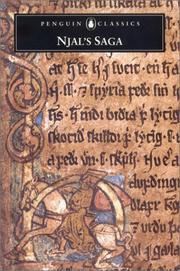
The greatest of them: a fifty-year chain of killings and lawsuits that turns on the failure of the legal system Byock described. Read this one first and much of the previous stage becomes concrete.
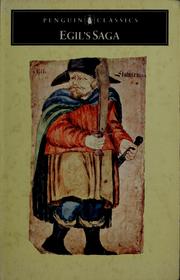
The life of a poet, farmer, mercenary and killer, and the best single portrait of the settlement generation and its quarrel with the Norwegian kings. Traditionally attributed to Snorri Sturluson, though the attribution is not certain.

The saga with the strongest women and the most famous love triangle in Old Norse literature, set in the Breidafjord valleys. Listed here under its translator; the work itself is anonymous.

The Greenlanders' Saga and Eirik the Red's Saga — the Icelandic accounts of the North American voyages, whose broad outline was confirmed by the excavation at L'Anse aux Meadows. The clearest case anywhere of a saga being tested against archaeology.
Six centuries under someone else's crown
IntermediateIceland submitted to Norway in 1262 and passed with it to Denmark, then spent centuries as an impoverished dependency: a royal trade monopoly, the Reformation imposed by force, the Laki eruption of 1783 that killed a fifth of the population, and a peasantry living in turf houses. This is the period the national story skips, and it is where the modern country's poverty and its literacy both come from.
▸ Study plan for this stage
Pace: Three weeks, and only two books, one fiction and one scholarship. Laxness's Iceland's Bell (448 pages) is the Nobel laureate's historical novel of the seventeenth and eighteenth centuries under Danish rule, built around a peasant accused of murder and a scholar collecting saga manuscripts, and it is
- Submission to Norway in 1262 and passage with it to the Danish crown
- The royal trade monopoly and its effect on an island that could not feed itself without exchange
- The Reformation imposed by force rather than adopted, and what that did to the church's landholdings
- The Laki eruption of 1783 and a mortality of roughly a fifth of the population
- Turf houses and the material conditions of a peasantry at the edge of subsistence
- Near-universal literacy coexisting with extreme poverty, which is the paradox Magnusson works on
- Manuscript collecting as the thread that carried the medieval material into the modern nation
- How did the trade monopoly work, and who was it designed to benefit?
- What did the Laki eruption do, and how did the Danish administration respond?
- How does a population that poor become that literate, and what were people reading and writing?
- What does Laxness's novel claim about Danish rule that Magnusson's evidence supports, and what does it dramatise beyond the record?
- Why did saga manuscripts leave Iceland, and what was at stake in collecting them?
- Follow the manuscript-collector thread in Iceland's Bell and then find out what actually happened to the Icelandic manuscript collections. The gap between novel and record is worth writing down.
- From Magnusson, extract what one ordinary person's diary reveals about daily life, and write a paragraph on what that source can establish that an administrative record cannot.
- Set the Laki mortality against your stage one picture of the Commonwealth's population and economy and write down what a fifth of the population means for a society of that size.
- List the ways Danish rule bore on an ordinary farmer, using both books, and mark which items come from the novel alone.
Next up: A poor, literate, dependent population with a medieval literature in its hands is the raw material of a nineteenth-century national movement, and that is the next stage.
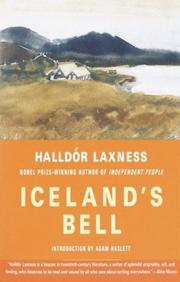
The Nobel laureate's historical novel of the seventeenth and eighteenth centuries under Danish rule, built around a peasant accused of murder and a scholar collecting saga manuscripts. Fiction, and the most vivid account available of what Danish administration felt like.

A social history of ordinary Icelanders from the eighteenth century onward, drawing on diaries and letters from a population that was desperately poor and almost universally literate. The scholarly ground under Laxness's novel.
Becoming a modern nation
IntermediateFollow the nineteenth-century independence movement, home rule in 1904, sovereignty in 1918 and the republic declared in 1944 while Denmark was under German occupation — and, alongside it, how the rest of the world learned to imagine Iceland as a pristine northern wilderness. Note that the national self-image was constructed from the medieval material in stage two, which is why the sagas mattered politically.
▸ Study plan for this stage
Pace: Three to four weeks for 740 pages, one novel and one academic study. Laxness's Independent People (470 pages) is the longer of the two and the novel that won him the Nobel: a sheep farmer's ruinous insistence on owing nothing to anyone, set as Iceland modernises around him, and the definitive treatm
- The nineteenth-century independence movement and its use of the Commonwealth as a precedent
- Home rule in 1904, sovereignty in 1918 and the republic declared in 1944 during the occupation of Denmark
- The sagas as political material: a documented medieval self-government available as a claim
- Self-reliance as a national virtue and as a trap, which is the argument of Independent People
- The exotic North as a European construction, and Icelandic participation in maintaining it
- Modernisation arriving at a rural society within a single lifetime
- The relationship between how a place is imagined abroad and how it organises itself at home
- What did the independence movement claim, and how did the medieval material support the claim?
- Why was the republic declared in 1944 rather than earlier or later, and what did the timing depend on?
- What does Laxness think self-reliance costs, and does the novel finally condemn it?
- How did Icelanders use the exotic-North image, and where did it work against them?
- Is the modern national identity continuous with the Commonwealth or constructed in the nineteenth century from its remains?
- Trace the constitutional steps from 1874 to 1944 from Karlsson's chapters and note what each step actually transferred.
- Take three uses of medieval material in nineteenth-century nationalism as Oslund describes them and check each against what you learned about the Commonwealth in stage one, marking any that misrepresent it.
- Follow the farmer's economic decisions across Independent People and write down at what point self-reliance stops being prudence.
- Write a paragraph on Iceland as a European reader in 1900 would have imagined it, using Oslund, then a second on what stage three tells you was actually there.
Next up: An independent republic with a fishing economy and a strong sense of its own resilience is the country that fought the Cod Wars and then built a banking sector, which is where the path ends.
The novel that won Laxness the Nobel: a sheep farmer's ruinous insistence on owing nothing to anyone, set as Iceland modernises around him. The definitive treatment of Icelandic self-reliance as both a virtue and a disease.

How Iceland, Greenland and the Faroes were written into the European imagination as a natural and exotic North, and how Icelanders used that image in their own nation-building. The outside view that completes the inside one.
Fish and money
IntermediateEnd on the modern republic's two defining episodes. Iceland extended its fishing limits four times between 1958 and 1976, sent trawlers and gunboats against the Royal Navy and won every round — the only country to face down a NATO ally and take the sea. Then, between 2003 and 2008, three privatised banks grew to roughly ten times national GDP and collapsed in a week. Read the second as the direct consequence of the confidence produced by the first.
▸ Study plan for this stage
Pace: Three weeks, and the stage is built around a causal claim you should test rather than accept. Welch's book on the Cod Wars (324 pages) is the longest here and covers the three confrontations with Britain from 1958 to 1976 from the naval side; our catalogue stores its title in capitals, which is a di
- Four successive extensions of the fishing limits and the legal and diplomatic arguments used for each
- Trawlers, gunboats and net-cutting as the actual tactics, and NATO membership as the decisive leverage
- Fish as the entire export economy, and what that concentration means for national risk
- Bank privatisation and balance sheets reaching roughly ten times national GDP
- The Icesave dispute and the question of whether a small state's taxpayers owe foreign depositors
- The pots-and-pans protests and a government brought down by them
- An insider account as a source: best informed, least disinterested, and useful once you read it as such
- How did Iceland actually win the Cod Wars, and what did NATO membership have to do with it?
- What did each extension of the limits gain, and what did Britain lose?
- How did three banks reach ten times GDP, and who was supposed to be supervising them?
- What was the Icesave dispute about in legal terms, and how was it settled?
- Does Jonsson's account explain the boom or defend it, and can you separate the two?
- Is the claim that the Cod Wars produced the confidence behind the boom supported by anything in these books, or is it a retrospective narrative?
- Build a timeline of the three confrontations with the limit in force at each stage, and write down what Britain conceded and when.
- Chart the growth of the three banks against national GDP using the figures Boyes and Jonsson supply, and note where the two authors' numbers differ.
- Read Jonsson on one decision he was close to and Boyes on the same decision, and write out the two accounts in parallel, separating fact from justification.
- Write out the causal claim linking the Cod Wars to the boom as a chain of steps, then mark which steps are evidenced in these books and which are assumed.
- Write a final page on Iceland using only the fourteen books on this path, and mark every point where your sources disagreed. The largest mark should sit on the sagas, where the disagreement is about what kind of evidence they are at all.
Next up: This ends the path: from a documented settlement and a state without a king, through the literature written about it, six centuries of dependency, a nation reassembled from medieval material, and a republic that beat the Royal Navy and then broke its own banks.

The full account of the three confrontations with Britain between 1958 and 1976, from the naval side. The catalogue stores the title in capitals as The Royal Navy in the Cod Wars; it is the standard narrative of the disputes.
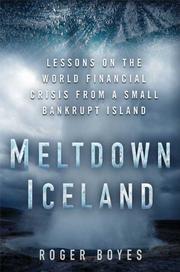
A correspondent's narrative of the 2008 banking collapse, the Icesave dispute and the pots-and-pans protests that brought down the government. The clearest account of how a fishing nation became a hedge fund and back again.

Written by the chief economist of one of the failed banks, which makes it both the best-informed account of the boom and the most interested one. Read it after Boyes, as testimony from inside the thing he describes from outside.
Discussion
Keep reading
Paths that share books, cover the same subject, or open a related topic.