Learn Icelandic: Best Books to Read in Order
This curriculum takes a complete beginner from zero Icelandic to conversational fluency and solid grammatical understanding across four progressive stages. Each stage builds directly on the last — starting with pronunciation and survival phrases, moving through core grammar, then expanding vocabulary and reading ability, and finally tackling authentic native-level material and advanced grammar reference.
First Steps: Sounds, Scripts & Survival Icelandic
BeginnerRecognize Icelandic letters and pronunciation, grasp basic phrases, and build enough confidence to start structured study.
▸ Study plan for this stage
Pace: 2–3 weeks, ~15–20 pages/day (Chapters 1–3 of Colloquial Icelandic)
- Icelandic alphabet and pronunciation rules, including unique letters (þ, ð, æ, ö) and their phonetic values
- Basic grammatical gender system (masculine, feminine, neuter) and how it affects nouns and articles
- Essential survival phrases for greetings, introductions, and polite expressions (Halló, Já, Nei, Takk, Bless)
- Present tense conjugation of common verbs (to be, to have, to go) in first and second person
- Word order patterns in simple declarative and question sentences
- Numbers 0–20 and how to tell time and give basic personal information
- Confidence-building through repetition of high-frequency words and phrases in realistic contexts
- Can you identify and pronounce all Icelandic letters, including the special characters (þ, ð, æ, ö, ú)?
- How do you greet someone in Icelandic and respond to basic greetings?
- What are the three grammatical genders in Icelandic, and how do they affect articles and adjectives?
- Can you introduce yourself in Icelandic, including your name, nationality, and occupation?
- How do you conjugate the present tense of 'to be' (vera) and 'to have' (hafa) for I/you forms?
- What are the numbers 0–20 in Icelandic, and can you tell the time?
- Pronunciation drills: Spend 10 minutes daily reading aloud the pronunciation guide and example words from Colloquial Icelandic, focusing on the unique Icelandic sounds
- Flashcard practice: Create cards for the 50 most common survival phrases from Chapters 1–2 (greetings, politeness, introductions) and review 15 minutes daily
- Verb conjugation table: Write out the present tense conjugation of vera (to be) and hafa (to have) for all persons, then practice filling in blanks in simple sentences
- Dialogue shadowing: Read the sample dialogues in Colloquial Icelandic aloud, then record yourself and compare your pronunciation to the audio (if available)
- Number and time practice: Write out numbers 0–20 from memory, then practice telling the time in Icelandic using clock images or a clock app
- Self-introduction script: Write a 5–7 sentence introduction about yourself in Icelandic using the phrases from the book, then practice saying it aloud daily until fluent
Next up: This stage establishes the phonetic and grammatical foundations needed to move into the next level, where you'll expand verb conjugations, learn more complex sentence structures, and begin reading simple authentic Icelandic texts with confidence.
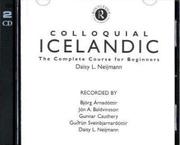
The single best beginner course book for English speakers — it covers pronunciation, the alphabet, essential grammar, and everyday dialogues in a carefully scaffolded way. Start here to get a solid all-round foundation before diving into dedicated grammar study.
Core Grammar: Building the Skeleton
BeginnerUnderstand Icelandic's four-case noun system, verb conjugations, adjective agreement, and sentence structure well enough to construct original sentences.
▸ Study plan for this stage
Pace: 4–5 weeks, ~20–25 pages/day, focusing on grammar chapters (roughly 80–100 pages total)
- The four-case system (nominative, accusative, dative, genitive) and how case endings change noun forms across gender and number
- Strong and weak verb conjugations in present and past tenses, including the distinction between regular and irregular verbs
- Adjective agreement with nouns across all four cases, genders (masculine, feminine, neuter), and numbers (singular, plural)
- Basic sentence structure: word order patterns in declarative, interrogative, and subordinate clauses
- Definite and indefinite articles and how they interact with the case system
- Personal pronouns and their case forms, including reflexive pronouns
- Prepositions and their case government (which cases they require)
- Practical application: constructing grammatically correct original sentences using all four cases
- How do the four Icelandic cases (nominative, accusative, dative, genitive) function, and what are the primary case endings for masculine, feminine, and neuter nouns in singular and plural?
- What is the difference between strong and weak verb conjugations in Icelandic, and can you conjugate both types in present and past tense?
- How do adjectives agree with nouns in Icelandic across case, gender, and number, and what are the key adjective endings?
- What are the main word order rules in Icelandic declarative sentences, questions, and subordinate clauses?
- Which prepositions govern which cases, and how do you know which case to use after a given preposition?
- Can you construct a grammatically correct original sentence using a specific case (e.g., dative or genitive) that demonstrates your understanding of case endings, adjective agreement, and word order?
- Case declension drills: Take 10 common nouns (mix of masculine, feminine, neuter) and decline them through all four cases in both singular and plural, labeling each form
- Verb conjugation tables: Conjugate 5 strong verbs and 5 weak verbs in present and past tense (indicative mood), then identify the patterns that distinguish them
- Adjective agreement matching: Given 15 noun phrases, select the correct adjective form that agrees with the noun in case, gender, and number
- Sentence construction from prompts: Write 8–10 original sentences (3–5 words each) that deliberately use different cases (e.g., 'Write a sentence with a dative object,' 'Write a sentence with a genitive modifier')
- Preposition + case practice: Create 10 sentences using different prepositions from Einarsson's list, ensuring correct case agreement after each preposition
- Translation and analysis: Translate 5 provided Icelandic sentences into English, then identify and label every case, verb form, and adjective agreement in each sentence
Next up: Mastering the four-case system and verb conjugations establishes the grammatical foundation needed to move into vocabulary building and practical communication, where you'll apply these structures to real dialogues and texts.
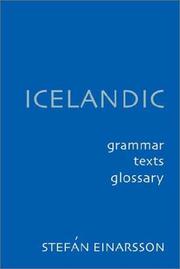
A thorough and time-tested reference grammar that goes deeper than any course book. Read it alongside or just after the classroom textbook to understand the 'why' behind every grammatical rule you encounter.
Vocabulary & Reading: Growing Fluency
IntermediateExpand active vocabulary, develop reading stamina with real Icelandic texts, and begin understanding natural spoken and written Icelandic.
▸ Study plan for this stage
Pace: 8–10 weeks, ~40–50 pages/day (dictionary reference work) + 15–20 pages/day (saga narrative). Alternate between dictionary study (3 days/week) and saga reading (4 days/week) to build vocabulary in context.
- Old Icelandic morphology: case systems, gender, and inflectional patterns as presented in Zoëga's dictionary
- Etymological connections between Old Icelandic and modern Icelandic to build vocabulary retention
- Common saga vocabulary and formulaic expressions recurring throughout Njáls Saga
- Reading comprehension strategies for narrative texts with minimal glossing: using context and cognates
- Active vocabulary expansion: moving from recognition (dictionary) to production (saga comprehension and discussion)
- Cultural and historical context embedded in Njáls Saga: kinship, honor codes, and legal systems that shape word meaning
- Syntactic patterns in Old Icelandic prose: word order, subordination, and rhetorical devices in saga narrative
- What are the major case endings for masculine, feminine, and neuter nouns in Old Icelandic, and how do they appear in Njáls Saga?
- How does Zoëga's dictionary help you recognize and understand the same root words appearing in different inflected forms throughout the saga?
- What are 10–15 high-frequency saga vocabulary items (e.g., words related to kinship, conflict, or legal proceedings) and how do their meanings shift with context in Njáls Saga?
- Can you read a passage from Njáls Saga (100–150 words) with minimal glossing and explain its narrative function and key plot points?
- How do the honor codes and legal systems referenced in Njáls Saga illuminate the meaning and usage of key vocabulary terms?
- What syntactic patterns (e.g., use of the subjunctive, participial constructions) do you notice recurring in Njáls Saga, and how do they affect meaning?
- Daily dictionary drills: Select 20–30 entries from Zoëga per session; write out all inflected forms (nominative, accusative, dative, genitive) for each word and use each in a sample sentence from the saga.
- Vocabulary mapping: Create a thematic word web for saga-central concepts (e.g., 'feud,' 'honor,' 'kinship') by collecting all related terms from Zoëga and tracking their usage across saga chapters.
- Close reading with minimal glossing: Read 2–3 pages of Njáls Saga per session without consulting the dictionary first; note unfamiliar words, then cross-reference Zoëga and discuss how context clues helped you infer meaning.
- Morphological analysis: Take 15–20 saga sentences and parse each word's case, gender, and number; explain how inflection signals grammatical relationships and meaning.
- Retelling exercise: After reading a saga chapter, retell the events in simple Old Icelandic (or modern Icelandic) using vocabulary from Zoëga, focusing on high-frequency words.
- Comparative etymology: Select 10 Old Icelandic words from the saga; research their modern Icelandic equivalents and cognates in other Germanic languages; discuss how etymology aids retention.
Next up: Mastery of Old Icelandic vocabulary, morphology, and saga-reading fluency prepares you to tackle more complex medieval texts, engage with historical and literary analysis of the saga tradition, and transition to reading modern Icelandic literature with confidence in recognizing linguistic patterns and cultural references.
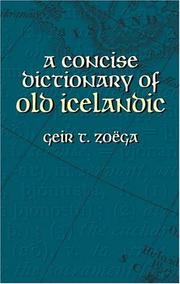
Old Icelandic (Old Norse) vocabulary overlaps heavily with Modern Icelandic, and this classic dictionary sharpens your intuition for word roots and morphology — invaluable for reading anything from news articles to sagas.

The most celebrated of the Icelandic sagas and a cornerstone of the literary tradition — reading it in a bilingual or annotated edition at this stage bridges classical and modern Icelandic vocabulary while immersing you in authentic narrative prose.
Advanced Mastery: Reference, Nuance & Native Material
ExpertAchieve near-fluency by mastering advanced grammar nuances, idiomatic expression, and the ability to read modern Icelandic literature independently.
▸ Study plan for this stage
Pace: 8–10 weeks, ~40–50 pages/day (alternating between reference work and novel with 2–3 days per week dedicated to deep dictionary study)
- Advanced inflectional patterns: mastering case declensions, gender agreement, and weak/strong verb conjugations in context
- Idiomatic expressions and phrasal constructions unique to Icelandic (e.g., prepositional phrases, fixed expressions)
- Laxness's narrative voice and stylistic techniques: archaic language, dialect markers, and literary register shifts
- Semantic nuance through etymology: using Íslensk orðabók to trace word origins and understand metaphorical extensions
- Reading for cultural and historical context: understanding early 20th-century rural Icelandic society as depicted in Independent People
- Parsing complex sentence structures: embedded clauses, participial constructions, and poetic syntax in literary prose
- How does Laxness use archaic or dialectal language in Independent People, and what grammatical patterns signal these registers?
- What are five idiomatic expressions from Independent People, and how do their literal meanings differ from their actual usage?
- Using Íslensk orðabók, trace the etymology and semantic evolution of three key words from the novel; how do their historical meanings enrich the text?
- Explain the grammatical function and stylistic effect of a complex sentence from Independent People (e.g., one with multiple embedded clauses or participial phrases).
- What cultural and historical references in Independent People require knowledge of early 20th-century Iceland, and how do they shape the narrative?
- How does Laxness's use of case inflection and word order create emphasis or convey character voice in dialogue versus narrative passages?
- Daily dictionary deep-dives: Select 5–10 words per day from Independent People; look them up in Íslensk orðabók, note etymology, related forms, and usage examples; write a short paragraph using each word in context.
- Idiomatic expression journal: Collect 20–30 idiomatic phrases from Independent People; create flashcards with literal translation, actual meaning, and a sentence showing usage; review weekly.
- Syntactic analysis: Choose 10 complex sentences from the novel; diagram their grammatical structure (identifying main clauses, subordinate clauses, participial phrases); write a brief note on how syntax reinforces meaning.
- Register and style annotation: Re-read a chapter of Independent People and annotate passages with archaic, dialectal, or poetic language; explain the grammatical markers (e.g., old case endings, verb forms) and their stylistic purpose.
- Comparative word study: Select 3–5 key thematic words from Independent People (e.g., 'land,' 'struggle,' 'independence'); trace their semantic range using Íslensk orðabók; write a short essay on how their meanings evolve across the novel.
- Oral interpretation: Record yourself reading aloud 2–3 passages from Independent People, focusing on intonation, pacing, and register; listen back and identify where grammatical complexity affects your delivery.
Next up: Mastery of advanced grammar, idiomatic fluency, and the ability to engage critically with literary Icelandic prepares you to read contemporary Icelandic media (journalism, essays, modern fiction) and to produce sophisticated written and spoken Icelandic in specialized contexts.

The authoritative monolingual Icelandic dictionary — switching to a monolingual reference at this stage forces you to think entirely in Icelandic and exposes you to the full richness of the language's vocabulary and usage notes.
A Nobel Prize-winning novel and the pinnacle of modern Icelandic literature — reading Laxness in the original Icelandic is the ultimate fluency test, rewarding all the grammar and vocabulary work of the previous stages with one of the world's great literary experiences.
Discussion
Keep reading
Paths that share books, cover the same subject, or open a related topic.