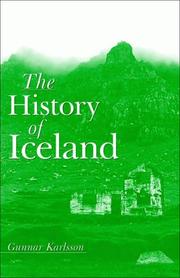
Start with Gunnar Karlsson's The history of Iceland, the standard single-volume history in English by Iceland's leading historian, 418 pages from settlement to the modern republic. The same book was published in Britain as Iceland's 1100 Years, so you may find either title on a shelf; you need only one of them.
Then read Jesse Byock before you touch a saga. This is the sequencing decision that makes the path work. Iceland has the strangest constitutional arrangement in medieval Europe — settled largely from Norway and the Norse colonies of the Irish Sea, governed by an annual assembly at Thingvellir from 930, with law but no king, no army and no executive to enforce a verdict — and the sagas are almost unreadable as history until you know how that system was supposed to function.
Settlement and the Commonwealth
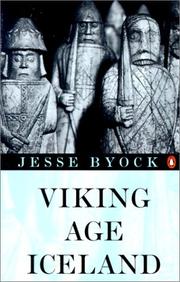
Byock's Viking age Iceland is the reconstruction of how the Commonwealth actually worked: chieftaincies, assemblies, arbitration, and the economics of a society without a state. It is the best explanation anywhere of government by feud and settlement, and at 447 pages it is the longest thing in this stage.
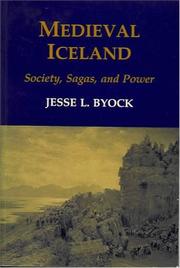
His earlier and shorter Medieval Iceland focuses on the feud as a legal and narrative structure and on how the sagas encode it. Read it second, as the bridge into the next stage.
The saga age in its own words
The sagas were written in the thirteenth century about the tenth and eleventh, in cool, plain prose with almost no interiority. Historians disagree sharply about how much of what they record is fact and how much is thirteenth-century literary construction, and you should read at least three before forming a view about what kind of evidence they are.
Njal's Saga is the greatest of them and should be first: a fifty-year chain of killings and lawsuits turning on the failure of the very legal system Byock described. Egil's saga is the life of a poet, farmer, mercenary and killer, and the best portrait of the settlement generation and its quarrel with the Norwegian kings; it is traditionally attributed to Snorri Sturluson, and our catalogue credits him, but that attribution is not certain.
Two records here need explaining before you buy. Laxdaela Saga — the saga with the strongest women and the most famous love triangle in Old Norse literature — is listed under Magnus Magnusson, who is its translator; the work itself is anonymous. And The Vinland sagas, the Icelandic accounts of the North American voyages whose broad outline was confirmed by the excavation at L'Anse aux Meadows, is credited to Leifur Eiricksson, which is the name of the publishing house, not an author. Both are the right books under misleading author fields.
Six centuries under someone else's crown
Iceland submitted to Norway in 1262 and passed with it to Denmark, then spent centuries as an impoverished dependency under a royal trade monopoly, with a Reformation imposed by force and the Laki eruption of 1783 killing a fifth of the population. This is the period the national story skips, and it is where both the modern country's poverty and its literacy come from.
Iceland's Bell is Halldór Laxness's historical novel of that era, built around a peasant accused of murder and a scholar collecting saga manuscripts. It is fiction, and it is the most vivid account available of what Danish administration felt like. Sigurður Gylfi Magnússon's Wasteland with Words is the scholarly ground beneath it — a social history drawing on diaries and letters from a population that was desperately poor and almost universally literate.
Becoming a modern nation
Laxness's Independent people, the novel that won him the Nobel, is a sheep farmer's ruinous insistence on owing nothing to anyone, set as Iceland modernises around him — self-reliance as both a virtue and a disease. Karen Oslund's Iceland imagined supplies the outside view: how Iceland, Greenland and the Faroes were written into the European imagination as an exotic North, and how Icelanders then used that image in their own nation-building.
Fish and money
Iceland extended its fishing limits four times between 1958 and 1976, sent trawlers and gunboats against the Royal Navy, and won every round — the only country to face down a NATO ally and take the sea. Andrew Welch's account of the three confrontations is the standard narrative; our catalogue stores its title entirely in capitals, as ROYAL NAVY IN THE COD WARS, which is a metadata artefact rather than anything about the book.
Then the crash. Between 2003 and 2008 three privatised banks grew to roughly ten times national GDP and collapsed in a week. Roger Boyes's Meltdown Iceland is a correspondent's narrative of the collapse, the Icesave dispute and the pots-and-pans protests that brought down the government. Asgeir Jonsson's Why Iceland? was written by the chief economist of one of the failed banks, which makes it both the best-informed account of the boom and the most interested one — read it after Boyes, as testimony from inside the thing he describes from outside. The full ordered path is at /paths/pt_ai_the-history-of-iceland.