The Mongols: the empire that remade the world
This curriculum takes a beginner from vivid narrative storytelling about Genghis Khan and the Mongol conquests, through a broader structural understanding of the empire's administration and trade networks, and finally into specialist scholarship on the empire's lasting cultural, ecological, and civilizational impact on Eurasia. Each stage builds the vocabulary, chronology, and analytical frameworks needed to absorb the next, turning a curious newcomer into a deeply informed student of Mongol history.
Foundations: The Story of Genghis Khan
BeginnerEstablish a vivid, chronological grasp of Genghis Khan's life, rise to power, and the early conquests — building the core narrative backbone all later reading depends on.
▸ Study plan for this stage
Pace: 4–5 weeks, ~25–30 pages/day — Weatherford's book is roughly 320 pages of main text; reading at a relaxed beginner pace with time for note-taking. Suggested breakdown: Week 1 — Prologue + Part One (The Making of a Conqueror, Chapters 1–3); Week 2 — Part One concluded + Part Two (The Mongol World War,
- Temüjin's origins and early hardships — his father's poisoning, years of poverty, and captivity — as the crucible that forged his leadership style and survival instincts
- The steppe political landscape: how fragmented, feuding Mongol and Turkic tribes operated under a clan-based loyalty system that Genghis Khan systematically dismantled and rebuilt
- Meritocracy over aristocracy: Genghis Khan's revolutionary practice of promoting generals and administrators based on ability and loyalty rather than bloodline, as illustrated through figures like Jebe and Subutai
- The kurultai and the mechanics of Mongol political legitimacy — how consensus-building among chiefs and the concept of the 'Great Assembly' underpinned Genghis Khan's authority
- Weatherford's central thesis: that the Mongol Empire was not merely a force of destruction but a catalyst for global trade, communication, and cultural exchange — the 'Pax Mongolica' argument
- Military innovation on the steppe: the role of psychological warfare, feigned retreats, coordinated cavalry tactics, and siege technology adopted from conquered peoples
- The Yasa (Great Law) as a unifying legal and administrative code — religious tolerance, trade protections, and the prohibition of aristocratic privilege
- Genghis Khan's campaigns against the Xi Xia and Jin Dynasty as the template for later Mongol conquest strategy — how early victories shaped the imperial blueprint
- According to Weatherford, how did Temüjin's childhood experiences — particularly the murder of his father and his years as a slave — directly shape the leadership principles he later institutionalized across the empire?
- What specific features of the traditional steppe tribal system did Genghis Khan break down, and what did he replace them with? Why does Weatherford argue this was revolutionary rather than merely practical?
- How does Weatherford challenge the conventional Western narrative of the Mongols as purely destructive? What evidence does he use from Genghis Khan's own lifetime to support the 'modernizing' thesis?
- Describe the role of the kurultai in Mongol governance. How did Genghis Khan use it to consolidate power while maintaining the appearance of collective legitimacy?
- What does the Yasa reveal about Genghis Khan's governing philosophy? How did its provisions on religious tolerance and trade differ from the norms of contemporary empires?
- Using the Xi Xia and Jin campaigns as examples, what were the defining characteristics of early Mongol military strategy, and how did Genghis Khan adapt his tactics when facing fortified cities?
- Timeline wall chart: As you read each chapter, build a hand-drawn or digital chronological timeline of Temüjin's life from birth (~1162) to death (1227), annotating each major event (enslavement, blood brotherhood with Jamukha, unification of tribes, first campaigns) with a one-sentence note on its significance. This forces active engagement with the narrative backbone.
- Tribe & alliance map: Using the geographic descriptions in Part One, sketch a rough map of the Mongolian steppe marking the major tribes (Merkits, Tatars, Keraits, Naimans) and draw arrows showing how Temüjin absorbed or defeated each. Label the approximate date and method (alliance, war, or betrayal) for each.
- Concept journal — 'Destruction vs. Transformation': Keep a running two-column journal as you read. Left column: passages where Weatherford describes Mongol violence and destruction. Right column: passages where he argues for constructive or modernizing outcomes. At the end of Week 4, write a 200-word personal verdict on his thesis.
- Character profile cards: Create a brief index card (physical or digital) for each major figure introduced — Börte, Jamukha, Jebe, Subutai, Toghrul Khan, and others. Note their relationship to Genghis Khan, their role, and one key moment that defines them. Use these as a review tool in Week 5.
- Comparative leadership reflection: After finishing Part One, write a one-page response to this prompt: 'Weatherford argues Genghis Khan replaced blood-based loyalty with merit-based loyalty. Find two specific examples from the text and explain why this shift mattered militarily and politically.'
- End-of-stage synthesis essay (300–400 words): Answer the question — 'What single decision or turning point in Genghis Khan's rise was most consequential, and why?' Cite at least three specific moments from Weatherford's narrative to support your argument. This prepares you for the analytical reading required in later stages.
Next up: Mastering Genghis Khan's life and founding principles through Weatherford gives you the narrative spine — the 'who' and 'how' of Mongol power — so that the next stage can zoom out to examine the full imperial expansion under his successors, where that same machinery of meritocracy, law, and military innovation operates at continental scale.
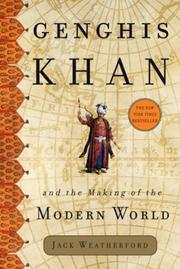
The ideal entry point — highly readable and narrative-driven, it traces Genghis Khan from orphaned outcast to world conqueror and argues compellingly for his lasting global influence. It gives beginners both a gripping story and a strong interpretive thesis to test against later books.
The Empire at Full Stretch
BeginnerExpand the view from Genghis Khan alone to the full arc of the empire under his successors — the conquests of China, Persia, Russia, and the Middle East — and understand how the empire was governed.
▸ Study plan for this stage
Pace: 8–10 weeks total: Weeks 1–4 cover "The Mongol Empire" by John Man (~25–30 pages/day, including time to review maps and genealogies); Weeks 5–10 cover "Khubilai Khan" by Morris Rossabi (~20–25 pages/day, with slower reading to absorb administrative and cultural detail).
- The kurultai system: how Mongol leadership succession worked after Genghis Khan, and the role of the great assemblies in legitimizing new Great Khans
- The four khanates: how the empire fractured into the Yuan dynasty, the Ilkhanate, the Chagatai Khanate, and the Golden Horde — and why this division was both a strength and a weakness
- Conquest strategies across different theaters: the siege warfare used against Jin China, the terror-and-submission tactics in Persia, and the cavalry campaigns into Russia and Eastern Europe
- The Pax Mongolica: how Mongol control paradoxically enabled trade, diplomacy, and cultural exchange across Eurasia along the Silk Road
- Khubilai Khan's dual identity: how he balanced being a Mongol Great Khan with ruling as a Chinese emperor of the Yuan dynasty, adopting Confucian administrative structures while preserving Mongol traditions
- Governance and administration: the use of non-Mongol administrators (Chinese, Persian, Uighur), the role of the yam (postal relay) system, and religious tolerance as tools of imperial control
- The limits of Mongol expansion: the failed invasions of Japan and Java under Khubilai, and what they reveal about the geographic and logistical boundaries of Mongol power
- Dynastic decline: the internal rivalries, economic strains, and legitimacy crises that began to erode the empire in Khubilai's later reign
- According to John Man, what were the key military and organizational innovations that allowed the Mongols to sustain conquests across such vastly different geographic and cultural environments after Genghis Khan's death?
- How did the empire transition from a unified entity under a single Great Khan to the four distinct khanates, and what role did succession disputes play in that fragmentation?
- How does Morris Rossabi portray Khubilai Khan's approach to governing China — in what ways did he adapt to Chinese political culture, and in what ways did he resist assimilation?
- What does the Pax Mongolica mean in practice, and what evidence from these two books supports the idea that Mongol rule had constructive as well as destructive consequences?
- Why did Khubilai's campaigns against Japan and Southeast Asia fail, and what do those failures suggest about the structural limits of the Mongol imperial model?
- How did the role and status of women, religious leaders, and foreign merchants differ under Mongol rule compared to the regimes the Mongols replaced, based on what Rossabi describes in the Yuan court?
- Map the empire's growth: After finishing John Man, draw or annotate a blank map of Eurasia marking the four khanates, major conquered cities (Zhongdu, Samarkand, Baghdad, Kiev), and the routes of key campaigns. Label approximate dates of conquest to build a mental timeline.
- Succession chart: Create a family tree / flowchart of the Chinggisid line from Genghis Khan through Khubilai, noting which sons inherited which territories. Use the genealogies provided in both books to cross-check your chart.
- Comparative conquest journal: For each major theater of conquest (China, Persia, Russia, Middle East), write a short paragraph (5–8 sentences) summarizing the Mongol approach, the local resistance, and the aftermath — drawing specific details from John Man's narrative.
- Khubilai's governance ledger: After finishing Rossabi, make a two-column table listing Khubilai's policies that were 'Mongol in character' on one side and 'Chinese/adapted' on the other. Use this to write a one-page reflection on whether Khubilai was more conqueror or emperor.
- Primary-source connection: Rossabi references accounts from figures like Marco Polo and Chinese officials. Choose one such source mentioned in the book, find a short freely available excerpt online, and write 3–4 sentences on how it confirms or complicates Rossabi's interpretation.
- Stage synthesis essay: Write a 400–600 word essay answering the question: 'Was the Mongol Empire's greatness achieved despite its methods of conquest, or because of them?' Use at least one specific example from each book to support your argument.
Next up: By understanding how the empire was governed at its height and why it began to fracture under Khubilai, the reader is now equipped to explore the deeper cultural, economic, and long-term historical legacy the Mongols left across Asia and Europe — the natural focus of a more advanced stage.

A clear, accessible narrative that follows the empire through Genghis Khan's sons and grandsons, filling in the post-Genghis story in an engaging style that suits readers still building their chronological map.

Focuses on the most powerful of Genghis's grandsons, who conquered China and founded the Yuan Dynasty. Rossabi's scholarly but accessible biography shows how the Mongols adapted to sedentary civilization — a crucial turning point in the empire's evolution.
The Pax Mongolica: Trade, Connection, and Destruction
IntermediateUnderstand the empire as a system — how the Mongols created the first truly Eurasian trade and communication network, and at what catastrophic human cost, including their role in spreading the Black Death.
▸ Study plan for this stage
Pace: 6–8 weeks total. Week 1–4: Read "The Silk Roads" by Frankopan (~30–35 pages/day, focusing on chapters covering Central Asia, the Mongol eruption, and the connected world of the 13th–14th centuries). Week 5–8: Read "The Mongol Conquests in World History" by May (~20–25 pages/day, a denser academic te
- The Pax Mongolica as a deliberate imperial policy: how the Mongols enforced road safety, standardized weights and currencies, and issued the paiza (passport) to enable long-distance commerce across Eurasia
- The Yam relay system: the Mongol postal and intelligence network that made the empire the fastest communication system in the pre-modern world, as examined by May
- Frankopan's 'Silk Roads' thesis: that the true axis of world history runs through Central Asia and the Middle East, and that the Mongol Empire represents the apex — and violent disruption — of that axis
- The dual nature of Mongol rule — creative and destructive simultaneously: cities like Samarkand and Baghdad were annihilated, yet the same empire rebuilt trade infrastructure on their ruins
- The Black Death as a Mongol-connected catastrophe: how the Yam system and trade routes that unified Eurasia also served as vectors for Yersinia pestis, carrying plague from Central Asian reservoirs westward into Europe and the Middle East
- The four khanates (Golden Horde, Ilkhanate, Chagatai, Yuan) as successor states that each shaped regional trade differently — May's framework for understanding how the empire fragmented yet its commercial legacy persisted
- Demographic and civilizational destruction: May's quantitative and qualitative analysis of population collapse in Iran, Iraq, and China, and what this meant for the long-term trajectory of Islamic civilization
- The role of merchants, missionaries, and diplomats (Marco Polo, Ibn Battuta, William of Rubruck) as human evidence of the Pax Mongolica's connectivity — referenced across both books
- According to Frankopan, how did the Mongol conquests simultaneously destroy and reinvigorate the Silk Roads, and which regions suffered the most irreversible long-term damage?
- How does May explain the Yam system's dual function as both a military logistics tool and a commercial enabler — and what were its structural limits?
- What specific mechanisms, traced across both Frankopan and May, allowed the Black Death to travel from Central Asian steppe reservoirs to Crimea, the Middle East, and Western Europe?
- How did the four successor khanates diverge in their approach to trade and administration after the empire's fragmentation, and which khanate best preserved the Pax Mongolica's commercial spirit?
- Frankopan argues that the destruction of Baghdad in 1258 was a civilizational turning point for the Islamic world — what is his evidence, and how does May's military history either support or complicate that claim?
- In what ways did the Mongol Empire's connectivity create conditions for what we might today call 'globalization,' and what does comparing Frankopan's and May's perspectives reveal about the costs of that integration?
- Mapping exercise: Draw a blank map of Eurasia and, using details from both Frankopan and May, plot the major Silk Road arteries, the Yam relay stations, the cities destroyed (Baghdad, Merv, Nishapur), and the probable plague transmission route from the Caspian steppe to Caffa to Europe. Annotate each node with dates and a one-line consequence.
- Dual-column note-taking: As you read, maintain a two-column journal labeled 'Creation' and 'Destruction.' For every Mongol policy or event described in either book, assign it to a column (some will belong in both). At the end of each book, write a 200-word synthesis: was the Pax Mongolica a net positive or negative for Eurasian civilization?
- Source comparison essay (500–700 words): Frankopan is a narrative historian writing for a broad audience; May is an academic military and social historian. Choose one shared topic — the sack of Baghdad, the plague, or the Yam system — and write a short essay comparing how each author frames it, what evidence each uses, and whose interpretation you find more persuasive and why.
- Timeline construction: Build a master chronological timeline covering 1206–1368 (Chinggis Khan's unification to the fall of the Yuan dynasty). For each decade, record at least one trade/connectivity event and one destruction/plague event drawn from the two books. This forces you to hold both narratives in tension simultaneously.
- Teach-it-back exercise: After finishing May, explain the concept of the Pax Mongolica out loud — as if to a curious friend with no background — in under five minutes, without notes. Record yourself if possible. Flag any point where you hesitate: that is your gap to revisit in the texts.
- Discussion or journal prompt — the 'connected world' paradox: Both books imply that connection carries risk (plague, cultural homogenization, imperial violence). Write a one-page reflection on what the Mongol case teaches us about the relationship between connectivity and vulnerability, and whether any modern parallel comes to mind.
Next up: By internalizing the Pax Mongolica as both a peak of Eurasian integration and the mechanism of its own unraveling — through plague, overextension, and fragmentation — the reader is primed to examine the empire's long-term legacy: how successor states, transformed trade routes, and the post-plague world gave rise to the early modern era, setting up the next stage's focus on the Mongol empire's poli

Reframes world history around the Central Asian corridors the Mongols dominated. Reading this here shows the learner the deep geographic and economic context in which the Mongol Empire operated, making the Pax Mongolica feel like a world-historical hinge.
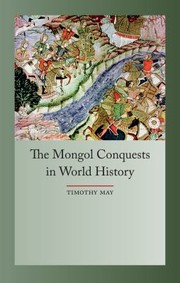
A focused, intermediate-level academic survey that systematically examines the military machine, administrative structures, and long-term consequences of Mongol rule across all regions. It bridges narrative history and analytical scholarship.
Deep Dives: Regional Impacts and Specialist Perspectives
ExpertAchieve a nuanced, multi-regional understanding of how the Mongol Empire transformed specific civilizations — Persia, the Islamic world, Russia — and engage with ongoing scholarly debates about legacy and destruction.
▸ Study plan for this stage
Pace: 10–13 weeks total: ~5–6 weeks on "The Mongols and the Islamic World" (dense academic text, ~30–35 pages/day with note-taking pauses) and ~4–5 weeks on "The Black Death" (~25–30 pages/day, supplemented by cross-referencing Jackson's epidemiological asides). Reserve the final 1–2 weeks for synthesis,
- The Mongol conquests as a civilizational rupture vs. continuity debate — Jackson's central tension between destruction and accommodation in the Islamic world
- Dhimmitude, conversion, and religious pluralism under Mongol rule: how the Il-Khanate negotiated Islam, Christianity, and Buddhism
- The administrative and cultural absorption of Persian bureaucratic traditions into Mongol governance (Persianization of the Mongol court)
- The role of the Silk Road network in transmitting not only goods but pathogens — the ecological preconditions Armstrong identifies for the Black Death's emergence from Central Asia
- Yersinia pestis and the epidemiology of the Black Death: Armstrong's account of how the plague spread from the Mongol steppe corridor westward into Europe and the Islamic world
- Scholarly debate on demographic collapse: reconciling Jackson's estimates of population loss in Persia and Mesopotamia with Armstrong's mortality figures in Europe
- The concept of the 'Pax Mongolica' and its double-edged legacy — enabling trade and cultural exchange while simultaneously creating the biological highway for pandemic disease
- Memory, trauma, and historiography: how Islamic chroniclers (e.g., Ibn al-Athir, Rashid al-Din) and European sources shaped — and distorted — our understanding of Mongol destruction
- According to Jackson, in what ways did Mongol rule over the Islamic world represent transformation rather than simple destruction, and which regions or institutions proved most resilient?
- How does Armstrong trace the geographic and chronological path of the Black Death back to the Mongol Empire's trade and military networks, and what ecological factors made the mid-14th century particularly catastrophic?
- What tensions exist between Jackson's nuanced scholarly reassessment of Mongol-Islamic relations and the near-apocalyptic accounts left by contemporary Muslim chroniclers — and how should a historian weigh these sources?
- How do the two books together reframe the 'Pax Mongolica': is it more accurately understood as an era of prosperity, a vector of catastrophe, or both simultaneously?
- What does Armstrong's analysis of the Black Death's social and religious aftermath in Europe suggest about how societies reconstruct identity following civilizational trauma — and how does this compare to the Islamic world's recovery as described by Jackson?
- Where do Jackson and Armstrong's arguments most productively intersect, and where do their disciplinary perspectives (Islamic history vs. epidemiological/social history) create blind spots or gaps?
- Annotated timeline: Build a dual-track chronological chart (1206–1400) — one track for Mongol political events drawn from Jackson, one for plague emergence and spread drawn from Armstrong. Annotate where the two tracks causally intersect.
- Source analysis exercise: Locate and read one primary source excerpt cited by Jackson (e.g., Ibn al-Athir's lament on the Mongol invasion) and one cited or discussed by Armstrong (e.g., a European chronicle of the Black Death). Write a 1–2 page comparison of how each author's voice reflects their cultural position and the limits of their perspective.
- Debate position paper: Write a structured 800–1,000 word argument either defending or challenging the proposition: 'The Mongol Empire's most enduring legacy was not political or cultural, but biological.' Draw evidence from both books.
- Regional impact map: Create an annotated map of Eurasia marking (a) regions of major Mongol conquest and administrative reorganization per Jackson, and (b) the documented spread of the Black Death per Armstrong. Add brief notes on each region's specific experience.
- Comparative mortality analysis: Using figures and estimates from both books, construct a simple table comparing population loss estimates across Persia/Mesopotamia (Jackson) and Western Europe (Armstrong). Reflect in a short paragraph on the methodological challenges both authors face in making such estimates.
- Synthesis essay: Write a 1,200–1,500 word essay answering: 'How did the Mongol Empire simultaneously build and destroy the world it conquered?' Use Jackson as your primary lens for the Islamic world and Armstrong as your lens for the biological consequences, weaving both into a unified argument.
Next up: By mastering the regional depth and scholarly debate skills developed through Jackson and Armstrong, the reader is now equipped to step back and engage with broader historiographical and comparative frameworks — evaluating the Mongol Empire's place in world history as a whole, including its long-term influence on modernity, state formation, and global connectivity.

A landmark work of rigorous scholarship examining the Mongol impact on the Islamic world from conquest through conversion. Jackson challenges popular myths and forces the reader to think critically about sources — essential for advanced understanding.

Examines how the Mongol trade and military networks inadvertently carried the plague across Eurasia — the darkest long-term consequence of Mongol connectivity, and a powerful capstone on the empire's world-transforming legacy.
Discussion
Keep reading
Paths that share books, cover the same subject, or open a related topic.