Best Books on the History of Cambodia, in Order
This curriculum traces Cambodian history from the grandeur of the Khmer Empire through French colonialism, the catastrophic Khmer Rouge genocide, and the long road to recovery. Starting at an intermediate level, each stage builds conceptual and contextual depth, moving from accessible narrative overviews to scholarly analysis and survivor testimony, ensuring the reader develops both emotional understanding and rigorous historical knowledge.
Foundations: The Arc of Cambodian History
IntermediateGain a confident chronological overview of Cambodian history — from Angkor to the modern era — so that later, deeper works have a clear framework to attach to.
▸ Study plan for this stage
Pace: 4–5 weeks, ~40–50 pages/day (approximately 200–250 pages/week). Chandler's *A History of Cambodia* is densely written with substantial historical detail; this pace allows time for re-reading sections and note-taking without rushing through critical periods.
- The Angkor period (9th–15th centuries) as Cambodia's apex: its hydraulic engineering, temple architecture, and administrative systems that shaped Cambodian identity and culture
- The post-Angkor decline and fragmentation (15th–18th centuries): territorial loss to Siam and Vietnam, the shift of power centers, and the emergence of Phnom Penh
- French colonialism (1863–1953) and its transformation of Cambodian governance, economy, and society—including the creation of modern administrative structures
- The Sihanouk era (1941–1970) and Cambodia's attempt at independence and neutrality during the Cold War, including the Sangkum Reastr Niyum movement
- The Khmer Rouge period (1975–1979) as a catastrophic rupture in Cambodian history: its origins, ideology, and devastating impact on the nation
- Vietnamese occupation and the transition to the 1991 Paris Peace Accords: how Cambodia moved from civil war toward reconstruction
- The role of geography, regional powers (Siam/Thailand, Vietnam, France, China), and external intervention in shaping Cambodia's trajectory
- How Chandler frames causation: the interplay of internal political factions, economic structures, and external pressure in driving historical change
- What were the key achievements and limitations of the Angkor Empire, and why did it decline?
- How did Cambodia's geography and position between Siam and Vietnam shape its vulnerability and political choices from the 15th century onward?
- What were the major consequences of French colonialism for Cambodia's administration, economy, and society?
- How did Sihanouk's neutrality policy work during the Cold War, and what internal and external pressures led to its collapse?
- What were the ideological and social origins of the Khmer Rouge, and how did they come to power?
- How does Chandler explain the transition from the Khmer Rouge period through Vietnamese occupation to the 1991 Paris Peace Accords?
- Create a detailed chronological timeline of Cambodia from the 9th century to 1991, marking major political transitions, territorial changes, and external interventions. Update it as you read each section.
- Map Cambodia's territorial boundaries at three key moments: the height of Angkor, the 18th century, and the present day. Annotate how Siam and Vietnam's expansion affected Cambodian territory.
- Write a 2–3 page synthesis essay on one major period (e.g., Angkor, French colonialism, the Sihanouk era, or the Khmer Rouge) using Chandler's evidence. Focus on cause and effect.
- Create a 'key figures' reference sheet for major political and military leaders Chandler discusses (e.g., Jayavarman VII, Sihanouk, Pol Pot, Hun Sen). Note their era, main policies, and historical significance.
- Identify and list 3–4 turning points in Cambodian history according to Chandler. For each, explain what changed and why—what internal and external factors converged?
- Compare two contrasting periods (e.g., Angkor vs. post-Angkor, or Sihanouk era vs. Khmer Rouge) in a short comparative outline. What structural or ideological differences does Chandler highlight?
Next up: By establishing a clear chronological framework and understanding how external powers and internal factions repeatedly shaped Cambodia's fate, you will be prepared to dive into specialized, thematic studies—whether on Angkor's civilization, the French colonial period, or the Khmer Rouge—with a solid sense of where each episode fits in the larger arc.
The single most authoritative and readable one-volume survey of Cambodian history by the field's leading Western scholar. Read this first to build the full chronological skeleton — Angkor, colonialism, independence, and the Khmer Rouge — that every subsequent book will flesh out.
Angkor and the Khmer Empire
IntermediateUnderstand the rise, splendor, and decline of the Khmer Empire — its religion, hydraulic engineering, art, and why its legacy still shapes Cambodian identity today.
▸ Study plan for this stage
Pace: 6–8 weeks, ~25–30 pages/day (approximately 150–180 pages/week). Start with Coe's overview (2–3 weeks), then move to Higham's deeper analysis (3–4 weeks), with 1 week for review and synthesis.
- The Khmer Empire's chronological arc: early kingdoms (Funan, Chenla), Angkor's rise under Jayavarman II, peak under Suryavarman II and Jayavarman VII, and gradual decline by the 15th century
- Angkor's revolutionary hydraulic engineering system: barays (reservoirs), canals, and water management that sustained a population of 750,000–1 million and enabled agricultural surplus
- Religious syncretism and state ideology: the evolution from Hindu (Shaivism, Vaishnavism) to Mahayana Buddhism, and how rulers legitimized power through temple construction and divine kingship
- Angkor Wat as the architectural and spiritual apex: its design as a microcosm of the universe, function as both temple and mausoleum, and its transition from Hindu to Buddhist use
- Khmer artistic and sculptural traditions: the development of Khmer style in stone carving, bas-reliefs, and the integration of Indian and Southeast Asian aesthetics
- The causes of Angkor's decline: environmental degradation, hydraulic system breakdown, Theravada Buddhism's rise, and pressure from neighboring Thai and Vietnamese kingdoms
- Angkor's rediscovery and modern legacy: how colonial and post-colonial scholarship reconstructed Khmer history, and why Angkor remains central to Cambodian national identity and pride
- What were the major phases of Khmer political development from Funan through the fall of Angkor, and which rulers were most significant in shaping the empire?
- How did the Khmer hydraulic system work, and why was it essential to Angkor's prosperity and population size?
- How did Khmer rulers use religion and temple construction to legitimize their power, and how did the religious landscape shift from Hinduism to Buddhism?
- What makes Angkor Wat architecturally and symbolically unique, and how does its design reflect Khmer cosmology?
- What were the primary causes of Angkor's decline, and how did environmental and political factors interact?
- Why is Angkor so central to modern Cambodian identity, and how has scholarship on the Khmer Empire evolved since colonial times?
- Create a detailed timeline of Khmer rulers and dynasties from Funan to the fall of Angkor, noting major achievements and religious affiliations for each period.
- Sketch or annotate a diagram of Angkor's hydraulic system (barays, canals, water flow) based on Higham's descriptions, explaining how water was captured, stored, and distributed.
- Compare Angkor Wat's architectural layout to the cosmological model described in both books; write a 2–3 page analysis of how the temple embodies Khmer religious beliefs.
- Analyze 3–4 bas-relief descriptions or photographs from Angkor Wat or other temples; identify Hindu and Buddhist iconography and explain what each reveals about the temple's purpose and the era in which it was created.
- Write a comparative essay on why Angkor declined: synthesize Coe's and Higham's explanations of environmental, political, and religious factors, and assess which were most decisive.
- Create a visual presentation (poster, infographic, or digital slides) showing how Angkor's legacy appears in modern Cambodia—through national symbols, tourism, archaeology, and cultural memory—based on the books' discussion of rediscovery and modern significance.
Next up: This stage provides the historical, architectural, and cultural foundations of the Khmer Empire at its height, preparing you to explore how Cambodian civilization adapted, fragmented, and transformed through the post-Angkor period, colonial era, and modern nation-building.
A richly illustrated, authoritative introduction to Angkor's archaeology, art, and society by a leading archaeologist. Start here to build vivid, concrete knowledge of the empire before tackling more interpretive scholarship.
Higham synthesizes decades of archaeological research to explain how Angkor was built and sustained. Reading it after Coe deepens understanding of the economic and environmental systems underlying the empire's greatness and eventual collapse.
French Rule and the Road to Independence
IntermediateUnderstand how French colonialism reshaped Cambodian society, politics, and identity, and how those distortions set the stage for the catastrophes of the 1970s.
▸ Study plan for this stage
Pace: 8–10 weeks, ~25–30 pages/day (approximately 4–5 hours/week of focused reading)
- The mechanisms of French colonial control: protectorate structures, administrative hierarchies, and the erosion of Cambodian sovereignty
- Economic exploitation under French rule: rubber plantations, taxation systems, and the extraction of resources that enriched France while impoverishing Cambodia
- The transformation of Cambodian identity: French education, cultural suppression of Buddhism and traditional institutions, and the creation of a French-educated elite disconnected from rural Cambodia
- Sihanouk's rise to power and his complex relationship with France: balancing nationalism, royal authority, and Cold War pressures
- The emergence of nationalist and communist movements: how French repression and colonial inequality created the conditions for radical ideologies to take root
- The unraveling of French authority: the Indochina War, the Geneva Accords of 1954, and Cambodia's formal independence
- The post-independence crisis: how colonial legacies—institutional weakness, economic dependence, social fracture—left Cambodia vulnerable to the conflicts of the 1970s
- How did the French protectorate system differ from direct colonial rule, and what were its practical effects on Cambodian governance and autonomy?
- What role did the French colonial economy (particularly rubber plantations and taxation) play in creating social grievances that later fueled radical movements?
- How did French education and cultural policies reshape Cambodian elite identity, and what tensions did this create between the educated classes and traditional society?
- What were the key turning points in Sihanouk's early political career, and how did his relationship with France evolve from his coronation through independence?
- How did French colonial repression of nationalist and communist movements paradoxically strengthen those movements and prepare the ground for the Khmer Rouge?
- What were the major weaknesses in Cambodia's political and economic institutions at independence, and how did these colonial legacies make the country vulnerable to the crises of the 1960s–1970s?
- Create a timeline of French colonial rule in Cambodia (1863–1954), marking key administrative reforms, economic policies, and nationalist uprisings; annotate each with its social or political consequences.
- Map the French colonial administrative structure: draw a diagram showing how power flowed from Paris through Phnom Penh to the provinces, and identify where Cambodian agency was preserved or eliminated.
- Analyze the rubber plantation system: research and write a 2–3 page essay on how French plantation economics created a landless peasantry and why this mattered for later radicalization.
- Profile Sihanouk's early political moves (1941–1954): create a detailed chronology of his decisions regarding France, nationalism, and independence, noting where he compromised and where he asserted authority.
- Compare French colonial education in Cambodia to traditional Cambodian learning: list the subjects, languages, and values emphasized in each, and discuss how this created cultural fracture.
- Debate exercise: argue both sides—'French colonialism modernized Cambodia' vs. 'French colonialism destabilized Cambodia'—using specific evidence from Osborne's books to support each position.
Next up: This stage establishes how colonial exploitation and institutional weakness left Cambodia fractured and dependent, setting up the reader to understand why Sihanouk's post-independence balancing act failed and how the power vacuums and ideological ferment of the 1960s–1970s led inexorably toward civil war and the Khmer Rouge takeover.
The foundational scholarly study of early French colonial rule in Cambodia and southern Vietnam. It establishes the political and administrative structures that France imposed — essential context for understanding why post-independence Cambodia was so fragile.
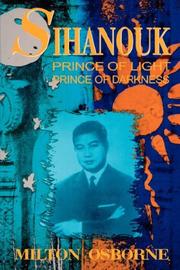
Focuses on the pivotal figure who navigated independence and then presided over Cambodia's slide toward catastrophe. Reading it here bridges the colonial era and the Khmer Rouge period, showing how personal and political failures intertwined.
The Khmer Rouge and the Genocide
ExpertAchieve a deep, multi-dimensional understanding of how the Khmer Rouge came to power, how the genocide unfolded, and what it meant for those who lived through it — through both scholarly analysis and survivor testimony.
▸ Study plan for this stage
Pace: 8–10 weeks, ~40–50 pages/day. Week 1–2: "Brother Enemy" (400 pp); Week 3–4: "The Pol Pot Regime" (480 pp); Week 5–6: "When the War Was Over" (400 pp); Week 7–8: "First They Killed My Father" (330 pp); Week 9–10: Review, synthesis, and exercises.
- The geopolitical context of Cambodia's Cold War entanglement (Vietnam, China, US involvement) and how regional tensions enabled the Khmer Rouge's rise, as detailed in Chanda's 'Brother Enemy'
- The Khmer Rouge's radical ideology: agrarian utopianism, autarky, and the vision of 'Year Zero,' and how Pol Pot and the leadership constructed this worldview
- The mechanics of genocide: how the regime systematized killing through labor camps, purges, and targeted elimination of intellectuals, ethnic minorities, and perceived enemies—Kiernan's forensic analysis
- The role of paranoia, internal purges, and the regime's self-destructive logic that accelerated violence even as it weakened the state
- Survivor testimony as historical evidence: how personal narratives (Ung's memoir) illuminate the human experience of genocide and challenge abstract analysis
- The distinction between perpetrators, collaborators, bystanders, and victims—and the moral complexity of survival under totalitarian terror
- The international response (or lack thereof) and how the genocide was initially denied or minimized by the global community
- Memory, trauma, and reconstruction: how survivors process and testify to atrocity, and what this reveals about resilience and the long-term psychological costs of genocide
- How did the Vietnam War and Cold War geopolitics (particularly US bombing and Vietnamese invasion) directly contribute to the Khmer Rouge's rise to power, according to Chanda and Kiernan?
- What were the core ideological tenets of the Khmer Rouge regime, and how did the concept of 'Year Zero' shape their policies on urbanization, intellectuals, and social hierarchy?
- Describe the mechanisms by which the Khmer Rouge carried out genocide: What were the primary killing sites, labor camps, and target groups, and how did the regime's paranoia fuel internal purges?
- How does Loung Ung's personal testimony in 'First They Killed My Father' illustrate or complicate the broader historical narrative presented in the scholarly works?
- What role did the international community play in either enabling, ignoring, or responding to the genocide during and immediately after the regime's rule?
- How do the four books collectively demonstrate the relationship between ideology, state power, and individual survival—and what does this reveal about the nature of totalitarianism?
- Create a detailed timeline (1965–1979) integrating events from all four books: mark key geopolitical shifts (from Chanda), ideological developments and purges (from Kiernan), journalistic observations (from Becker), and Loung Ung's family's personal milestones. Identify causal connections across sources.
- Write a 2,000-word analytical essay comparing how Chanda and Kiernan explain the Khmer Rouge's rise: What does geopolitical analysis reveal that ideological analysis does not, and vice versa?
- Construct a map of Cambodia marking major labor camps, killing fields, and zones mentioned in Kiernan and Ung's accounts. Annotate with statistics on mortality rates and target populations for each location.
- Conduct a close reading exercise: Select one chapter from Becker's 'When the War Was Over' and one passage from Ung's memoir describing the same period or event. Write a 1,500-word comparative analysis of how journalistic and personal testimony differ in tone, detail, and what they reveal about the genocide.
- Create character/perpetrator profiles of 3–4 key Khmer Rouge leaders (Pol Pot, Duch, Ta Mok, etc.) based on Kiernan's analysis. For each, note their ideological commitments, role in the purges, and what their actions reveal about the regime's internal logic.
- Develop a 'survivor's guide' worksheet: Based on Ung's account, identify the survival strategies she and her family employed (hiding identity, forming alliances, adapting to labor demands). Reflect on the psychological and moral costs of each strategy.
Next up: This stage establishes the historical, ideological, and human dimensions of the Khmer Rouge genocide, preparing you to examine Cambodia's post-1979 recovery: reconstruction of institutions, transitional justice, and how societies rebuild after mass atrocity.

Provides the essential geopolitical context — the Cold War, Vietnam, China — that enabled the Khmer Rouge to seize and hold power. Read this first in the stage to understand the international forces that shaped the genocide.
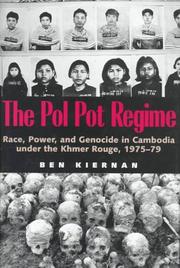
The definitive scholarly account of Khmer Rouge ideology, organization, and the mechanics of mass killing. Kiernan's meticulous research makes this the indispensable analytical core of any serious study of the genocide.

A journalist who was present in Cambodia combines eyewitness reporting with deep historical research. It humanizes and contextualizes Kiernan's analysis, bridging the gap between scholarship and lived experience.
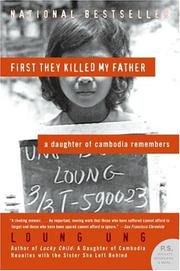
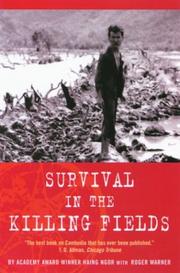
A searing memoir of survival under the Khmer Rouge told from a child's perspective. After the structural and political accounts, this book delivers the irreplaceable moral weight of individual testimony, making the statistics human.
Reckoning and Recovery
ExpertUnderstand how Cambodia has grappled with trauma, transitional justice, and reconstruction — and what the country's ongoing struggles reveal about the long aftermath of genocide.
▸ Study plan for this stage
Pace: 4–5 weeks, ~40–50 pages/day, with 2–3 days per week for reflection and note-taking
- The intergenerational trauma of the Khmer Rouge genocide and its psychological, social, and institutional legacies
- Cambodia's struggle with transitional justice: the delayed establishment and limitations of the Khmer Rouge Tribunal
- Corruption, weak governance, and institutional dysfunction as obstacles to genuine reconstruction and accountability
- The role of Hun Sen's authoritarian regime in shaping post-genocide politics and preventing full reckoning
- Economic inequality, land disputes, and social fragmentation as consequences of incomplete reconciliation
- The tension between moving forward and confronting the past: why Cambodia has struggled to achieve both simultaneously
- International involvement (UN, donors, NGOs) and its mixed results in supporting justice and recovery
- Personal and collective narratives of survival, memory, and the difficulty of healing in a society that has not fully reckoned with its crimes
- What does Brinkley argue are the primary obstacles preventing Cambodia from achieving genuine transitional justice and accountability for Khmer Rouge crimes?
- How has Hun Sen's political dominance shaped Cambodia's approach to reckoning with its genocidal past, and what are the consequences for national healing?
- What is the relationship between institutional corruption and Cambodia's inability to move beyond the trauma of the genocide?
- How does Brinkley characterize the role of the international community in Cambodia's post-genocide reconstruction, and what are the limitations he identifies?
- What evidence does Brinkley present about intergenerational trauma in Cambodia, and how does it manifest in contemporary Cambodian society?
- Why does Brinkley suggest that Cambodia remains 'cursed' despite decades of peace, and what would genuine recovery require?
- Create a timeline of Cambodia's major post-genocide political events and transitional justice milestones (1979–present), annotating Brinkley's key claims about each period
- Develop a detailed outline of Brinkley's argument about Hun Sen's role in blocking accountability; identify specific examples and their consequences
- Write a 2–3 page analytical essay: 'Why has Cambodia struggled to achieve both justice and recovery simultaneously?' using Brinkley's evidence
- Conduct a comparative analysis: select one other post-genocide society (Rwanda, Bosnia, or East Timor) and compare its transitional justice approach to Cambodia's; note what Cambodia could learn
- Create an annotated map or visual diagram showing the geographic, economic, and social divisions Brinkley describes as legacies of incomplete reckoning
- Interview or research one Cambodian survivor's or activist's account of trauma and recovery (primary source); write a reflection on how it complicates or confirms Brinkley's analysis
Next up: This stage establishes the deep structural and psychological wounds of Cambodia's genocide and the political failures that have prevented healing, preparing you to examine either specific policy solutions for transitional justice, the role of civil society and grassroots movements in pushing for change, or comparative frameworks for understanding post-conflict societies.
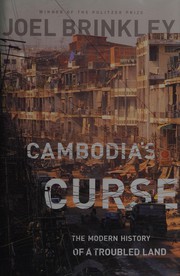
A Pulitzer Prize-winning journalist examines why Cambodia's recovery has been so painfully slow — corruption, impunity, and the unhealed wounds of the past. It is the ideal bridge between the genocide stage and questions of justice and modernity.
Discussion
Keep reading
Paths that share books, cover the same subject, or open a related topic.