Best Books on the Khmer Rouge and the Cambodian Genocide
This curriculum moves from essential narrative foundations through deep historical and ideological analysis, survivor testimony, and finally the long aftermath of justice and memory. Starting at an intermediate level, each stage builds the political, historical, and human context needed to fully absorb the next, culminating in a sophisticated understanding of how the Khmer Rouge rose, ruled, killed, and was eventually reckoned with.
Foundations: The Story You Must Know First
IntermediateGain a clear, narrative-driven understanding of the Khmer Rouge's rise, the Year Zero ideology, and the scale of the genocide — building the essential factual and emotional foundation for everything that follows.
▸ Study plan for this stage
Pace: 8–10 weeks, approximately 40–50 pages per day. Allocate 3 weeks to "First They Killed My Father" (~300 pages), 3 weeks to "Survival in the Killing Fields" (~350 pages), and 2–3 weeks to "Cambodia's Curse" (~400 pages), with 1 week for review and reflection.
- The Khmer Rouge's ideological foundation: Year Zero, agrarian utopianism, and the vision of a purified Cambodian nation
- The personal and family-level experience of displacement, forced labor, and survival during the regime (through Loung Ung's and Haing Ngor's testimonies)
- The mechanics of genocide: how ordinary people became perpetrators, how the regime systematically eliminated perceived enemies, and the role of fear and indoctrination
- The scale and scope of the killing: approximately 1.7–2 million deaths and the targeting of intellectuals, ethnic minorities, and the urban population
- Cambodia's pre-Khmer Rouge history and the geopolitical context (civil war, American bombing, Vietnamese influence) that enabled the regime's rise
- The psychological and emotional toll of trauma, loss, and survival—how individuals and families endured and coped
- The aftermath and legacy: how Cambodia struggled to rebuild and the long-term consequences of the genocide on survivors and the nation
- What was 'Year Zero' and what utopian vision did the Khmer Rouge use to justify their radical transformation of Cambodia?
- How did Loung Ung's family experience the forced evacuation of Phnom Penh, and what does her account reveal about the regime's targeting of urban, educated, and ethnic Vietnamese populations?
- What survival strategies did Haing Ngor employ in the labor camps, and how does his testimony illustrate the psychological mechanisms people used to endure genocide?
- What were the key historical and geopolitical factors (civil war, American bombing, Vietnamese involvement) that Joel Brinkley identifies as contributing to the Khmer Rouge's rise to power?
- How many people died during the Khmer Rouge regime, who were the primary targets, and what does this scale reveal about the regime's ideological goals?
- How do the three books together—personal memoir, survivor testimony, and historical analysis—create a complete picture of the Khmer Rouge that combines emotional understanding with factual and contextual knowledge?
- Create a detailed timeline of key events from 1970–1979, marking major milestones from each book (e.g., the coup, the fall of Phnom Penh, the establishment of labor camps, the Vietnamese invasion). Note where Loung Ung's and Haing Ngor's personal experiences intersect with the broader historical events Brinkley describes.
- Write a 2–3 page comparative character study of Loung Ung and Haing Ngor as survivors: What were their different roles in society before the regime? How did their pre-genocide identities shape their survival strategies? What does this reveal about who was targeted and why?
- Map the geography of displacement: Track Loung Ung's family's journey from Phnom Penh through various labor camps using details from her memoir. Cross-reference with Brinkley's description of the regime's administrative structure to understand how the Khmer Rouge organized territory and labor.
- Analyze the Khmer Rouge's ideology: Collect 4–5 quotes or anecdotes from the three books that illustrate Year Zero thinking, the hatred of intellectuals and urbanites, or the vision of agrarian purity. Write a 1–2 page essay explaining how this ideology justified mass killing.
- Create a 'voices of the regime' analysis: Identify moments in the books where perpetrators, cadres, or indoctrinated soldiers speak or act. What do these moments reveal about how ordinary people became killers? How does understanding perpetrator psychology complicate the moral picture?
- Conduct a source comparison exercise: For a single major event (e.g., the evacuation of Phnom Penh), compare how Loung Ung describes it personally, how Haing Ngor's experience relates to it, and how Brinkley contextualizes it historically. Write a synthesis paragraph showing how all three perspectives are necessary for full understanding.
Next up: This stage establishes the emotional, factual, and historical bedrock—you now understand *what happened* and *why it mattered*—preparing you to move into deeper analysis of the regime's structure, the international response, and the long-term consequences for Cambodia and survivors.
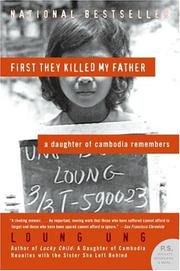
A visceral, ground-level memoir of surviving the Khmer Rouge as a child soldier's sister. Reading this first anchors the human reality of the regime before engaging with history and politics.
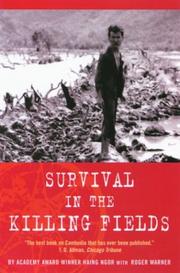
The definitive survivor memoir by the Oscar-winning actor, covering the full arc from the fall of Phnom Penh through the labor camps. It provides the broadest personal panorama of the genocide and pairs powerfully with Ung's account.
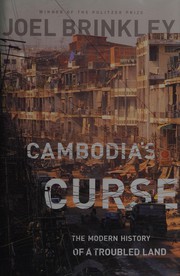
A Pulitzer Prize-winning journalist's accessible overview of Cambodia's modern history and the long shadow the Khmer Rouge cast on the country. Bridges the survivor accounts to the deeper historical analysis ahead.
The Rise of Pol Pot: History and Ideology
IntermediateUnderstand how the Khmer Rouge came to power — the Cold War context, Cambodian politics, French colonialism, and the radical Maoist ideology that produced Year Zero.
▸ Study plan for this stage
Pace: 8–10 weeks, ~40–50 pages/day (approximately 3–4 hours of focused reading per week)
- Pol Pot's early life, education in France, and intellectual formation under French communist influence and Maoist ideology
- The Indochina War and French colonial collapse as the geopolitical backdrop for Cambodian communist movements
- The factional struggles within the Cambodian Communist Party and how Pol Pot consolidated power through purges and ideological control
- The concept of 'Year Zero' and radical agrarian utopianism as a Maoist interpretation adapted to Cambodian conditions
- The Cold War context: how US bombing campaigns, Vietnamese communist expansion, and Sihanouk's neutrality destabilized Cambodia
- The relationship between Pol Pot and other key figures (Nuon Chea, Ieng Sary, Ta Mok) and their roles in building the movement
- How Duch (Kaing Guek Eav) and other cadres were recruited, indoctrinated, and became instruments of the regime's ideology
- The distinction between the Khmer Rouge's public nationalist narrative and its secret communist ideology during the civil war (1970–1975)
- How did Pol Pot's time in France shape his ideological worldview, and how did he adapt Marxism-Leninism and Maoism to the Cambodian context?
- What role did French colonialism and the Indochina War play in creating the conditions for communist movements to gain traction in Cambodia?
- How did Pol Pot use purges and ideological discipline to consolidate control over the Cambodian Communist Party, and who were his main rivals?
- What was 'Year Zero' and how did it reflect both Maoist revolutionary theory and Pol Pot's vision of a radically transformed Cambodian society?
- How did the US bombing campaign and Vietnamese communist activities during the 1960s–70s influence the Khmer Rouge's rise to power?
- What was Duch's trajectory from recruitment to becoming a key enforcer of the regime, and what does his story reveal about how the Khmer Rouge indoctrinated cadres?
- Create a detailed timeline of Pol Pot's life from birth to 1975, marking key events (education, party membership, purges, military victories) and cross-reference with major Cold War and Cambodian political events
- Write a 2–3 page character analysis of Pol Pot based on Chandler's biography, focusing on how his personality, paranoia, and ideological rigidity shaped his leadership style
- Map the factional conflicts within the Cambodian Communist Party (Pol Pot's faction vs. rivals) using evidence from both books; identify which cadres sided with whom and why
- Analyze the concept of 'Year Zero' by comparing Pol Pot's stated ideology with Maoist theory; write a 1–2 page essay on how he adapted Maoism to Cambodia's agrarian context
- Create a visual diagram showing the relationships between key figures (Pol Pot, Nuon Chea, Ieng Sary, Ta Mok, Duch, Sihanouk, Vietnamese communists) and their interactions during 1960–1975
- Read key excerpts from Duch's interrogation records or confessions (referenced in Dunlop's book) and write a reflection on how ideology and coercion combined to radicalize cadres like him
Next up: This stage establishes the ideological foundations, key personalities, and geopolitical circumstances that enabled the Khmer Rouge to seize power, preparing you to examine the regime's implementation of its radical vision and the catastrophic human consequences during the 1975–1979 period.

The authoritative biography of Pol Pot by the leading Western scholar of Cambodia. Read this first in the stage to understand the man at the center before examining the broader movement.
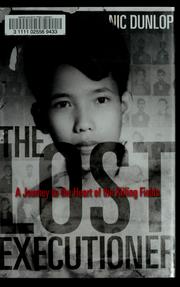
Follows journalist Nic Dunlop's discovery of Comrade Duch, the commandant of Tuol Sleng prison, weaving biography with the ideology of the cadres who carried out the killing. Deepens understanding of how ordinary people became perpetrators.
The Killing Fields: Deep Historical Analysis
IntermediateEngage with the most rigorous scholarly and journalistic accounts of the genocide itself — its mechanics, scale, and the international community's failure to intervene.
▸ Study plan for this stage
Pace: 8–10 weeks, ~40–50 pages/day (accounting for dense historical analysis and note-taking)
- The U.S. bombing campaign in Cambodia (1969–1973) and its destabilization of Khmer society, as detailed in Shawcross's investigation of Operation Menu
- The mechanics of the Khmer Rouge's rise to power: how external pressures and internal grievances created conditions for revolutionary takeover
- The systematic nature of the genocide: targeted elimination of intellectuals, ethnic minorities, and perceived enemies of the state
- The role of Pol Pot and the inner circle in orchestrating mass violence and the cult of personality that enabled it
- International complicity and silence: why the U.S., China, and other powers failed to intervene or acknowledge the atrocities in real time
- Firsthand testimony and journalistic investigation as historical evidence: how Becker's interviews and Shawcross's archival work reconstruct events
- The distinction between intentional genocide and the consequences of ideological purism: debates about whether the KR deliberately targeted groups or killed through radical social engineering
- What was Operation Menu, and what does Shawcross argue about its role in destabilizing Cambodia and radicalizing the population?
- How did the Khmer Rouge consolidate power between 1970 and 1975, and what external and internal factors enabled their victory?
- What were the primary targets of the Khmer Rouge's purges during the genocide, and how did the regime identify and eliminate them?
- What evidence does Becker present from survivor interviews about the daily mechanics of killing and control in the labor camps?
- Why did the international community, particularly the United States, fail to intervene or publicly acknowledge the genocide while it was occurring?
- How do Shawcross and Becker differ in their emphasis on causation—does one focus more on external factors (bombing, geopolitics) and the other on internal ideology?
- Create a detailed timeline of Cambodia 1969–1979 using both books, marking key events: bombing campaign, Sihanouk's ouster, KR takeover, and major purges. Annotate with casualty figures and policy shifts.
- Read Shawcross's chapters on Operation Menu alongside declassified U.S. government documents (available online) and write a 2–3 page analysis of how his interpretation aligns with or challenges official records.
- Select 3–4 survivor testimonies from Becker's book and create a detailed case study of each person: their background, how they survived or were killed, and what their experience reveals about KR methods.
- Construct a map of the Khmer Rouge's administrative structure and purge targets (intellectuals, ethnic Vietnamese, Cham Muslims, etc.) based on evidence from both books; annotate with specific examples.
- Write a comparative essay (4–5 pages) on how Shawcross emphasizes geopolitical causation while Becker emphasizes survivor experience—which framework better explains the genocide?
- Research and summarize the international response to the genocide in real time (1975–1979): compile statements from the U.S., UN, China, and other powers, then compare with what Shawcross and Becker reveal about the actual scale of atrocities.
Next up: This stage equips you with a rigorous, evidence-based understanding of the genocide's causes, mechanics, and international context—preparing you to examine the aftermath: survivor trauma, memory, justice, and how Cambodia rebuilt itself after 1979.
The essential account of how U.S. bombing and Cold War policy destabilized Cambodia and created the conditions for the Khmer Rouge's rise. Must be read to understand the international dimension of the catastrophe.
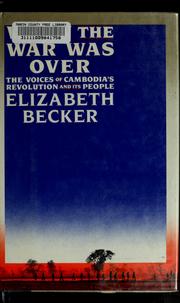
One of the only Western journalists to visit Democratic Kampuchea, Becker's account is the most comprehensive single-volume history of the Khmer Rouge era. It synthesizes politics, ideology, and atrocity with unmatched authority.
Discussion
Keep reading
Paths that share books, cover the same subject, or open a related topic.