The Khmer Empire and Angkor: books to read, in order
Between roughly 800 and 1400 the Khmer built the largest pre-industrial urban complex on earth, a hydraulic city of reservoirs, canals and temple-mountains ruled by kings who were successively Hindu and Buddhist. This path starts with two archaeological syntheses and a national history, spends a stage in front of the buildings themselves, then turns to kingship, ritual and the single foreign eyewitness account that survives, and ends with the regional archaeology and the drought-and-collapse debate over why Angkor was abandoned. It is about the empire, not about modern Cambodia.
The Civilization
BeginnerEstablish the basic chronology from Funan and Chenla through Jayavarman II's consecration to the fifteenth-century abandonment, and understand what an archaeologist means by calling Angkor a hydraulic city.
▸ Study plan for this stage
Pace: 3 weeks for about 720 pages, two of them heavily illustrated. Higham's The Civilization of Angkor (192pp) is the framework and takes a week read slowly with the maps. Coe's Angkor and the Khmer Civilization (240pp) in a week. Chandler's A History of Cambodia (288pp) covers the country to the present
- The chronology to fix: Funan and Chenla as the pre-Angkorian polities, Jayavarman II's consecration on the Kulen hills around 802 as the conventional founding, the great building reigns of Suryavarman II and Jayavarman VII in the twelfth and early thirteenth centuries, and the fifteenth-century aban
- 'Hydraulic city' is a technical claim, not a metaphor. The barays, canals, moats and embankments are the largest works at Angkor, and whether they were primarily for irrigation, for cosmology or for flood management has been argued for seventy years.
- Higham writes as an archaeologist and builds from excavation upward — settlement, subsistence, material remains — where most popular accounts start with the temples.
- Coe covers the same ground with more art, inscription and religion, and the revised edition with Damian Evans carries the airborne lidar survey results that transformed the field by revealing an enormous low-density urban landscape around the stone monuments.
- Lidar is the reason recent scholarship differs from anything published before roughly 2013. The city turned out to be far larger and far more dispersed than the monument-centred picture allowed.
- Inscriptions in Sanskrit and Old Khmer are the only textual sources produced by the Khmer themselves, and they are almost entirely religious foundation records — donations, slaves, endowments. There is no Khmer chronicle of the empire.
- Chandler's early chapters place Angkor inside a longer Cambodian story and explain what the empire's memory has been made to mean since. That is a different question from what the empire was, and the path keeps the two apart.
- Date the empire's founding and its abandonment, and name three reigns in between with what each is known for.
- What does an archaeologist mean by calling Angkor a hydraulic city, and what evidence supports it?
- What did the lidar surveys reveal that ground survey had not, and what did that do to earlier population estimates?
- What kind of information does a Khmer foundation inscription contain, and what does its absence of narrative history mean for what can be known?
- Where do Higham and Coe emphasise different evidence for the same period?
- Draw the chronology on one page with reigns, major foundations and the two capitals. You will add monuments to it in the next stage, so leave room.
- Take Higham's account of the baray system and Coe's, and write out where each stops short of claiming the reservoirs were primarily for irrigation. The hedging is the state of the evidence.
- Find a lidar image of the Angkor landscape and hold it against a conventional monument map. Write 150 words on what changes in your mental picture of the city.
- Note down the three claims you now hold about Angkor that you would find hardest to source. Carry the list through the path and see which stage answers each.
Next up: You have the framework; now put the buildings into it, because the monuments are both the evidence and the argument.
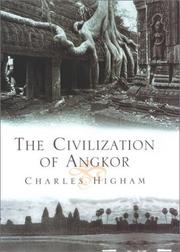
The best short archaeological synthesis of the empire, from its pre-Angkorian roots to its decline, by the leading archaeologist of mainland Southeast Asia. Start here for the framework everything else fits into.
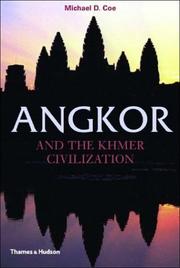
Coe's survey covers the same ground more accessibly and with better coverage of art, inscriptions and religion; the revised edition with Damian Evans adds the airborne-laser survey results that transformed the field. Read second as the illustrated complement to Higham.
The standard national history, whose early chapters place Angkor inside a longer Cambodian story and explain what the empire's memory has meant since. Read it for continuity, and stop worrying about the post-Angkorian chapters until later.
The Monuments Themselves
BeginnerBe able to identify and date the major sites — Angkor Wat, the Bayon and Angkor Thom, Banteay Srei, the Roluos group, Preah Khan — and read a Khmer temple's plan as an argument about cosmology.
▸ Study plan for this stage
Pace: 4 weeks for about 840 pages, most of it plans and photographs. Freeman and Jacques's Ancient Angkor (236pp) is a site guide and works best consulted rather than read — keep it open throughout. Jacques's Angkor: Cities and Temples (319pp) in two weeks. Ortner's photographic volume (286pp) is looking
- The sites to be able to identify and date: the Roluos group (late ninth century), Banteay Srei (967), the Baphuon, Angkor Wat (Suryavarman II, twelfth century), Angkor Thom and the Bayon with Preah Khan and Ta Prohm (Jayavarman VII, around 1200).
- A Khmer temple plan is a cosmological argument: the central tower as Mount Meru, the enclosure walls as mountain ranges, the moat as the ocean, and the causeway as the passage between worlds. Learning to read the plan is the skill this stage exists to build.
- Angkor Wat faces west, which is unusual, and its bas-reliefs run in a direction that has been used to argue it was funerary. That argument is live and you will meet it again in the next stage.
- Jacques was an epigrapher, so his book reads the monuments through their inscriptions and their named builders and donors rather than as objects. This is the strongest single source on who built what and why.
- The Bayon's face-towers and Jayavarman VII's Mahayana Buddhist programme are a break with everything before, and the physical evidence of that break — including the later defacement of Buddha images — is visible on site.
- Restoration history is part of what you are looking at. Anastylosis, the technique of rebuilding from fallen original blocks, has reconstructed much of what a photograph shows, and Ortner's images are of a maintained monument, not a found one.
- Ortner's photographs are the closest available substitute for standing in front of the sites, and there is no reading substitute for scale.
- Given a plan with a moat, three enclosures and a quincunx of towers, what are you looking at and roughly when was it built?
- What is the Meru symbolism of a Khmer temple, and which architectural elements carry it?
- Who commissioned Angkor Wat, who commissioned the Bayon, and what changed religiously between them?
- What does Jacques get from inscriptions that a purely architectural account cannot?
- Why does Angkor Wat's westward orientation matter to the argument about its function?
- Take the plan of Angkor Wat in Freeman and trace the route a visitor walks, naming each element. Then do the same for the Bayon, which is deliberately harder because its plan is confused by later additions.
- Look at the Churning of the Sea of Milk relief in Ortner's photographs and read Jacques on it. Write out what the relief depicts, and then what Jacques says it is doing for Suryavarman II.
- Pick three monuments and, using Jacques, name the ruler, the approximate date and the deity or dedicatee for each. If you cannot do this for three, do it for one properly rather than three vaguely.
- Find a photograph of a monument taken before restoration and the same monument today. Write a short note on how much of what you are looking at is a modern decision.
Next up: You can now read the buildings; next comes the kingship they were built to express, and the one visitor who described the city while it was still working.
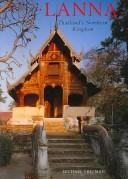
The standard site-by-site guide, with plans, photographs and dates for every major monument. Functions as the reference you keep open while reading everything else on this path.
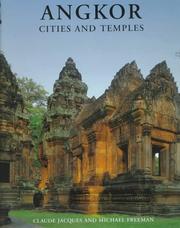
Jacques was an epigrapher, so this reads the monuments through their inscriptions and their builders rather than as objects. The strongest single book on who built what and why.

A large-format photographic survey with essays, and the closest substitute for standing in front of the sites. Published as Angkor: Celestial Temples of the Khmer Empire; Open Library files it under the bare title.
Kingship, Ritual, and the Only Eyewitness
IntermediateUnderstand devaraja kingship, the temple economy that supported it, and the shift from Shaivite and Vaishnavite Hinduism to Jayavarman VII's Mahayana Buddhism — and read the one surviving description of Angkor by a visitor.
▸ Study plan for this stage
Pace: 4 weeks for about 860 pages, but they are very unequal. Zhou Daguan's A Record of Cambodia (150pp in Peter Harris's translation) can be read in two evenings and should then be reread. Mabbett and Chandler's The Khmers (289pp) in ten days. Mannikka's Angkor Wat (416pp) is technical and argumentative
- Zhou Daguan was a Chinese envoy who spent about a year at Angkor from 1296 and wrote the only substantial eyewitness description of the city in operation — markets, houses, slavery, festivals, law, royal processions, women's dress.
- He is a foreigner writing for a Chinese readership with Chinese categories, and some of what he reports is hearsay. Use him as a witness with a standpoint, not as a neutral camera.
- Devaraja is the most-argued term in the field. The inscriptions attest a royal cult but not obviously the god-king of the popular accounts, and Mabbett is careful about the difference between what the inscriptions say and what has been read into them.
- The temple economy is the mechanism of the state: foundations were endowed with land, rice and dependent labour, and the inscriptions that record those endowments are the closest thing to Khmer administrative documents.
- The religious sequence — Shaivite and Vaishnavite Hindu foundations, then Jayavarman VII's Mahayana Buddhism, then a Theravada Buddhist population from around the fourteenth century — is the frame for everything in the last stage about why the building stopped.
- Mannikka reads Angkor Wat's measurements and bas-relief programme as a deliberate calendrical and cosmological scheme, with solar alignments and unit-counts encoding numbers of religious significance.
- Mannikka's thesis is contested, which is why it belongs after the general accounts. Learning to evaluate a numerically-argued claim about intention is the specific skill this stage adds.
- Name five things Zhou Daguan describes that no other source records, and say for each whether he claims to have seen it.
- What do the inscriptions actually attest about the royal cult, and where does the popular 'god-king' formulation go beyond them?
- How did a temple foundation support itself? Describe the endowment mechanism as an economy.
- What is Mannikka's central claim about Angkor Wat, and what would count as evidence against it?
- Zhou Daguan visited nearly a century after the Bayon was built. What does his account suggest about the state of the city in 1296?
- Read Zhou Daguan's description of a royal procession and then look at the corresponding scenes on the Bayon's outer gallery reliefs — the marching troops, the market, the cockfight. Write down what the text and the stone corroborate and where they do not meet.
- Take five of Zhou Daguan's claims and check each against Mabbett. Mark them corroborated, unsupported, or contradicted. This is the whole method of using a single foreign eyewitness.
- Trace one claim across two authors: Mabbett's cautious account of devaraja against the fuller god-king version you will find in popular sources. Find the inscription both are working from and decide what it will bear.
- Take one of Mannikka's numerical arguments — a measurement in Khmer cubits and the significance she assigns it — and write the sceptic's reply in a paragraph. Then say what would settle it.
- Set the section of Zhou Daguan on slavery beside Mabbett on dependent labour in the temple economy, and write 200 words on whether they are describing the same institution.
Next up: With kingship and daily life in place, the last stage widens to the neighbours, the excavation evidence, and the argument about why the whole thing was abandoned.
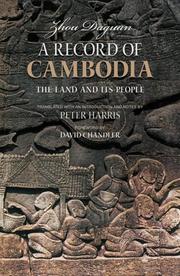
The Chinese envoy's 1296 account of daily life at Angkor is the only substantial eyewitness description of the city in operation — markets, slavery, festivals, royal processions. Peter Harris's translation is the modern one; an older translation circulates as The Customs of Cambodia.

A historian's account of Khmer society, religion and political structure rather than its buildings, and the best treatment of what devaraja kingship actually meant. Read it to convert Zhou Daguan's observations into a social system.
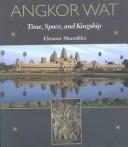
A close reading of Angkor Wat's measurements and bas-reliefs as a deliberate cosmological and calendrical scheme. Published as Angkor Wat: Time, Space, and Kingship; the catalogue record carries the bare title and an unreliable date. Contested by some scholars, which is why it belongs after the general accounts rather than before them.
The Region, the Archaeology, and the Collapse
IntermediatePlace the Khmer state among its neighbours and rivals, engage with the excavation evidence directly, and be able to argue about abandonment — drought, hydraulic failure, the Ayutthayan wars, or a shift of gravity to the maritime trade.
▸ Study plan for this stage
Pace: 8 weeks and by far the hardest stage. Dagens's Angkor: Heart of an Asian Empire (191pp) is short and illustrated — a few days, and read it first. Higham's The Archaeology of Mainland Southeast Asia (387pp) and Early Cultures of Mainland Southeast Asia (375pp) are technical surveys — two weeks each.
- Dagens tells the history of Angkor's rediscovery, documentation, looting and reconstruction by French archaeology from the nineteenth century. What is known about the empire is inseparable from who went looking and what they wanted to find.
- Higham's two regional volumes are the evidence base under his short synthesis in stage one: prehistory, Bronze and Iron Age settlement, and the state formation that preceded Angkor. This is where you see an archaeological argument actually being built from sites and dates.
- Angkor did not arise from nothing. The Iron Age moated settlements of the Mun valley and the Chao Phraya basin are the precursor societies, and the continuity question is a live one.
- Hall's regional economic and political history sets Angkor beside Champa, Pagan, Dai Viet, Srivijaya and the maritime trade networks, which is the necessary comparison for judging why one state failed and others did not.
- The collapse candidates are: prolonged drought followed by intense monsoon, established from tree-ring records; hydraulic system failure and siltation; the Ayutthayan wars and the sack of 1431; a shift of economic gravity toward maritime trade on the Mekong; and the social effects of the change to T
- Lieberman's move is to treat Angkor's fall as one case in a pattern of mainland Southeast Asian integration and collapse rather than as a mystery, and to compare it against Burma, Siam and Vietnam over the same centuries.
- 'Collapse' is itself contested. The population did not vanish; the capital moved and the building of stone monuments stopped, which is a different thing from a civilisation ending.
- What did French archaeology at Angkor take, restore and assume, and how does that shape the surviving evidence?
- Name two pre-Angkorian archaeological cultures Higham covers and say what each contributes to explaining state formation in the region.
- List the main explanations for Angkor's abandonment, and say for each what kind of evidence supports it — palaeoclimatic, archaeological, textual or inferential.
- What does the tree-ring drought evidence actually show, and what does it not show about causation?
- How does Lieberman's comparative frame change the question from 'why did Angkor fall' to something more answerable?
- After the whole path: what is the strongest single-sentence answer you can give for why Angkor was abandoned, and what does it fail to account for?
- Trace one claim across two authors who disagree: the drought-and-hydraulic-failure account against Lieberman's comparative and political explanation. Find where each states its case, list the evidence each cites, and write which one is arguing from data and which from pattern.
- Check a statistic against the source cited: take any Angkor population estimate you have met on this path, find where it comes from, and identify the assumptions — settlement density, house size, occupancy — that produce the number.
- Build a comparative table from Hall: Angkor, Pagan, Champa and Srivijaya, with columns for economic base, religious foundation, peak period and end. Doing it yourself is what makes the comparison stick.
- Read Dagens on the removal of sculpture in the colonial period, then look at where major Khmer pieces are now held. Write a paragraph on what that does to the evidence base you have been relying on.
- Write 500 words for a reader starting this path tomorrow: what the Khmer Empire was, what is genuinely known, what is argued, and which two books you would give them first. Name at least four books from the path.
Next up: The path closes on an open argument about why the largest pre-industrial city on earth was left, which is the current state of the field and the right place to stop.

A short illustrated history of how Angkor was documented, looted and rebuilt by French archaeology from the nineteenth century onward. Start the stage here, because what we know about the empire is inseparable from who went looking.
Higham's regional survey from prehistory to Angkor, and the underlying evidence base for his shorter book in stage one. Technical, and the place to see how the argument is actually built.
The companion volume, richer on Bronze and Iron Age precursors and on the state formation that preceded Angkor. Read after the archaeology survey to see where the Khmer came from.

A regional economic and political history covering Angkor alongside Champa, Pagan, Srivijaya and the maritime trade networks — the necessary comparison for judging why one of these states failed. The catalogue inverts the article in the display title.
Lieberman's comparative history of mainland Southeast Asian state integration is the most ambitious frame available for the collapse question, treating Angkor's fall as one case in a pattern rather than a mystery. The hardest and best closing book here.
Discussion
Keep reading
Paths that share books, cover the same subject, or open a related topic.


