The Best Books on Blackjack and Card Counting
This curriculum takes an intermediate player from solid blackjack fundamentals through professional-grade card counting and advanced advantage-play techniques. Each stage builds directly on the last — mastering basic strategy before counting, counting before team play, and team play before the deepest mathematical and legal dimensions of the game.
Foundations & Basic Strategy Mastery
BeginnerInternalize perfect basic strategy, understand the house edge, and build the mental discipline required for serious play — eliminating costly guesswork before any counting system is introduced.
▸ Study plan for this stage
Pace: 4–5 weeks, ~40–50 pages/day. Start with "Blackjack Blueprint" (weeks 1–2), then transition to "Beat the Dealer" (weeks 3–5). Allocate 3–4 days per week for reading, with 2–3 days reserved for drills and strategy practice.
- Perfect basic strategy as the mathematical foundation: knowing the statistically optimal play for every hand combination against every dealer upcard
- House edge mechanics: how the dealer's standing rules, player bust risk, and game structure create the house advantage even with perfect play
- The illusion of intuition: why gut feelings and superstition lead to costly deviations from basic strategy
- Bankroll management and variance: understanding that short-term results don't reflect true odds, and why proper bet sizing prevents ruin
- The theoretical framework for card counting: how deck composition affects probability, and why counting exploits the house edge rather than creating one
- Mental discipline and emotional control: the psychological barriers to executing strategy consistently under pressure
- The relationship between basic strategy and advantage play: basic strategy is the prerequisite floor; counting is the next level built on top
- What is the correct basic strategy play for a hard 16 against a dealer 10, and why is it statistically superior to the intuitive alternative?
- How does the house edge persist even when a player plays perfect basic strategy, and what does this tell you about the game's mathematical structure?
- Explain the concept of variance in blackjack: why can a player follow perfect strategy and still lose money in the short term?
- What is the relationship between deck composition and player advantage, and how does this concept set up the foundation for card counting?
- Describe three common deviations from basic strategy that players make, and quantify the cost of each deviation in terms of house edge increase.
- Why is bankroll management essential even for a player using perfect basic strategy, and what does proper bankroll sizing protect against?
- Drill basic strategy using a strategy card for 30 minutes daily: start with single decisions (e.g., 'What do you do with 12 vs. 6?'), then progress to rapid-fire mixed hands until you achieve 95%+ accuracy without hesitation.
- Play 100 hands of blackjack (online simulator or live, low stakes) using only basic strategy, tracking every hand and decision; review any deviations at the end of the session.
- Create a personal 'mistake log': document the three most tempting deviations you're prone to (e.g., 'always hit 16 vs. 7'), calculate the long-term cost of each, and write a one-sentence rule to counter it.
- Simulate a 500-hand session using basic strategy and calculate your expected loss based on house edge; then play 100 hands and compare actual results to expected variance range.
- Study the probability tables in 'Beat the Dealer': for five key hands (e.g., 12 vs. 6, 11 vs. 11, soft 17 vs. 6), explain why the recommended play has the highest expected value.
- Conduct a 'discipline test': play 50 hands and intentionally follow basic strategy even when you feel a 'hunch' to deviate; journal the emotional resistance and how it diminishes with repetition.
Next up: Mastery of perfect basic strategy and understanding of house edge mechanics establishes the mathematical and psychological foundation necessary to learn card counting—the next stage will show how to identify when the deck composition shifts in the player's favor and how to exploit that advantage systematically.
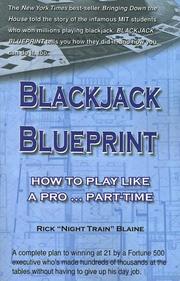
A clear, modern primer that drills basic strategy to near-perfection and introduces the mindset of disciplined, rules-aware play — ideal groundwork before tackling counting systems.
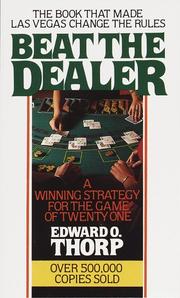
The canonical text that proved blackjack is mathematically beatable. Reading it here cements why basic strategy works and provides the historical and theoretical foundation every serious student needs.
Learning to Count: Core Systems
IntermediateLearn and drill a practical card-counting system (Hi-Lo), understand true-count conversion, bet spreading, and how to gain a measurable edge over the casino.
▸ Study plan for this stage
Pace: 6–8 weeks, ~40–50 pages/day, with 2–3 dedicated drill days per week for card-counting practice
- Hi-Lo card counting system: assigning values (+1, 0, −1) to cards and maintaining a running count in real time
- True count conversion: dividing running count by estimated remaining decks to adjust for penetration and game conditions
- Bet spreading: adjusting bet size based on true count to maximize edge and minimize detection
- Advantage calculation: understanding how true count translates to measurable house edge or player advantage
- Penetration and deck estimation: recognizing how many decks remain and why this affects counting accuracy
- Variance and bankroll requirements: managing risk through proper bet sizing and session bankroll allocation
- Casino countermeasures and detection: recognizing surveillance patterns and how to avoid being identified as a counter
- How does the Hi-Lo system assign values to each card rank, and why are these values chosen?
- What is true count, and how do you calculate it from a running count?
- How does true count directly inform your betting decisions, and what is the relationship between true count and player advantage?
- What is penetration, why does it matter for card counting, and how do you estimate remaining decks?
- How much bankroll do you need for a given bet spread, and what does variance have to do with it?
- What are the main casino countermeasures against card counters, and how can you minimize detection risk?
- Drill running count accuracy: use a single deck, flip cards one at a time, and maintain a running count. Aim for 100% accuracy at speeds of 1 card per second, then 2 cards per second.
- True count conversion drills: given a running count and estimated deck penetration (e.g., running count +8 with 2.5 decks remaining), calculate true count repeatedly until you can do it mentally in under 2 seconds.
- Bet spreading scenarios: given various true counts (−2, 0, +1, +3, +5), determine your bet size using a realistic spread (e.g., 1–8 units) and explain your reasoning.
- Advantage calculation practice: using tables from Schlesinger or Wong, match given true counts to player advantage percentages and explain what that advantage means for long-term profit.
- Penetration estimation exercises: practice estimating remaining decks by watching cards dealt in a shoe game, then verify your estimate against the actual discard tray.
- Bankroll and variance analysis: calculate the required bankroll for a given bet spread, hourly win rate, and variance, using formulas from the texts.
Next up: Mastering Hi-Lo and true count conversion gives you the mechanical foundation to play with a measurable edge; the next stage will build on this by teaching you how to disguise your play, manage multiple tables, and execute advanced betting and playing strategies in real casino conditions.
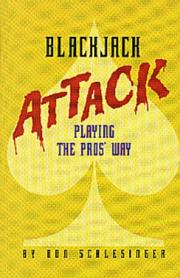
The definitive mathematical reference for the Hi-Lo system and the Illustrious 18 index plays — read first in this stage to understand which deviations from basic strategy actually matter.
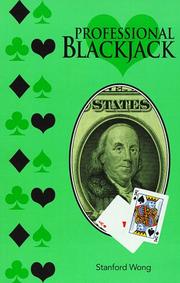
Wong's classic provides a rigorous, practical treatment of counting, true-count conversion, and wonging (back-counting) — deepening and stress-testing what Schlesinger introduced.
Casino Survival & Camouflage
IntermediateUnderstand casino surveillance, countermeasures, and how to disguise advantage play long enough to remain profitable — the skills that separate hobbyists from working professionals.
▸ Study plan for this stage
Pace: 4–5 weeks, ~40–50 pages/day (approximately 280–350 pages total across both books)
- Casino surveillance systems, camera placement, and pit boss detection patterns—how casinos identify and track advantage players
- Behavioral camouflage techniques: betting patterns, play speed, emotional control, and table positioning to avoid detection
- The economics of comps and casino host relationships as a cover for extended play and information gathering
- Heat management: recognizing when you're being watched, backing off strategically, and knowing when to leave a casino
- The difference between casual play and professional advantage play—how professionals blend in while maintaining edge
- Comp strategy as both a profit center and a surveillance evasion tool—maximizing value while staying under the radar
- Casino databases, player tracking systems, and how your play history affects future access and comps
- Multi-casino networks and the importance of geographic diversification to avoid being blacklisted
- What are the primary surveillance methods casinos use to identify card counters, and where are the blind spots in their camera coverage?
- How can you modify your betting spread, play speed, and table behavior to avoid triggering a pit boss's suspicion while still maintaining a mathematical edge?
- What is the relationship between comp strategy and camouflage, and how can you use casino host relationships to extend your playing time without detection?
- How do you recognize when you're being 'heated' (under surveillance), and what are the appropriate responses to manage that heat?
- What role does casino player tracking data play in your long-term viability as an advantage player, and how should you plan around it?
- How does the comp economy work, and how can you leverage it to subsidize your play and reduce the variance of your bankroll?
- Visit a casino and spend 2–3 hours observing pit boss and surveillance patterns without playing—map camera positions, identify blind spots, note how dealers and supervisors track high-action tables
- Practice your 'cover' betting pattern at home: simulate 500+ hands with a realistic spread (e.g., 1–8 units) while maintaining consistent play speed and emotional control—record any deviations
- Create a personal comp strategy document for 3–5 casinos you plan to target: identify host contact info, tier thresholds, and specific comp goals (meals, rooms, free play) that align with your play volume
- Role-play heat scenarios: have a friend or mentor act as a pit boss while you respond to increasingly direct questions about your play—practice deflection, casual conversation, and strategic retreat
- Develop a multi-casino rotation plan for your region: map out 8–12 casinos by distance, surveillance reputation, and comp generosity; plan a 6-month schedule that minimizes revisit frequency to any single property
- Analyze your own play session video (if possible) or a recorded session: identify tells, betting patterns, and behavioral cues that might attract attention; refine your camouflage based on what you observe
Next up: This stage equips you with the operational security and relationship-building skills to sustain advantage play in the real world; the next stage will likely focus on scaling your edge through team play, bankroll management, and long-term professional strategy—where camouflage becomes a team discipline rather than an individual skill.

The masterclass on camouflage, cover betting, and social engineering at the table — essential reading once you can count, so you know how to keep doing it.

Reveals how to exploit casino comp systems to add a secondary edge, turning casino marketing against itself — a natural complement to Andersen's camouflage strategies.
Team Play & Advanced Tactics
ExpertUnderstand how blackjack teams operate, master advanced counting techniques and shuffle tracking, and study real-world team strategies used by the most successful advantage players in history.
▸ Study plan for this stage
Pace: 4–5 weeks, ~40–50 pages/day (approximately 280–350 pages total across both books)
- Team structure and roles (spotter, big player, controller, surveillance) as demonstrated in the MIT team model
- Advanced card counting systems beyond basic Hi-Lo (level 2+ counts, true count conversion, betting spreads)
- Shuffle tracking and prediction techniques for identifying unshuffled cards and exploiting deck composition
- Bankroll management and risk of ruin calculations for team play with shared capital
- Casino surveillance, detection methods, and counter-surveillance tactics used by advantage players
- Real-world team operations: scouting, communication protocols, and execution in live casino environments
- Psychological resilience and decision-making under pressure in high-stakes team scenarios
- How did the MIT blackjack team structure their roles, and why was the separation between spotters and big players strategically important?
- What are the limitations of basic Hi-Lo counting, and how do more advanced counting systems (like level 2+ counts) improve advantage?
- Explain the concept of shuffle tracking: what are you tracking, and how does it differ from traditional card counting?
- What detection methods do casinos use to identify advantage players, and what counter-surveillance techniques did successful teams employ?
- How do you calculate true count, and why is it more useful than running count for betting and playing decisions?
- What role does bankroll management play in team blackjack, and how does shared capital change risk calculations compared to solo play?
- Simulate a team structure: assign roles (spotter, big player, controller) and practice communication protocols using hand signals or coded language without detection
- Practice advanced counting with a shoe of cards using a level 2+ system (e.g., Omega II or Zen count); track running count and convert to true count with varying penetration levels
- Conduct shuffle tracking drills: identify a sequence of cards before a shuffle, predict where they land post-shuffle, and verify accuracy across multiple shuffles
- Build a bankroll calculator: input team capital, house edge, bet spread, and variance to compute risk of ruin and optimal unit sizing for different penetration scenarios
- Analyze casino surveillance footage or case studies from the books: identify detection points where teams were compromised and brainstorm counter-measures
- Role-play a casino session: practice maintaining cover (casual play, small bets, varied betting patterns) while counting and signaling to a partner without arousing suspicion
- Create a detailed team operations plan: outline scouting procedures, shift rotations, communication methods, and contingency protocols for a hypothetical team deployment
Next up: This stage equips you with the operational and technical mastery of team advantage play; the next stage will likely focus on legal, ethical, and strategic considerations—such as navigating the gray zones of advantage play, protecting yourself legally, and deciding whether and how to apply these skills in the modern casino environment.

The narrative account of the MIT Blackjack Team provides vivid, real-world context for team-play roles (spotter, big player) and the psychological demands of high-stakes advantage play.

A first-person insider account of professional team play that goes deeper than Mezrich into the operational and bankroll realities — read second to ground the narrative in practical detail.
The Mathematics & Long-Term Edge
ExpertAchieve a deep quantitative understanding of risk of ruin, Kelly betting, variance, and the statistical realities of long-run advantage play — enabling sound bankroll management and rational decision-making under pressure.
▸ Study plan for this stage
Pace: 6–8 weeks, ~40–50 pages/day (with 2–3 days/week for problem sets and calculations)
- Expected value (EV) and house edge: how to calculate true advantage per hand and cumulative advantage over time
- Variance and standard deviation: understanding short-term volatility and why skilled players still face significant losing streaks
- Risk of ruin (RoR): the mathematical probability of losing your entire bankroll before reaching a profit target
- Kelly Criterion and optimal bet sizing: how to maximize long-term wealth growth while managing bankruptcy risk
- Penetration depth and its impact on counting advantage: how rule variations and deck composition affect your edge
- Statistical significance and sample size: why 100 hands proves nothing, but 10,000 hands reveals true skill
- Legal and regulatory landscape: how blackjack advantage play is prosecuted, detected, and defended in court
- Bankroll requirements and practical money management: translating theory into sustainable real-world play
- How do you calculate the exact expected value of a specific blackjack decision, and why does it differ from intuition?
- What is risk of ruin, and how does it change when you increase your bet size or starting bankroll?
- Explain the Kelly Criterion: why betting your full edge is dangerous, and what the optimal fraction should be.
- How does deck penetration affect your counting advantage, and why do casinos care about this metric?
- Why can a skilled card counter with a +1% edge still lose $50,000 in a week, and how do you prepare for this?
- What legal defenses exist for advantage players, and what evidence do casinos use to detect and ban them?
- Given a specific set of rules (penetration, rules variations, bet spread), how would you calculate the minimum bankroll needed for a 5% risk of ruin?
- Build a spreadsheet calculating expected value for 10 common blackjack scenarios (e.g., hard 16 vs. dealer 10, soft 17 vs. dealer 6) using Griffin's methodology; verify against basic strategy.
- Run a Monte Carlo simulation (or use provided software) of 100,000 hands with a +0.5% advantage and $100 bets; measure actual variance, longest losing streak, and probability of reaching +$10,000 profit.
- Calculate risk of ruin for three bankroll scenarios ($5,000, $15,000, $50,000) with a +1% edge and $50 average bet; explain how each changes if you increase bet spread to $25–$500.
- Solve 5–8 Kelly Criterion problems: given edge and variance, determine optimal bet sizing and compare outcomes of full-Kelly vs. half-Kelly vs. quarter-Kelly over 10,000 hands.
- Analyze a real or hypothetical casino rule set (e.g., 6-deck shoe, 75% penetration, 3:2 blackjack, late surrender); estimate your true advantage using Griffin's tables and discuss how it changes with different penetration depths.
- Research and write a 2–3 page case study on a real legal case involving advantage players (e.g., MIT Blackjack Team, Ken Uston, or a specific prosecution); identify the evidence used and defenses raised per Rose's framework.
Next up: This stage transforms you from a tactical card counter into a strategic risk manager, equipping you with the mathematical and legal foundations needed to move into the next stage: translating these principles into operational casino play, bankroll logistics, and team dynamics.

The most rigorous mathematical treatment of blackjack ever written — Griffin's analysis of expectation, efficiency of counting systems, and combinatorics is the gold standard for serious students.
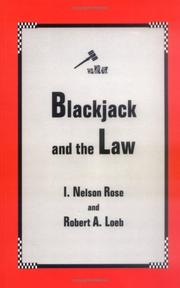
Addresses the legal landscape of advantage play, card counting, and casino exclusion — critical knowledge for anyone playing at a professional level to protect themselves and their bankroll.
Discussion
Keep reading
Paths that share books, cover the same subject, or open a related topic.