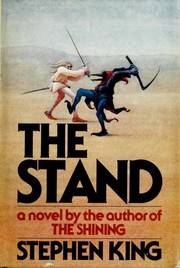
Stephen King Reading Order: Where to Start
This curriculum takes you from Stephen King's most accessible standalone novels through his major horror masterworks and finally into the vast, interconnected Dark Tower saga. Each stage builds familiarity with King's voice, themes, and fictional universe (known as the "Kingverse") so that by the time you reach the Dark Tower, you'll recognize the references and feel the full weight of the mythology.
The Perfect Entry Point
BeginnerGet hooked on King's storytelling voice, pacing, and character work through his most beloved and accessible standalone novel — no prior King knowledge needed.
▸ Study plan for this stage
Pace: 3–4 weeks, ~25–30 pages/day (The Shining is ~450 pages); read in longer sittings of 45–60 min when possible to stay immersed in King's pacing rhythms
- King's 'ordinary people in extraordinary terror' formula — Jack, Wendy, and Danny are deeply human before the horror begins
- Slow-burn pacing: King spends the first third building character and setting before unleashing the supernatural, teaching readers to trust the setup
- The Overlook Hotel as a living antagonist — how King uses setting as a character with its own history, malevolence, and voice
- Danny's psychic ability (the 'shining') as a narrative device that grants readers privileged access to danger the adults cannot see
- King's use of backstory and trauma — Jack's alcoholism and abusive past are as frightening as any ghost, blurring the line between internal and external horror
- Free indirect discourse and close third-person POV: King slips fluidly between Jack's, Wendy's, and Danny's perspectives to build dread from multiple angles
- Foreshadowing and the 'loaded gun' technique — King plants objects, phrases, and memories early (the roque mallet, Room 217, REDRUM) that pay off with devastating precision
- Thematic core: the corruption of the family unit, addiction as possession, and the idea that the most dangerous monsters wear familiar faces
- How does King use the first 100 pages to make you care about the Torrance family before placing them in danger — and why does this emotional investment matter to the horror?
- In what ways is Jack Torrance's descent driven by internal demons (alcoholism, rage, failure) versus external supernatural influence from the Overlook? Can you separate the two — and does King want you to?
- How does Danny's 'shining' function differently from a typical horror-movie psychic power? What does it allow King to do narratively that a purely adult POV could not?
- Pick three specific objects or locations in the Overlook (e.g., the topiary animals, Room 217, the hedge maze). How does King transform them from mundane to terrifying over the course of the novel?
- How does King handle Wendy's perspective, and in what ways is she more than just a passive victim? What does her arc reveal about the novel's themes of survival and motherhood?
- By the end of the novel, who or what is the true villain — Jack, the Overlook, or something else entirely? Use specific scenes to support your answer.
- **The Dread Journal:** After each reading session, write 2–3 sentences describing the single moment that made you most uneasy — not necessarily the scariest scene, but the one that felt most *wrong*. At the end of the book, review your notes and map how King escalated tension across the novel.
- **Character Trauma Inventory:** Create a simple three-column chart (Jack / Wendy / Danny). As you read, log each character's fears, wounds, and desires. After finishing, compare the columns — notice how King makes each character's psychology a direct fuel source for the horror they experience.
- **Foreshadowing Hunt:** On your first read, flag (with sticky notes, highlights, or a list) every moment that feels like a 'plant' — an image, phrase, or object that seems slightly too emphasized. After finishing, go back and confirm which ones paid off. This trains your eye for King's long-game craft.
- **Setting-as-Character Essay (300–500 words):** Write a short informal essay arguing that the Overlook Hotel is the novel's true protagonist. Use at least four specific scenes or details from the text as evidence. This forces close reading of King's descriptive and atmospheric technique.
- **Rewrite a Scene in First Person:** Choose any scene told from Danny's POV and rewrite it in tight first-person present tense ('I see the door. I hear the breathing.'). Then do the same for a Jack scene. Reflect: how does the POV shift change the emotional texture and the reader's sense of safety?
- **The King Voice Imitation:** Write a 1–2 page original scene (completely your own story, any genre) consciously imitating King's style from *The Shining* — specifically his habit of grounding the supernatural in mundane domestic detail, and his use of italics for a character's intrusive thoughts. This is the fastest way to internalize his prose rhythm.
Next up: Mastering King's foundational tools in this single, contained story — his character-first approach, slow escalation, and setting-as-dread — gives you the critical vocabulary and emotional calibration needed to tackle his broader, more structurally complex works in the next stage.
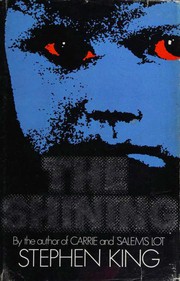
Widely considered the ideal King entry point: a contained, character-driven horror story with a relatable family at its center. It introduces King's signature slow-burn dread, psychological depth, and vivid prose without requiring any prior knowledge of his wider universe.
Major Horror Masterworks
BeginnerExperience the full range of King's horror — small-town evil, supernatural monsters, and apocalyptic scope — building the stamina and intuition needed for his longer, more complex works.
▸ Study plan for this stage
Pace: 10–12 weeks total, reading roughly 25–35 pages per day. Suggested pacing: Carrie (1 week, ~200 pp), 'Salem's Lot (2 weeks, ~440 pp), It (5–6 weeks, ~1,100 pp — the core of the stage, so allow extra time and don't rush), Misery (1–2 weeks, ~320 pp). Build in a 2–3 day reflection buffer between each b
- The Outsider as Catalyst: How King uses a socially marginalized protagonist (Carrie White, the Losers Club) to expose the real-world cruelty that makes supernatural horror feel earned and inevitable.
- Small-Town America as a Horror Stage: The way King transforms familiar, claustrophobic communities — Chamberlain, Jerusalem's Lot, Derry — into places where evil is not an intrusion but a long-festering resident.
- The Monster as Mirror: Each book's central threat (telekinesis-as-rage in Carrie, the vampire in 'Salem's Lot, Pennywise in It, Annie Wilkes in Misery) reflects a specific human fear — shame, predatory community silence, childhood trauma, and creative powerlessness respectively.
- Dual Timeline and Structural Experimentation: It's radical two-timeline structure (1958 ↔ 1985) and Carrie's mock-documentary inserts show King using form itself as a storytelling tool, not just prose narrative.
- Childhood Trauma and Adult Haunting: Across It and Misery especially, King argues that unresolved childhood wounds do not disappear — they resurface, demanding to be faced or destroyed.
- The Stephen King 'Brand' of Terror — Slow Dread vs. Sudden Violence: Studying how 'Salem's Lot builds almost unbearable atmospheric dread over hundreds of pages while Carrie detonates in a single catastrophic night trains the reader to recognize King's two primary horror rhythms.
- Metafiction and the Writer's Condition: Misery is King's most self-aware book in this stage — Paul Sheldon's captivity is an allegory for addiction, audience expectation, and the terror of the blank page, introducing a thematic layer absent from the other three books.
- Ensemble Casts and the Power of Collective Memory: The Losers Club in It demonstrates King's signature technique of building horror around a group whose shared history and loyalty become the only weapon against evil.
- How does King use Carrie White's home life and school life to make the reader simultaneously fear and sympathize with her — and what does that dual response say about where the real horror lies in Carrie?
- In 'Salem's Lot, the town itself seems to surrender to the vampire almost willingly. What specific narrative and character choices does King make to suggest that Barlow is less an invader and more a revealer of the town's pre-existing moral rot?
- It alternates between the Losers as children in 1958 and as adults in 1985. How does this structure reinforce the novel's central argument about the relationship between memory, fear, and identity?
- Annie Wilkes in Misery is often called one of King's most terrifying villains despite having no supernatural powers whatsoever. What techniques does King use to make her as frightening — or more frightening — than Pennywise or Barlow?
- Across all four books, King returns to the idea that communities enable or ignore evil rather than confront it. Identify one specific example from each book and explain how they collectively build this theme.
- By the end of this stage, how would you describe the difference between King's 'intimate' horror (Carrie, Misery) and his 'epic' horror ('Salem's Lot, It), and what reading skills does each mode demand from you?
- The Two-Column Fear Audit: While reading each book, keep a running two-column log — 'Supernatural Dread' vs. 'Human Cruelty.' After finishing all four, compare the columns. Write a one-paragraph argument for which column is ultimately scarier in each book and why.
- Monster Design Breakdown: After finishing each book, write a single-page character study of its central threat (Carrie's power, Barlow, Pennywise, Annie). Focus on: What human fear does this monster embody? What would be lost if King had made it purely supernatural with no psychological dimension?
- Structural Mapping of It: Create a visual timeline or chapter map of It, marking each chapter as either '1958' or '1985' and noting the emotional tone (fearful, nostalgic, violent, hopeful). Identify the three moments where the two timelines feel most in conversation with each other and write a short explanation of why.
- Rewrite the Opening Page: Take the opening page of either Carrie or 'Salem's Lot and rewrite it in a completely different tone — clinical, comedic, or journalistic. Then write a paragraph reflecting on what King's original tonal choices accomplish that your rewrite loses.
- The Villain Empathy Test: Choose Annie Wilkes (Misery) or any one bully/townsperson from 'Salem's Lot or Carrie. Write a 300-word interior monologue from their point of view that attempts to justify their actions. Reflect on what this exercise reveals about how King builds believable antagonists.
- Stamina & Annotation Challenge for It: Because It is the longest book in this stage, set a goal to annotate at least one passage per reading session (25–35 pages) where King successfully makes you feel something unexpected — not just scared, but nostalgic, sad, or even joyful. Collect these annotations and review them when you finish: they will reveal King's full emotional range beyond pure horror
Next up: Completing these four books — especially surviving the structural and emotional demands of It — gives the reader the tonal fluency, stamina, and thematic vocabulary needed to tackle King's more mythologically ambitious and interconnected works, where the horror expands beyond individual towns into a fully realized multiverse.

King's debut is short, punchy, and thematically rich — a great second read that shows where it all began and demonstrates his gift for social horror and tragic outsider characters.
King's vampire novel is essential reading and directly ties into the Dark Tower universe; reading it now plants seeds you'll recognize later while delivering pure, atmospheric horror.
King's magnum opus of horror — a massive, ambitious novel about childhood, memory, and evil. Reading it here, after building comfort with his style, lets you fully appreciate its scope; it also connects deeply to the Dark Tower mythology.
A lean, relentless thriller that showcases King's mastery of tension and character in a confined setting — a perfect palate cleanser after the epic scale of It before moving into the Dark Tower.
The Dark Tower — The Journey Begins
IntermediateEnter King's defining epic with the right foundation, understanding the Gunslinger's world and the mythological framework that ties the entire Kingverse together.
▸ Study plan for this stage
Pace: 8–10 weeks total: Week 1–2 — The Gunslinger (~230 pages, ~20 pages/day, allowing time for re-reading the dense, mythic opening chapters); Week 3–5 — The Drawing of the Three (~400 pages, ~25 pages/day, faster-paced and more accessible); Week 6–10 — The Waste Lands portion of the omnibus (~390 pages,
- The Gunslinger as Archetype: Roland Deschain is simultaneously a Western gunfighter, an Arthurian knight, and a mythic hero — understanding his stoic code and tragic past is the emotional spine of the entire series
- The Dark Tower as Cosmological Axis: The Tower is not just a destination but the lynchpin of all realities ('ka-tet of universes'), and every event in the series radiates outward from its existence or threatened collapse
- Ka and Ka-tet: King's concept of 'ka' (fate/destiny) and 'ka-tet' (a group bound by fate) — introduced and deepened across all three books — governs every major character decision and must be tracked carefully
- The Man in Black and the Nature of Evil: Walter/Marten/Flagg represents a shape-shifting, cosmically-scaled antagonist; The Gunslinger's long pursuit and the palaver at the end of Book 1 reframe the entire quest's stakes
- The Drawing of the Three — World-Building Through Character: Each 'door' on the beach introduces a new character (Eddie Dean, Odetta/Detta/Susannah Holmes) whose modern-world backstory enriches and complicates Roland's medieval-feeling Mid-World
- Mid-World's Mythology and Decay: The world has 'moved on' — technology, civilization, and even physics are breaking down; this entropy is not background detail but a thematic argument about time, memory, and loss
- Blaine the Mono and the Riddle Motif: The Waste Lands introduces Blaine as a symbol of mad, self-destructive intelligence, and the riddle contest foreshadows how wit and story — not just guns — are weapons in this world
- Intertextuality and the Kingverse: From the first pages of The Gunslinger, King seeds connections to his wider fictional universe (Randall Flagg from The Stand, references to other realities) — recognizing these threads is key to intermediate-level reading
- By the end of The Gunslinger, what has Roland sacrificed in pursuit of the Man in Black, and what does that sacrifice reveal about the moral cost of his quest?
- How does the 'door' mechanic in The Drawing of the Three function both as a plot device and as a metaphor for the collision between Mid-World and our world?
- What is the significance of Odetta Holmes's split personality (Odetta/Detta) merging into Susannah Dean, and how does this transformation reflect the series' broader themes of wholeness and ka-tet?
- How does King use the concept of 'the world has moved on' across all three books to build a sense of mythic decay, and what real-world anxieties might this reflect?
- In The Waste Lands, how does Jake Chambers's resurrection create a paradox for both Roland and Jake, and what does King use this paradox to say about memory, guilt, and the nature of reality?
- What narrative and tonal differences do you notice between The Gunslinger (sparse, dreamlike) and The Drawing of the Three (propulsive, character-driven), and how does The Waste Lands begin to synthesize both styles?
- Roland's Sacrifice Log: Keep a running list of every person, memory, or moral principle Roland abandons or loses across all three books. At the end of the stage, write a one-page character assessment — is Roland a hero, an anti-hero, or something else entirely?
- Ka-tet Character Map: Draw a visual web connecting Roland, Eddie, Odetta/Susannah, Jake, and Oy. For each connection, annotate what binds them (ka, shared trauma, complementary skills) and how that bond was forged in the text.
- Door Journal: Each time a 'door' appears in The Drawing of the Three, pause and write 2–3 sentences on what it represents thematically — not just what it does mechanically. Compare your entries at the end to see how King's use of the symbol evolves.
- Mid-World Glossary: Build a personal glossary of Mid-World terminology (ka, ka-tet, dinh, gunslinger's creed, 'the world has moved on,' todash, etc.) with a page reference and a plain-English definition for each term. Aim for at least 20 entries by the end of The Waste Lands.
- Riddle Duel Prep: Before finishing The Waste Lands, write down five riddles of your own in the style of the book's riddle contest with Blaine. Then reflect in writing: what do riddles reveal about the relationship between intelligence, storytelling, and survival in King's world?
- Cross-Book Tone Comparison Essay: Write a 300–500 word informal essay comparing the opening chapter of The Gunslinger to any chapter midway through The Waste Lands. Focus on prose style, pacing, and atmosphere — how has King's voice evolved, and how has the reader's relationship with Roland changed?
Next up: Completing these three foundational volumes — and especially sitting with the cliffhanger of Blaine's riddle contest — gives the reader the emotional investment in the ka-tet and the cosmological stakes needed to tackle the series' more expansive, metafictional, and thematically ambitious later entries, where King begins breaking the fourth wall and the Kingverse connections multiply dramatically.

The sparse, haunting opening of the Dark Tower series introduces Roland Deschain and the strange, dying world he inhabits — best appreciated now that you already know King's voice and have met some of the universe's connective tissue.
The pace accelerates dramatically as Roland's ka-tet begins to form; this book rewards readers who pushed through the deliberately slow first volume and is where most readers become fully committed to the series.

The quest takes full shape, the world-building deepens, and references to other King novels (including It and Salem's Lot) begin to pay off richly — this is where the Kingverse connections become thrilling.
The Dark Tower — The Heart of the Quest
IntermediateNavigate the emotional and narrative climax of the series, experiencing the full mythological and metafictional ambition King built toward across decades of writing.
▸ Study plan for this stage
Pace: 10–13 weeks total: ~3–4 weeks for Wizard and Glass (~500 pages, ~25 pages/day), ~3–4 weeks for Wolves of the Calla (~700 pages, ~25–30 pages/day), and ~4–5 weeks for The Dark Tower (~800 pages, ~25 pages/day). Allow extra reflection time after The Dark Tower's ending — do not rush the finale.
- Roland's backstory and the tragedy of Susan Delgado as the emotional foundation of his obsession with the Tower — Wizard and Glass reveals that the quest is as much about grief and guilt as it is about destiny
- The Crimson King and Randall Flagg as converging mythological antagonists, representing chaos and the unraveling of the Beams that hold all worlds together
- Ka-tet as chosen family: the bonds between Roland, Eddie, Susannah, Jake, and Oy are tested to their breaking point across both Wolves of the Calla and The Dark Tower, making loss a structural device
- Metafiction and King's self-insertion: The Dark Tower explicitly places Stephen King the author as a character whose survival is tied to the Tower's fate, collapsing the boundary between creator and creation
- The concept of 'All-World' cosmology — Mid-World, End-World, and the Keystone Earth — and how the Beams, Guardians, and Roses form an interconnected mythological architecture
- The Calla as a microcosm of Mid-World's decay: the Wolves of the Calla storyline uses a single threatened community to dramatize the wider stakes of the Tower's weakening
- Cyclicality and the nature of Roland's curse: the ending of The Dark Tower reframes the entire series as a loop, interrogating whether growth and redemption are possible within an eternal cycle
- Sacrifice and the cost of the quest: each major death or loss across these three books is thematically deliberate, asking the reader whether the Tower is worth what it demands
- How does Roland's love for Susan Delgado in Wizard and Glass reshape your understanding of his coldness and single-mindedness in the earlier books — and does it make him more or less sympathetic?
- In Wolves of the Calla, how does the community of the Calla function as a mirror for the ka-tet itself, and what does the resolution of the Wolves' threat suggest about collective courage versus individual heroism?
- How does King's decision to insert himself as a character in The Dark Tower affect your reading of the entire series — does it feel like a satisfying metafictional payoff or an authorial intrusion, and why?
- What does the ending of The Dark Tower — Roland's return to the desert, the possible change signaled by the Horn of Eld — argue about the nature of redemption, cycles, and whether stories ever truly end?
- Across all three books, how does King use the deterioration of the Beams and the Tower's instability as a metaphor for the fragility of narrative itself and the act of storytelling?
- Which member of the ka-tet do you believe undergoes the most significant transformation across these three books, and how do the specific trials King puts them through in Wolves of the Calla and The Dark Tower drive that change?
- Grief map for Roland: After finishing Wizard and Glass, write a one-page character profile tracing every significant loss Roland has suffered across all books read so far. Annotate how each loss either hardens or humanizes him, then predict — before reading on — how you think these losses will shape his choices in The Dark Tower.
- Calla community analysis: While reading Wolves of the Calla, keep a running log of the townspeople who play named roles. After finishing, write a short essay (300–500 words) arguing whether the Calla's victory feels earned or pyrrhic, using at least three specific scenes as evidence.
- Metafiction close-read: Identify the three scenes in The Dark Tower where King's self-insertion is most narratively significant. For each, write a paragraph explaining what the scene would lose — or gain — if King had written himself out and replaced himself with a fictional stand-in.
- Tower cosmology diagram: Draw or digitally map the mythological architecture King has built — the Beams, the Guardians, the Roses, the Keystone Earth, and the Tower itself — annotating which elements were introduced or paid off in each of the three books in this stage.
- The ending debate: Write two short arguments (150–200 words each) — one defending King's cyclical ending as thematically perfect, one condemning it as a betrayal of the reader — then write a final paragraph stating your actual position and why.
- Ka-tet eulogy: Choose one ka-tet member whose arc concludes (or is irrevocably altered) in The Dark Tower. Write a 200–300 word in-world eulogy or farewell in the voice of another ka-tet member, drawing on specific shared moments from Wizard and Glass, Wolves of the Calla, and The Dark Tower.
Next up: Completing The Dark Tower's cyclical ending leaves the reader primed to explore the broader King multiverse — the novels, novellas, and stories that feed into and echo the Tower's mythology — revealing that the quest was never contained to these books alone.

A sweeping flashback novel that reveals Roland's tragic origin story — emotionally the richest book in the series and essential for understanding why the quest matters so deeply to him.

The ka-tet faces a village under threat in a story that echoes The Magnificent Seven; it re-energizes the quest narrative and deepens the Kingverse connections before the final push.

The concluding volume brings Roland's quest to its controversial, unforgettable end — read last, it delivers the full emotional payoff of everything built across the entire curriculum.
Discussion
Keep reading
Paths that share books, cover the same subject, or open a related topic.