Start with The Gunslinger, and get the 2003 revised edition rather than the 1982 original. Stephen King rewrote it after finishing the series to fix continuity and smooth the prose, and while purists prefer the strange, spare original, the revision is the better door into a seven-book journey.
Now the warning that matters more than the order: The Gunslinger is the book people quit on. It is short, elliptical, atmospheric and almost plotless — a man walks across a desert after another man — and it reads nothing like the six volumes that follow. If it defeats you, the honest advice is to read the first fifty pages of The Drawing of the Three anyway. That is where the series actually begins, where Roland acquires the companions who make the story work, and where King's storytelling engine switches on.
The sequence
The Gunslinger, The Drawing of the Three, The Waste Lands, Wizard and Glass, Wolves of the Calla, Song of Susannah, The Dark Tower. The third volume is not currently in our catalogue under its own entry, though it appears in the omnibus edition of the first three books.
The Wind Through the Keyhole was published in 2012 and sits chronologically between Wizard and Glass and Wolves of the Calla. Read it last. It is a story within a story with almost no bearing on the main plot, and dropping it into the middle of your first read interrupts the momentum at exactly the wrong point. Reading it as an eighth book, afterwards, is the better experience.
The connected novels
This is where reading orders get baroque, and most of the elaborate schemes are unnecessary. The truth is that several King novels connect to the Tower, and none of them is required.
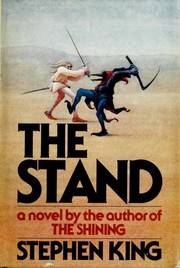
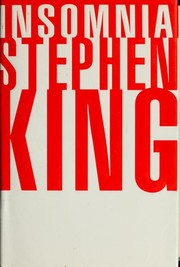
The ones that genuinely add something: 'Salem's Lot, because a major character from it appears in Wolves of the Calla and the reunion is more affecting if you know him. Insomnia, because a character and a concept from it recur late in the series. The Talisman and Black House, which share Roland's multiverse. Hearts in Atlantis contains a novella with direct Tower material. The Stand is the same shattered America in a different key and is the best novel on this list by a distance.
If you want a rule: read 'Salem's Lot before Wolves of the Calla if you can, and treat the rest as optional enrichment rather than homework.
Honest warnings
The tonal range across seven books is extreme. Book one is a spaghetti-western fever dream, book two is a New York crime thriller, book four is a nine-hundred-page romance flashback, and the last three become increasingly metafictional — King writes himself into the story as a character, which a substantial number of readers consider the point at which the series loses its nerve.
Wizard and Glass stops the main plot dead for most of its length to tell Roland's backstory. It is many readers' favourite volume and many others' wall.
The ending is genuinely divisive. King anticipates this, and near the close of the final book he directly tells the reader they can stop before the last section and keep a satisfying ending. That off-ramp is real and worth knowing about. Take it or do not, but decide for yourself rather than reading complaints in advance.
Where to stop
The whole series or nothing — there is no clean partial arc, since the books end mid-journey. The one legitimate stopping point is the one King himself offers in the final pages.
If multiverse fantasy with a moral argument at its centre appeals, see also His Dark Materials.
Follow the full ordered path here: The Dark Tower Reading Order and Reading Guide.