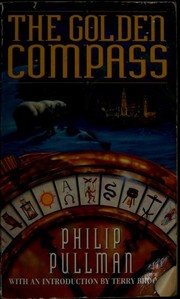
Start with Northern Lights, published in North America as The Golden Compass. It is the first book Pullman wrote in this world, it is the best constructed of all of them, and it introduces the two ideas the whole sequence depends on — daemons, and an eleven-year-old who lies fluently and is usually right to.
The alternative you will see recommended is to start chronologically with La Belle Sauvage, the Book of Dust prequel set when Lyra is a baby. Do not. It is a slower, stranger book, its emotional stakes depend entirely on you already caring about an infant you have no reason to care about yet, and its second half turns into a dreamlike river journey that makes far more sense once you know where this world is going.
The original trilogy
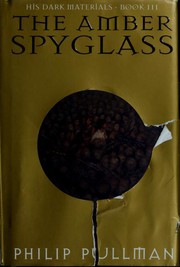
Northern Lights, then The Subtle Knife, then The Amber Spyglass. These are one story in three volumes and there is no flexibility.
Honest notes on each. The Subtle Knife is the weakest — it has the classic middle-book problem, splitting the cast across worlds and spending its length arranging pieces. It is short and it moves, so this is a mild complaint. The Amber Spyglass is the most ambitious and the most divisive: the long sequence in the world of the dead slows to a crawl for some readers and is the emotional core for others, and the theological argument that was implicit in book one becomes entirely explicit. If you were reading these as children's adventure novels, book three will inform you otherwise.
The novellas
Lyra's Oxford and Once Upon a Time in the North are short companion pieces, both handsomely produced with maps and ephemera. Once Upon a Time in the North is a prequel about Lee Scoresby and Iorek meeting decades earlier; Lyra's Oxford is set after the trilogy.
Read both after The Amber Spyglass, regardless of their internal chronology. They are slight, they are charming, and they are best understood as gifts to readers who already miss the world.
The Book of Dust
La Belle Sauvage comes first — Lyra as an infant, an enormous flood, and a boy and girl carrying her downriver. It is genuinely darker than the original trilogy in places, and the pursuit sequence in its second half is frightening in a way the earlier books are not.
The Secret Commonwealth jumps forward to Lyra at twenty. It is a much more adult book: a fractured relationship with her own daemon, a journey east through a world of refugees and authoritarian religion, and some very grim material. It also ends without resolution, because the trilogy it belongs to was still unfinished at the time of writing. Go in knowing that.
The order controversy, decided
The case for chronological order — La Belle Sauvage, then the trilogy, then The Secret Commonwealth — is that events then unfold in sequence and nothing is spoiled. The case against is stronger: La Belle Sauvage is written for readers who already know Lyra, it withholds explanation of daemons and the Magisterium in a way that assumes prior knowledge, and it is a deliberately quieter book that makes a poor first impression.
Publication order. Every time. Northern Lights was written to be a first book and does that job; La Belle Sauvage was not and does not.
Where to stop
The Amber Spyglass ends the story. It is a complete, deliberate, emotionally punishing conclusion, and stopping there is the choice a lot of readers make. The Book of Dust is a genuinely worthwhile continuation, but it is unfinished and its second volume leaves you hanging. Decide before you start it whether you mind waiting.
For another long fantasy sequence with a contested order, see The Dark Tower.
Follow the full ordered path here: His Dark Materials Reading Order: Where to Start.