The Cultural Revolution ran from 1966 to 1976 and defies summary because it was several different things in sequence: a purge of the Party leadership, a mass student movement, a period of factional armed conflict, and then a decade of rustication and repression. Political histories that start at the top can make it look like a coherent programme. It did not feel like one to the people inside it, and the memoirs are the fastest way to understand why.
That is the case for reading order here. Memoir first, so the reversals — a father denounced, a teacher beaten by her students, a teenager sent to a village for years — attach to people. Then the biographies of Mao, and then the archival histories that explain the machinery. Reversing that order tends to produce a reader who can name the Gang of Four and cannot say what a struggle session did to a family.
Start with the memoirs
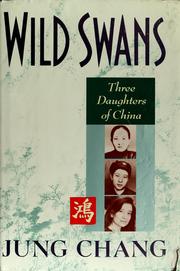
Wild Swans is the obvious opener and deserves its reputation. Jung Chang tells three generations of women — grandmother, mother, herself — across the warlord era, the revolution, and the Cultural Revolution, so you watch a family that believed in the Party get destroyed by it. It is the single best entry point in English.
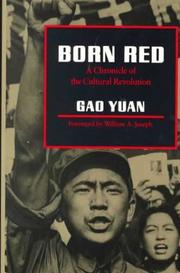
Red Scarf Girl is the shortest and clearest account of the early years from a child's perspective: Ji-li Jiang was twelve in 1966, a model student whose class background suddenly made her a target. Born Red gives you the Red Guard experience from inside — Gao Yuan was a middle-school student whose school split into warring factions, and the book shows how quickly adolescent politics turned into real violence.
Son of the revolution covers the same years from a family in Hunan, and To the Edge of the Sky extends the frame across a longer life. Four memoirs is a lot; if you want only two, take Wild Swans for scope and Born Red for the Red Guard mechanics, which the others touch on less directly.
Then the man at the centre
Mao, by Jung Chang and Jon Halliday, is a massive and deliberately prosecutorial biography. It is also the most contested book on this path: specialists have challenged its sourcing and several of its strongest claims, while acknowledging the scale of the research. Read it, and read it knowing that historians of modern China are genuinely divided about it — that argument is part of the subject.
Mao's last revolution, by Roderick MacFarquhar and Michael Schoenhals, is the scholarly standard for the decade itself. It reconstructs the elite politics year by year from Party documents: the manoeuvring against Liu Shaoqi, the role of Lin Biao, the army's intervention, and how the movement was eventually wound down. It is dense and it is the book that explains the sequence.
The wider frame
The tragedy of liberation is Frank Dikötter on the years from 1945 to 1957, and it belongs here because the Cultural Revolution did not arrive from nowhere. Land reform killings, the campaigns against counter-revolutionaries, and the Anti-Rightist Movement had already established the methods. Dikötter writes from provincial archives and his overall interpretation is bleaker than most; other historians read the same period with more attention to genuine popular support for the early Communist state. Noting where the disagreement lies is more useful than picking a winner.
Read in this order and the decade stops being an inexplicable frenzy and becomes a set of decisions with consequences. Follow the full path to keep the sequence.
Follow the full ordered path here: Best Books on China's Cultural Revolution, in Order.