The Chronicles of Prydain Reading Order
Lloyd Alexander's Prydain is five short novels published between 1964 and 1968, and they must be read in publication order because they are one continuous coming-of-age with a genuinely earned ending. The books get better as they go and the fourth is the one that turns the series from a good adventure into something people carry into adulthood. This path reads the five in sequence, then adds the story collection, the Welsh source material Alexander was drawing on, and the best of his non-Prydain work.
Start Here
BeginnerMeet Taran, Eilonwy and Gurgi, and get the two opening adventures that establish the quest shape the later books will complicate.
▸ Study plan for this stage
Pace: One week for about 440 pages. These are children's books of roughly 200 to 230 pages with short chapters, and an adult reader will finish The Book Of Three in two evenings. Read them in publication order, back to back. If you are reading aloud to a child, a chapter a night works out at around three
- Be clear on what this is: a five-book children's series published between 1964 and 1968, written for readers of roughly eight to twelve, and it does not pretend otherwise. It is comfort reading with real feeling in it, not a hidden adult epic. Adults love it because the last two books earn something
- The Book Of Three introduces Taran, an Assistant Pig-Keeper who wants to be a hero, and the entire five-book arc is about dismantling that ambition and replacing it with something better
- Eilonwy, Gurgi, Fflewddur Fflam and Doli are introduced fast and each has one running comic device. Fflewddur's harp string that snaps whenever he exaggerates is the best joke in children's fantasy and it pays off properly in book five
- The Black Cauldron, a Newbery Honor book, is where the series first shows its hand: a genuine sacrifice, made by a character you did not expect to care about, with no undoing
- Alexander drew names and figures from the Welsh Mabinogion — Gwydion, Arawn, Annuvin, the cauldron itself — but the plots are his own invention. This is not a retelling and reading it as one will mislead you
- The prose is plain and quick. There is no worldbuilding apparatus, almost no exposition, and the map at the front is all the geography you get
- Disney's 1985 animated film mashes the first two books together and is bad. If it is your only reference point, discard it before starting
- What does Taran want in book one, and what does the book already suspect about that want?
- Which of the companions is actually competent, and how does Alexander keep that from deflating Taran?
- The Black Cauldron ends with a real cost. What does the series gain by refusing to reverse it?
- Fflewddur's harp is a joke that carries information. What does it tell you about him that dialogue does not?
- How much does Alexander explain about his world, and does the sparseness feel thin or fast?
- Read both books inside a week. Momentum matters here and spacing them out flattens the arc
- Note every time Taran claims a title or role he has not earned. The count goes down across five books and that decline is the plot
- Listen for the harp string. Track what Fflewddur was exaggerating each time
- If reading aloud, do Gurgi's rhymes properly. They are written for the voice and are unbearable read flat
Next up: You have the company and the quest shape; the middle two books are where Alexander takes the quest away and asks what Taran is without one.
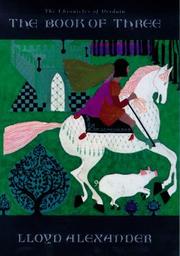
An Assistant Pig-Keeper chases an oracular pig into a war he does not understand. Start here: it is the shortest and simplest of the five, and every character you will care about arrives in it.
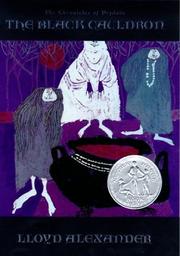
A darker second outing about the price of a bargain, and the first time the series lets a good decision cost something. Read it immediately after — it is also the book the Disney film mangled, so come to it fresh.
The Turn
BeginnerRead the two middle books, where the series stops being about a quest object and starts being about who Taran actually is.
▸ Study plan for this stage
Pace: 10 days to two weeks for around 460 pages. The Castle of Llyr is short and quick. Taran Wanderer needs more room than its length suggests — it has almost no plot and works by accumulation, so read it in two or three sittings rather than in ten-minute snatches.
- The Castle of Llyr moves the focus to Eilonwy and to what Taran cannot control. It is the lightest of the five and functions as a breather before the pivot
- Taran Wanderer is the book adults rate highest and children often find slowest, because it has no villain, no quest object and no battle. Taran walks around Prydain trying to find out who his parents were
- The sequence of craftsmen in Taran Wanderer — the smith, the weaver, the potter — is the heart of the series. Taran tries each trade, fails at each, and the failures are handled with complete seriousness
- This is where the series argues its actual thesis: worth is made by work rather than conferred by birth, and the fantasy convention of the secret royal heir is explicitly set up in order to be refused
- The answer Taran finds about his parentage is the opposite of the answer this genre normally supplies, and it is delivered quietly rather than as a twist
- If you were reading the first two books as light adventure, this is the volume that changes what the series is. Do not skip it because the description sounds uneventful
- The comic companions are largely absent through the middle of Taran Wanderer, and their absence is deliberate — the book needs Taran alone
- Taran Wanderer has no antagonist. What supplies its forward motion instead?
- What does Taran learn from each craftsman, and which failure hurts him most?
- The Castle of Llyr gives Eilonwy her own stakes. How does the series handle her afterward, and is that handling fair to her?
- Alexander sets up the secret-heir convention and then declines it. Why does that refusal only work if the earlier books established the convention first?
- Which of these two books is doing more work for the ending of the series?
- Read the three craftsman episodes in one sitting. Their cumulative effect is the point and it dissipates if broken up
- Write down what Taran believes about himself at the start of Taran Wanderer and at the end. The gap is the whole series in one page
- Note where the humour drops out of the prose. It is not accidental and it comes back for the last book
- Pause before The High King and predict how the series ends. Most readers get the events roughly right and the cost entirely wrong
Next up: Taran now knows what he is and what he is not, which is the only condition under which the final book's choice means anything.

Eilonwy is sent away to learn to be a princess, and the book is really about Taran realising what he feels. The lightest of the five and the necessary setup for the next one.
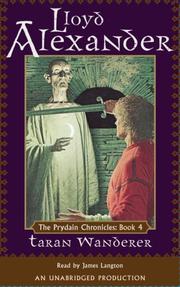
The best book in the sequence and the strangest: no villain, no quest, just Taran going from craftsman to craftsman trying to find out whether his parentage matters. If someone tells you Prydain is a lesser Narnia, this is the rebuttal.
The Ending
BeginnerFinish the sequence with the volume that pays off all four previous books and does not flinch at the cost.
▸ Study plan for this stage
Pace: Three or four days for 285 pages. The High King is the longest of the five and the fastest to read. Do not stretch it out; read the last sixty pages in one sitting, and do not read them somewhere you would mind being visibly affected.
- The High King won the Newbery Medal in 1969 and pays off all four preceding books. Every companion, every running joke, and every apparently minor kindness from earlier volumes returns with a job to do
- It is a war book. Prydain gets a real winter campaign with real losses, and several beloved characters die in ways that are not softened for the age group
- The ending's final choice is the reason people carry this series into adulthood. It offers Taran something the whole genre would normally treat as the reward, and the book is about whether he takes it
- Alexander does not flinch from the cost, and he does not let the reader off with an ambiguity. The last chapter states what has been given up and by whom
- The comic devices all pay their debts — the harp, the sword, the pig, Gurgi. If a detail felt like a throwaway gag in book one, watch for it here
- This is a genuinely earned ending, which is rarer than it sounds: nothing is retconned, nothing arrives from outside, and everything that resolves was set up before Taran Wanderer
- Read it directly after Taran Wanderer. The two books are effectively one movement and the ending loses force if you leave a month between them
- Which earlier detail pays off most satisfyingly, and when was it planted?
- What is Taran offered at the end, and why is the offer only meaningful because of Taran Wanderer?
- Who dies, and does the book give each death the weight it deserves or does it rush any of them?
- The final chapter chooses clarity over ambiguity. Would ambiguity have been better, or is the plainness the point?
- What does the series finally say worth is made of, and does the ending live up to the claim?
- Read the last sixty pages in one uninterrupted sitting
- List every callback you catch, then go back and find where each was planted. There are more than you will notice on the first pass
- Write half a page on the final choice as though arguing against it. It is the fastest way to see how carefully the book has closed off the alternatives
- Leave a couple of days before starting the next stage. The ending deserves the room
Next up: The five-book arc is complete and self-contained; everything after this is context, source material and the rest of a long career, none of which the ending needed.
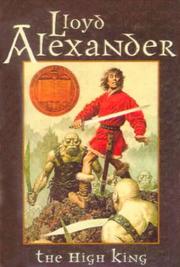
The Newbery Medal winner and the war the series has been circling since book one. Read it last, obviously — but be ready for a final chapter that is far sadder and more grown-up than the opening volume promises.
Beyond the Five
IntermediateGo outward — to the Prydain short stories, to the Welsh myth Alexander was adapting, and to the other series worth your time by the same author.
▸ Study plan for this stage
Pace: 4 to 5 weeks for around 620 pages. The Foundling and Other Tales of Prydain in two or three sittings — it is eight short stories. The Mabinogion needs two to three weeks and should be read slowly with the introduction and notes, since it is a translation of medieval Welsh prose and not a novel. West
- The Foundling and Other Tales of Prydain collects short stories set before the novels, including origin stories for Dallben, the sword Dyrnwyn and Fflewddur's harp. They are slight, charming, and best read after the series rather than before, because several would function as spoilers
- The Mabinogion in Sioned Davies's translation is the source Alexander was drawing on, and reading it is the fastest way to see exactly how much he invented. Arawn, Annuvin, Gwydion, Math and the cauldron are all here; Taran, Eilonwy and the plot of the Chronicles are not
- Expect the Mabinogion to be strange rather than epic. Medieval Welsh narrative moves by association, drops characters without explanation, and treats the marvellous as ordinary. Read a tale at a sitting and use the notes
- Davies's introduction and notes are the reason to use this edition specifically — they explain the oral performance context that makes the abruptness legible
- Westmark is Alexander's other major sequence and is a completely different register: no magic at all, an eighteenth-century-style revolution, printing presses, a con artist and a genuinely dark treatment of political violence
- Reading Westmark shows that Alexander was not a one-series writer and that the moral seriousness of Taran Wanderer was a permanent feature rather than a lucky accident
- This whole stage is optional. The five novels are complete on their own and nothing here is required to understand them
- Which Foundling stories genuinely add to the novels, and which are pleasant but inert?
- What did Alexander take from the Mabinogion — names, figures, atmosphere — and what did he invent wholesale?
- How does medieval Welsh storytelling differ from the modern novel in what it explains, and what does that do to a modern reader?
- Westmark has no magic. What replaces it as the source of danger, and is it more or less frightening?
- Having read all of this, is the Prydain series a Welsh myth adaptation or an American children's series wearing Welsh names?
- Read the four Branches of the Mabinogion first and leave the other tales for later. They are the ones Alexander used most
- Make a two-column list: names taken from the Mabinogion, and what Alexander did with each one. The Black Cauldron entry alone is instructive
- Read the Foundling story about the harp immediately after finishing The High King
- Read the first chapter of Westmark on the assumption that it is by a different writer. That is how it will feel
- Write two sentences on what the Chronicles owe to Welsh myth and what they owe to Alexander's own experience of the Second World War
Next up: That closes Prydain and its sources, and the obvious neighbours are Susan Cooper's Dark Is Rising sequence for the same myth-under-modern-landscape seam, or Alan Garner for its harder, stranger version.

Eight short backstories — how Dallben got the Book of Three, where Fflewddur's harp came from. Read them after The High King: as prequels they spoil nothing, but they land as epilogues.

The medieval Welsh tales Alexander mined for names, objects and the Cauldron itself, in the standard modern translation. Read it once the series is finished and you will see exactly what he borrowed and what he invented.

His other great sequence, set in a pseudo-eighteenth-century kingdom and far harder-edged about revolution and violence. The natural next Alexander for a reader who loved Taran Wanderer.
Discussion
Keep reading
Paths that share books, cover the same subject, or open a related topic.