The Warlord Chronicles Reading Order: Where to Start
Bernard Cornwell's Arthurian trilogy strips out the Round Table, the plate armour and most of the magic, and puts in their place a warlord holding together a collapsing post-Roman Britain — narrated in old age by Derfel, a Saxon-born monk who fought for Arthur and outlives everyone. It is three books and they must be read in order; there is no publication-versus-chronological argument, and Cornwell has never continued it. What repays reading alongside it is the tradition Cornwell is deliberately arguing with: the medieval romances that invented most of what people think they know about Arthur, and the modern historians who try to work out what, if anything, is underneath. This path takes the trilogy first, then those two bodies of work.
The trilogy, in order
IntermediateRead Cornwell's Arthur straight through and understand the narrator's frame, which is the device the whole trilogy turns on.
▸ Study plan for this stage
Pace: Six weeks for 1,286 pages, and the three books are almost exactly matched — The Winter King 434 pages, Enemy of God 416, Excalibur 436 — so a fortnight each is an even, sustainable pace. Read them consecutively and strictly in order; there is no publication-versus-chronological argument to have and
- Derfel's retrospective narration, and how knowing the outcome from page one changes what the trilogy is doing
- Arthur as warlord rather than king — no crown, no Round Table, no plate armour, and the political consequences of each removal
- Mordred as an infant claimant Arthur is sworn to protect, which is the trap the whole trilogy runs on
- Lancelot reimagined as a coward and a propagandist, and what that inversion says about where the legend came from
- Christian against pagan Britain as the trilogy's real subject, emerging in the middle book
- Post-Roman Britain as a place losing its infrastructure, literacy and cohesion by degrees
- Mount Badon as a victory that does not save anything, which is the point Excalibur is built to make
- What does the Derfel frame remove from the story, and what does it give back?
- Cornwell strips out the Round Table, the plate armour and most of the magic. What does he put in each of those places?
- How does the Christian and pagan conflict in Enemy of God change your reading of the first book's religious material?
- Why is Lancelot a propagandist here rather than simply a villain, and what does that let the trilogy say about how legends are made?
- Excalibur runs past Mount Badon to the collapse. What would be lost if it had ended at the victory?
- Mark every point where Derfel the old monk interrupts Derfel the young warrior. The pattern is deliberate and it thickens toward the end of Excalibur.
- List the elements of the popular Arthur story Cornwell has removed by the end of The Winter King, and keep the list open — you will check it against the medieval sources in the next stage.
- Track the state of one piece of Roman infrastructure — a road, a villa, a town — across the three books. The decline is measured rather than asserted, and it is the trilogy's best trick.
- After Excalibur, reread the first two pages of The Winter King. Everything in them is now a spoiler you did not recognise.
Next up: You now know precisely what Cornwell kept, inverted and threw out, which is the only useful way to read the medieval sources he built the trilogy against.
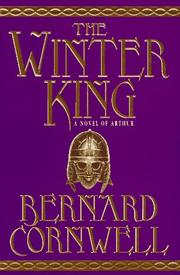
The first book: the death of Uther, the infant Mordred, and Arthur returning from Brittany as a warlord rather than a king. Read it for the framing device — an old monk writing in a Saxon-ruled Britain that Arthur failed to prevent, which tells you the ending from page one.
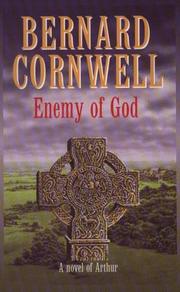
The middle book, where Lancelot is reimagined as a coward and a propagandist and the Christian and pagan conflict becomes the trilogy's real subject. The catalogue record for this one carries a Spanish translator in its author field alongside Cornwell — it is the English second volume.
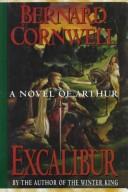
The conclusion, running to Mount Badon and past it to the collapse. It resolves the Derfel frame and is the reason the trilogy is so often named as Cornwell's best work; it cannot be read out of sequence.
The Arthur Cornwell is arguing with
IntermediateRead the medieval and Victorian sources that built the legend, so you can see exactly which parts Cornwell kept, inverted or threw out.
▸ Study plan for this stage
Pace: Three to four months for 2,112 pages, and this stage cannot be read at novel pace — four of the five books are medieval or Victorian and one is a modern novel. Take them in this order. Geoffrey of Monmouth's History of the Kings of Britain is 384 pages and is a primary medieval source, not a history
- Geoffrey of Monmouth as the source of nearly everything downstream — Merlin, Uther, the whole dynastic frame — and as a text no one reads as history
- The Welsh Arthur of the Mabinogion: a warband leader with strange retainers, which is where Cornwell's Welsh names and his politics come from
- Malory's fixing of the Round Table, the Grail and Lancelot's adultery in English, and the warlord's transformation into a chivalric king
- Tennyson turning Malory into moral allegory, the immediate ancestor of the gauzy Arthur Cornwell writes against
- White's playful, anachronistic, finally anti-war Arthur as the opposite modern solution to Cornwell's grim archaeological one
- The legend as a sequence of remakings rather than a single story with variants
- Why the order of this stage matters: each text is answering the one before it
- Which specific elements of the modern Arthur can you trace to Geoffrey alone, and which are already in the Welsh material?
- Reading the Mabinogion after the trilogy, what has Cornwell taken directly and what has he only borrowed the flavour of?
- Where in Malory does the warlord become a king, and what does the change cost the story?
- What is Tennyson's Arthur for, and who is it for? The answer is not the same as Malory's.
- White and Cornwell solve the same problem in opposite directions. State the problem, then say which solution you find more honest.
- Take the list of removals you made in stage one and find each item's first appearance across Geoffrey, the Mabinogion and Malory. That single exercise is most of what this stage is for.
- Read Malory's account of one episode and Tennyson's version of the same episode back to back, then compare both with how Cornwell handles it. Three registers, one scene.
- Read the Mabinogion tale of Culhwch and Olwen and list Arthur's retainers. Then look for their descendants in Cornwell's warband.
- Ration Malory deliberately — a set number of pages per sitting, written down in advance. Readers who try to take 501 pages of fifteenth-century prose at novel speed abandon it, and it is the book this stage most depends on.
- After The Once and Future King, write one paragraph on which of the two modern novels you would give someone who had read no Arthur at all.
Next up: Having seen how thoroughly the legend was invented and reinvented, the obvious next question is whether anything historical sits underneath it at all.
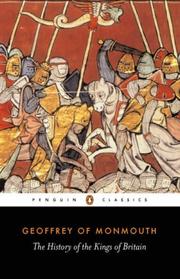
The twelfth-century work that put Arthur into European literature, complete with Merlin and Uther, and which historians have treated as largely fiction almost since it was written. Read it first of the sources: nearly everything downstream comes from here.

The medieval Welsh tales, in Davies's Oxford translation, containing the oldest Arthur — a leader of a warband surrounded by strange retainers rather than a courtly king. This is the tradition Cornwell's Britain is actually built on, and the reason his characters have Welsh names.

Malory's fifteenth-century compilation is the version that fixed the Round Table, the Grail and Lancelot's adultery in English. Read it after the Welsh material to watch the warlord turn into a chivalric king — the exact transformation Cornwell reverses.
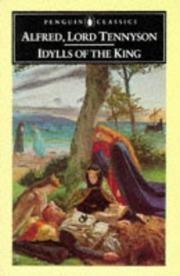
The Victorian remaking of Malory into a moral allegory, and the immediate ancestor of every gauzy Arthur Cornwell writes against. Short, and the fastest way to feel the distance between the legend's registers.
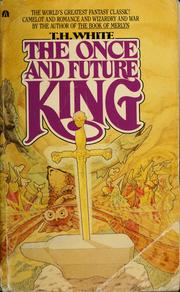
The twentieth century's other great Arthur novel, and the useful contrast: White is playful, anachronistic and finally anti-war, where Cornwell is grim and archaeological. Read it last of this stage to see two modern novelists solving the same problem in opposite directions.
What the historians actually think
IntermediateTest the trilogy's setting against the scholarship, including the case that there was no Arthur at all.
▸ Study plan for this stage
Pace: Three months for 1,398 pages, and none of it reads at fiction speed. John Morris's The Age of Arthur is the longest and the hardest going at 665 pages: it is the maximalist case, an attempt to write fifth- and sixth-century Britain as continuous narrative history with Arthur in it, and it was heavil
- The maximalist case: what it would take for Arthur to be a historical person, and what evidence Morris was willing to admit to get there
- Why The Age of Arthur was criticised — the treatment of late and unreliable sources as if they were contemporary record
- Archaeology as a constraint on narrative: what a dig at Cadbury can and cannot establish
- Alcock's caution as a method rather than a temperament, and the difference between no evidence and evidence of absence
- Higham's sceptical position: Arthur as a literary construction reused and rebuilt by each era that needs him
- The gap between a fifth-century Britain that certainly existed and a person who may not have
- How Cornwell's choice to write Arthur as a soldier rather than a symbol reads as an argument once you know this literature
- What is the earliest source that names Arthur, and how long after the events it describes was it written? Morris and Higham answer this differently in emphasis — say how.
- What did Alcock's excavation at Cadbury actually establish, and what has been claimed for it beyond that?
- Higham argues the figure is a construction. What would count as evidence against him?
- Having read all three, is the honest position that Arthur probably existed, probably did not, or that the question is badly formed?
- Which of the three books would you trust to correct the other two, and on what grounds?
- Does the trilogy's Britain survive contact with this scholarship? Name the parts that do and the parts that do not.
- Pick one specific claim Morris makes about a fifth-century event and follow it into Alcock and Higham. Watching one claim shrink across three books teaches more than any summary of the debate.
- Write out the source list — the handful of early texts everything depends on — with a date and a reliability note for each, from these three books rather than from memory.
- Read Morris and Alcock as a pair with the same notebook, and record every point where the archaeologist declines to confirm the historian.
- Return to Cornwell's Britain with Higham finished and mark three details in The Winter King that the scholarship supports and three it does not. Do this in writing; it is the payoff of the whole path.
- State, in one paragraph, what you now think a reader is entitled to believe about Arthur. Being able to write that paragraph is the point of reading three books of contested scholarship.
Next up: This is the end of the path: you have Cornwell's Arthur, the tradition he inverted, and the scholarship that decides how much of any of it could be true.
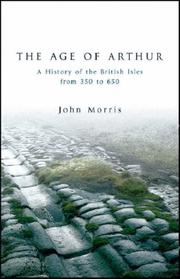
The 1973 attempt to write fifth- and sixth-century Britain as continuous history with Arthur in it. It was heavily attacked by later scholars for its handling of sources, which is precisely why it belongs first here: it is the maximalist case, and knowing why it failed frames everything after.
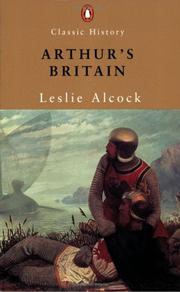
Alcock excavated Cadbury Castle, the site often identified with Camelot, and this is the archaeologist's answer to Morris — much more cautious about what the ground can actually support. Read the two together.
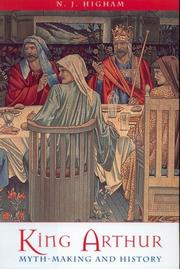
Higham's study of Arthur as myth-making rather than history, arguing that the figure is a literary construction serving each era that reuses him. It closes the path with the sceptical position, and it makes Cornwell's choice to write Arthur as a soldier and not a symbol look like an argument rather than a setting.
Discussion
Keep reading
Paths that share books, cover the same subject, or open a related topic.