Kingsbridge Reading Order: Publication or Chronological?
Ken Follett's Kingsbridge series spans nearly a thousand years of English history across four novels, plus one prequel. This curriculum guides you through both the publication order (which shaped how readers first experienced the saga) and the in-world chronological order, so you can appreciate Follett's craft from both angles. Each stage builds your familiarity with his storytelling style, historical periods, and recurring themes of power, faith, and architecture before moving to the next installment.
The Foundation Stone
BeginnerEnter the world of Kingsbridge with the novel that started it all, learning Follett's narrative style, his way of weaving architecture, religion, and human drama, and the medieval English setting that anchors the entire series.
▸ Study plan for this stage
Pace: 8–10 weeks, ~30–35 pages/day (the novel is ~1,000 pages); read in 5 named parts as Follett structures them, pausing at each part-break for reflection before continuing
- Medieval cathedral building as the spine of the narrative — understand how the construction of Kingsbridge Cathedral drives plot, character motivation, and thematic meaning across decades
- Follett's multi-generational, ensemble storytelling — track how he juggles a large cast (Tom Builder, Prior Philip, Ellen, Aliena, Jack, William Hamleigh) across different social strata and time spans
- The interplay of Church and State power — recognize how the Anarchy (the civil war between King Stephen and Empress Maud) creates the political instability that shapes every character's fate
- Architecture as character and symbol — learn the basics of Romanesque vs. early Gothic design that Follett embeds in the story, and what the cathedral represents spiritually and politically
- Follett's narrative formula: alternating POV chapters, cliffhanger scene endings, and the pairing of a heroic builder/visionary against a ruthless antagonist
- Religion, faith, and institutional corruption — distinguish between genuine spiritual devotion (Prior Philip) and the Church as a vehicle for ambition and cruelty
- Social mobility and gender in 12th-century England — trace how characters like Aliena and Ellen navigate a rigidly hierarchical, patriarchal world
- The long arc of justice — Follett's moral universe where virtue is tested over decades before it is (or isn't) rewarded, teaching patience as a reading skill
- How does the building of Kingsbridge Cathedral function as more than a backdrop — in what ways does its progress or setback directly mirror the fortunes of the main characters?
- What role does the Anarchy (the Stephen–Maud civil war) play in the novel, and how does national political chaos filter down to affect the lives of ordinary people in Kingsbridge?
- Compare Prior Philip and William Hamleigh as opposing moral forces: what does each man want, what methods does each use, and how does Follett use them to explore the theme of power?
- How does Follett use architecture — specifically the shift from Romanesque to Gothic — to signal character growth, particularly in Jack Jackson's evolution as a builder?
- In what ways are Aliena and Ellen constrained by 12th-century society, and how does each woman push back against or work within those constraints?
- By the end of the novel, what has Follett established as the 'rules' of his Kingsbridge world — morally, structurally, and narratively — that a reader can expect to carry into future books?
- **Architectural sketch journal**: As each major phase of the cathedral's construction is described, draw a rough floor plan or elevation sketch. Note which character is responsible for each design decision and what obstacle threatens it. This makes abstract building descriptions concrete and memorable.
- **Character relationship map**: After finishing each of the five parts, update a hand-drawn diagram connecting all major characters with labeled arrows (e.g., 'loves,' 'betrays,' 'mentors,' 'rivals'). Pay special attention to how relationships shift across decades.
- **Antagonist motivation log**: Every time William Hamleigh commits an act of violence or cruelty, write one sentence explaining his immediate motive and one sentence explaining the deeper social/political system that enables him. This builds critical reading habits beyond 'he is simply evil.'
- **Historical context pairing**: Read a short external article or encyclopedia entry on (a) the Anarchy 1135–1153, and (b) the basics of Romanesque and Gothic cathedral architecture. After reading each, write a paragraph on one moment in the novel that is richer for knowing that context.
- **Follett's craft analysis**: Choose any three consecutive chapters and annotate how each chapter ends — does it end on a cliffhanger, a revelation, a quiet emotional beat? Write a one-page reflection on how Follett's scene-ending technique controls reading pace and tension.
- **Theme essay (500–700 words)**: At the novel's conclusion, write a short essay responding to this prompt: 'The Pillars of the Earth argues that building something beautiful is itself a moral act. Do you agree, based on the evidence of the novel?'
Next up: Completing The Pillars of the Earth gives the reader a fully internalized map of Kingsbridge's geography, social hierarchy, and moral logic, providing the essential baseline against which the next stage's books — set in later eras — can be measured for continuity, change, and thematic evolution.
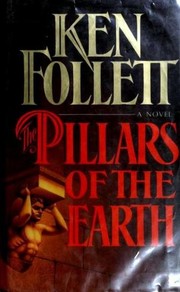
The 1989 publication that launched the series and remains its most beloved entry. Reading it first gives you the full emotional and historical foundation — the building of Kingsbridge Cathedral in the 12th century — that all other books reference and build upon.
Publication Order: The Direct Sequel
BeginnerContinue in the order Follett's readers originally experienced the saga, moving two centuries forward to 14th-century Kingsbridge and deepening your understanding of how the town and its institutions evolve across generations.
▸ Study plan for this stage
Pace: 4–5 weeks, ~25–30 pages/day (the novel runs ~1,000 pages); aim to finish one of the novel's five roughly equal "parts" per week, giving you natural pause points for reflection
- Generational continuity and change – World Without End is set ~200 years after The Pillars of the Earth, so the same cathedral, priory, and town exist but have been transformed by time, new families, and shifting power structures
- The Black Death as a historical turning point – the plague arrives mid-novel and reshapes every institution in Kingsbridge, making it a masterclass in how catastrophe accelerates social change
- Women's agency and medieval medicine – protagonist Caris's struggle to practice healing and eventually lead the priory challenges the reader to examine gender roles and intellectual freedom in the 14th century
- The wool trade and mercantile capitalism – unlike the 12th-century focus on cathedral-building, this novel centers on commerce, cloth-making, and the emerging merchant class as engines of civic power
- Church authority vs. secular ambition – the conflict between Prior Godwyn and the townspeople dramatizes the slow erosion of ecclesiastical dominance and the rise of civic self-governance
- Architecture as institutional memory – the bridge and the new hospital are the novel's great building projects, showing how each generation inherits and reinterprets the physical legacy of its predecessors
- The Hundred Years' War as backdrop – English military campaigns in France create economic pressure and political instability that ripple through Kingsbridge's daily life
- Follett's narrative craft for beginners – interlocking storylines, chapter-by-chapter cliffhangers, and a large ensemble cast are deliberate techniques worth identifying as a new reader of long-form historical fiction
- How does Kingsbridge in the 14th century differ from the town depicted in The Pillars of the Earth, and what institutions or physical structures connect the two eras?
- What role does the Black Death play in shifting the balance of power between the priory and the townspeople, and which characters are most affected by this shift?
- How does Caris's journey — from accused witch to prioress and medical innovator — reflect the broader theme of women navigating restrictive medieval institutions?
- In what ways does the wool and cloth trade function as a source of both conflict and liberation for the characters, and who controls it at the novel's end versus its beginning?
- How does Follett use the construction of the new bridge and hospital as symbolic counterparts to the cathedral-building in The Pillars of the Earth?
- Which antagonists in World Without End most effectively represent institutional corruption, and how does Follett ensure the reader understands their motivations rather than simply vilifying them?
- Timeline mapping: Create a two-column timeline — one for real 14th-century historical events (the Black Death, the Hundred Years' War, the Statute of Laborers) and one for the novel's plot events. Note where Follett aligns fiction with history and where he takes creative license.
- Character relationship web: Draw a diagram connecting the novel's major characters (Caris, Merthin, Godwyn, Philemon, Gwenda, Wulfric) with labeled lines showing their relationships, rivalries, and power dynamics. Update it at the end of each 'part' of the novel.
- Comparative institution audit: List the key institutions in World Without End (the priory, the guild, the town council, the hospital) and for each one write 2–3 sentences on who controls it at the start of the novel and who controls it at the end — then reflect on what drove the change.
- Close-reading passage journal: Choose one scene involving Caris practicing medicine and one involving Merthin's architectural work. Write a short paragraph on each explaining how Follett uses sensory detail and period-accurate language to make the medieval setting feel lived-in.
- Thematic comparison essay (300–400 words): Without re-reading The Pillars of the Earth, write from memory about one theme that appears in both novels (e.g., the abuse of Church power, the role of a visionary builder, the resilience of ordinary people). Identify what is the same and what has evolved.
- Reader's glossary: As you read, keep a running list of at least 15 unfamiliar medieval terms, trades, or titles (e.g., 'fleece staple,' 'prioress,' 'corrodian'). Write a one-sentence plain-English definition for each, using context clues from the novel before consulting outside sources.
Next up: Completing World Without End gives you a firm grasp of Kingsbridge across two distinct centuries, preparing you to step outside strict publication order and explore the prequel A Column of Fire, where the town's Reformation-era story demands you recognize how deeply its Catholic institutions — now familiar to you — are about to be dismantled.
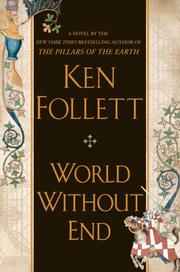
Published in 2007, this direct sequel is set 200 years after Pillars and follows descendants of the original characters through the Black Death and the Hundred Years' War. Reading it second mirrors the publication experience and rewards your knowledge of the cathedral's history.
Publication Order: The Modern Chapter
IntermediateFollow the publication timeline into the 16th century, experiencing how Follett adapts his formula to the English Reformation — a more politically complex and morally ambiguous era — while still centering Kingsbridge and its cathedral.
▸ Study plan for this stage
Pace: 4–5 weeks, ~25–30 pages/day (the novel runs ~900 pages in most editions); allow extra time mid-read for the denser political chapters surrounding the St. Bartholomew's Day Massacre and the Spanish Armada plot
- The English Reformation as narrative engine: how the Catholic/Protestant conflict replaces the medieval Church power struggles of earlier Kingsbridge novels as the primary source of dramatic tension
- Moral ambiguity and ideological complexity: unlike the clearer villain/hero dynamics of earlier eras, A Column of Fire presents characters on both sides of the religious divide as capable of atrocity and compassion, forcing the reader to sit with ethical discomfort
- The evolution of the Kingsbridge 'formula': Follett's signature structure (multigenerational families, a cathedral as anchor, love across divides, a long historical arc) is stretched across multiple countries and royal courts, testing how portable the formula is
- Espionage and statecraft as plot mechanics: the novel introduces spy networks, coded letters, and political assassination as primary plot drivers — a significant departure from the craft-and-construction plots of earlier books
- The cathedral as symbolic constant: Kingsbridge Cathedral shifts from a building under construction to an established institution whose survival is now threatened by iconoclasm and religious politics rather than engineering failure
- Female agency in a constrained world: protagonist Margery Shiring and other women navigate religious conviction, dynastic marriage, and secret resistance, extending Follett's long-running interest in women operating within patriarchal structures
- Pan-European scope: the narrative moves between England, France, Spain, and the Low Countries, situating Kingsbridge within the broader Wars of Religion and demanding that the reader track multiple national storylines simultaneously
- The long 16th century as historical context: the reign of Elizabeth I, the threat of Mary Queen of Scots, the Spanish Armada, and the St. Bartholomew's Day Massacre are not mere backdrop — they are structural plot beats the reader must understand to follow character motivations
- How does Follett use the Catholic/Protestant divide to generate conflict in A Column of Fire, and in what ways is this morally different from the Church corruption that drove tension in earlier Kingsbridge novels?
- What role does Kingsbridge Cathedral play in this novel compared to its role as a construction project in earlier eras — what does its established presence allow Follett to do differently?
- How does the novel portray Queen Elizabeth I and her court, and how do the fictional Kingsbridge characters' fates become entangled with real historical events such as the St. Bartholomew's Day Massacre and the Armada?
- In what ways does Ned Willard's career as a spy for Elizabeth's government complicate the reader's ability to view him as a straightforward hero, and how does this reflect the novel's broader moral ambiguity?
- How does Margery Shiring's secret Catholicism function as both a personal and political act, and what does her storyline reveal about the cost of religious conviction in the 16th century?
- How successfully does Follett adapt his multigenerational family saga structure to a story that spans multiple countries and decades — where does the formula feel stretched, and where does it feel renewed?
- Construct a dual-column character map: on one side list the major Protestant characters and their allegiances; on the other, the Catholic characters. Draw lines where characters cross, collaborate, or betray each other — then annotate which crossings surprised you and why, as a way of tracking the novel's moral complexity.
- Keep a 'historical anchor log': each time a real event (e.g., the St. Bartholomew's Day Massacre, the execution of Mary Queen of Scots, the Armada) appears in the novel, pause and write 3–5 sentences summarizing what you already knew about that event versus how Follett fictionalizes it. Note where he compresses, invents, or reframes history.
- Write a one-page comparative essay answering: 'How has the cathedral changed as a symbol between the earlier Kingsbridge era and A Column of Fire?' Use specific scenes from the novel to support your argument.
- Map the novel's geography: draw or annotate a simple map of Western Europe marking every city or region the narrative visits. Use this to track how the pan-European scope changes the pacing and focus compared to the more locally rooted earlier Kingsbridge stories.
- Choose one morally ambiguous act committed by a protagonist (e.g., Ned's espionage decisions, Margery's deceptions) and write a structured 'defense and prosecution' paragraph — argue both that the character was justified and that they were not, using evidence from the text.
- Draft a short 'series evolution memo' (one page): list three specific ways A Column of Fire extends or modifies the Kingsbridge formula established in earlier novels, and predict — based on patterns you've noticed — what a hypothetical next stage of the series might look like thematically.
Next up: By completing A Column of Fire, the reader has now traced the Kingsbridge saga from the 12th through the 16th century in publication order, building the interpretive skills — tracking historical context, recognizing Follett's structural formula, and reading moral complexity — needed to approach the series chronologically or to engage with the prequel and companion works that fill in the gaps betwe

Published in 2017, this third novel leaps to the age of Queen Elizabeth I and religious wars between Catholics and Protestants. It rewards readers already comfortable with Follett's style by introducing espionage and international intrigue alongside the familiar Kingsbridge backdrop.
Publication Order: The Newest Entry
IntermediateComplete the publication-order reading with the most recently released Kingsbridge novel, set in the 14th century alongside World Without End, and reflect on how Follett's storytelling has matured over three decades.
▸ Study plan for this stage
Pace: 3–4 weeks, ~25–30 pages/day — Evening and the Morning runs approximately 900 pages; a steady daily pace allows time for reflection without rushing the dense historical detail of 10th-century England.
- Prequel storytelling: how Evening and the Morning functions as an origin story for Kingsbridge, depicting the town's earliest foundations centuries before The Pillars of the Earth
- 10th-century England as setting: the Viking raids, the fragile Saxon kingdoms, and the brutal realities of early medieval life that differ markedly from the 12th–14th century settings of the earlier novels
- Follett's narrative maturity: comparing his prose style, pacing, and character construction in this 2020 novel against his earlier work to trace three decades of craft development
- Multi-protagonist structure: tracking the interwoven storylines of Edgar the bridge-builder, Aldred the monk, and Ragna the Norman noblewoman, and how each thread serves the novel's thematic whole
- Power, gender, and agency: Ragna's struggle against corrupt local lords as a lens on how Follett depicts women's resistance within severely patriarchal medieval structures
- The church as institution: Aldred's idealism versus the entrenched corruption of the clergy, echoing but deepening the ecclesiastical conflicts of the earlier Kingsbridge novels
- Architecture and craft as metaphor: Edgar's bridge-building and construction work as a symbol of civilization, progress, and human perseverance against chaos — the literal founding of Kingsbridge
- Thematic continuity across the series: identifying the recurring Follett motifs (ambition, injustice, resilience, community-building) and how Evening and the Morning both honors and reframes them
- How does Evening and the Morning explain the origins of Kingsbridge as a settlement and a community, and which characters are most directly responsible for laying its foundations?
- In what ways does the 10th-century setting — particularly the Viking threat and the weakness of Saxon governance — create a distinctly different atmosphere from the later Kingsbridge novels, and how does Follett use that contrast deliberately?
- How does Ragna's arc illustrate Follett's evolving portrayal of female agency, and how does her situation compare to that of powerful women in the earlier books of the series?
- What does Aldred's storyline reveal about Follett's ongoing critique of institutional religion, and in what ways is his idealism tested or transformed by the novel's end?
- Reflecting on the full publication-order journey, how has Follett's prose style, structural complexity, and thematic ambition visibly changed between his earlier novels and Evening and the Morning?
- Edgar is essentially the 'first builder' of Kingsbridge — how does Follett use his craft and character to establish the values (ingenuity, community, moral courage) that will define Kingsbridge across all the novels?
- Craft a 'founding document' for Kingsbridge: after finishing the novel, write one to two pages in your own words describing the town's origin as Evening and the Morning presents it — who built it, why, and what values were embedded in its founding.
- Comparative character matrix: create a table mapping Edgar, Aldred, and Ragna against protagonists from the earlier Kingsbridge novels (e.g., Tom Builder, Caris, Merthin) — note similarities in archetype, obstacles faced, and moral choices, then write a short paragraph on what this reveals about Follett's character templates.
- Style audit: select one action scene and one intimate character scene from Evening and the Morning, then find comparable scenes from an earlier novel in the series. Write a one-page close-reading comparison focusing on sentence rhythm, descriptive detail, and emotional tone to concretely track Follett's stylistic evolution.
- Viking raid mapping exercise: each time a Viking raid or threat appears in the novel, note the chapter, the characters affected, and the immediate consequence. At the end, write a short essay on how the Viking presence functions not just as historical backdrop but as a narrative and thematic engine.
- Series reflection journal: write a 500-word personal reflection on the full publication-order reading experience — what surprised you most about how the series evolved, which novel felt most accomplished, and how Evening and the Morning changed (or confirmed) your understanding of the Kingsbridge world.
- Timeline synthesis: construct a single visual timeline spanning all the Kingsbridge novels in publication order, marking key historical events, major characters, and the 'state of Kingsbridge' at each novel's close — use Evening and the Morning as the anchor point showing where everything began.
Next up: Completing Evening and the Morning closes the publication-order arc and equips the reader with a full panoramic view of Follett's craft evolution, making them ideally prepared to re-engage the series in chronological order — starting with this same novel — and experience how Follett deliberately layered foreshadowing, thematic echoes, and world-building across centuries of fictional Kingsbridge hi

Published in 2020 as a prequel set in the 10th century (the Dark Ages), this is the final piece of the publication-order puzzle. Reading it last in publication order lets you experience the dramatic irony of knowing the great cathedral that will one day rise from this rough, violent world.
Discussion
Keep reading
Paths that share books, cover the same subject, or open a related topic.