Learn copyediting: polish any piece of writing
This curriculum takes a beginner from zero editorial knowledge to professional-level copyediting and proofreading competence across four tightly sequenced stages. Each stage builds on the last — first internalizing the rules of language, then learning to apply them editorially, then mastering industry-standard style guides and workflows, and finally turning those skills into a sustainable career or side income.
Foundations: Grammar, Style & the Writer's Eye
BeginnerBuild a solid command of English grammar, usage, and clear prose — the essential raw material every editor must internalize before touching someone else's work.
▸ Study plan for this stage
Pace: 8–10 weeks total, reading roughly 20–30 pages per day. Week 1–2: "The Elements of Style" (read slowly; re-read each rule before moving on). Weeks 3–5: "Woe Is I" (one chapter per sitting, pausing to do the book's own quizzes). Weeks 6–10: "Sin and Syntax" (two chapters per week, savoring the prose m
- Strunk's 'omit needless words' principle and the discipline of concision — every word must earn its place
- The canonical rules of usage: subject-verb agreement, pronoun case, parallel structure, and dangling modifiers, as laid out across all three books
- The difference between prescriptive rules (what traditionalists demand) and descriptive reality (how language actually works), a tension O'Conner navigates with wit in Woe Is I
- Punctuation as a tool for rhythm and clarity — commas, semicolons, dashes, and apostrophes treated in depth by O'Conner
- The building blocks of a sentence — nouns, verbs, modifiers, and clauses — and how Hale in Sin and Syntax shows that strong verbs and concrete nouns are the engine of vivid prose
- Active vs. passive voice: when each is appropriate, and why Strunk and Hale both push writers toward the active
- The 'carnal sins' of prose (Sin and Syntax's framework): clutter, vagueness, weak verbs, and misplaced modifiers as diagnosable, fixable diseases
- Developing a writer's eye: reading published sentences critically to spot what works, what fails, and why — the meta-skill all three books cultivate
- After reading The Elements of Style, can you recite and apply at least five of Strunk's elementary rules of usage — and explain the reasoning behind each, not just the rule itself?
- What is the difference between 'that' and 'which,' between 'who' and 'whom,' and between 'lie' and 'lay' — and how does O'Conner's Woe Is I make these distinctions memorable and practical?
- How does Sin and Syntax argue that the noun and the verb are the twin pillars of a strong sentence, and what specific techniques does Hale recommend for choosing each?
- What are the most common comma errors O'Conner identifies, and what quick tests can an editor apply to catch them in someone else's manuscript?
- How do all three books collectively define 'clutter,' and what is the step-by-step process for cutting a bloated sentence down to its essential meaning?
- In what ways do Strunk's prescriptive commandments and O'Conner's more flexible, usage-based approach complement rather than contradict each other — and how should an editor decide which authority to follow?
- 'Omit needless words' drill: Take any three paragraphs from a newspaper op-ed or blog post and cut each by at least 30% without losing meaning — then compare your cuts against Strunk's rules to see which principle justified each deletion.
- Woe Is I quiz replay: After finishing each chapter of O'Conner's book, close it and write your own five-sentence paragraph that deliberately violates the chapter's key rule; then correct it, explaining each fix in a marginal note.
- Verb audit: Choose a page of your own writing (or a freely available public-domain text) and highlight every verb. Following Hale's guidance in Sin and Syntax, replace every weak 'to be' construction or vague verb with a concrete, active alternative — then read both versions aloud.
- Sentence dissection journal: Each week, copy out five sentences you find striking — from any source — and label every grammatical element (subject, verb, object, modifier, clause type). Note what makes each sentence succeed or fail by the standards of all three books.
- Error log: As you read all three books, keep a running personal list of the grammar and usage mistakes you know you make habitually. By the end of the stage, write a one-page 'personal style memo' that names your top five weaknesses and the rule that corrects each.
- Read-aloud revision: Print a full page of prose (your own or a public-domain passage), read it aloud slowly, and mark every spot where you stumble or the rhythm feels off. Revise those spots using the principles from Strunk (concision), O'Conner (correctness), and Hale (vivid word choice) — then read it aloud again and note the difference.
Next up: ">Internalizing grammar, usage, and sentence-level clarity in this stage gives you the diagnostic vocabulary and editorial instincts you'll need in the next stage, where you'll apply those same standards systematically to other people's manuscripts — moving from understanding the rules to enforcing them under real copyediting conditions.
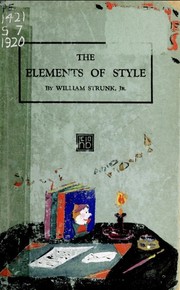
The classic starting point for anyone working with words; its concise rules of usage and composition give beginners a shared editorial vocabulary and a feel for what 'clean' prose looks like.
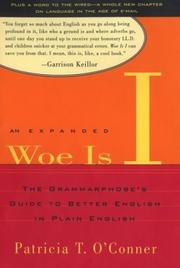
A friendly, example-rich tour of everyday grammar pitfalls — the perfect follow-up to Strunk & White that makes the rules feel practical and memorable rather than abstract.
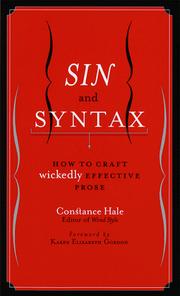
Bridges grammar and style by showing how the rules can be bent purposefully; reading this third ensures the learner understands both the law and its spirit before editing others.
The Editor's Eye: Copyediting in Theory & Practice
BeginnerUnderstand what copyediting and proofreading actually are as crafts — the marks, the mindset, the process, and the difference between the two disciplines.
▸ Study plan for this stage
Pace: 10–12 weeks total, reading roughly 20–25 pages per day. Week 1–3: Judd's "Copyediting, a Practical Guide" (read end-to-end, including all sample exercises). Week 4–8: Einsohn's "The Copyeditor's Handbook" (slower pace; treat each chapter as a standalone workshop — re-read dense grammar/style section
- The distinction between copyediting and proofreading: copyediting intervenes in a manuscript before layout; proofreading checks a typeset proof against a corrected manuscript — Judd and May together make this boundary concrete.
- Standard proofreading and copyediting marks: both Judd and May introduce the conventional symbol sets; mastering these marks is the non-negotiable entry point to professional editorial work.
- The editorial hierarchy of concerns — mechanical style (spelling, punctuation, capitalization), grammar and usage, consistency, and fact-checking — as laid out systematically in Einsohn's handbook.
- House style vs. published style guides: Einsohn's handbook explains how editors navigate conflicts between a client's preferences and authorities such as Chicago, AP, or Merriam-Webster.
- The copyeditor's mindset: Judd frames editing as a service relationship with the author and publisher, not a rewriting exercise — understanding when NOT to change something is as important as knowing how.
- Levels of edit: Judd introduces the concept of light, medium, and heavy copyediting, giving readers a framework for scoping any project before touching a word.
- Consistency checking: tracking character names, terminology, hyphenation, and number style across a document — a practical skill drilled in Einsohn's exercises.
- The proofreader's workflow: May's step-by-step process (cold reading, comparison reading, and query writing) shows how proofreading is a distinct, structured discipline, not just 'a final read-through.'
- After reading Judd, can you explain in plain language the difference between a copyeditor's job and a proofreader's job, and at what stage of production each person enters the workflow?
- Can you reproduce from memory (or accurately look up) at least 15 standard copyediting and proofreading marks, and use them correctly on a marked-up page — as practiced in both Judd and May?
- Using Einsohn's framework, what are the four or five major categories of issues a copyeditor is responsible for, and how do you prioritize them when time is limited?
- How does Einsohn advise a copyeditor to handle a conflict between an author's deliberate stylistic choice and a rule in the house style guide?
- Following May's methodology, what is the difference between a 'cold read' and a 'comparison read,' and when would you use each technique?
- What does Judd mean by 'levels of edit,' and how would you use that concept to set expectations with a client or employer before starting a project?
- Mark-up drill (Judd): Photocopy or retype one of Judd's sample passages and copyedit it using only standard marks — no track changes. Compare your marks to Judd's answer key and note every discrepancy. Repeat weekly with fresh passages.
- Symbol flashcards (Judd + May): Create a two-sided flashcard deck — one side shows the mark, the other shows its name and function. Drill until you can identify all marks in under 30 seconds each.
- Einsohn chapter journals: After each chapter of The Copyeditor's Handbook, write a half-page summary of the rule set covered and one real-world sentence you invented that violates — then corrects — that rule.
- Consistency log exercise (Einsohn): Take any 10-page public-domain text (Project Gutenberg works well). Build a style sheet from scratch: record every hyphenation decision, number style, capitalization choice, and recurring proper noun. Then audit the text for inconsistencies against your own sheet.
- Cold-read vs. comparison-read (May): Find a short press release or blog post online. First, cold-read it for errors without any reference document. Then, retype it with five deliberate errors introduced, print both versions, and practice May's comparison-read technique to catch every planted mistake.
- End-of-stage synthesis: Take a single 2–3 page unpublished or public-domain passage and run it through the full workflow — copyedit it using Judd's levels-of-edit framework and Einsohn's category checklist, then produce a 'proof' of your own edited version and proofread it using May's process. Write a one-page reflection on where the two disciplines overlapped and where they were clearly distinct.
Next up: Having internalized the marks, mindset, and process boundaries of both crafts through Judd, Einsohn, and May, the reader is ready to move from foundational mechanics into the deeper stylistic and grammatical judgment calls that define expert-level editing — the natural focus of any intermediate stage.
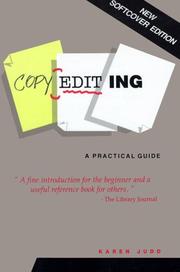
One of the most thorough introductions to the copyediting process itself — covering manuscript markup, querying authors, and consistency checking — making it the ideal first dedicated textbook.
The field's definitive instructional text; after Judd's overview, this book deepens every skill with exercises, real-world examples, and nuanced discussion of editorial judgment.
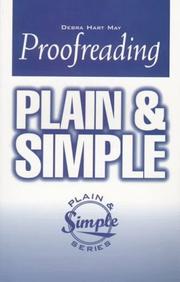
Focuses specifically on proofreading as a distinct discipline — marks, checklists, and strategies — ensuring the learner can clearly separate the proofreader's role from the copyeditor's.
Style Guides: Working to a Standard
IntermediateLearn to navigate and apply the major industry style guides confidently, understanding when and why each one is used across different publishing contexts.
▸ Study plan for this stage
Pace: 10–12 weeks total. Week 1–5: The Chicago Manual of Style — focus on chapters covering manuscript preparation, grammar, punctuation, citations, and documentation (~25–30 pages/day, treating it as a reference to read thematically rather than cover-to-cover; prioritize Parts 1–3 and the citation chapte
- The scope and authority of each guide: Chicago as the standard for book publishing and academic writing, AP as the standard for journalism and media, and Garner's as the usage arbiter for legal and general prose
- Chicago's two citation systems — Notes-Bibliography (humanities) vs. Author-Date (sciences/social sciences) — and when each is appropriate
- AP style's core departures from Chicago: abbreviations, numerals, capitalization, and the absence of the Oxford comma as deliberate editorial philosophy
- Garner's Language-Change Index: the five-stage spectrum from 'rejected' to 'fully accepted,' and how to use it to make defensible editorial decisions
- How style guides handle evolving usage: inclusive language, gender-neutral pronouns, and the treatment of new or contested words across all three books
- The concept of 'house style' — how publishers layer their own rules on top of a base guide, and the editor's role in maintaining consistency within that hierarchy
- Punctuation philosophy differences: Chicago's comprehensive punctuation rules vs. AP's streamlined, space-saving journalism conventions
- Cross-referencing strategy: knowing which guide to consult first for a given text type, and how to resolve conflicts between guides using Garner's as a usage court of last resort
- What are the key structural differences between Chicago's Notes-Bibliography and Author-Date systems, and how would you decide which to apply to a given manuscript?
- A journalist's article uses 'percent' spelled out and includes an Oxford comma throughout — using AP Stylebook, how would you correct these, and what is the rationale behind AP's choices?
- A Garner's Language-Change Index rating of Stage 3 is assigned to a usage — what does that mean, and how should it influence your editing decision for a formal academic text vs. a news article?
- How do Chicago and AP differ in their treatment of numbers, titles of works, and abbreviations? Give at least two concrete examples for each category.
- If a publisher's house style sheet conflicts with a rule in the Chicago Manual of Style, what is the correct editorial hierarchy to follow, and why?
- How does Garner's Modern English Usage function differently from Chicago and AP — is it a style guide in the same sense, and how should it be used alongside the other two?
- Style-switching drill: Take a single 500-word passage (e.g., a news article) and edit it first to strict Chicago style, then re-edit the Chicago version to AP style, documenting every change you make and the specific rule that governs it.
- Citation audit: Find or create a reference list of 10 sources (books, journal articles, websites, interviews) and format each one correctly in both Chicago Notes-Bibliography and Author-Date systems, then check your work against the relevant Chicago chapters.
- Garner's verdict log: Over two weeks, collect 15 real-world usage disputes you encounter while reading (e.g., 'data is' vs. 'data are,' 'they' as singular) and look up each in Garner's — record the Language-Change Index stage, Garner's recommendation, and your own editorial decision for three different text types (academic, journalistic, general trade).
- House style simulation: Draft a one-page house style sheet for a fictional mid-size trade publisher, specifying which base guide you are using (Chicago), then list 10 deviations or additions your house style makes — justify each decision by citing the relevant Chicago section or a Garner's entry.
- AP vs. Chicago head-to-head quiz: Create a two-column reference card of the 20 most common style conflicts between AP and Chicago (numerals, dates, state abbreviations, titles, comma usage, etc.) and test yourself by covering one column and recalling the other guide's rule from memory.
- Proofreading against a guide: Obtain a publicly available press release or institutional report, mark it up against AP Stylebook rules, then write a brief editorial memo (150–200 words) explaining your top five corrections and the specific Stylebook entries that support them.
Next up: Mastering these three guides builds the authoritative rule-set and decision-making hierarchy that the next stage — applying editorial judgment to real manuscripts — demands, because you can now distinguish between a style violation, a usage error, and a legitimate authorial choice with a specific, citable rationale.
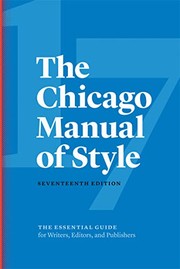
The bible of book and general publishing; every serious copyeditor must know it deeply, and reading it at this stage — after building editorial instincts — makes its vast detail digestible.

The standard for journalism, content marketing, and digital media; pairing it with Chicago teaches the learner that 'correct' is always context-dependent and client-specific.
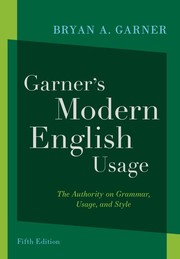
The most authoritative and nuanced usage guide available; at this stage it serves as the editor's go-to reference for resolving contested points that style guides alone don't settle.
Career & Business: Editing as a Profession
ExpertTranslate editorial skills into a professional identity — understanding how to find clients, set rates, manage projects, and build a sustainable freelance editing career or side income.
▸ Study plan for this stage
Pace: 6–8 weeks total: Weeks 1–3 cover "The Subversive Copy Editor" (~20–25 pages/day, including re-reading key chapters on client communication and workflow); Weeks 4–7 cover "What Editors Do" (~25–30 pages/day, a denser anthology requiring reflection time between sections); Week 8 is reserved for synthe
- The 'subversive' mindset: balancing editorial authority with diplomacy, humility, and author-centered service (Saller)
- Managing the editorial relationship — communicating with authors, agents, and publishers without ego or conflict (Saller)
- Setting boundaries and workflows: how to handle difficult authors, unclear briefs, and scope creep professionally (Saller)
- The full editorial ecosystem: how developmental editing, line editing, copyediting, and proofreading each occupy a distinct professional niche (Ginna)
- The editor as collaborator and advocate: understanding the editor's role not as gatekeeper but as a creative and commercial partner (Ginna)
- Publishing industry structures — trade, academic, digital, and freelance markets — and how editors position themselves within them (Ginna)
- Building a professional identity: defining your editorial specialty, ideal client, and value proposition drawn from both books
- Sustainable practice: rate-setting philosophy, project management, and long-term career building implied by the professional standards both authors model
- According to Saller, what does it mean to be a 'subversive' copy editor, and how does that philosophy change the way you handle disagreements with authors or house style?
- How does Saller recommend managing a difficult or unresponsive author while still delivering a clean, on-schedule manuscript?
- Based on Ginna's contributors, what distinguishes a developmental editor's work from a copyeditor's, and why does that distinction matter when marketing your services to clients?
- What does 'What Editors Do' reveal about the range of publishing contexts (trade, academic, digital) an editor might work in, and how should that inform your choice of specialization?
- How would you use the professional standards and workflows described in both books to write a client-facing service description or rate sheet?
- What ethical responsibilities do both Saller and Ginna's contributors identify as central to editorial work, and how do those responsibilities shape day-to-day professional decisions?
- Draft a one-page 'editorial philosophy statement' synthesizing Saller's author-centered approach and the collaborative ethos described in Ginna — this becomes the foundation of a professional bio or website About page.
- Role-play a difficult client scenario inspired by Saller's case studies: write out the email exchange you would have with an author who is pushing back on every correction, applying her diplomatic but firm communication principles.
- Using Ginna's breakdown of editorial roles, create a personal 'services menu' that clearly defines which type(s) of editing you offer, who your ideal client is, and what is explicitly out of scope — practice the clarity both books demand.
- Research three real freelance editing rate surveys (e.g., EFA, ACES) and, using the professional positioning logic from both books, write a one-paragraph justification for the rate you would charge at your current experience level.
- Select one chapter or essay from 'What Editors Do' that covers a publishing context unfamiliar to you (e.g., academic, digital, or children's publishing) and write a 300-word reflection on how you could transfer your existing skills into that market.
- Design a simple project-management checklist for a copyediting job — intake, style sheet creation, editing passes, author review, final delivery — grounded in the workflow discipline Saller models throughout her book.
Next up: Mastering the professional identity, client communication, and industry positioning covered in this stage gives the reader the business fluency needed to pursue advanced specialization, whether that means moving into developmental editing, editorial management, or a specific publishing niche explored in subsequent stages.
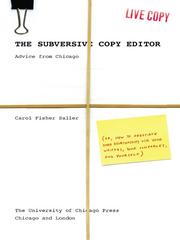
Reframes the editor's role around diplomacy, flexibility, and author relationships — essential professional wisdom that turns a technically skilled editor into a truly hireable one.

A collection of essays by working editors across every publishing sector; reading this last gives the learner a panoramic view of where their skills can take them and how the industry actually operates.
Discussion
Keep reading
Paths that share books, cover the same subject, or open a related topic.