Best Books on the Berlin Wall, in Reading Order
This curriculum takes the reader from the broad sweep of divided Berlin and the Cold War through the Wall's dramatic construction, the harrowing escape attempts and Stasi surveillance, and finally to the euphoric collapse of 1989. Each stage builds the historical, political, and human context needed to fully appreciate the deeper and more specialized works that follow.
Foundations: Divided Berlin and the Airlift
BeginnerUnderstand how Berlin came to be divided after World War II, why the city became the epicenter of the Cold War, and how the 1948–49 Berlin Airlift set the stage for decades of tension.
▸ Study plan for this stage
Pace: 6–7 weeks, ~40–50 pages/day. Start with "The Fall of Berlin, 1945" (weeks 1–4, ~800 pages), then "The Candy Bombers" (weeks 5–7, ~400 pages). Allocate 1–2 days per week for review and note-taking.
- The military and political collapse of Nazi Germany in 1945 and the Soviet Red Army's conquest of Berlin
- The Potsdam Conference agreements and the division of Berlin into four occupation zones (American, British, French, Soviet)
- Stalin's strategic objectives in Eastern Europe and his consolidation of Soviet control over East Germany
- The escalating tensions between the Western Allies and the Soviet Union over reparations, German governance, and territorial control
- The Soviet blockade of West Berlin (June 1948–May 1949) as a deliberate attempt to force Western withdrawal
- The Berlin Airlift as a logistical and humanitarian response: Operation Vittles and the role of American and British pilots
- The symbolic and psychological significance of the airlift in demonstrating Western resolve and winning hearts in West Berlin
- How the airlift's success hardened Cold War divisions and led to the creation of two separate German states
- What were the immediate consequences of the Soviet Red Army's capture of Berlin in May 1945, and how did this shape the postwar occupation?
- How did the Potsdam Conference agreements attempt to structure the occupation of Germany and Berlin, and why did these arrangements prove unstable?
- What were Stalin's strategic goals in Germany and Eastern Europe after 1945, and how did they conflict with Western objectives?
- Why did Stalin impose the Berlin blockade in June 1948, and what did he hope to achieve?
- How did the Berlin Airlift work logistically, and what made it a viable alternative to military confrontation or Western withdrawal?
- What role did the distribution of candy and supplies play in the airlift's success beyond mere logistics?
- Create a detailed timeline of key events from the fall of Berlin (April–May 1945) through the end of the airlift (May 1949), marking political decisions, military actions, and turning points.
- Draw a map of divided Berlin showing the four occupation zones and annotate it with the locations of major airlift operations, Soviet blockade points, and civilian population centers.
- Write a 2–3 page comparative analysis of how Beevor's military narrative in 'The Fall of Berlin' and Cherny's human-centered account in 'The Candy Bombers' each illuminate different aspects of the same historical moment.
- Compile a dossier on one key figure (e.g., Stalin, General Lucius Clay, or a pilot featured in 'The Candy Bombers') using evidence from both books to explain their role and decision-making.
- Analyze primary documents or excerpts (e.g., the Potsdam Declaration, Soviet demands during the blockade, airlift statistics) and explain how they support or complicate the narratives in the two books.
- Create a visual infographic showing the scale of the Berlin Airlift: tonnage delivered daily, number of flights, aircraft types, and supplies, then reflect on how these numbers translate to human survival.
Next up: This stage establishes the historical foundation and personal stakes of the Cold War in Berlin, preparing you to examine how the hardened divisions led to the construction of the Wall itself and the ideological, social, and political consequences of a city split for nearly three decades.
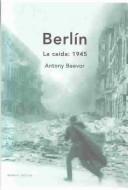
A gripping, accessible narrative of Berlin's destruction and occupation that explains exactly how the city ended up split between East and West — essential first context for everything that follows.

Tells the story of the Berlin Airlift in vivid human detail, establishing the moral and geopolitical stakes of the Western commitment to West Berlin before the Wall even existed.
The Night It Went Up
BeginnerUnderstand why the Wall was built, how it was erected overnight in August 1961, and what it meant for ordinary Berliners on both sides who woke up to find their city sealed.
▸ Study plan for this stage
Pace: 4–5 weeks, ~40–50 pages/day. Start with Taylor's overview (approximately 400 pages), then move to Kempe's detailed narrative (approximately 500 pages). Allocate 2–3 weeks for Taylor, then 2–3 weeks for Kempe, with overlap possible if reading simultaneously.
- The Cold War context: Soviet-American tensions and the division of Germany after WWII that made Berlin a flashpoint
- The refugee crisis: why East Germans were fleeing to West Berlin in massive numbers before August 1961, and how this threatened Soviet prestige
- Operation Rose: the Soviet and East German decision-making process to seal the border, and the political/military planning behind it
- The night of August 12–13, 1961: the logistics of how barbed wire, troops, and concrete were mobilized overnight to divide the city
- Immediate human impact: how ordinary Berliners on both sides experienced the shock of waking to a sealed city, separated families, and lost livelihoods
- The Wall as a symbol: what the barrier represented to each side—containment vs. imprisonment—and how it hardened Cold War ideology
- Early escape attempts and the human cost: the dangers people faced trying to cross, and the first deaths at the Wall
- Why did the Soviet Union and East Germany decide to build the Wall in 1961, and what specific crisis prompted the decision?
- How did the physical construction of the Wall happen so quickly, and what military/logistical preparations made the overnight operation possible?
- What was daily life like for Berliners on August 13, 1961, and how did the Wall immediately change their routines, families, and sense of freedom?
- How did West Berlin and East Berlin interpret the Wall's meaning differently, and what did each side claim it represented?
- What were the first escape attempts like, and why did some people die trying to cross the Wall in its early days?
- How did the construction of the Wall affect ordinary workers, shoppers, and families who had commuted or visited across the city before August 1961?
- Create a timeline of key events from 1945–August 13, 1961, marking the refugee exodus, Soviet threats, and the final decision to build the Wall, using details from both Taylor and Kempe.
- Draw or annotate a map of Berlin showing the pre-Wall city layout, major crossing points, and how the Wall divided neighborhoods, streets, and families—reference the maps in both books.
- Write a first-person account (300–400 words) from the perspective of either an East or West Berliner waking up on August 13, 1961, incorporating specific details about what they would have seen, heard, and felt.
- Compare how Taylor and Kempe each explain the Soviet decision-making process: what does each author emphasize, and where do their narratives differ or align?
- Research and present one specific escape attempt or death at the Wall from the first weeks of August–September 1961 (both books cover these), and explain why the person took the risk.
- Create a 'before and after' document showing how the Wall changed one aspect of Berlin life (e.g., commuting, shopping, visiting family, working) by comparing conditions on August 12 vs. August 14, 1961.
Next up: This stage establishes the dramatic origin story and immediate human trauma of the Wall's construction, preparing you to explore how it evolved, hardened, and shaped Berlin's divided society over the next 28 years until its fall.
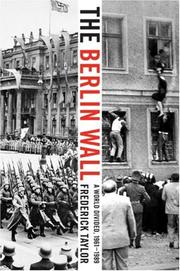
The single best one-volume history of the Wall from construction to fall — authoritative yet readable, it gives the beginner a complete narrative spine on which all later reading hangs.
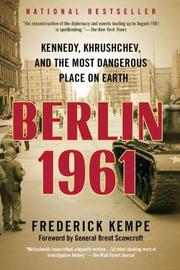
Focuses tightly on the diplomatic and political crisis of the summer of 1961, showing how Kennedy, Khrushchev, and Ulbricht each made the decisions that allowed the Wall to go up — a perfect companion to Taylor's broader account.
Life Under the Wall: Escapes and the Stasi
IntermediateGrasp the human cost of the Wall through escape attempts, the mechanics of East German surveillance, and the lived experience of those trapped inside the GDR.
▸ Study plan for this stage
Pace: 6–8 weeks, ~40–50 pages/day. Start with "Stasiland" (4–5 weeks, ~35 pages/day), then move to "The Spy Who Came in from the Cold" (2–3 weeks, ~50 pages/day). Build in 1–2 weeks for reflection and synthesis between books.
- The Stasi's pervasive surveillance apparatus and its psychological grip on East German society, as documented through Funder's interviews
- The human cost of escape attempts: physical danger, family separation, and the moral complexity of fleeing the GDR
- The lived experience of ordinary East Germans under totalitarian control, including informants, fear, and complicity
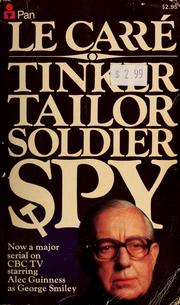
- The Cold War espionage machinery and how intelligence operatives navigated the divided city, as portrayed in le Carré's fiction
- The Wall as both a physical barrier and a psychological prison that shaped identity and relationships
- The role of ideology, propaganda, and state control in maintaining the division between East and West
- The distinction between historical testimony (Funder's interviews) and literary interpretation (le Carré's spy narrative) in understanding the same historical moment
- What were the primary methods the Stasi used to monitor and control the East German population, and how did these methods affect everyday life?
- Describe at least three escape attempts documented in 'Stasiland' and explain what they reveal about the desperation and ingenuity of those trapped in the GDR
- How did the Stasi's use of informants ('inoffizielle Mitarbeiter') create a climate of mistrust and fear, and what examples does Funder provide?
- What is Leamas's moral position in 'The Spy Who Came in from the Cold,' and how does le Carré use his character to critique Cold War espionage?
- How do the personal testimonies in 'Stasiland' and the fictional narrative of 'The Spy Who Came in from the Cold' offer different but complementary perspectives on life divided by the Wall?
- What role did the Wall play in the identity and psychology of East Germans, according to Funder's interviews?
- Create a detailed profile of one Stasi victim from 'Stasiland': document their escape attempt (or surveillance experience), the methods used against them, and the long-term consequences. Include direct quotes from Funder's text
- Map the surveillance network described in 'Stasiland': identify the key institutions (secret police, informants, border guards) and draw connections showing how they worked together to control the population
- Write a comparative character study of Leamas ('The Spy Who Came in from the Cold') and one of Funder's interview subjects: analyze how each character responds to the pressures of living in or operating within a divided city
- Conduct a close reading of a pivotal escape scene from 'Stasiland' and a tense espionage scene from 'The Spy Who Came in from the Cold': identify how each author uses language, pacing, and detail to convey danger and desperation
- Create a timeline of key Stasi tactics and escape attempts from 'Stasiland,' then annotate it with moments from 'The Spy Who Came in from the Cold' that illustrate the same historical context (e.g., border security, informant networks)
- Write a reflective essay: 'What does it mean to be trapped?' Use evidence from both books to explore how physical imprisonment (the Wall), psychological control (Stasi surveillance), and moral compromise (espionage) each trap individuals in different ways
Next up: This stage grounds you in the human and institutional realities of division, preparing you to examine the Wall's collapse and the broader geopolitical forces that sustained it in the next stage.

An award-winning, deeply reported account of life under Stasi surveillance told through the voices of real East Germans — essential for understanding the fear and complicity that kept the Wall standing for 28 years.

Though fiction, this canonical Cold War novel is set against the Berlin Wall and captures the moral ambiguity of the espionage world better than almost any non-fiction work — read here to deepen intuition before tackling archival histories.
The Fall: 1989 and the End of the Cold War
ExpertUnderstand the cascade of events — inside the GDR, across the Eastern Bloc, and in the corridors of power — that led to the Wall's unexpected fall on November 9, 1989, and what it meant for the world.
▸ Study plan for this stage
Pace: 4–5 weeks, ~40–50 pages/day. "The Collapse" is approximately 400–450 pages; allocate 3 weeks for the main text, then 1–2 weeks for review, synthesis, and exercises.
- The internal decay of the GDR: economic stagnation, loss of legitimacy, and the role of the Stasi in suppressing dissent
- The domino effect across the Eastern Bloc: Hungary's border opening, Poland's Solidarity movement, and the ripple effect on East German citizens
- Gorbachev's pivotal role: his refusal to intervene militarily and the signal this sent to reformers and dissidents across the Eastern Bloc
- The acceleration of events in autumn 1989: the Monday Demonstrations in Leipzig, the exodus through Hungary and Czechoslovakia, and the pressure on the SED leadership
- The miscommunication and bureaucratic accident: Günter Schabowski's press conference on November 9 and the unintended opening of the Wall
- The immediate aftermath and global implications: the shock to Western governments, the rapid path to German reunification, and the end of the Cold War order
- Contingency and chance: how small decisions and timing shaped whether the Wall fell peacefully or violently
- The role of ordinary citizens: how mass protest and civil disobedience, not just elite decisions, drove the collapse
- What were the key economic and political failures of the GDR in the 1980s, and how did they erode the regime's legitimacy?
- How did the opening of Hungary's border in September 1989 trigger a cascade of events that destabilized East Germany?
- What was Gorbachev's critical decision regarding military intervention, and why was it so consequential for the fall of the Wall?
- Explain the role of the Monday Demonstrations in Leipzig and mass civil disobedience in forcing the regime's hand.
- What was the significance of Günter Schabowski's press conference on November 9, 1989, and how did miscommunication lead to the Wall's opening?
- How did the fall of the Berlin Wall reshape the Cold War order and what were the immediate geopolitical consequences?
- What does Sarotte argue about the role of contingency and chance in the Wall's fall—could it have happened differently?
- Timeline construction: Create a detailed month-by-month timeline of events from January 1989 to November 9, 1989, marking key turning points (Hungary's border opening, Leipzig demonstrations, Schabowski's announcement). Annotate each with why it mattered.
- Decision-point analysis: Identify 3–4 critical moments where different decisions could have changed the outcome (e.g., if Gorbachev had authorized military force, if Schabowski had not made his announcement). Write a 500-word counterfactual for one scenario.
- Primary source close reading: Locate and analyze Schabowski's actual press conference transcript or video. Identify the ambiguous language that led to the misunderstanding, and write a brief analysis of how miscommunication can have world-historical consequences.
- Comparative Eastern Bloc analysis: Create a chart comparing the trajectories of Poland, Hungary, Czechoslovakia, and East Germany in 1989. What was different about each path to collapse, and what was similar?
- Stakeholder perspective exercise: Write three 300-word position papers from the viewpoints of (a) a Stasi officer, (b) a Leipzig protester, and (c) a Soviet official in autumn 1989. How did each see the unfolding crisis?
- Contingency reflection: Write a 600-word essay on Sarotte's argument about chance and contingency. Do you find her case convincing? What does it suggest about how we understand historical causation?
Next up: This stage establishes the immediate causes and the dramatic moment of the Wall's fall; the next stage will likely explore the longer-term consequences—the process of German reunification, the transformation of Eastern Europe, and the redrawing of the global order—requiring you to understand how November 9, 1989 set those processes in motion.

A meticulously researched account of the ten days that brought down the Wall, drawing on newly opened archives to show how the fall was accidental and contingent — the most authoritative work on 1989 for a reader now ready for scholarly depth.
Discussion
Keep reading
Paths that share books, cover the same subject, or open a related topic.