Gettysburg has a bibliography running to thousands of titles, and the practical problem for a new reader is not scarcity but redundancy: a dozen single-volume histories cover the same three days, and reading three of them in a row teaches you very little the first did not. The order below picks one book per job — the narrative, the ground, the individual days, the memory — and says where the overlaps are so you can skip them.
The second thing order fixes is the myth problem. Popular understanding of this battle was shaped less by historians than by a novel and a film made from it, and several of the confident judgements a general reader arrives with — about Longstreet's conduct, about the inevitability of the third day, about what the battle decided — are contested among historians or come from postwar Lost Cause writing. Reading the novel first is fine as long as you know that is what you are doing.
Start with the story, knowing it is a story
The Killer Angels by Michael Shaara is a novel. It is also the most influential book ever written about this battle, the basis for the film that fixed the popular picture, and genuinely excellent at conveying the terrain and the decisions. Read it first for the shape and the human weight. Then hold it loosely: Shaara's Longstreet is a modern military rationalist and his Lee is tragic and stubborn, characterisations that historians have argued about ever since, and the novel silently adopts some positions from the postwar Lost Cause literature it was reacting against.
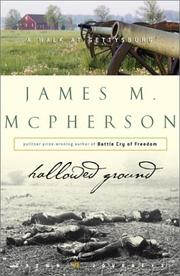
Hallowed Ground by James McPherson is the corrective and the ideal second book — a short walking guide to the battlefield by the leading Civil War historian of his generation, which orients you on ground that is genuinely confusing on a map.
One single-volume history, not three
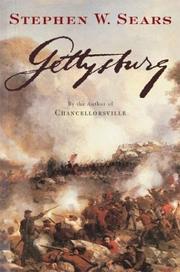
Three books on this path carry the same job. Gettysburg by Stephen Sears is the most conventional and the most reliable narrative account, strongest on the tactical detail and on Meade. Gettysburg by Allen Guelzo is the more interpretive and better-written of the two, placing the battle in the political and intellectual world that produced it, and it is the one to read if you want a historian arguing rather than reporting. Gettysburg by Noah Andre Trudeau covers the same ground hour by hour with heavy use of participant accounts.
Read one. Guelzo for argument, Sears for reliability, Trudeau if you want the eyewitness texture — reading all three in sequence is the most common way people waste a month on this subject.
The ground, day by day
The specialised accounts are where the subject actually opens up. Gettysburg--the first day and Gettysburg, the second day, both by Harry Pfanz, are the definitive terrain-level studies, reconstructing regiment-by-regiment movement in detail no general history has room for. Pfanz wrote a third volume, on Culp's Hill and Cemetery Hill; it is missing from our catalogue rather than from the literature.
Pickett's charge by George Stewart is the classic account of the third day, published in 1959 and still cited. The Gettysburg campaign by Edwin Coddington is the scholar's standard and the most demanding book here — it treats the battle as the culmination of a campaign, follows both armies from Virginia, and is unusually fair to Meade, whose reputation it substantially rehabilitated. If you read only one serious work, this is it.
What the battle came to mean
Lincoln at Gettysburg by Garry Wills is not a battle book at all. It is an argument about the address delivered four months later and how it reframed the war and the founding, and it won a Pulitzer; its thesis about Lincoln's rhetorical strategy is contested by other historians, which is part of what makes it worth reading. These Honored Dead by Thomas Desjardin closes the path with the historiography itself — how the battle was remembered, embellished and rebuilt in the century afterward, including how much of the standard account rests on unreliable veteran testimony. It is the right last book because it makes you re-examine everything before it.
Follow the full path in order for the sequence as designed.
Follow the full ordered path here: The Best Books on the Battle of Gettysburg to Read First.