Best Books on the Battle of Gettysburg, in Reading Order
Gettysburg has more books written about it than any other three days in American history, which makes the order you read them in matter more than usual. This path starts with the novel and the survey that give you the shape of the battle, moves to the two best modern single-volume accounts, then goes day by day with the specialist studies that reconstruct each ridge and hill, and finishes with the campaign as a whole and the argument over what the battle came to mean. Skip the sequence and the detailed volumes are unreadable; follow it and they are gripping.
The shape of the thing
BeginnerGet the terrain, the commanders and the three-day sequence into your head, and understand where the battle sits in the war.
▸ Study plan for this stage
Pace: Three weeks. The Killer Angels is 374 pages and reads like the novel it is — a week, and read it for pleasure rather than for accuracy. Hallowed Ground is only 141 pages and is best read twice: once through in an evening, and again slowly with a map, because everything in the next three stages depen
- The fishhook: the Union line curling from Culp's Hill around Cemetery Hill, down Cemetery Ridge to Little Round Top, against the Confederate arc on Seminary Ridge — a compact interior position against a long exterior one
- That the battle began by accident. Neither commander chose Gettysburg; the roads converged there and a cavalry screen chose to fight for the town
- Meade in command for three days, with no time to know his corps commanders, against Lee commanding an army he had reorganised after losing his best subordinate
- Longstreet's disagreement with Lee about whether to fight on this ground at all, which is the argument the entire postwar controversy is built on
- Shaara's fictional architecture: Longstreet as a modern soldier out of his time, Chamberlain as the moral centre. Both are amplified well beyond what the sources support, and both are the reason the novel works
- The 1863 strategic picture McPherson supplies — an invasion intended to shift Northern politics and feed an army off Pennsylvania farmland, at exactly the moment Vicksburg was falling in the west
- Why the terrain matters concretely: ridges that hide troop movement, hills that command the ridges, and stone walls and boulder fields that break formations
- Draw the fishhook and explain the advantage of interior lines. What did the position cost the Union to hold?
- What does The Killer Angels need Longstreet and Chamberlain for, and where does it exceed the historical record on each?
- Meade had commanded the army for three days. What follows from that, both for what he did and for how he has been judged?
- Structurally rather than sentimentally, what did Lee lose when Jackson died two months earlier?
- Where does Gettysburg sit in the strategic picture of 1863, and what else was happening that same week?
- Draw the battlefield from memory after McPherson — the ridges, the hills, the road network, the town — then check it. Redraw until it is right, because every book after this assumes it
- List the corps commanders on both sides with the day and the sector each fought in. Seven Union corps and three Confederate corps is a manageable set and the names recur constantly
- Mark five things in The Killer Angels you suspect are invented or dramatised. Keep the list — the next stage will settle it
- Write 200 words on what a novel gives a reader of this battle that a history cannot, and 200 on what it costs
- Walk the ground if you can, or use aerial imagery if you cannot, and measure the actual distance from Seminary Ridge to the copse of trees. The number matters for the last stage
Next up: You have the ground, the names and the sequence — enough to read two full-length histories as arguments rather than as information.

A novel, and the reason most Americans know anything about Gettysburg at all — Longstreet and Chamberlain as its centre of gravity. Read it first for the geography and the personalities, then let the histories correct it.
A short walking tour of the battlefield by the leading historian of the war, which fixes the ground in your mind and places the battle in the 1863 strategic picture.
The two standard accounts
BeginnerHave a full, reliable narrative of all three days from two historians who disagree about what decided it.
▸ Study plan for this stage
Pace: Seven weeks. Sears's Gettysburg is 623 pages and takes three to four; read it first as the reliable baseline, keeping notes on the command decisions he judges. Guelzo's is 632 pages and takes three more; read it second, deliberately as a counter-argument, and mark every point where his verdict diffe
- The disputed decisions that structure all Gettysburg historiography: Ewell's failure to press Cemetery Hill on the first evening, Longstreet's delayed and countermarched attack on the second day, Sickles's unauthorised advance, Meade's council of war, and Stuart's absence
- The discretionary order — Lee's habit of telling corps commanders to act 'if practicable' — which worked with Jackson and did not work with the reorganised corps structure of 1863
- Sears's method: meticulous, balanced, close to the official records, and generous to Meade
- Guelzo's revision: harder on Meade, more sceptical of the Lee legend, and much more interested in what the fighting was physically like than in what the maps say
- Guelzo's argument about combat range — that despite the rifled musket, most infantry fighting happened at ranges and with an effectiveness closer to the smoothbore era, which changes how you read every assault in the battle
- The postwar construction of blame: the campaign conducted by former Confederate officers to make Longstreet responsible for the defeat and to preserve Lee's reputation
- The general lesson of reading two good historians on one event — that the disagreement is usually about weighting and counterfactual judgement rather than about what happened
- What did 'if practicable' mean within Lee's command culture, and could Cemetery Hill actually have been taken on the evening of the first day?
- Where exactly do Sears and Guelzo disagree about Meade, and what evidence does each rest on?
- If Civil War infantry combat happened at much shorter ranges than the weapons allowed, what does that change about how you read Pickett's Charge and the second-day assaults?
- Longstreet was blamed for the defeat for a century. Who conducted that campaign, when, and what did they need it for?
- Name the single decision you think most changed the outcome, and defend the choice against the obvious objection
- Build a table of six disputed decisions with three columns: Sears's verdict, Guelzo's verdict, and yours. Fill in yours only after reading both
- Check your list of suspected Shaara inventions against these two accounts and record which suspicions were fair. Some of the most famous scenes will survive and some will not
- Write a 500-word assessment of Meade as a commander using only what was known and done before the fourth of July. Judging him on the pursuit is a separate question and belongs in the last stage
- Trace one Confederate division through all three days — where it marched, where it fought, what it lost — using both books. The logistics are invisible in the surveys and decisive in the outcome
- Find one passage where Guelzo explicitly writes against a claim in Sears, and write a paragraph on which you find better supported and why
Next up: With two full narratives and a list of live disputes in hand, the tactical volumes stop being an undifferentiated mass of regimental names and become the evidence for those disputes.
The most balanced modern single-volume battle history, meticulous about command decisions on both sides. The safest foundation for everything after.
Guelzo writes against the Sears consensus — harder on Meade, more sceptical of the Lee legend, and more interested in what the fighting was physically like. Read second, for the argument.
Day by day, hill by hill
IntermediateReconstruct each day at regimental level — the first day's collapse north of town, Little Round Top and the Peach Orchard, and Pickett's Charge.
▸ Study plan for this stage
Pace: Ten weeks and the densest reading on the path. Gettysburg: The First Day is 472 pages and takes three; Gettysburg: The Second Day is 613 pages and takes four, and it is the hardest because the day itself is the most tangled. Pickett's Charge is 354 pages and takes two to three. Read all three with m
- That the first day was a Confederate victory, and a substantial one — the surveys compress it because it does not fit the story of a Union defensive triumph
- Buford's dismounted cavalry delaying action, the arrival and death of Reynolds, the Iron Brigade at McPherson's Ridge, and the collapse of the exposed corps north of town
- The second day's central problem: Sickles advanced his corps forward to the Peach Orchard without orders, creating a salient that had to be reinforced and could not be held
- Longstreet's attack delivered in echelon — brigade after brigade from the right — and how that sequencing interacted with Sickles's misplaced line to produce the Wheatfield, Devil's Den and the Peach Orchard
- Little Round Top, Warren's discovery of the undefended hill, and the fact that the fight there occupies a share of popular memory far out of proportion to its share of the day's fighting
- The evening assaults on Culp's Hill and East Cemetery Hill, which came close to succeeding and are almost never mentioned
- The third day: the great bombardment, the artillery officer's judgement that the ammunition was running out and his note urging the infantry forward, the three divisions crossing three-quarters of a mile of open ground, the convergence on the copse of trees, and the flanking fire that broke the flan
- Stewart's minute-by-minute method, which established the template for the modern micro-history of a single action
- The first day was a Confederate victory. Why do the general histories compress it, and what is lost by doing so?
- Reconstruct Sickles's reasoning for advancing to the Peach Orchard as sympathetically as the evidence allows, then judge whether the move helped or hurt
- What was actually decided at Little Round Top, and what elsewhere on the second day mattered as much or more?
- What was the Confederate bombardment on the third day supposed to accomplish, and why did it fail to accomplish it?
- What does Stewart's minute-level resolution reveal about the charge that an hour-by-hour account cannot?
- Map the second day as five successive maps at one-hour intervals from four in the afternoon. If you can do this, you understand the day; almost nobody can do it from the surveys alone
- Take one regiment on the second day and trace it completely: where it started, the ground it crossed, whom it fought, and what it lost. Pfanz gives you everything needed
- Write out the third day from the opening of the bombardment to the repulse with timestamps, and mark every point at which a different decision was still available
- Return to your fishhook drawing from the first stage and correct it against Pfanz. Most first attempts get the Culp's Hill end badly wrong
- Compare Pfanz's account of one action with the corresponding pages in Sears and Guelzo, and note what the extra four hundred pages actually bought
Next up: You now know the battle at regimental resolution — the last stage pulls back to the campaign that produced it and then to the century of argument about what it meant.
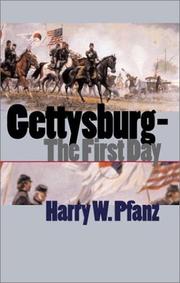
The definitive account of 1 July, the day the surveys compress most. Pfanz's trilogy is the standard tactical reference and this is where it starts.
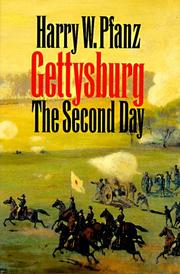
The most complicated day of the battle — Sickles's advance, Little Round Top, the Wheatfield — untangled hour by hour. Read straight after the first-day volume.

A minute-by-minute study of the assault on 3 July, and the model on which most later micro-histories were built. The natural close to the tactical stage.
The campaign, and what it came to mean
BeginnerSet the three days inside the whole invasion of Pennsylvania, and account for how Gettysburg became the moral centre of American memory of the war.
▸ Study plan for this stage
Pace: Nine weeks. Coddington's The Gettysburg Campaign is 866 pages and takes four; it is demanding and only becomes readable once the tactical detail is familiar, which it now is. Trudeau's narrative takes two weeks and is a change of altitude back down to the ranks. Lincoln at Gettysburg is 320 pages an
- Lee's actual campaign objectives — feeding an army off Pennsylvania rather than exhausted Virginia, threatening Northern political will, and forcing a battle on favourable ground — which must be the basis on which the campaign is judged
- The marching and supply problem Coddington reconstructs, which is where campaigns are actually decided and which no battle narrative shows you
- Stuart's ride and the resulting intelligence blackout: what his orders permitted, what Lee lost, and why the controversy has never resolved
- The retreat to the Potomac, the flooded river, and Meade's decision not to attack — the second great Meade controversy, and one on which Lincoln had a strong opinion
- Trudeau's reliance on soldier accounts, which restores the ranks after two stages of command decisions, and the standing evidential problem that memoirs were written late and often for a purpose
- Wills's argument about the address: that its rhetorical model is the classical funeral oration, that it silently refounds the nation on the Declaration rather than the Constitution, and that it did so in the space of a few minutes after a two-hour oration nobody remembers
- Desjardin's subject: how the Gettysburg story was assembled after the fact by veterans competing for credit, by monument committees, by a novel and a film — and repeatedly revised since
- The specific case of Chamberlain, whose prominence in modern memory owes more to his own postwar writing and to a novel than to the reports of the day
- What was Lee trying to achieve by invading Pennsylvania? Judge the campaign on the terms he set rather than on the outcome
- What were Stuart's orders, and what did the army actually lose by his absence? Distinguish what Lee did not know from what he could have known otherwise
- Was Meade's failure to attack Lee at the Potomac a failure? Argue both sides using Coddington
- State Wills's argument about the Gettysburg Address, then the strongest objection to it
- Name three specific constructions of the Gettysburg story that you had accepted from earlier books on this path before reading Desjardin
- Was Gettysburg the turning point of the war? Make the case against first, then decide
- Map the whole campaign from the crossing of the Potomac to the return, with dates and the position of both armies at each stage. The three days occupy a small part of it
- Read the Gettysburg Address aloud, then write out its structure sentence by sentence with a note on what each sentence does. It is 272 words and repays the attention
- Take one contested episode Desjardin examines and trace how it is told in Shaara, in Sears and Guelzo, and in Pfanz. The drift across the four is the exercise
- Write 500 words on the evidential problems of veteran memoirs, using cases from Trudeau where accounts conflict
- Write the closing essay: 1,500 words on what decided the battle, citing a book from every stage and naming which of these historians would disagree with your answer and on what grounds
Next up: This closes the path; the natural continuations are the Vicksburg campaign that ran concurrently, the Army of the Potomac's command history, the wider Civil War memory literature, and the Official Records themselves, which every book here is built on.
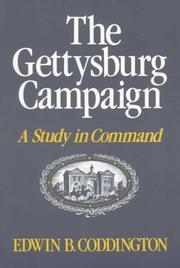
The classic study of the whole operation from the crossing of the Potomac to the retreat, and still the reference for the marching and the intelligence failures. Demanding, and worth it once the tactical detail is familiar.

A narrative history built heavily on soldier accounts, which restores the ranks after two stages of command decisions.
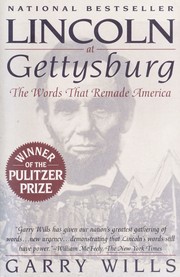
How 272 words delivered four months later rewrote what the war was about. The pivot from the battle to its meaning.

A study of how the Gettysburg story was constructed, mythologised and repeatedly revised — including by several books earlier on this path. The right sceptical note to end on.
Discussion
Keep reading
Paths that share books, cover the same subject, or open a related topic.