The Baroque Cycle Reading Order and Guide
This curriculum is designed for an expert reader who wants to deeply inhabit Neal Stephenson's Baroque Cycle — understanding its historical scaffolding, its cryptographic and mathematical DNA, and how Cryptonomicon functions as both prequel-in-spirit and sequel-in-time. The path moves from essential historical and intellectual context, through Cryptonomicon as the thematic bridge, into the Baroque Cycle itself, and finally into critical and philosophical deepening that rewards re-reading.
Historical & Intellectual Scaffolding
ExpertBuild the historical, scientific, and philosophical world that Stephenson dramatizes — the Scientific Revolution, the birth of modern finance, and the war of ideas between Newton and Leibniz — so that the novels' events feel grounded rather than ornamental.
▸ Study plan for this stage
Pace: 8–10 weeks total, reading roughly 25–35 pages per day. Week 1–3: "The Clockwork Universe" (approx. 320 pp) — read in three focused weeks, pausing after each major section to take notes on the natural-philosophy debates. Week 4–5: "Newton and the Counterfeiter" (approx. 320 pp) — two brisk weeks, rea
- The mechanistic worldview: how 17th-century natural philosophers (Boyle, Hooke, Wren, Newton) came to see the cosmos as a divinely engineered clockwork, and why that metaphor was revolutionary (Dolnick)
- The role of the Royal Society and coffeehouse culture as institutional engines of the Scientific Revolution — peer challenge, correspondence networks, and the birth of 'experimental philosophy' (Dolnick)
- Newton's dual life: the towering theorist of the Principia and the ruthless, street-level enforcer at the Royal Mint — and how both roles reflect the same obsessive, controlling personality (Levenson)
- Coinage, counterfeiting, and monetary credibility: why the Great Recoinage of 1696 was a national crisis, and how the integrity of money underpinned the emerging English financial state (Levenson)
- The Newton–Leibniz priority dispute over calculus as a microcosm of Baroque-era intellectual nationalism, patronage politics, and the fragility of scientific credit (Dolnick & Levenson)
- The origins of modern financial instruments — bonds, stocks, insurance, and futures — and Ferguson's argument that the 'ascent of money' is inseparable from the ascent of Western power (Ferguson)
- The birth of the Bank of England (1694) and the concept of public credit: how sovereign debt was transformed from a royal embarrassment into a tradeable asset (Ferguson)
- Risk, probability, and actuarial thinking: how Baroque-era mathematicians (including figures Stephenson fictionalizes) laid the groundwork for insurance and derivatives markets (Dolnick & Ferguson)
- After reading Dolnick, can you explain in plain language why the clockwork metaphor was both scientifically powerful and theologically reassuring to 17th-century thinkers — and what tensions it quietly introduced?
- Levenson portrays Newton at the Mint as a detective and enforcer. How does this portrait complicate the hagiographic 'pure scientist' image, and what does it reveal about the relationship between intellectual authority and state power in the 1690s?
- The Great Recoinage is a pivotal event in both Levenson and in The Baroque Cycle itself. What were its causes, its social costs, and its consequences for monetary trust — and who bore the burden?
- Ferguson argues that financial innovation has historically preceded or enabled military and imperial expansion. What evidence from 'The Ascent of Money' supports this thesis, and where does it feel overstated?
- How do the three books together construct a single coherent world — the same England of the 1690s–1720s — even though each approaches it from a different angle (science, crime, finance)?
- Which real historical figures appear across more than one of the three books, and how do the authors' portrayals of those figures differ in emphasis or interpretation?
- Timeline synthesis: Build a single master timeline (paper or digital) spanning 1660–1730, populating it with events from all three books — Royal Society founding, Principia publication, the Great Recoinage, the Bank of England's founding, the South Sea Bubble, the calculus dispute. Color-code by domain (science / money / politics). This becomes your navigational map for reading the novels.
- Character dossiers: For each major real figure who will appear in The Baroque Cycle (Newton, Leibniz, Hooke, Pepys, Locke, Montagu), write a one-page dossier drawing on the books: their role, their motivations, their relationship to money and ideas, and one tension or contradiction in their character.
- Concept translation drill: Take Ferguson's explanation of a financial instrument (e.g., the bond, the joint-stock company, or insurance) and rewrite it as if explaining it to a fictional Baroque-era merchant character. This forces you to internalize the concept rather than just recognize it.
- Debate reconstruction: Using Dolnick's account of the Newton–Leibniz dispute, write a one-page 'position statement' from each man's perspective defending his claim to calculus. Then write a two-paragraph verdict from a neutral Royal Society observer. This primes you for how Stephenson dramatizes intellectual rivalry.
- Close-reading annotation pass: Re-read the chapter in Levenson covering Newton's prosecution of William Chaloner, annotating every moment where Newton uses information, social network, or institutional authority as a weapon. Note the tactics — they reappear in fictionalized form in the novels.
- Pre-novel prediction journal: Before opening The Baroque Cycle, write 300–500 words predicting: Which of the three books' themes do you expect Stephenson to dramatize most heavily? Which historical figures will be protagonists vs. background presences? Which financial or scientific concepts will drive plot? Revisit and revise this entry after finishing each novel.
Next up: By grounding the reader in the actual historical mechanics — how natural philosophy was practiced, how money was minted and manipulated, and how financial instruments were invented — this stage transforms The Baroque Cycle's dense fictional world from an intimidating information overload into a richly recognizable landscape, making the next stage (close reading of the novels themselves) an act of
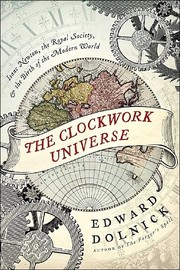
A vivid, expert-level account of the Royal Society, Newton, Leibniz, and the conviction that God's creation runs like a machine — the exact intellectual atmosphere of the Baroque Cycle's natural philosophers.

Focuses on Newton's real tenure as Warden of the Royal Mint and his obsessive pursuit of coiners — a story Stephenson fictionalizes directly; reading this first makes those plot threads land with full historical weight.
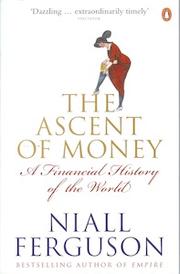
Traces the origins of banking, bonds, stock markets, and currency from the 17th century onward, giving expert grounding in the financial systems — goldsmiths, the Bank of England, the VOC — that are central machinery in the Cycle.
The Cryptographic Bridge — Cryptonomicon
ExpertRead Cryptonomicon as the essential companion text: it introduces Stephenson's signature style, the Waterhouse and Shaftoe dynasties, and the themes of cryptography, gold, and information that the Baroque Cycle will trace back to their 17th-century roots.
▸ Study plan for this stage
Pace: 10–13 weeks total: 2–3 weeks on The Code Book (~25–30 pages/day across ~300 pages), then 8–10 weeks on Cryptonomicon (~40–45 pages/day across ~900 pages). Budget extra time for Cryptonomicon's denser technical and narrative passages — plan for at least two deliberate slow-down weeks during the crypt
- The historical arc of cryptography: from Caesar ciphers and Vigenère squares through Enigma and one-time pads to public-key cryptography (RSA) — as laid out in The Code Book, this arc is the intellectual backbone Cryptonomicon dramatizes
- Frequency analysis and the fundamental tension between cryptanalysis and cipher design: understanding why every 'unbreakable' system eventually falls is essential for appreciating the novel's stakes
- The Enigma machine and the Allied codebreaking effort at Bletchley Park: The Code Book's account of this is the non-fiction scaffolding for Lawrence Waterhouse's WWII storyline in Cryptonomicon
- The Waterhouse dynasty as a vessel for ideas: Lawrence Waterhouse (WWII) and Randy Waterhouse (1990s) are not just characters but embodiments of the coder/mathematician archetype across generations — track how their obsessions, social awkwardness, and moral clarity rhyme across time
- The Shaftoe dynasty as a vessel for action and loyalty: Bobby Shaftoe (WWII) and Arne/Jimmy/America Shaftoe (1990s) ground the abstract cryptographic themes in physical courage, sacrifice, and human cost — note how Singh's human stories of codebreakers parallel Stephenson's technique
- Cryptography as a political and ethical instrument: Cryptonomicon's Crypt and the data haven plot dramatize the argument — implicit in The Code Book's final chapters on PGP and key escrow — that strong encryption is a tool of individual liberty against state power
- Gold, information, and value: the Golgotha treasure and the Crypt startup are two faces of the same question Stephenson will later push back to the 17th century — what is the foundation of trustworthy value and reliable information?
- Stephenson's narrative and stylistic signature: multi-timeline structure, extended technical digressions as plot and character revelation, footnotes as comic and philosophical counterpoint — recognizing these devices in Cryptonomicon prepares the reader for their amplified use across the three volum
- After reading The Code Book, can you trace the evolution of cryptographic systems from monoalphabetic substitution to public-key encryption, and explain why each 'advance' was eventually broken or superseded?
- How does Cryptonomicon use its dual WWII/1990s timeline to argue that the same fundamental struggle — between those who want secrets kept and those who want them exposed — recurs across technological eras?
- What specific techniques from The Code Book (e.g., the Enigma's rotor mechanics, the concept of a one-time pad, the mathematics of RSA) does Cryptonomicon dramatize, and how accurately or liberally does Stephenson render them?
- How do Lawrence Waterhouse and Randy Waterhouse differ as protagonists, and what does the contrast reveal about how the social and institutional context of cryptography changed between the 1940s and the 1990s?
- What is the thematic relationship between the Golgotha gold hoard and the Crypt data haven? What does Stephenson suggest about the relationship between physical and informational stores of value?
- How does Enoch Root function as a connective tissue character, and what does his presence hint about the deeper historical continuity that the Baroque Cycle will make explicit?
- Cipher workout using The Code Book: after finishing each major historical chapter, attempt the challenge cipher Singh provides (or reconstruct one of the historical ciphers by hand — e.g., encrypt and decrypt a short message with a Vigenère square). This makes the cryptographic mechanics visceral before Cryptonomicon dramatizes them.
- Maintain a dynasty genealogy chart: as you read Cryptonomicon, build a two-column reference sheet tracking the Waterhouse line and the Shaftoe line — names, roles, time periods, and one defining trait per character. This habit will be indispensable when the Baroque Cycle introduces their 17th-century ancestors.
- Technical digression log: each time Cryptonomicon launches into an extended technical explanation (Van Eck phreaking, the Solitaire cipher, gold assaying, etc.), pause and write a 2–3 sentence plain-English summary. Collect these in a running document — it trains the 'Stephenson digression' reading muscle and produces a useful reference.
- Parallel reading annotation: identify at least five specific passages in Cryptonomicon that directly dramatize a concept explained in The Code Book (e.g., the Enigma intercept scenes vs. Singh's Bletchley chapter). Write a short note on what the novel adds — emotional, moral, or narrative — that the history book cannot.
- Thematic essay (500–800 words): argue for or against the following claim — 'Cryptonomicon is ultimately a novel about trust, not technology.' Use specific scenes and characters from the novel and at least one supporting concept from The Code Book to make your case. This forces synthesis before entering the Baroque Cycle.
- Map the 1990s plot's 'information wants to be free' argument: trace the Crypt data haven storyline from its inception to its conclusion and list every obstacle — legal, political, physical, personal — the characters face. Then find the analogue moment in The Code Book where a real-world government or institution tried to suppress or control a cryptographic advance. Reflect on what changed and what
Next up: By finishing The Code Book and Cryptonomicon, the reader has internalized the full arc of cryptographic history and met the Waterhouse and Shaftoe dynasties at their modern end — the Baroque Cycle now rewinds the clock to show the 17th-century origins of those same dynasties, the same contest between secrecy and openness, and the same questions about gold and information, but embedded in the found
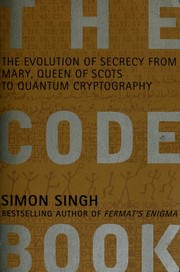
A rigorous history of cryptography from Caesar ciphers to public-key encryption; reading this immediately before Cryptonomicon makes every cipher scene — Enigma, the Pontifex algorithm, the Crypt — fully intelligible at an expert level.
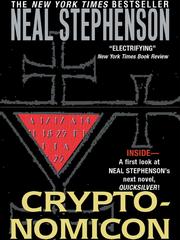
The direct thematic and genealogical prequel to the Baroque Cycle: the Waterhouse and Shaftoe families appear here first (in their WWII and 1990s generations), and the novel's obsessions with gold, secrecy, and rational systems are the Cycle's obsessions in embryo. Read it here, before the Cycle, to feel the full resonance.
The Baroque Cycle — Volume by Volume
ExpertRead the three volumes of the Baroque Cycle in order, experiencing the full 17th–18th-century epic of Daniel Waterhouse, Jack Shaftoe, and Eliza — now armed with historical context and the family-tree intuition built by Cryptonomicon.
▸ Study plan for this stage
Pace: 16–20 weeks total: ~6–7 weeks per volume (~35–40 pages/day, 5 days/week). Quicksilver (944 pp): weeks 1–7; The Confusion (848 pp): weeks 8–13; System of the World (892 pp): weeks 14–20. Reserve one "buffer/reflection" day per week for annotations and journal entries.
- The Scientific Revolution as lived experience — Newton, Leibniz, Hooke, and the Royal Society are not background figures but active characters whose rivalries (especially the calculus priority dispute in System of the World) drive plot and theme in all three volumes.
- The intertwined fates of the three protagonists — Daniel Waterhouse's Puritan rationalism, Jack Shaftoe's picaresque freedom, and Eliza's economic and political agency — function as three lenses on the same era, converging fully only in System of the World.
- The birth of modern finance and markets — from Eliza's commodity speculation and the founding of the Bank of England in Quicksilver/The Confusion, to the gold-vs.-silver monetary war and the Mint plotline in System of the World, money itself is a central character.
- Cryptography and information as power — codes, ciphers, and secret correspondence (echoing Cryptonomicon's themes across centuries) appear throughout, most explicitly in Eliza's intelligence networks and the Enoch Root thread.
- The Confusion's dual-narrative structure ('Bonanza' and 'Juncto') — understanding how Stephenson deliberately interleaves Jack's globe-spanning odyssey with Eliza's European court intrigue to create thematic counterpoint rather than mere parallel plotting.
- Political philosophy in action — the Glorious Revolution's aftermath, Whig vs. Tory conflict, Louis XIV's France, and the War of Spanish Succession are not mere backdrop but the constitutional and ideological stakes the characters are literally fighting over.
- Alchemy vs. natural philosophy as epistemological battleground — the tension between occult/alchemical thinking (represented by figures like Enoch Root and Newton's secret alchemical work) and emerging empiricism runs as a subterranean current through all three volumes.
- The Baroque Cycle as a unified novel — recognizing the structural callbacks, recurring symbols (gold, quicksilver/mercury, the Solomonic Gold), and character echoes that link all three volumes into one coherent 2,700-page argument about the origins of modernity.
- By the end of Quicksilver, how has Daniel Waterhouse's relationship with both Newton and Leibniz shaped his understanding of what 'natural philosophy' can and cannot explain about human affairs?
- In The Confusion, how does Jack Shaftoe's enslavement and globe-circling odyssey function as a structural and thematic mirror to Eliza's rise through European courts — what does each journey reveal that the other cannot?
- How does System of the World resolve the calculus priority dispute between Newton and Leibniz, and why does Stephenson frame this intellectual conflict as inseparable from the political and monetary crises of the age?
- What is the significance of the Solomonic Gold across all three volumes, and how does its fate in System of the World reframe the meaning of the entire Baroque Cycle?
- How does Eliza's mastery of financial instruments (futures, options, intelligence brokering) in all three volumes anticipate — and directly genealogically connect to — the cryptographic capitalism depicted in Cryptonomicon?
- In what ways do the three volumes collectively argue that the 'System of the World' (Newtonian physics, central banking, constitutional monarchy, information networks) is both a liberation and a new form of control?
- Keep a 'Character Web' document updated after each book's major section: map every named historical figure (Newton, Leibniz, Pepys, Marlborough, etc.) against their fictional counterparts, noting where Stephenson invents, compresses, or dramatizes — this trains the skill of reading historical fiction critically.
- Maintain a 'Money & Markets' ledger as you read: each time a financial instrument, institution, or transaction appears (a bill of exchange, a short sale, the founding of the Bank of England, the Mint's recoinage), write one sentence explaining the mechanism in modern terms. By System of the World you should have 20–30 entries.
- After finishing each of the three volumes, write a one-page 'protagonist report' from the perspective of Daniel, Jack, or Eliza respectively — summarizing what they gained, lost, and understood by the end of their volume's arc. Compare all three after System of the World.
- Map the calculus dispute: create a simple timeline from Quicksilver through System of the World tracking every scene in which Newton, Leibniz, or Daniel engages with the priority question. Then read a short external summary of the actual historical dispute and annotate where Stephenson is faithful vs. where he fictionalizes for narrative effect.
- Re-read the opening and closing chapters of Quicksilver and the closing chapters of System of the World back-to-back after finishing all three volumes, specifically hunting for structural echoes, repeated images (mercury, fire, gold, the color of the sky over London), and callbacks to Cryptonomicon — write a short paragraph on what the full arc 'means' thematically.
- Draft a one-page 'letter' from Eliza to her Cryptonomicon descendant (any character of your choosing from that novel) explaining the financial and cryptographic world she helped build — this forces synthesis across the entire reading curriculum and cements the thematic through-line.
Next up: Completing all three volumes gives the reader the full genealogy of modernity — scientific, financial, and cryptographic — that Stephenson has been constructing across thousands of pages, leaving them equipped to engage with deeper critical and scholarly analysis of his work, or to pursue the real historical sources (Newton's Principia, Locke's political writings, histories of the Bank of England)

Volume I: establishes Daniel Waterhouse at the Royal Society alongside Newton and Leibniz, and introduces Jack Shaftoe and Eliza; the historical and scientific scaffolding from Stage 1 pays off immediately on every page.
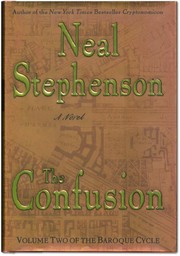
Volume II: Jack's picaresque global odyssey and Eliza's rise through European finance and court intrigue; the financial history from Stage 1 makes the currency and trade mechanics viscerally comprehensible.
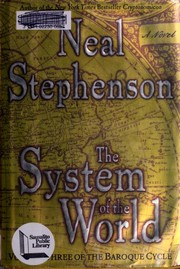
Volume III: the culminating confrontation in London over the nature of money, the calculus priority dispute, and the fate of all the major characters; reading Cryptonomicon first makes the dynastic echoes in this finale deeply satisfying.
Philosophical & Literary Deepening
ExpertAfter completing the Cycle, engage with the primary philosophical and literary sources Stephenson himself drew on — Leibniz's actual thought, the picaresque tradition, and the Enlightenment project — to unlock a second, richer reading.
▸ Study plan for this stage
Pace: 4–5 weeks total: Week 1 — read Discourse on Metaphysics slowly (it is dense; ~2–3 sections per sitting, annotating heavily); Weeks 2–3 — read Candide in 2–3 sittings (it is short but rewards re-reading), then spend the remainder of Week 3 re-reading key chapters alongside your Discourse on Metaphysi
- Leibniz's concept of the monad and pre-established harmony — the idea that each substance mirrors the universe from its own perspective, with no true causal interaction between substances
- The Principle of Sufficient Reason and the Principle of the Best — Leibniz's argument that God chose this world because it is the best of all possible worlds, the very doctrine Voltaire targets
- Theodicy and the problem of evil — how Leibniz attempts to reconcile an omnipotent, benevolent God with the existence of suffering, and why this reconciliation became philosophically and culturally explosive
- Substance, attribute, and individual essence in the Discourse — Leibniz's claim that the complete concept of an individual contains all predicates true of them, collapsing contingency into necessity in a way that troubled his contemporaries
- The picaresque mode in Candide — episodic, satirical, road-narrative structure in which a naive protagonist is battered by experience; how Voltaire weaponizes this form against Leibnizian optimism
- Voltaire's Pangloss as a philosophical straw man — understanding what Pangloss actually caricatures versus what Leibniz genuinely argued, and where the caricature is fair or unfair
- The Enlightenment tension between systematic rationalism and empirical skepticism — Candide as a manifesto for lived, practical wisdom ('we must cultivate our garden') over metaphysical system-building
- Stephenson's use of both authors in The Baroque Cycle — Leibniz appears as a character whose optimism and system-building are tested by the brutal contingency of history, echoing the very debate between the Discourse and Candide
- Can you state Leibniz's 'best of all possible worlds' argument in your own words, using evidence from the Discourse on Metaphysics, and then explain precisely which parts of that argument Voltaire's Pangloss parodies — and which parts he misrepresents?
- The Discourse on Metaphysics argues that the complete individual concept of a person contains every predicate that will ever be true of them. How does this doctrine sit alongside Candide's insistence that catastrophe is random and unjustified? Which view does the narrative structure of The Baroque Cycle implicitly favor?
- Voltaire ends Candide with 'we must cultivate our garden.' How does this conclusion function as a philosophical counter-proposal to Leibniz's theodicy, and is it a refutation or merely a retreat?
- How does the picaresque form of Candide — its rapid episodic movement, its cartoonishly suffering protagonist — do philosophical work that a treatise could not? What would be lost if Voltaire had written a systematic rebuttal instead?
- Identify two or three moments in The Baroque Cycle (from your earlier reading) where Stephenson's Leibniz behaves in ways that are consistent with the Discourse on Metaphysics. Does Stephenson treat Leibniz more sympathetically than Voltaire does?
- What is the relationship between Leibniz's pre-established harmony and the Enlightenment project of rational progress? Does Candide attack Leibniz specifically, or the broader Enlightenment optimism about reason and order?
- Annotation dialogue: As you read the Discourse on Metaphysics, mark every claim that could be turned into a Pangloss line. Then re-read those marked passages after finishing Candide and write a one-paragraph verdict on each: is Voltaire's parody philosophically fair?
- Rewrite a scene: Choose one disaster scene from Candide (the Lisbon earthquake, the auto-da-fé, or the encounter with the slave in Suriname) and rewrite it as Leibniz might have narrated it in the voice and style of the Discourse — then write a reflection on what that exercise reveals about the rhetorical stakes of each author's chosen form.
- Concept map: Draw a visual map connecting the following nodes — Monad, Pre-established Harmony, Best Possible World, Theodicy, Pangloss, 'Cultivate our garden', and Stephenson's Leibniz. Label each edge with the nature of the relationship (supports / parodies / extends / refutes / dramatizes).
- Comparative close-reading: Select the opening section of the Discourse on Metaphysics (Sections I–VI) and the opening chapter of Candide. Write a 500-word comparison of how each author establishes their philosophical stakes in the first pages — tone, rhetorical strategy, implied reader.
- Devil's advocate brief: Write a one-page defense of Pangloss's optimism using only evidence from the Discourse on Metaphysics, then write a one-page rebuttal using only evidence from Candide. Read both aloud and decide which is more persuasive — and why that verdict matters for reading The Baroque Cycle.
- Stephenson connection journal: Return to your notes or memories of The Baroque Cycle and write a journal entry of at least 400 words tracing how the Leibniz–Voltaire debate plays out across the trilogy's plot and characters — who in the novels is a 'Leibnizian' and who is a 'Voltairean,' and does Stephenson resolve the tension or leave it open?
Next up: Mastering the Leibniz–Voltaire axis — rationalist optimism versus satirical empiricism — gives the reader the philosophical grammar needed to tackle the broader Enlightenment and scientific-revolution literature that underpins The Baroque Cycle's treatment of natural philosophy, trade, and political economy.
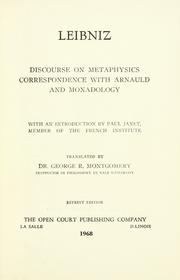
Leibniz is a living character throughout the Cycle; reading his own concise philosophical manifesto reveals exactly what is at stake in his debates with Newton and Clarke, and why Stephenson treats him as a hero of rational optimism.

Voltaire's savage satire of Leibnizian optimism ('the best of all possible worlds') is the literary tradition Jack Shaftoe's picaresque adventures consciously inhabit and subvert — reading it retrospectively reframes the entire Cycle's tone.
Discussion
Keep reading
Paths that share books, cover the same subject, or open a related topic.