Best Books About Isaac Newton, in Reading Order
Newton wrote more on alchemy and biblical chronology than on physics, and any reading path that treats the second Newton as a curious footnote to the first has got him backwards — the scholarship of the last fifty years is largely the work of taking the whole man seriously. This path goes short life, then full biography, then the actual science, then the alchemy, theology, Mint and the calculus quarrel. The order matters in one specific way: read a modern life before touching the Principia or the alchemical scholarship, because both are far more interesting once you know how strange the person writing them was.
The short life
BeginnerGet the whole arc — Woolsthorpe, Trinity, the plague years, the Principia, the Mint, the Royal Society presidency — in under a week's reading.
▸ Study plan for this stage
Pace: Two to three weeks for three short, readable books. James Gleick's Isaac Newton (272 pages) is a few evenings and is deliberately impressionistic rather than complete. Rob Iliffe's Newton, catalogued under the bare title and published as the Very Short Introduction, is shorter still and reads in a s
- The shape of the life: Woolsthorpe, Trinity, the plague years of 1665–66, the Principia, the Mint, the Royal Society presidency
- The annus mirabilis story — what Newton actually claimed about those two years, and how much of it was reconstructed decades later
- The proportions of the archive: Newton wrote more on alchemy and biblical chronology than on physics, and Iliffe, who edits the Newton Project, is the one of these three closest to the manuscripts
- Publication as the exception rather than the rule — most of what Newton wrote he never printed, and much of it was unread for two centuries
- The world Dolnick describes: plague, the Fire, the founding of the Royal Society, and a century that expected the apocalypse
- Secrecy and priority as habits, not incidents — the disposition that produces both the Hooke quarrel and the Leibniz one
- What did Newton actually do in 1665–66, and on whose testimony do we know it?
- Roughly what proportion of Newton's surviving writing is natural philosophy, and where do Gleick and Iliffe differ in how much weight they give the rest?
- Why was the Principia written at all, given that Newton had held the material for twenty years?
- What did the Royal Society exist to do in the 1660s, on Dolnick's account, and how did it change what counted as knowledge?
- What is Gleick deliberately leaving out, and what does Iliffe put back in?
- Read Gleick first, then Iliffe, and list every claim about the alchemy or the theology that Iliffe makes and Gleick does not. That list is the argument the rest of this path is about.
- Build a one-page chronology from Gleick — birth, Trinity, plague years, Principia, Mint, presidency, death — and leave wide margins. You will be adding to it for the whole path.
- In Dolnick, mark every episode that is about institutions rather than individuals (the Society's founding, its journal, its patronage) and note beside each what it made possible for Newton personally.
- Write, before the next stage, a two-sentence account of who you currently think Newton was. Keep it; Westfall will contradict you.
Next up: You now have the arc and the century; the next stage is the full scholarly life that establishes how that picture was assembled from manuscripts Newton never intended anyone to read.

Two hundred pages, elegantly written, and the best short life there is. Gleick is deliberately impressionistic rather than comprehensive, which is exactly right as a first book. If you want a second short life, Michael White's Isaac Newton: The Last Sorcerer pushes harder on the alchemy and is catalogued separately under the same display title.

The Very Short Introduction, filed under the bare title. Iliffe edits the Newton Project and knows the manuscripts better than almost anyone, so this compressed account is unusually well-informed about the unpublished Newton. Read it directly after Gleick as the corrective.
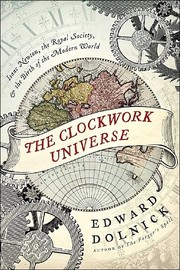
The world Newton worked in rather than Newton himself — plague, fire, the founding of the Royal Society, and a seventeenth century that expected the apocalypse and got calculus. Read it here, before the heavy biography, because it supplies the context Westfall assumes you have.
The definitive biography
IntermediateRead the full scholarly life, and learn how the modern picture of Newton was assembled out of manuscripts he never published.
▸ Study plan for this stage
Pace: Two to three months, and treat this as the long stretch of the path. Richard Westfall's Never at Rest (908 pages) is twenty years of work and is the definitive life; at 30 pages a day it is roughly a month, and it is denser than that pace suggests because it works through the science alongside the m
- How the modern Newton was assembled: the 1936 Sotheby's dispersal of the unpublished papers, and the scholarship that followed it
- Westfall's refusal to treat alchemy and theology as embarrassments to be explained away — the methodological decision that defines the book
- Christianson on the childhood — the fatherless birth, the mother's remarriage, the years at Woolsthorpe — and how far psychological reading of a seventeenth-century subject can be pushed
- The 1693 crisis and the competing explanations for it
- The quarrels as pattern: Hooke, Flamsteed, Leibniz, each following the same shape
- Biography versus specialist essay: what a narrative life can show that a Companion chapter cannot, and the reverse
- Reading a nine-hundred-page book with technical passages — which sections to work through and which to read for narrative
- Where do Westfall and Christianson disagree about what drove Newton, and what evidence does each rest on?
- How does Westfall handle the alchemical manuscripts — as a parallel activity, a rival to the physics, or part of the same project?
- What happened to Flamsteed's star catalogue, and what does the episode show about Newton in power?
- What do the Companion essays assume that the biographies explain, and what does that tell you about who each was written for?
- Having read both lives: is the unpleasantness incidental to the achievement or connected to it, and on what grounds?
- Pick one episode — the 1693 breakdown, or the Hooke priority dispute — and read Westfall's and Christianson's accounts of it side by side. Write a paragraph on where they diverge and which evidence each privileges.
- As you read Westfall, add every date to the chronology you started in stage one, and mark in a second colour anything that happened in alchemy or theology. Look at the resulting density before you start stage four.
- Read only the Companion chapters on the Principia and on the optics now, before you open either book in the next stage, and note the three things each chapter says you must know first.
- Compare your sealed two-sentence description of Newton from stage one against Westfall's Newton and write down exactly which sentence you had wrong.
Next up: Knowing how strange the man was, you can now open the actual books — which is the point at which the path stops being biography and starts being hard.
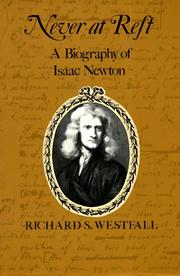
The definitive biography, nine hundred pages, twenty years in the making, and still unsurpassed forty years on. It does not condescend about the alchemy or the theology, and it is honest about how unpleasant Newton could be. Westfall also produced a one-volume abridgement, The Life of Isaac Newton, if the full text is too much; the abridgement is a separate record.
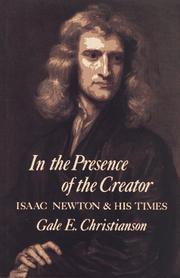
The other great full-length life, published the same decade and better than Westfall on the psychology and the early years. Read it as the second opinion rather than the first account — the two disagree in useful ways about what drove him.
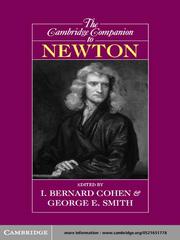
Specialist essays on each part of the work — the mathematics, the optics, the mechanics, the theology, the alchemy — by the scholars who did the primary research. Use it as a bridge from biography to the science itself, reading only the chapters on what you are about to tackle.
What the work actually did
IntermediateEngage with the Principia and the Opticks directly, with the modern commentary that makes them readable, and understand what was genuinely new in each.
▸ Study plan for this stage
Pace: Two to three months, and expect this to be the hardest stage on the path by a wide margin. Read I. Bernard Cohen's The Newtonian Revolution (404 pages) first — it is a historian's monograph rather than a popular book, but it needs no mathematics and it explains the method before you meet it. Then th
- Cohen's 'Newtonian style': moving between an idealised mathematical system and the physical world, and adjusting the model until the two meet
- Why the Principia changed what science was rather than only what it knew
- The geometrical form of the Principia's proofs, and the fact that Newton had the calculus and chose not to use it
- The moon test — comparing the Moon's acceleration with terrestrial gravity as the argument that one force does both
- The Opticks as a different genre entirely: experimental reports the reader could in principle repeat, closing with the Queries, where Newton let his metaphysics show
- The Queries as the place where the natural philosophy and the theology of stage four visibly touch
- Primary source versus commentary — what you can only get from Newton's own pages, and what you need Cohen or Chandrasekhar to unlock
- What, on Cohen's account, was actually new in the Principia's method as opposed to its results?
- Why does Newton prove Kepler's area law geometrically, and what does the proof require you to accept about instantaneous impulses?
- How does the Definitions and Axioms section define mass and force, and where is that definition circular?
- What is Newton doing in the Queries at the end of the Opticks that he never does in the Principia?
- Where does Chandrasekhar depart from Newton's own reasoning, and why does he say he is doing it?
- Having read both, which of the two books would a working seventeenth-century natural philosopher have found more useful, and why?
- Work through Book One, Proposition 1 of the Principia — the area law — following the geometry with pencil and paper until you can redraw the diagram from memory. This single proposition is the best test of whether the geometrical style is workable for you.
- Reproduce the moon test with Newton's own figures as the Principia gives them: the Moon's distance in Earth radii, its period, and the resulting acceleration compared with surface gravity. Do the arithmetic yourself and see how closely it comes out.
- Set up the first prism experiment from the Opticks on paper as Newton describes it — the hole, the distances, the wall — and list what he had to control for. Then note which of his experiments you could actually repeat today with a hardware-shop prism.
- Read the Queries at the end of the Opticks and mark every claim that is not supported by any experiment in the book. Keep the list for stage four.
- If you attempt Chandrasekhar, take one proposition you already worked in Newton's own text and read Chandrasekhar's version of it beside the original; write down what modern notation buys and what it hides.
Next up: The Queries at the end of the Opticks are already reaching past physics, which is exactly where the final stage goes — into the alchemy, the theology and the Mint years that occupied more of Newton's life than any of this did.
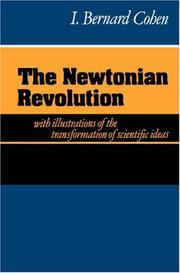
Cohen's account of Newton's method — how he moved between idealised mathematical systems and the physical world — and the best single explanation of why the Principia changed what science was rather than just what it knew. Read it before opening the Principia.

The book itself, in the Cohen and Whitman translation with its long guide to reading it. It is written in classical geometry rather than the calculus Newton invented, which makes it far harder than its reputation implies. Read the introductory material and Book One's opening; do not attempt the whole thing on a first pass.
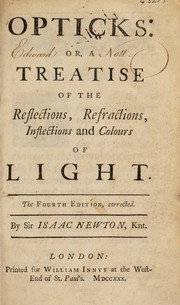
The far more approachable masterwork: written in English, organised as experiments you could nearly repeat, and closing with the speculative Queries where Newton let his metaphysics show. If the Principia defeats you, this is the book that will not.
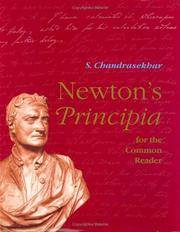
A Nobel astrophysicist reworking Newton's proofs in his eighties, out of sheer admiration. The title is optimistic — this needs real mathematics — but for a reader with calculus it is the most rewarding way into the actual arguments. Optional, and clearly the hardest book here.
The other Newton
IntermediateTake the alchemy, the anti-Trinitarian theology, the Mint years and the Leibniz quarrel as serious parts of one life rather than as anecdotes.
▸ Study plan for this stage
Pace: Two months, and read these as serious parts of one life rather than as anecdotes. Betty Jo Teeter Dobbs's The Janus Faces of Genius (373 pages) is a specialist academic monograph and the hardest reading in this stage — it works closely with alchemical manuscripts and their vocabulary, and its argume
- Dobbs's thesis: the alchemy and the physics as one project — an inquiry into how divine action operates in matter — rather than two careers in one skull
- The scale of it, which is the point: alchemy and biblical chronology occupied more of Newton's writing life than natural philosophy did
- Newton's anti-Trinitarianism: a heresy he held for a lifetime, concealed to keep his Trinity fellowship, and regarded as at least as important as the natural philosophy
- Prisca sapientia — the belief that ancient authors had known the truth and that his own work was recovery rather than discovery
- The Mint as a third career: the recoinage, the prosecutions, and thirty years of administration and criminal investigation
- The Leibniz priority dispute, including the Royal Society committee Newton appointed and whose supposedly impartial report he wrote himself, anonymously
- Where scholars still disagree — how tightly the alchemical and physical projects are connected is genuinely contested, and Dobbs's reading is one position rather than the settled view
- What is Dobbs's evidence that the alchemy and the Principia's concept of force belong to the same inquiry, and what would count against her?
- What specifically did Newton believe about the Trinity, what did concealing it cost him practically, and how did he keep his fellowship?
- How does Iliffe's Newton relate his theological scholarship to his natural philosophy — which did he take to be the more important work?
- What did Newton actually do at the Mint, day to day, and why was a natural philosopher good at it?
- In the calculus dispute, which claims of Newton's were true, which were unfair, and where does Bardi decline to adjudicate?
- Having read the whole path: does the Newton of stage four discredit the Newton of stage three, or explain him?
- Take the list of unsupported claims you made from the Opticks Queries and check each one against Dobbs and Iliffe. Several turn out to have a source outside physics entirely; note which.
- Read Iliffe's account of the theological manuscripts and then look up two of the same documents on the Newton Project, which Iliffe edits, to see the material in its own form rather than in summary.
- Build a bar chart, however rough, of Newton's writing by subject and decade using the figures the biographies give. Put it next to the chronology you have been keeping since stage one and see which parts of his life your first two-sentence description ignored.
- Read the Levenson account of the Chaloner prosecution and list the investigative techniques Newton used; compare them with the experimental method Cohen described in stage three and note the overlaps.
- Finish with Bardi and mark every moment in the Leibniz affair that matches a pattern you already saw in the Hooke and Flamsteed quarrels in Westfall. The consistency is the point.
Next up: The path closes with the whole man in view — the geometry, the crucible, the heresy and the gallows — which is the picture fifty years of scholarship was assembled to make possible.

The mature statement of the scholarship that rehabilitated Newton's alchemy, arguing the alchemical work and the physics came from a single project of understanding divine action in matter. Dobbs's earlier Foundations of Newton's Alchemy is the groundwork and also resolves here; this is the book to read if you read one.
The theology, from the man who has read the manuscripts most closely: Newton as a heretic who denied the Trinity, concealed it for a lifetime, and regarded his religious scholarship as at least as important as the natural philosophy. The single most revealing book on this path.

The thirty years at the Royal Mint, told as the true crime story of Newton hunting the coiner William Chaloner through the London underworld. Genuinely entertaining, and the best account of the half of his career that was neither science nor theology.
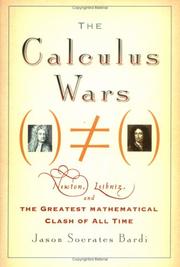
The priority dispute with Leibniz, including the Royal Society committee Newton stacked and whose report he anonymously wrote himself. Read it last: it is the clearest single demonstration of the character that everything earlier on this path has been describing.