Microservices are often sold as a cure and delivered as a curse. Splitting a system into many services can improve scaling and team autonomy, but it also turns method calls into network calls, replaces stack traces with distributed mysteries, and multiplies the ways things fail. Teams that adopt them because it is fashionable, without understanding the tradeoffs, usually build a distributed monolith that is worse than what they had.
The right reading order builds judgment before enthusiasm. You learn what microservices are and when they help, how to draw good boundaries, then the hard realities of distributed systems and how to keep them running.
Learn the foundations and the tradeoffs
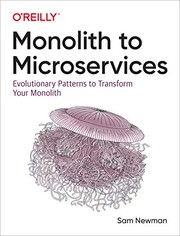
Start with Building Microservices by Sam Newman, the standard introduction that is honest about both the benefits and the costs. It frames every decision as a tradeoff, which is exactly the mindset this topic demands. Then read Monolith to Microservices, also by Newman, which is the practical companion for the far more common situation of decomposing an existing system rather than starting fresh.
Get the boundaries right
The hardest part of microservices is deciding where to cut, and that is a design problem, not a technical one. Implementing Domain-Driven Design teaches how to model a business into bounded contexts that make natural service boundaries. Poor boundaries are the root cause of most microservices pain, so this book earns its place early.
For the patterns of assembling services into systems, Designing Distributed Systems offers reusable building blocks, and Enterprise integration patterns remains the definitive catalog of how services communicate through messaging.
Design the seams and survive failure
Services talk through APIs, and Designing APIs with Swagger and OpenAPI covers defining contracts that let teams work independently. Then comes the reality of distributed failure. Release It! is essential reading on stability patterns like circuit breakers and bulkheads, drawn from real production disasters.
Because you cannot fix what you cannot see, Observability Engineering teaches how to understand systems too complex to reason about from the outside. And Chaos Engineering closes the path by showing how to find weaknesses deliberately, before they find you, by injecting failure on purpose.
Read the full path in order and microservices become a considered choice rather than a trend you regret. You end knowing when not to split, how to draw boundaries that hold, and how to operate a system where failure is normal rather than exceptional.
Follow the full reading path →
Ready to learn something deeply?
Build a reading path — free