The Best Books on Refactoring, In Order
This curriculum takes an intermediate developer from principled refactoring technique through code-smell diagnosis, design-level restructuring, and finally the hardest real-world challenge — safely modernizing large, untested legacy systems. Each stage builds on the vocabulary and mechanics of the last, so by the end the reader can confidently reshape any codebase, large or small, without breaking it.
Core Mechanics — The Refactoring Canon
IntermediateMaster the vocabulary, catalog of named refactorings, and the red-green-refactor discipline that underpins all safe structural change.
▸ Study plan for this stage
Pace: 8–10 weeks, ~40–50 pages/day (Fowler first: 4–5 weeks; Feathers second: 4–5 weeks)
- The red-green-refactor cycle: write failing test, make it pass, then safely restructure code without changing behavior
- Named refactorings as a shared vocabulary: Extract Method, Inline Method, Move Method, Rename Variable, Replace Temp with Query, and others as a catalog of safe, repeatable transformations
- Refactoring vs. rewriting: the discipline of making small, testable, reversible changes rather than wholesale rewrites
- Seams and characterization tests: techniques for identifying safe boundaries and understanding legacy code behavior before refactoring
- The role of tests as a safety net: how comprehensive test coverage enables confident refactoring and prevents regression
- Identifying refactoring opportunities: code smells (duplication, long methods, large classes, feature envy) as signals for structural improvement
- Dependency injection and breaking dependencies: strategies for isolating and testing code in legacy systems
- Incremental modernization: how to refactor existing systems without halting feature development
- What is the red-green-refactor cycle, and why is each phase essential to safe refactoring?
- Name and describe at least five named refactorings from Fowler's catalog, including when and why you would apply each
- What is a code smell, and how do you use code smells to identify refactoring opportunities in your own code?
- What is a seam, and how do seams and characterization tests help you refactor legacy code that lacks test coverage?
- How does test coverage act as a safety net during refactoring, and what risks do you face when refactoring code with inadequate tests?
- Describe a concrete scenario where you would use dependency injection to break a dependency and enable testing in legacy code
- Refactor a small, well-tested codebase (50–100 lines) using at least three named refactorings from Fowler's catalog; document each refactoring step and verify tests pass after each change
- Identify code smells in a provided legacy code snippet; write characterization tests to capture its current behavior, then apply one refactoring to improve its structure
- Implement the red-green-refactor cycle on a feature: write a failing test, make it pass with the simplest code, then refactor to remove duplication or improve clarity
- Take a tightly coupled legacy class and use dependency injection to break dependencies; write tests that verify the refactored code's behavior
- Extract a method from a long function (20+ lines) that violates the Single Responsibility Principle; ensure all tests pass before and after
- Write characterization tests for a legacy function with no existing test coverage; use those tests as a safety net while refactoring the function's internal structure
Next up: This stage establishes the foundational discipline and vocabulary for safe refactoring; the next stage will apply these mechanics to larger architectural patterns and strategic refactoring decisions in complex systems.

The definitive reference that names and codifies every essential refactoring move. Reading this first gives you the shared language and step-by-step mechanics every subsequent book assumes you know.
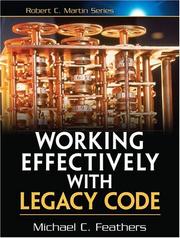
Immediately follows Fowler because it answers the hardest practical question: how do you apply refactorings when there are no tests? Introduces seams, characterization tests, and safe-change patterns for real-world messy codebases.
Smells, Principles & Clean Structure
IntermediateDevelop a trained eye for code smells and learn the design principles that tell you what to refactor toward, not just how.
▸ Study plan for this stage
Pace: 8–10 weeks, ~40–50 pages/day (accounting for re-reading and reflection)
- Code smells as signals of deeper design problems (naming, functions, comments, duplication, complexity)
- The Boy Scout Rule and incremental refactoring discipline
- Meaningful naming conventions and their impact on readability and maintainability
- Single Responsibility Principle and cohesion in function and class design
- DRY (Don't Repeat Yourself) and the cost of duplication across codebases
- Error handling and exception strategies as structural design decisions
- The relationship between formatting, structure, and team communication
- Pragmatic mindset: knowing when to refactor versus when to leave code alone
- What are the primary code smells Martin identifies, and what underlying problems do they typically indicate?
- How does the Boy Scout Rule apply to your daily refactoring work, and what is its cumulative impact on a codebase?
- Why does meaningful naming matter more than comments, and how do you know when a name is 'good enough'?
- What is the Single Responsibility Principle, and how do you recognize when a function or class violates it?
- How do you distinguish between acceptable duplication and problematic duplication that should be eliminated?
- What pragmatic trade-offs should you consider when deciding whether to refactor a piece of code?
- Audit your own recent code: identify 3–5 code smells using Martin's taxonomy and write a brief diagnosis of what each smell suggests about the design
- Rename variables, functions, and classes in a legacy codebase section to make intent explicit; document how readability improved
- Refactor a function that violates Single Responsibility into multiple focused functions; explain the design improvement
- Apply the Boy Scout Rule to a real project: make one small improvement per day for two weeks and track the cumulative effect
- Extract duplicated logic into a shared utility or helper function; measure the reduction in lines of code and complexity
- Review a piece of code you wrote 6+ months ago and apply Martin's principles to identify what you'd change and why
- Write a short case study (500–750 words) analyzing a code smell in a real codebase and proposing a refactoring strategy grounded in design principles
- Pair-review code with a colleague using Martin's and Hunt's frameworks; document the smells you find and the principles that guide your recommendations
Next up: This stage trains you to *recognize* what needs refactoring and *why*; the next stage will teach you the specific *techniques and patterns* to execute those refactorings safely and effectively.
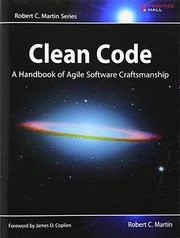
Translates abstract quality intuitions into concrete naming, function-size, and formatting rules — giving you a clear target state to refactor toward.

Broadens the lens to engineering habits — DRY, orthogonality, and reversibility — that explain why certain structures rot and how to prevent it during refactoring.
Design Patterns as Refactoring Destinations
IntermediateUnderstand the classic design patterns so you can recognize when a refactoring sequence is naturally leading toward one, and navigate there deliberately.
▸ Study plan for this stage
Pace: 8–10 weeks, ~40–50 pages/day (Head First: 3–4 weeks; Gang of Four: 4–6 weeks)
- Design patterns as proven solutions to recurring design problems, not rigid templates to memorize
- The relationship between refactoring and patterns: recognizing when code naturally evolves toward a pattern
- Creational patterns (Singleton, Factory, Abstract Factory, Builder) and when to apply them to reduce coupling and improve object creation
- Structural patterns (Adapter, Bridge, Composite, Decorator, Facade, Proxy) and how they reshape object relationships to add flexibility
- Behavioral patterns (Observer, Strategy, Command, State, Template Method, Iterator, Mediator, Chain of Responsibility) and their role in managing object communication and responsibility
- The Gang of Four classification system: understanding intent, motivation, applicability, and consequences for each pattern
- Pattern trade-offs: when a pattern solves a problem but introduces complexity, and how to weigh those costs
- Pattern composition: how patterns work together in real systems rather than in isolation
- What is the difference between a design pattern and a refactoring? How do patterns serve as 'destinations' for refactoring sequences?
- Given a code smell (e.g., rigid object creation, scattered conditional logic, tight coupling), which pattern(s) would naturally address it, and why?
- For each of the 23 Gang of Four patterns, can you articulate its intent, a realistic scenario where it applies, and at least one consequence of using it?
- How do Creational, Structural, and Behavioral patterns differ in their purpose, and why does this classification matter when refactoring?
- When would you choose one pattern over a similar alternative (e.g., Strategy vs. State, Adapter vs. Bridge, Factory vs. Abstract Factory)?
- Can you trace a refactoring path from a code smell to a pattern, explaining each intermediate step and why the pattern becomes the natural destination?
- Read Head First Design Patterns chapters 1–3 (Intro, Observer, Decorator) and implement the Observer pattern in a real or toy project; refactor existing event-handling code to use it deliberately
- Work through Head First's Strategy and Command chapters (4–6); identify a piece of your own code with conditional logic and refactor it toward Strategy or Command
- Study the Gang of Four's Creational Patterns section; create a small application (e.g., a document factory, configuration builder) that demonstrates at least two creational patterns and explain why each was chosen
- Pick three Structural patterns from the Gang of Four (e.g., Decorator, Facade, Proxy); refactor a legacy module to introduce one of them, documenting the before/after trade-offs
- Choose a Behavioral pattern from the Gang of Four (e.g., Observer, State, Template Method); implement it in a real codebase or kata, then write a brief analysis of when you'd refactor toward it versus away from it
- Create a 'pattern decision tree' for a specific domain (e.g., UI frameworks, data access layers): given a set of code smells, map them to the patterns that would address them and explain the refactoring path
Next up: This stage equips you with a mental catalog of proven design solutions, enabling the next stage to focus on the *process* of refactoring—how to safely apply these patterns incrementally, recognize when a refactoring is complete, and balance pattern adoption against simplicity and project constraints.

A highly accessible entry into the Gang of Four patterns; reading this before the original GoF book builds the intuition needed to absorb the denser reference.

The canonical pattern catalog — once you know the patterns, you can use Fowler's refactorings as deliberate stepping-stones toward them rather than isolated moves.
Architecture-Level Restructuring
ExpertApply refactoring thinking at the system and architecture scale — decomposing monoliths, managing technical debt strategically, and evolving large designs safely.
▸ Study plan for this stage
Pace: 8–10 weeks, ~25–30 pages/day (alternating between both books in parallel, with 2–3 days per week for exercises and reflection)
- Monolith decomposition strategies: identifying service boundaries, strangler fig pattern, and incremental migration paths
- Microservice architecture principles: autonomy, decentralization, resilience, and organizational alignment (Conway's Law)
- Technical debt visualization and analysis: using code metrics, hotspots, and temporal coupling to identify refactoring priorities
- Strategic refactoring at scale: managing risk, coordinating across teams, and measuring architectural improvements
- Communication patterns and coupling in distributed systems: synchronous vs. asynchronous, contract testing, and API evolution
- Organizational and social factors in architecture: team structure, ownership models, and how design reflects organizational boundaries
- Evolutionary architecture: designing for change, managing versioning, and building systems that can be safely modified over time
- What are the key indicators that a monolith should be decomposed into microservices, and what are the risks of premature decomposition?
- How does Conway's Law inform microservice design, and what organizational structures support effective service-oriented architecture?
- What techniques from 'Software Design X-Rays' can you use to identify the highest-impact refactoring opportunities in a legacy system?
- Describe the strangler fig pattern and explain why it is safer than a big-bang rewrite when migrating from monolith to microservices.
- How do you manage inter-service communication, versioning, and contract changes in a microservice architecture without breaking dependent teams?
- What is temporal coupling, and how does it reveal architectural problems that code metrics alone might miss?
- Map a real or fictional monolithic system: identify service boundaries using domain-driven design principles, and sketch a microservice decomposition plan with explicit reasoning for each boundary.
- Analyze a codebase (your own or open-source) using code hotspot analysis: identify files with high change frequency, high complexity, or temporal coupling; propose refactoring priorities based on these signals.
- Design a strangler fig migration: pick a feature or module in a monolith and plan a step-by-step extraction into a new microservice, including database migration, routing, and rollback strategy.
- Create a communication matrix for a microservice system: document synchronous vs. asynchronous interactions, identify bottlenecks, and propose improvements to reduce coupling.
- Conduct an organizational alignment audit: map your team structure to your current architecture; identify misalignments and propose structural changes to reduce handoffs and improve autonomy.
- Build a technical debt dashboard: collect metrics (change frequency, cyclomatic complexity, test coverage) for a system and visualize them to identify refactoring hotspots; present findings and prioritized recommendations.
Next up: This stage equips you with both the strategic vision (when and how to refactor at scale) and the diagnostic tools (how to see architectural problems) needed to lead large-scale modernization efforts; the next stage will deepen your ability to execute these changes reliably through advanced testing, deployment, and monitoring practices.

Shows how to incrementally extract services from a monolith — the highest-stakes refactoring scenario — using strangler fig and other safe migration patterns.

Introduces behavioral code analysis to prioritize which parts of a large codebase most urgently need refactoring, making the advanced reader's effort data-driven rather than intuitive.
Mastery — Sustainable Codebases at Scale
ExpertSynthesize everything into long-term strategies for keeping large teams and large codebases clean, and understand the economic and organizational forces that drive or resist refactoring.
▸ Study plan for this stage
Pace: 8–10 weeks, ~25–30 pages/day (alternating between the two books to balance philosophical depth with empirical evidence)
- Deep vs. shallow modules: how to design systems that minimize complexity and surface area for future maintainers
- Red flags in code design: recognizing when a system is accumulating unnecessary complexity and when refactoring is justified
- Information hiding and abstraction as the foundation for sustainable architecture at scale
- The business case for refactoring: how code quality directly impacts deployment frequency, lead time, and organizational performance
- Organizational dynamics and technical debt: why teams resist refactoring and how to align incentives across engineering and leadership
- Measuring code health: connecting software metrics (MTTR, deployment frequency) to business outcomes and team velocity
- Incremental refactoring strategies for large teams: how to maintain momentum without halting feature delivery
- Cultural and structural factors that enable continuous improvement in large codebases
- What is the distinction between deep and shallow modules, and why does this distinction matter more as codebases scale?
- How does Ousterhout's concept of information hiding relate to reducing the cognitive load on large engineering teams?
- What does 'Accelerate' identify as the measurable connection between code quality and deployment frequency, and how does this justify refactoring investments?
- What organizational and cultural barriers prevent teams from refactoring, and what strategies can overcome them?
- How would you diagnose whether a large codebase is suffering from accumulated complexity, and what metrics would you use?
- Design a refactoring strategy for a large team working on a legacy system that balances feature velocity with technical debt reduction.
- Read 'A Philosophy of Software Design' chapters 1–4 and map three modules in a codebase you know against Ousterhout's deep/shallow framework; document which are problematic and why
- Audit a large codebase for information hiding violations: identify 5–10 places where internal implementation details are leaking into client code, and sketch a refactoring approach for each
- Extract deployment frequency, lead time, and MTTR metrics from your organization (or a case study); correlate them with known technical debt hotspots using the framework from 'Accelerate'
- Conduct a team interview or retrospective focused on refactoring: what barriers do engineers cite? Map these against the organizational factors discussed in 'Accelerate' chapters 3–5
- Design a 6-month incremental refactoring roadmap for a specific subsystem, balancing feature delivery with complexity reduction; present it as a business case using metrics from 'Accelerate'
- Write a design review checklist based on Ousterhout's red flags (complexity, obscurity, inconsistency) and apply it to a recent PR or design proposal in your team
Next up: This stage equips you to see refactoring not as a technical chore but as a strategic lever for organizational performance, positioning you to lead large-scale modernization efforts and mentor teams in building systems that remain maintainable as they grow.

Challenges and deepens assumptions formed in earlier stages — particularly around complexity, deep modules, and when abstraction helps vs. hurts — sharpening your judgment for large-scale decisions.

Provides the research-backed organizational and delivery context that explains why continuous refactoring is not optional but a measurable driver of software delivery performance — the ideal capstone for making the case and sustaining the practice.
Discussion
Keep reading
Paths that share books, cover the same subject, or open a related topic.