Learn Java in order: a reading path from basics to real applications
This curriculum takes you from writing your very first Java program all the way to designing robust, enterprise-grade systems. Each stage builds directly on the last — you'll establish core syntax and OOP fundamentals before tackling the standard library deeply, then graduate to advanced language features and concurrency, and finally absorb the design wisdom needed for production-quality software.
Foundations: Core Syntax & First Programs
BeginnerUnderstand Java's syntax, basic data types, control flow, methods, and the fundamentals of object-oriented thinking — enough to write and run complete, small programs confidently.
▸ Study plan for this stage
Pace: 6–8 weeks, ~40–50 pages/day (Head First Java: 2–3 weeks; Liang's Comprehensive Version: 4–5 weeks)
- Java syntax fundamentals: variables, data types (primitive and reference), operators, and type casting
- Control flow structures: if/else, switch statements, loops (for, while, do-while), and break/continue
- Methods: declaration, parameters, return types, scope, and method overloading
- Object-oriented fundamentals: classes, objects, constructors, instance variables, and the relationship between classes and objects
- Arrays and basic collections: declaring, initializing, and iterating through arrays
- String manipulation: String class, concatenation, common methods, and immutability
- Exception handling basics: try-catch blocks and understanding common exceptions
- Input/output fundamentals: Scanner class and System.out for basic console I/O
- What are the eight primitive data types in Java, and when would you use each one?
- Explain the difference between pass-by-value and how it applies to both primitive types and object references in Java.
- How do constructors differ from regular methods, and why are they essential in object-oriented programming?
- Write a method that accepts an array of integers and returns the sum; explain how arrays are passed to methods.
- What is the difference between a class and an object, and how do instance variables relate to both?
- Describe the execution flow of a for loop and a while loop; when would you choose one over the other?
- Complete all hands-on labs and code examples in Head First Java (Chapters 1–7); type out every code snippet rather than copying and pasting.
- Build a simple Student class with instance variables (name, studentID, gpa) and methods (setGPA, getGPA, displayInfo); instantiate multiple Student objects and test them.
- Write a program that reads 10 integers from user input using Scanner, stores them in an array, and outputs the sum, average, and largest value.
- Create a Calculator class with overloaded methods for add(), subtract(), multiply(), and divide() that work with both integers and doubles.
- Implement a simple BankAccount class with deposit and withdraw methods; include validation logic and exception handling for invalid transactions.
- Write a program that uses nested loops to print multiplication tables (1–10) and a program that reverses a string using a loop.
Next up: Mastering these foundational concepts—syntax, control flow, methods, and basic OOP—equips you to tackle more advanced topics like inheritance, polymorphism, and design patterns in the next stage.
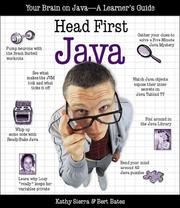
The ideal first book for absolute beginners — its visual, conversational style makes syntax and OOP concepts (classes, objects, inheritance) genuinely stick before you touch anything more formal.

After Head First Java builds intuition, Liang's comprehensive textbook solidifies every core language feature — loops, arrays, methods, and basic data structures — with rigorous practice exercises.
Object-Oriented Design & the Java Standard Library
BeginnerMaster object-oriented design principles (encapsulation, inheritance, polymorphism, interfaces) and become fluent with Java's most essential standard library APIs including Collections and Generics.
▸ Study plan for this stage
Pace: 8–10 weeks, ~40–50 pages/day (Core Java Vol I: Chapters 5–8, ~250 pages over 5–6 weeks; Java Generics and Collections: ~400 pages over 3–4 weeks)
- Encapsulation: designing classes with private fields, public accessors, and controlled mutation to protect object state
- Inheritance and class hierarchies: extending classes, calling super constructors, overriding methods, and the Liskov Substitution Principle
- Polymorphism: writing code that works with superclass references to handle multiple subclass implementations
- Interfaces and abstract classes: defining contracts, implementing multiple interfaces, and using them for flexible API design
- Collections framework architecture: understanding List, Set, Map interfaces and their implementations (ArrayList, HashSet, HashMap)
- Generics: type parameters, bounded wildcards, type erasure, and writing generic classes/methods to ensure type safety at compile time
- Iteration and functional patterns: using iterators, enhanced for-loops, and lambda expressions (Java 8+) to traverse collections
- Common standard library APIs: String manipulation, wrapper classes, boxing/unboxing, and utility classes like Arrays and Collections
- What is encapsulation and why is it important? How do you enforce it in Java?
- Explain the difference between inheritance and composition. When would you use each?
- What is polymorphism and how does method overriding enable it?
- What is the difference between an interface and an abstract class? When should you use each?
- Describe the Collections framework hierarchy. What are the key differences between List, Set, and Map?
- What are generics and why are they important? Explain type erasure and bounded wildcards.
- How do you write a generic class or method? What constraints can you place on type parameters?
- What is the difference between ArrayList and LinkedList? When would you choose one over the other?
- Design and implement a BankAccount class with encapsulation: private balance field, public deposit/withdraw methods with validation, and a private helper method for logging transactions.
- Create a class hierarchy for shapes (Shape superclass, Circle/Rectangle subclasses) with overridden area() and perimeter() methods; write a method that takes a Shape[] and calculates total area using polymorphism.
- Implement an interface PaymentProcessor with process() method; create two implementations (CreditCardProcessor, PayPalProcessor) and write code that works with the interface type.
- Build a generic Stack<T> class with push(), pop(), and peek() methods; test it with different types (Integer, String, custom objects).
- Write a program that uses ArrayList, HashSet, and HashMap to store and manipulate a collection of Employee objects (with name, id, salary); demonstrate adding, removing, searching, and iterating.
- Refactor a raw-type Collections example (from the book) to use generics; identify and fix type safety issues.
- Create a generic method that finds the maximum element in a List<T extends Comparable<T>>; test with different types.
- Implement a simple cache using a generic Map<K, V>; demonstrate put, get, and iteration with type safety.
Next up: This stage equips you with the foundational OOP and standard library knowledge needed to tackle advanced topics like concurrency, design patterns, and framework-based development in subsequent stages.

The definitive professional reference for core Java — covers OOP design, interfaces, generics, and the Collections framework with depth and precision that beginner books skip.

Generics and the Collections API are where most intermediate Java developers have gaps; this focused book closes them completely and pairs perfectly right after Horstmann's Volume I.
Intermediate Mastery: Idiomatic & Effective Java
IntermediateWrite idiomatic, high-quality Java by internalizing best practices around API design, lambdas, streams, error handling, and the subtleties that separate working code from great code.
▸ Study plan for this stage
Pace: 12–14 weeks, ~40–50 pages/day (mix of dense conceptual material and code examples)
- Item design principles: immutability, defensive copying, and composition over inheritance
- Effective use of lambdas and functional interfaces for concise, readable code
- Streams API: lazy evaluation, intermediate vs. terminal operations, and performance considerations
- Exception handling best practices: checked vs. unchecked exceptions, custom exceptions, and recovery strategies
- Generics: bounded wildcards, type erasure, and avoiding raw types and unchecked warnings
- Serialization pitfalls, security implications, and alternatives (JSON, Protocol Buffers)
- Concurrency patterns: thread safety, synchronization, volatile, and immutability as a concurrency tool
- Reflection and annotations: when to use them, performance costs, and common pitfalls
- Why is immutability a cornerstone of effective Java, and how do you design an immutable class correctly?
- When should you use checked exceptions vs. unchecked exceptions, and what are the trade-offs?
- How do lambdas and the Streams API enable functional-style programming in Java, and what are their performance characteristics?
- What is type erasure in generics, and how does it constrain what you can do with parameterized types?
- How do you write thread-safe code using immutability, synchronization, and volatile fields?
- What are the security and performance risks of serialization, and when should you use alternatives?
- Redesign a mutable class (e.g., a Point or Person class) to be immutable; document the trade-offs and benefits
- Refactor a legacy codebase snippet using nested loops and conditionals into a Streams-based solution; measure readability and performance
- Create a custom exception hierarchy for a domain (e.g., banking, e-commerce); justify checked vs. unchecked choices
- Write a generic utility class (e.g., a cache or comparator) using bounded wildcards; test edge cases and document type constraints
- Implement a thread-safe singleton using eager initialization, lazy initialization, and enum; compare thread-safety guarantees
- Build a small REST API client that deserializes JSON into Java objects; compare manual serialization vs. a library like Jackson
Next up: This stage equips you with the deep knowledge of Java's idioms and pitfalls needed to architect larger systems; the next stage will apply these principles to design patterns, concurrent frameworks, and production-grade application architecture.
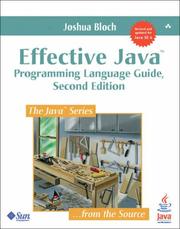
The single most important book for leveling up Java craftsmanship — Bloch's 90 items cover generics, lambdas, streams, exceptions, and design decisions that every serious Java developer must know.

Picks up where Volume I left off, covering streams, the new Date/Time API, I/O, networking, and database connectivity — essential knowledge before tackling concurrency.
Concurrency & the JVM Internals
IntermediateUnderstand Java's memory model, safely write multi-threaded programs, use the java.util.concurrent library, and reason about performance and correctness in concurrent systems.
▸ Study plan for this stage
Pace: 10–12 weeks, ~40–50 pages/day. Start with "Java Concurrency in Practice" (weeks 1–8, ~380 pages), then "Java Performance" (weeks 9–12, ~400 pages). Allocate 2–3 days per major chapter for review and exercises.
- Java Memory Model: visibility, atomicity, ordering, and happens-before relationships
- Thread safety: immutability, synchronization, locks, and safe publication
- Concurrent collections and utilities: ConcurrentHashMap, BlockingQueue, CountDownLatch, Semaphore, and other java.util.concurrent classes
- Executor framework and thread pools: ExecutorService, ThreadPoolExecutor, and task-based concurrency
- Deadlock, livelock, and starvation: recognition, prevention, and debugging
- Performance profiling and optimization: GC tuning, lock contention, false sharing, and JVM internals
- Volatile, final, and synchronized semantics: when and why to use each
- Testing concurrent code: stress testing, race condition detection, and verification strategies
- What does the Java Memory Model guarantee about visibility and ordering between threads, and what is a happens-before relationship?
- How do you design a thread-safe class, and what are the trade-offs between different synchronization approaches (synchronized, ReentrantLock, volatile)?
- When and why would you use ConcurrentHashMap over Collections.synchronizedMap(), and what are the performance implications?
- How does the Executor framework simplify concurrent programming, and what thread pool configuration is appropriate for CPU-bound vs. I/O-bound tasks?
- What causes deadlock and how do you prevent or detect it in a multi-threaded application?
- How do you profile and optimize a concurrent Java application, and what JVM flags and tools are essential for diagnosing performance bottlenecks?
- Implement a thread-safe cache using different synchronization strategies (synchronized blocks, ReentrantLock, ConcurrentHashMap) and compare their performance under contention.
- Write a producer-consumer application using BlockingQueue and verify correctness with multiple threads; experiment with different queue sizes and thread counts.
- Build a thread pool executor for a batch processing task; measure throughput and latency with different pool sizes and rejection policies.
- Create a deadlock scenario intentionally, then refactor it to prevent deadlock using lock ordering, timeouts, or tryLock().
- Implement a custom concurrent data structure (e.g., a thread-safe linked list or stack) using fine-grained locking and compare it to a coarse-grained version.
- Profile a multi-threaded application using JProfiler or JFR; identify lock contention, GC pauses, and false sharing; apply optimizations from 'Java Performance' and measure improvements.
Next up: This stage equips you with the knowledge to write correct, performant concurrent systems; the next stage will likely deepen specialized areas such as reactive programming, distributed systems, or advanced JVM tuning, building on the concurrency foundations you've established.
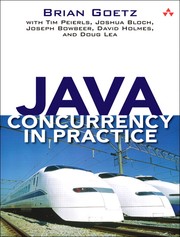
The authoritative text on Java concurrency — written by the architects of java.util.concurrent, it teaches the Java Memory Model, thread safety, locks, and concurrent data structures from first principles.

After mastering concurrency correctness, this book teaches you to reason about JVM performance, GC tuning, and profiling — critical skills for enterprise-grade applications.
Enterprise Design: Architecture & Robust Systems
ExpertApply software design patterns, clean architecture principles, and enterprise Java practices to build maintainable, scalable, production-quality systems.
▸ Study plan for this stage
Pace: 12–14 weeks, ~40–50 pages/day (Design Patterns: 4–5 weeks; Clean Code: 3–4 weeks; Clean Architecture: 3–4 weeks)
- The 23 Gang of Four design patterns (Creational, Structural, Behavioral) and when to apply each in real systems
- Code readability and maintainability through naming, functions, comments, error handling, and formatting conventions
- SOLID principles (Single Responsibility, Open/Closed, Liskov Substitution, Interface Segregation, Dependency Inversion) as foundations for clean code
- Separation of concerns and layered architecture (presentation, business logic, persistence, external interfaces)
- Dependency management and inversion of control to decouple components and enable testability
- Boundaries between frameworks, entities, use cases, and external systems in enterprise applications
- Testing strategies and the role of architecture in supporting automated testing at multiple levels
- Technical debt, refactoring practices, and the cost of poor design decisions over system lifetime
- How do you recognize when a specific Gang of Four pattern (e.g., Factory, Strategy, Observer, Adapter) is the right solution, and what are the trade-offs of using it?
- What makes code 'clean' in terms of naming, function size, error handling, and formatting, and how do these practices reduce cognitive load?
- How do the SOLID principles guide architectural decisions, and what problems arise when they are violated?
- How should you structure a multi-layered enterprise application to isolate business logic from frameworks, databases, and external systems?
- Why is dependency inversion critical for testability, and how do you apply it in practice using interfaces and dependency injection?
- What is the relationship between architecture and testing, and how should architectural boundaries support unit, integration, and system tests?
- How do you identify and manage technical debt, and when should you refactor versus rewrite?
- Refactor a legacy monolithic class by identifying and applying 3–4 Gang of Four patterns (e.g., Strategy for algorithm selection, Factory for object creation, Observer for event handling)
- Take a poorly written function (long, unclear names, mixed concerns) and rewrite it following Clean Code principles; document the readability improvements
- Design a multi-layered architecture for a real-world domain (e.g., e-commerce, banking, inventory) with clear boundaries between presentation, use cases, entities, and external systems
- Implement dependency injection in an existing project to decouple a high-level module from low-level details; measure the improvement in testability
- Write comprehensive unit and integration tests for a component, then refactor its architecture to make the tests easier to write and maintain
- Audit an existing codebase for SOLID violations and design pattern misuse; propose and implement corrections with before/after comparisons
- Create a detailed architecture diagram for a moderately complex system (3–5 layers, 8–10 components) showing dependencies, boundaries, and communication patterns
Next up: This stage equips you with the vocabulary, patterns, and principles to design and critique enterprise systems; the next stage will apply these foundations to specific domains (e.g., microservices, distributed systems, or cloud-native architectures) and teach you how to evolve architectures as requirements change.

The foundational Gang of Four patterns book — reading it at this stage, after deep Java fluency, lets you immediately map every pattern to concrete Java implementations you already understand.
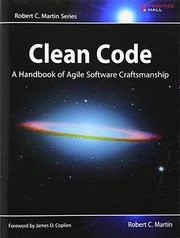
Bridges the gap between knowing Java and writing professional-grade code — covers naming, functions, classes, and refactoring with Java examples, cementing the habits needed for enterprise teams.

The capstone of the curriculum — teaches how to structure entire Java applications for long-term maintainability, separating business logic from frameworks and infrastructure at the architectural level.
Discussion
Keep reading
Paths that share books, cover the same subject, or open a related topic.