Best Books to Start a Teaching Career (in Order)
This curriculum builds a strong practical and theoretical foundation for new K-12 teachers, starting with the immediate survival skills of classroom management, then moving into the craft of lesson and unit design, and finally deepening into the broader pedagogical and reflective practices that distinguish good teachers from great ones. Each stage assumes the vocabulary and confidence built in the previous one, creating a coherent arc from first-day readiness to career-long professional growth.
Classroom Survival & Management Foundations
BeginnerEstablish immediate, practical strategies for managing a classroom, building relationships with students, and creating a safe, structured learning environment from day one.
▸ Study plan for this stage
Pace: 8–10 weeks, ~25–30 pages/day. Week 1–3: "The First Days of School" (approximately 300 pages). Week 4–6: "Teach Like a Champion" (approximately 330 pages). Week 7–10: "The Classroom Management Book" (approximately 240 pages). Include 1–2 reflection days per week.
- The critical importance of the first days of school in setting classroom culture, expectations, and procedures that carry through the entire year
- Establishing clear, consistent routines and procedures for transitions, materials management, and behavioral expectations before academic content takes priority
- Building positive relationships with students through deliberate communication, respect, and understanding individual student needs and backgrounds
- Using specific instructional techniques (like SLANT, Do Now, and strong voice) to maximize engagement and minimize behavioral disruptions during lessons
- Creating a safe, structured physical and emotional environment where students know what to expect and feel valued
- Proactive classroom management: preventing misbehavior through clear systems rather than reactive punishment
- The teacher's role as the architect of classroom culture—your mindset, energy, and consistency directly shape student behavior and learning
- Differentiated management strategies: recognizing that students have different needs and responding with flexibility within a consistent framework
- Why do the first days of school matter so much, and what specific outcomes should you prioritize before diving into academic content?
- What are the key differences between reactive and proactive classroom management, and why is prevention more effective than punishment?
- Describe at least three specific routines or procedures you would establish in your classroom and explain how you would teach them to students.
- How do the instructional techniques described in 'Teach Like a Champion' (such as SLANT, Do Now, or strong voice) reduce behavior problems and increase engagement?
- What does it mean to build relationships with students, and how does this foundation support classroom management?
- How would you create a classroom environment where students feel safe enough to take academic risks and make mistakes?
- Create a detailed first-week lesson plan that includes: (1) how you'll introduce classroom procedures, (2) at least three routines you'll explicitly teach, and (3) how you'll learn students' names and backgrounds.
- Design a classroom layout diagram and write a rationale explaining how your physical setup supports management and student engagement.
- Record yourself (audio or video) delivering a 5–10 minute lesson segment using at least two techniques from 'Teach Like a Champion' (e.g., SLANT, Do Now, strong voice). Review and self-assess.
- Write a classroom management plan document that includes: your core values, 3–5 non-negotiable expectations, specific procedures for 5 key transitions (entry, dismissal, group work, etc.), and your response plan for minor and major misbehavior.
- Conduct a 'procedure audit': observe a classroom (in person or via video) and identify three procedures that are working well and three that could be improved. Explain why.
- Role-play or script three challenging scenarios (e.g., a student refusing to follow a direction, side conversations during instruction, incomplete homework) and write your response using proactive language and relationship-building principles.
Next up: This stage equips you with the foundational systems and relationship-building skills needed to create a stable classroom environment; the next stage will build on this foundation by deepening your instructional expertise and learning how to differentiate teaching to meet diverse student needs within the well-managed classroom you've established.
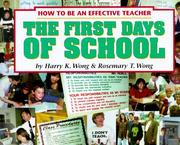
The single most widely-read book for new teachers; it establishes the foundational language of procedures, routines, and expectations that every other management book builds on. Read this first.
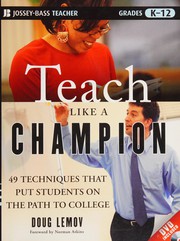
Translates effective classroom management and instruction into concrete, named techniques you can practice immediately — a perfect complement to Wong's philosophy with actionable moves.

A deeper procedural companion to The First Days of School, offering step-by-step classroom procedure plans; read after the first Wong book to operationalize what you learned.
Lesson Design & Planning
BeginnerLearn how to design clear, purposeful, and engaging lessons and units — including objectives, assessments, and activities — so that every class period has intentional structure and direction.
▸ Study plan for this stage
Pace: 8–10 weeks, ~25–30 pages/day (with 2–3 days per week for exercises and reflection)
- Backward design: starting with desired results (standards and learning goals) before planning instruction or assessment
- Defining clear, measurable learning objectives aligned to standards and essential questions
- Designing assessments (both formative and summative) before creating lessons to ensure alignment with objectives
- Creating authentic, performance-based assessments that require students to apply knowledge in real-world contexts
- Structuring coherent units with purposeful sequencing of activities, resources, and learning experiences
- Designing project-based learning with clear driving questions, student agency, and authentic products
- Balancing scaffolding and rigor to meet diverse learner needs while maintaining high expectations
- Using assessment data to inform instructional decisions and adjust lessons in real time
- What is backward design, and why does Wiggins argue it should replace traditional lesson planning approaches?
- How do you distinguish between learning objectives, essential questions, and standards, and how do these elements work together in a unit?
- What makes an assessment 'authentic' or 'performance-based,' and why does Wiggins prioritize these over traditional tests?
- How do you design a unit using the Understanding by Design framework, and what are the three stages of the design process?
- What are the key characteristics of high-quality project-based learning according to Larmer, and how do they differ from traditional projects?
- How can you use formative assessment throughout a unit to monitor student progress and adjust instruction?
- Complete a backward design template for a unit you currently teach (or plan to teach): define standards, learning goals, essential questions, and desired results before planning activities
- Write 3–5 clear, measurable learning objectives for a unit, ensuring each is aligned to a standard and answerable through a specific assessment
- Design one summative performance-based assessment (e.g., presentation, portfolio, product) for a unit, including a detailed rubric with clear criteria
- Map out the sequence of formative assessments across a 2–3 week unit, identifying checkpoints where you would adjust instruction based on student data
- Design a project-based learning unit using Larmer's framework: identify a driving question, define student roles and authentic products, and plan for student voice and choice
- Create an essential question for a unit and develop 3–4 supporting questions that guide students toward deeper understanding
- Audit an existing lesson or unit you have taught, identifying gaps between stated objectives and actual assessments or activities, then revise it using backward design principles
Next up: This stage equips you with the planning and design skills to create intentional, coherent instruction; the next stage will focus on classroom management and engagement strategies that ensure your well-designed lessons actually unfold effectively with students.
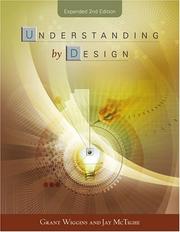
Introduces the 'backward design' framework — starting with desired outcomes and assessments before planning activities — which is the dominant lesson and unit planning model in K-12 education.

A practical workbook companion to Understanding by Design that walks new teachers through actually building UbD units step by step; read immediately after the main text.

Expands lesson design beyond single lessons into project-based learning, giving new teachers a powerful, student-centered design model to complement the UbD framework.
Pedagogy & How Students Learn
IntermediateUnderstand the cognitive science behind how students actually learn, retain, and transfer knowledge — and translate that research into smarter instructional decisions.
▸ Study plan for this stage
Pace: 8–10 weeks, ~40–50 pages/day (alternating between books in 2-week blocks: Willingham weeks 1–2, Brown weeks 3–4, then revisit Willingham weeks 5–6, Brown weeks 7–8, with synthesis weeks 9–10)
- Cognition is not separate from content: students' prior knowledge and factual understanding directly enable thinking and problem-solving (Willingham)
- Working memory has severe limits (~4 items); instructional design must account for cognitive load and avoid overloading students (Willingham & Brown)
- Spacing and interleaving: distributed practice over time and mixing problem types dramatically improve retention and transfer compared to massed practice (Brown)
- Retrieval practice and testing effect: retrieving information from memory (via quizzes, low-stakes tests) strengthens long-term retention far more than re-reading or passive review (Brown)
- Elaboration and generation: students must actively generate connections and explanations; passive consumption of information does not create durable learning (Brown & Willingham)
- Transfer requires varied practice contexts: students must practice applying knowledge in different situations and formats to transfer learning to novel problems (Brown)
- Metacognition and illusions of competence: students often misjudge their own learning; fluency with material (e.g., from massed practice) feels like mastery but does not predict retention or transfer (Brown)
- Why does Willingham argue that 'you can't think about things you don't know about,' and what are the instructional implications for teaching critical thinking?
- What is cognitive load, and how should teachers design lessons to work within the limits of working memory?
- How do spacing and interleaving differ from massed practice, and why does the research show they produce better long-term retention?
- What is the testing effect, and why is retrieval practice more powerful than re-reading for cementing knowledge?
- How can teachers help students avoid illusions of competence, and what study strategies should they recommend instead?
- What does transfer mean, and what conditions (from Brown and Willingham) must be present for students to apply learning to new contexts?
- Audit one of your own lessons: identify the cognitive load demands (working memory, prior knowledge required, number of new concepts introduced simultaneously). Redesign one section to reduce extraneous load.
- Design a low-stakes quiz or retrieval practice activity for a unit you teach; administer it, then track student performance on the summative assessment to measure the testing effect.
- Create a spaced practice schedule for a key concept or skill: plan 4–5 retrieval opportunities spread over 3–4 weeks (not massed on one day). Implement and compare retention to a previous unit taught with massed review.
- Analyze a textbook chapter or lesson sequence: identify where interleaving could replace blocked practice (e.g., mixing problem types instead of 'do all type A, then all type B'). Reorder and pilot with students.
- Conduct a think-aloud or interview with 2–3 students after they study: ask them how confident they feel, what they think they know, and then quiz them. Reflect on gaps between perceived and actual mastery; discuss metacognitive strategies.
- Design an elaboration activity (e.g., concept map, explanation to a peer, application to a real-world scenario) for a topic students find abstract. Compare learning outcomes to a control group that reviewed the same material passively.
Next up: This stage equips you with the cognitive science foundation to make evidence-based instructional choices; the next stage will focus on translating these principles into specific classroom strategies, assessment design, and differentiation practices that work for diverse learners.

A cognitive scientist explains memory, attention, and thinking in plain language for teachers; this is the essential bridge between classroom practice and learning science.
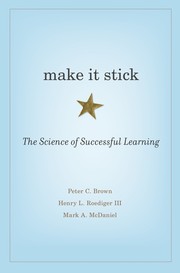
Covers evidence-based learning strategies (retrieval practice, spaced repetition, interleaving) that directly inform how teachers should structure lessons and assessments; builds on Willingham's cognitive foundation.
Equity, Student Relationships & Culturally Responsive Teaching
IntermediateDevelop the mindsets and strategies needed to reach every learner — especially those from diverse backgrounds — by building authentic relationships and culturally responsive instructional practices.
▸ Study plan for this stage
Pace: 8–10 weeks, ~25–30 pages/day. Begin with Hammond's "Culturally Responsive Teaching and the Brain" (weeks 1–5, ~200 pages), then transition to Ladson-Billings' "The Dreamkeepers" (weeks 6–10, ~180 pages). Allocate 1–2 days per week for reflection and integration exercises.
- The neuroscience of culturally responsive teaching: how students' cultural identities and prior experiences shape brain development, learning pathways, and academic engagement
- Stereotype threat and its neurological impact: understanding how negative stereotypes about ability undermine cognitive performance, especially in students from marginalized groups
- Building trust and psychological safety as a foundation for learning: the role of authentic relationships in reducing threat responses and activating higher-order thinking
- Culturally sustaining pedagogy: designing instruction that validates, affirms, and builds upon students' cultural identities and community knowledge rather than replacing them
- The three pillars of culturally responsive teaching: awareness of one's own cultural lens, knowledge of students' cultures and communities, and intentional instructional practices that bridge home and school
- Dreamkeepers as exemplars: studying real teachers who maintain high academic expectations while honoring students' cultural identities and building transformative relationships
- Asset-based versus deficit-based thinking: shifting from viewing diverse students through a lens of gaps or deficiencies to recognizing their strengths, resilience, and cultural wealth
- Translating theory into classroom practice: concrete strategies for relationship-building, curriculum design, and assessment that center equity and cultural responsiveness
- How does Hammond explain the connection between cultural identity, brain development, and learning? What role does the brain's threat response system play in academic performance for students from marginalized groups?
- What is stereotype threat, and how does it operate neurologically? Why is psychological safety essential for students to access their full cognitive capacity?
- How do Ladson-Billings' 'dreamkeepers' build authentic relationships with their students, and what specific practices do they use to maintain high academic expectations while affirming cultural identity?
- What is the difference between culturally responsive teaching and culturally sustaining pedagogy, and how do both frameworks challenge deficit-based assumptions about diverse learners?
- How can teachers develop awareness of their own cultural lens and biases? What steps can you take to learn about your students' cultures and communities in authentic, respectful ways?
- What are concrete classroom strategies—in curriculum, instruction, assessment, and classroom climate—that embody culturally responsive teaching principles? How would you implement at least three in your own practice?
- Cultural autobiography: Write a 2–3 page reflection on your own cultural identity, values, and how your background shapes your teaching. Identify at least three assumptions or biases you bring to the classroom.
- Threat audit: Observe or reflect on your classroom for one week and document moments when students might experience stereotype threat or psychological threat. Analyze the triggers and brainstorm low-threat alternatives.
- Student asset mapping: Select 3–5 students from your class (or a class you observe). Research and document their cultural backgrounds, family strengths, community resources, and individual talents. Write how you can leverage these assets in instruction.
- Dreamkeepers case study: Choose one teacher profile from Ladson-Billings' book and analyze their practices across three dimensions: relationship-building, academic rigor, and cultural affirmation. Create a one-page action plan to adopt one of their strategies.
- Curriculum audit: Review a unit or lesson you teach. Identify whose voices, histories, and knowledge are represented and whose are absent. Redesign one lesson to include diverse perspectives and community knowledge.
- Relationship-building experiment: Implement one new relationship-building practice (e.g., structured one-on-one conversations, culturally relevant icebreakers, home visits, or community engagement) over 2–3 weeks. Document the impact on student engagement and trust.
Next up: This stage grounds you in the neuroscience and lived examples of culturally responsive teaching, preparing you to move forward into instructional design and assessment practices that operationalize equity—ensuring that your curriculum, pacing, and evaluation systems are designed with diverse learners' needs and strengths at the center.

Connects neuroscience with equity-focused pedagogy, giving teachers a research-grounded framework for supporting culturally and linguistically diverse learners — a must-read for any modern classroom.
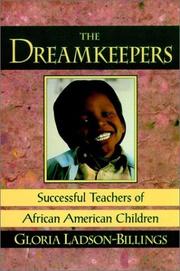
A landmark study of teachers who successfully educate Black students; it deepens the equity lens introduced by Hammond and grounds culturally relevant pedagogy in real classroom stories.
Reflective Practice & Long-Term Professional Growth
ExpertDevelop the habits of a reflective, continuously improving professional — learning to analyze your own teaching, seek feedback, and sustain a meaningful career over the long term.
▸ Study plan for this stage
Pace: 8–10 weeks, ~25–30 pages/day (alternating between the two books to maintain engagement and allow for reflection between readings)
- Constructionism as a learning philosophy: how students build knowledge through hands-on creation and personal meaning-making, and how this applies to your own professional growth
- The power of self-directed learning and introspection: recognizing how your own educational experiences shape your teaching beliefs and practices
- Identifying and examining your implicit assumptions about learning, intelligence, and student potential—and how these affect classroom decisions
- The role of failure and struggle in genuine learning: reframing mistakes as opportunities for growth rather than deficits
- Sustaining intellectual curiosity and agency over a long teaching career: avoiding burnout through continuous inquiry and renewal
- Critical reflection on institutional constraints: understanding when to work within systems and when to challenge or reimagine them
- Building a personal philosophy of education grounded in evidence, experience, and ethical commitment to student growth
- How does Papert's concept of constructionism challenge traditional transmission models of teaching, and what would it look like to apply constructionist principles in your own classroom?
- What are the key differences between learning *about* something and learning *through* doing, and why does Papert emphasize the latter?
- How does Westover's personal journey of self-education illustrate both the power and the limitations of self-directed learning?
- What implicit beliefs about knowledge, authority, and learning did Westover inherit, and how did she have to unlearn or reconstruct them?
- How can you use reflective practice to examine your own 'hidden curriculum'—the unstated assumptions and values you transmit through your teaching?
- What does it mean to sustain a meaningful teaching career over decades, and what role does continuous learning and professional renewal play in that sustainability?
- Reflective autobiography: Write a 3–5 page narrative about a formative learning experience from your own K–12 education. Analyze it through a constructionist lens—what were you *doing*, creating, or building? How did that shape your understanding? What would have made it more or less meaningful?
- Teach a mini-lesson using constructionist principles: Design and deliver a 20–30 minute lesson where students create or build something (physical or conceptual) rather than passively receive information. Reflect afterward on what students learned, what surprised you, and what you'd change.
- Belief audit: List 5–7 core beliefs you hold about teaching, learning, and student potential (e.g., 'intelligence is fixed' or 'struggle is essential'). For each, trace where that belief came from—your own schooling, mentors, research, experience—and evaluate whether it still serves you and your students.
- Examine a teaching decision you made recently (a lesson design choice, a classroom management decision, a grading practice). What implicit assumptions underlay that choice? What would Papert or Westover's frameworks suggest about it?
- Peer observation and feedback protocol: Observe a colleague's lesson (or have them observe yours), then conduct a structured reflection conversation using these prompts: What did you notice about student agency and meaning-making? Where did students struggle, and how was that handled? What assumptions about learning seemed to guide the instruction?
- Create a 'learning portfolio' documenting your own professional growth over the stage: collect artifacts (lesson plans, student work samples, reflections, feedback from colleagues) and write quarterly reflections on what you're learning about yourself as a teacher and how your practice is evolving.
Next up: This stage equips you with both a philosophical framework (constructionism) and a personal model (reflective self-examination) for continuous improvement, preparing you to engage with the next stage's focus on systemic change, equity, and translating individual reflective practice into broader institutional and community impact.
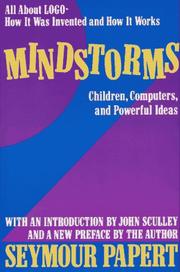
A visionary classic on how children construct knowledge and how teachers can design environments that empower deep, self-directed learning — challenges you to rethink the purpose of schooling itself.

While a memoir rather than a pedagogy text, it offers a profound perspective on what access to education truly means — read at the end to reconnect with the human 'why' behind a teaching career.
Discussion
Keep reading
Paths that share books, cover the same subject, or open a related topic.