Build a second brain: notes that compound
This curriculum builds a complete personal knowledge management (PKM) system from the ground up, starting with the mindset and habits of effective learning, then introducing proven note-taking architectures, and finally mastering the tools and techniques — like spaced repetition and Zettelkasten — that make knowledge compound over time. Each stage assumes the vocabulary and mental models built in the previous one, so reading in order is essential.
Foundations: How Learning and Memory Actually Work
BeginnerUnderstand the science of how humans learn, retain, and recall information — so every PKM technique you adopt later has a solid cognitive foundation.
▸ Study plan for this stage
Pace: 6–8 weeks total: Weeks 1–4 for "Make It Stick" (~20–25 pages/day, ~5 days/week), Weeks 5–8 for "A Mind for Numbers" (~18–22 pages/day, ~5 days/week). Reserve one day per week for review, reflection journaling, and exercises. Neither book is dense with jargon, so a relaxed daily pace is intentional —
- Retrieval practice over re-reading: actively recalling information (e.g., self-testing, flashcards) produces far stronger long-term retention than passive review, as argued throughout 'Make It Stick'
- Desirable difficulties: strategies that feel harder in the moment — spaced practice, interleaving, varied problem types — actually produce more durable learning ('Make It Stick', Ch. 3–5)
- The illusion of knowing: fluency with material (e.g., highlighting, re-reading) creates false confidence; learners routinely misjudge their own mastery ('Make It Stick', Ch. 2)
- Spaced repetition: distributing study sessions over time with increasing intervals dramatically outperforms massed 'cramming' for long-term retention ('Make It Stick', Ch. 4; 'A Mind for Numbers', Ch. 2)
- Focused vs. diffuse thinking modes: the brain alternates between tight, analytical focus and a relaxed, wide-associative mode — both are essential for deep understanding and creative problem-solving ('A Mind for Numbers', Ch. 2–3)
- Chunking: binding individual pieces of information into compact, meaningful units frees up working memory and accelerates expertise ('A Mind for Numbers', Ch. 4–5)
- Procrastination and the pain response: the brain treats disliked tasks as physical discomfort; understanding this neurological basis enables deliberate strategies (Pomodoro, habit loops) to override avoidance ('A Mind for Numbers', Ch. 6)
- Elaborative interrogation and self-explanation: asking 'why' and 'how' about new material, then explaining it in your own words, creates richer memory traces that connect new knowledge to existing schemas ('Make It Stick', Ch. 3; 'A Mind for Numbers', Ch. 8)
- According to 'Make It Stick', why does re-reading feel productive but actually produce weak retention — and what should replace it?
- What is a 'desirable difficulty', and can you give two concrete examples from 'Make It Stick' of how to introduce one into a study session?
- How do the focused and diffuse thinking modes described in 'A Mind for Numbers' complement each other, and what practical habits does Oakley recommend for toggling between them?
- What is chunking, and why does 'A Mind for Numbers' argue it is the foundation of expertise rather than raw intelligence?
- Both books converge on spaced practice — how do Brown et al. and Oakley each explain the mechanism behind why spacing works, and do their explanations differ?
- How does 'A Mind for Numbers' reframe procrastination as a neurological phenomenon, and what does that reframing suggest about how to design a PKM workflow?
- Daily retrieval dumps: After each reading session, close the book and write — from memory only — every key idea you encountered. Compare to the text afterward and note gaps. Do this instead of highlighting.
- Spaced self-quizzing log: Create a simple table (paper or digital) with three columns — Concept | Date First Learned | Next Review Date. After finishing each chapter, add its core ideas and schedule reviews at 1 day, 3 days, 1 week, and 2 weeks out. This directly applies the spaced-repetition principle from both books.
- Interleaved chapter review: Once you finish 'Make It Stick', don't read 'A Mind for Numbers' in pure isolation — every third study session, return to a random chapter from 'Make It Stick' and quiz yourself on it. Practice the interleaving technique the books themselves recommend.
- Focused/diffuse toggle experiment: Pick one genuinely confusing concept from 'A Mind for Numbers' (e.g., chunking or the memory palace). Study it intensely for 25 minutes (focused mode), then take a 15-minute walk with no phone (diffuse mode). Journal what new connections or clarity emerged after the break.
- Teach-back exercise: After finishing each book, record a 5–10 minute voice memo or write a one-page plain-English summary as if explaining the book's core argument to a friend who has never heard of cognitive science. Identify where your explanation breaks down — those are your knowledge gaps.
- Procrastination audit: Using the framework from 'A Mind for Numbers' Ch. 6, list three study tasks you consistently avoid. For each, identify the specific discomfort trigger, then design a process-focused intention (e.g., 'I will open my notes for 5 minutes' rather than 'I will master this topic') and track whether the avoidance decreases over two weeks.
Next up: By internalizing how memory encoding, retrieval, spacing, and chunking actually work at a cognitive level, you are now equipped to evaluate and deliberately choose PKM tools and note-taking systems — the next stage — not as productivity trends, but as purposeful implementations of these proven learning mechanisms.
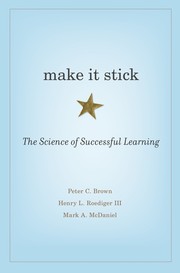
Debunks common study myths and introduces evidence-based principles (retrieval practice, spaced repetition, interleaving) that underpin every serious PKM system. Read this first to understand *why* the methods ahead actually work.
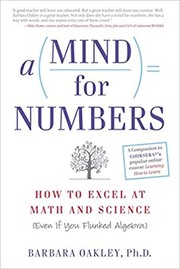
Translates neuroscience into practical habits for absorbing difficult material. It builds the mental model of focused vs. diffuse thinking that explains how ideas connect and consolidate — essential intuition before designing a note system.
The Second Brain: Capturing and Organizing What You Learn
BeginnerDesign and launch a personal external system for capturing, organizing, and retrieving notes and ideas so nothing valuable is lost.
▸ Study plan for this stage
Pace: 6–8 weeks total: Weeks 1–3 cover "Getting Things Done" (~30–40 pages/day, ~300 pages); Weeks 4–8 cover "Building a Second Brain" (~20–25 pages/day, ~270 pages), with one buffer day per week for review and system-building practice.
- The GTD 'capture everything' mindset — your brain is for having ideas, not holding them (Allen)
- The Five Steps of GTD: Capture, Clarify, Organize, Reflect, Engage — the foundation of any trusted external system (Allen)
- The concept of 'open loops' and psychic RAM — why unprocessed commitments drain mental energy and how to close them (Allen)
- The Weekly Review as a non-negotiable habit for keeping your system current and trustworthy (Allen)
- The Second Brain's CODE framework: Capture, Organize, Distill, Express — a note-specific evolution of GTD's principles (Forte)
- Progressive Summarization — layering highlights and bold passages over time to make notes future-proof and instantly scannable (Forte)
- The PARA organizational method: Projects, Areas, Resources, Archives — organizing by actionability rather than topic or source (Forte)
- The 'Just-In-Time' vs. 'Just-In-Case' note-taking shift — capturing only what resonates and serves a future project (Forte)
- According to Allen, what is an 'open loop' and why does closing open loops matter for cognitive clarity?
- What are the Five Steps of GTD, and how does each step prevent information and commitments from falling through the cracks?
- How does Forte's CODE framework build on and extend Allen's GTD capture-and-clarify workflow specifically for knowledge and notes?
- What is PARA, how do its four categories differ from each other, and why does Forte argue that organizing by actionability beats organizing by topic?
- What is Progressive Summarization, and how do its multiple layers help you rediscover and reuse notes months or years later?
- How would you decide, using both Allen's and Forte's criteria, whether a piece of captured information belongs in your task manager, your note system, or the archive?
- **Build your Capture Inbox (Week 1–2):** Following Allen's capture sweep, spend one session collecting every open loop in your life — physical papers, browser tabs, mental to-dos — into a single inbox. Process each item through the Clarify and Organize steps and notice what belongs in a task manager vs. a note system.
- **Set up your PARA structure (Week 4–5):** In whichever note-taking app you choose (Notion, Obsidian, Apple Notes, etc.), create the four top-level PARA folders. Migrate or create at least 3 active Projects, 3 Areas, and 5 Resources to make the structure feel real and personal.
- **Practice Progressive Summarization on 10 existing notes (Week 5–6):** Take 10 articles, highlights, or meeting notes you've already saved. Apply Forte's three layers — highlight the best passages, bold the most essential phrases, then write a two-sentence executive summary at the top. Compare how scannable they are before and after.
- **Conduct your first Weekly Review (end of Week 3 and Week 7):** Following Allen's Weekly Review checklist, clear your inboxes, review your project list, and update next actions. In Week 7, add Forte's twist: scan your PARA notes for anything that can fuel a current project.
- **The 'Resonance Test' capture drill (Week 6):** For one full week, every time you read an article, watch a video, or attend a meeting, capture only the passages that genuinely surprise, inspire, or are immediately useful — nothing else. At the end of the week, review what you saved and reflect on the quality vs. quantity trade-off.
- **End-of-stage system audit (Week 8):** Write a one-page 'State of My Second Brain' document: describe your chosen tools, your PARA structure, your capture triggers, and one real project where your system helped you retrieve and use a saved note. Identify the single biggest friction point still remaining.
Next up: Mastering capture and organization creates a reliable external system, setting the stage for the next level of personal knowledge management: learning how to actively connect, synthesize, and generate original ideas from the notes you've collected — the shift from storing knowledge to thinking with it.

Establishes the foundational discipline of capturing everything out of your head into a trusted system. Its 'mind like water' philosophy is the prerequisite mindset for any note-taking architecture.
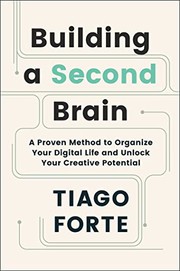
Directly addresses the learner's goal: a step-by-step method (PARA + CODE) for turning digital notes into a living knowledge base. Read after GTD because it assumes you already trust your capture habit.
Reading with Intent: Extracting and Processing Ideas
IntermediateMove from passive reading to active knowledge extraction — learning to engage with books and articles in ways that produce reusable, connected notes.
▸ Study plan for this stage
Pace: 6–8 weeks total: Weeks 1–4 for "How to Read a Book" (~20–25 pages/day, pausing to practice each level of reading as it is introduced); Weeks 5–8 for "Atomic Habits" (~15–20 pages/day, deliberately slower to apply Adler's analytical reading techniques in real time on the text itself).
- Adler's four levels of reading — elementary, inspectional, analytical, and syntopical — and how each level demands progressively more active engagement from the reader
- Inspectional reading as a triage tool: using systematic skimming and superficial reading to decide how deeply to engage with a text before committing fully
- Analytical reading's four-stage questioning framework: What is the book about as a whole? What is being said in detail, and how? Is it true? And so what?
- Coming to terms with an author: identifying and precisely defining the key words and propositions an author uses, as a prerequisite to genuine understanding
- The distinction between information and understanding — Adler's central argument that being widely read is not the same as being well-read or truly knowledgeable
- Clear's concept of habit loops (cue → craving → response → reward) as a mental model that can itself be extracted, noted, and reused across domains
- The 'Four Laws of Behavior Change' from Atomic Habits (make it obvious, attractive, easy, satisfying) as a concrete framework for building the reading and note-taking habits this stage demands
- Identity-based habit formation from Atomic Habits: framing active reading not as a task but as an expression of the identity 'I am someone who reads to think'
- According to Adler, what is the difference between analytical and inspectional reading, and when should you use each on a non-fiction book?
- What are the four questions Adler says every analytical reader must ask of every book, and can you answer all four for 'Atomic Habits' itself?
- How does Adler define 'coming to terms' with an author, and which specific terms in 'Atomic Habits' required you to pin down Clear's precise meaning before the argument made sense?
- How does Clear's habit loop model explain why passive, highlight-only reading tends to persist even when readers know it is ineffective?
- Using Clear's Four Laws, how would you redesign your physical reading environment and daily routine to make active note-taking the default behavior rather than the exception?
- What is the central argument ('the unity') of each book in one sentence, and how do the two books' arguments relate to or tension with each other?
- Inspectional pass first: Before reading each chapter of 'How to Read a Book' analytically, spend exactly 5 minutes skimming it — read the title, headings, first and last paragraphs, and any summaries. Write a one-sentence prediction of the chapter's argument, then verify or correct it after reading.
- X-ray each book: After finishing 'How to Read a Book', write a single-page structural outline of the book using only Adler's own method — identify its parts, the order of its argument, and the single sentence that captures its unity. Repeat this exercise immediately on 'Atomic Habits'.
- Come to terms with Clear: As you read 'Atomic Habits', maintain a running 'terms glossary' of 8–10 words Clear uses in a specific or loaded way (e.g., 'system', 'identity', 'plateau of latent potential'). For each, write Clear's definition in your own words and note the page where he defines it.
- Proposition & argument log: After each major section of either book, write down the two or three core propositions the author is making, then write one sentence evaluating whether you agree, disagree, or suspend judgment — and why. This directly practices Adler's analytical reading stage.
- Habit design sprint: Using Clear's Four Laws, design a written 'active reading ritual' for yourself. Specify the cue (when/where you will read), how you'll make it attractive (temptation bundling), how you'll make it easy (two-minute rule entry point), and how you'll make it satisfying (a visible tracker or reward). Run this ritual for the entire duration of reading 'Atomic Habits'.
- Syntopical mini-exercise: Write a 400–600 word comparative note that places both books in dialogue. What question are both books trying to answer? Where do Adler and Clear agree, and where does one book's framework expose a gap or limitation in the other's?
Next up: Mastering active extraction and analytical questioning here gives the reader both the raw material (well-processed notes and propositions) and the stable habits needed to tackle the next stage, where the focus shifts from extracting ideas within single books to linking and synthesizing knowledge across many sources into a personal knowledge network.

The classic guide to analytical and syntopical reading. It gives you a rigorous framework for interrogating a text, which directly feeds higher-quality raw material into your PKM system.
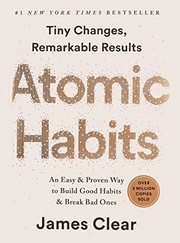
Sustaining a PKM system is a habit problem as much as a method problem. This book provides the behavioral architecture to make daily capture and review automatic rather than effortful.
Zettelkasten: Thinking in Networks of Ideas
IntermediateImplement the Zettelkasten method to transform isolated notes into an interconnected web of knowledge that generates new insights and writing.
▸ Study plan for this stage
Pace: 4–5 weeks, ~25–35 pages/day. Week 1–3: Read "How to Take Smart Notes" by Ahrens (cover to cover, ~200 pages), pausing after each chapter to write fleeting and literature notes. Week 4–5: Read "Digital Zettelkasten" by Kadavy (~130 pages), immediately applying each principle to your live digital slip
- The slip-box as a thinking partner, not a storage system — Ahrens's core argument that the Zettelkasten externalizes and extends thought rather than merely archiving it
- The four note types: fleeting notes (quick captures), literature notes (source-specific summaries), permanent notes (atomic, self-contained ideas in your own words), and index/hub notes — as laid out across both Ahrens and Kadavy
- Atomicity and autonomy: each permanent note should contain exactly one idea and be fully understandable without context, per Ahrens's principle of writing notes 'as if for a stranger'
- Linking over filing: the Zettelkasten's power comes from explicit, reasoned connections between notes rather than hierarchical folders or tags alone — a central theme in both books
- The writing workflow: Ahrens's bottom-up model where papers and essays emerge from clusters of linked permanent notes, reversing the traditional top-down outline approach
- Kadavy's digital-first adaptations: using tools like Obsidian or Roam to implement the slip-box, leveraging bidirectional links, graph views, and templates to replicate Luhmann's analog system digitally
- Productive note density vs. collector's fallacy: Ahrens warns against hoarding highlights and sources without processing them into permanent notes — quality of engagement over quantity of capture
- Emergence and serendipity: how a mature Zettelkasten surfaces unexpected connections and generates original ideas that the author could not have planned in advance
- According to Ahrens, what is the fundamental difference between writing permanent notes and simply highlighting or summarizing a source — and why does that difference matter for long-term thinking?
- What makes a note truly 'atomic' in the Zettelkasten sense, and how do both Ahrens and Kadavy suggest you test whether a note meets that standard?
- How does Ahrens's bottom-up writing workflow differ from the conventional top-down outline method, and what role does the slip-box play in generating a manuscript's structure?
- What specific strategies does Kadavy recommend for translating Luhmann's analog card-based system into a digital environment, and what pitfalls does he caution against?
- How do you decide when and how to link two permanent notes? What reasoning should accompany a link, according to Ahrens?
- What is the 'collector's fallacy' as Ahrens describes it, and what daily or weekly habits does the Zettelkasten workflow prescribe to avoid it?
- Build your slip-box from scratch: after finishing each chapter of 'How to Take Smart Notes,' write at least one permanent note in your own words — no quotes, no copy-paste — and link it to at least one existing note with a one-sentence explanation of the connection.
- Conduct a 'note autopsy': take 10 highlights or bookmarks you saved in the past month, process each one into a proper literature note (source + your paraphrase), then decide which ones deserve a permanent note — discard the rest deliberately.
- Apply Kadavy's digital setup: configure your chosen tool (e.g., Obsidian) with the exact folder structure and template Kadavy recommends, then migrate your permanent notes from the Ahrens exercise into it, adding bidirectional links and an index note.
- Write a 500-word essay or blog post using only permanent notes you have already written — no new research allowed. Follow Ahrens's bottom-up method: browse your notes, find a cluster of linked ideas, let the structure emerge from the connections.
- Perform a weekly review (as both authors implicitly recommend): process all fleeting notes into literature or permanent notes, identify orphan notes with zero links and force yourself to connect or delete them, and update your index/hub notes.
- Teach-back exercise: explain the difference between a literature note and a permanent note to someone unfamiliar with Zettelkasten (or write it as a permanent note itself), using only examples drawn from books or articles you have personally read.
Next up: Mastering the Zettelkasten's networked note structure builds the atomic, well-linked knowledge base that more advanced stages of personal knowledge management — such as synthesizing across projects, building a second brain, or producing long-form creative and intellectual work — depend on as their raw material.

The definitive modern introduction to the Zettelkasten method. It reframes note-taking as thinking, and is the single most important book in this curriculum for building a compounding knowledge system.
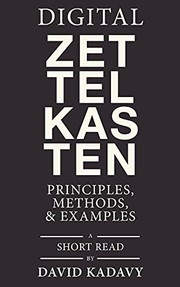
A concise, practical companion that translates Zettelkasten principles into a digital workflow. Read immediately after Ahrens to bridge theory and hands-on implementation.
Mastery: Spaced Repetition, Synthesis, and Output
ExpertLock knowledge into long-term memory with spaced repetition, and learn to synthesize your accumulated notes into original thinking, writing, and creative output.
▸ Study plan for this stage
Pace: 8–10 weeks total: Weeks 1–4 cover "Ultralearning" (~25–30 pages/day, including reflection time); Weeks 5–10 cover "The Craft of Research" (~20–25 pages/day, with slower pacing to allow deep synthesis practice). Reserve 1–2 days between books for a consolidation review session.
- Ultralearning principles: directness, drill, retrieval, and feedback loops as the backbone of aggressive self-directed mastery
- Spaced repetition and the testing effect: why actively recalling information at increasing intervals beats passive re-reading for long-term retention
- Metalearning: mapping a subject before diving in to identify what to learn, how to learn it, and where the bottlenecks are
- Directness in learning: practicing the exact skill you want to acquire rather than a proxy, applied to PKM output (writing, teaching, building)
- The research question as the engine of synthesis: Booth's framework for moving from a vague topic to a precise, arguable claim
- The reader–writer contract: understanding your audience's needs and knowledge gaps to shape how synthesized knowledge is communicated
- Evidence, reasoning, and warrants: how to build an argument from your accumulated notes that is logically sound and well-supported
- Revision as thinking: treating drafts not as polished output but as a tool for discovering and sharpening your own ideas
- According to Young's Ultralearning, what distinguishes a retrieval-based study session from a review-based one, and why does the distinction matter for locking PKM notes into long-term memory?
- How does Young's concept of 'directness' challenge the common PKM habit of endlessly collecting and tagging notes without producing output?
- Using Booth's framework, how do you transform a broad personal knowledge interest (e.g., 'I've collected a lot of notes on habit formation') into a focused, arguable research question?
- What role does Booth's concept of the 'reader's problem' play in deciding how to structure a piece of writing synthesized from your own note system?
- How can Young's principle of 'drill' be applied to the specific weak points in your synthesis workflow — for example, if you struggle to write strong claims or find supporting evidence in your notes?
- How do Booth's guidelines on evidence and warrants help you audit your existing notes for gaps, contradictions, or unsupported assumptions?
- Spaced repetition audit: After finishing each chapter of Ultralearning, write a 3-sentence summary from memory (no notes), then compare it to the text. Schedule a second recall attempt 3 days later and a third at 10 days. Track decay and improvement in a dedicated log.
- Metalearning map: Before reading The Craft of Research, spend 60 minutes drawing a concept map of everything you already know about research and argumentation. After finishing the book, update the map and annotate what changed, deepened, or was contradicted.
- Question sharpening drill: Pick 5 clusters of notes from your existing PKM system. Using Booth's topic → question → problem → thesis progression, write a one-paragraph research proposal for each cluster, iterating until each has a clear, arguable claim.
- Directness output sprint: Choose one Ultralearning principle and one Booth argumentation technique. Write a 500-word essay synthesizing both, sourced entirely from your own notes — no re-reading the books. This forces retrieval and real synthesis simultaneously.
- Evidence stress-test: Take a draft argument or essay you've written during this stage and apply Booth's warrant analysis: for every major claim, explicitly state the evidence, the reasoning connecting evidence to claim, and any assumptions. Identify and fill at least two gaps.
- Teach-back session: Present a 10-minute verbal or recorded explanation of your PKM synthesis workflow — incorporating Young's retrieval principles and Booth's argumentation structure — to a peer, study group, or camera. Use the feedback (or self-review) to identify the weakest links in your understanding.
Next up: Mastering spaced retrieval and structured synthesis here equips the reader to move confidently into sharing and stress-testing knowledge publicly — whether through writing, teaching, or collaborative sense-making — which forms the foundation of any advanced PKM stage focused on networked thinking and external contribution.
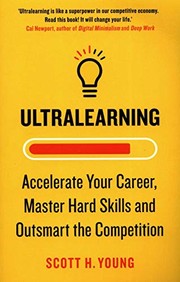
Synthesizes the entire learning stack — directness, retrieval, spaced practice, and feedback — into a framework for aggressive self-directed mastery. At this stage it ties together every technique from earlier books.
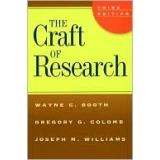
Teaches how to move from a pile of well-organized notes to coherent arguments and written output — the ultimate test of whether your PKM system is truly producing compounding knowledge.
Discussion
Keep reading
Paths that share books, cover the same subject, or open a related topic.