Read better and faster: get more from every book
This four-stage curriculum moves from the mindset and mechanics of active reading, through memory and retention science, into speed and efficiency techniques grounded in evidence, and finally into the meta-skills of building a compounding reading life. Each stage assumes the vocabulary and habits built in the one before it, so reading in order matters.
Foundations: How to Actually Read a Book
BeginnerUnderstand what 'active reading' means, develop a reliable system for engaging with any text, and shed passive habits that make reading feel forgettable.
▸ Study plan for this stage
Pace: 6–8 weeks total: Weeks 1–4 for "How to Read a Book" (~25–30 pages/day, reading all four parts in order); Weeks 5–7 for "Atomic Habits" (~20–25 pages/day, pausing after each chapter to apply one idea to your reading routine); Week 8 is a consolidation week — no new reading, only review, journaling, a
- The four levels of reading (elementary, inspectional, analytical, syntopical) from Adler — and why most people never move past the first
- Inspectional reading: how to X-ray a book before committing to it fully (skimming, pre-reading, and systematic skimming as defined by Adler)
- Analytical reading: the four questions every reader must ask of every book — What is it about? What is being said in detail? Is it true? So what?
- Marking a book as a tool for thinking: Adler's case that writing in the margins transforms reading from passive reception to active dialogue
- The habit loop (cue → craving → response → reward) from Clear's Atomic Habits, and how it explains why passive reading habits are so sticky and hard to break
- Identity-based habits from Clear: framing yourself as 'an active reader' rather than someone trying to read better — the shift from outcome to identity
- The 1% improvement principle from Clear applied to reading: small, consistent reading sessions compound into deep comprehension over time
- Designing your reading environment: using Clear's environment-design strategies to make active reading the path of least resistance (e.g., book open on desk, pen beside it, phone in another room)
- According to Adler, what is the difference between inspectional and analytical reading, and when should you use each on a new book?
- What are the four questions Adler says every analytical reader must ask, and can you answer all four for 'How to Read a Book' itself?
- How does Clear's habit loop explain the passive reading habit — what is the cue, craving, response, and reward in a typical 'read without retaining' session?
- What specific environment or system changes, drawn from Atomic Habits, could you implement today to make active reading automatic rather than effortful?
- Adler argues that 'owning' a book means making it your own through annotation — how does this connect to Clear's concept of identity-based habits?
- After completing both books, what is your personal definition of 'active reading,' and what three concrete behaviors distinguish it from how you read before this stage?
- X-ray exercise (Adler): Before reading each chapter of 'How to Read a Book,' spend 5 minutes on inspectional reading — read the title, headings, first and last paragraphs, and any bold text. Write one sentence predicting what the chapter argues. Check your prediction after reading.
- Margin dialogue (Adler): Read at least 30 consecutive pages of 'How to Read a Book' with a pen in hand. Use Adler's own marking system (underline key sentences, circle unfamiliar words, write questions in the margin, star the most important passages). At the end, write a 3-sentence summary of the author's main argument in your own words.
- Four-questions journal (Adler): After finishing 'How to Read a Book,' write a one-page analytical reading response answering all four of Adler's questions about the book itself. This forces you to apply the method to the very book that teaches it.
- Habit audit (Clear): After reading Part 1 of 'Atomic Habits,' map your current reading habit onto Clear's four-step loop. Write down the exact cue that triggers your reading sessions, the craving it satisfies, the response (what you actually do), and the reward you feel. Identify which step is weakest and design one fix.
- Identity statement + implementation intention (Clear): Write a single sentence beginning with 'I am the type of person who…' that captures your reading identity. Then write three 'When X happens, I will Y' implementation intentions (Clear's format) that lock active reading behaviors into your daily schedule.
- Two-book synthesis (both): In week 8, write a 1-page 'reading constitution' — a personal document that combines Adler's analytical framework with Clear's habit-design principles into your own step-by-step system for approaching any new book. This document becomes your reference card for every future stage of this curriculum.
Next up: Completing this stage gives you both a repeatable method for engaging with any text (Adler) and a habit architecture to sustain it without willpower (Clear), so the next stage can immediately raise the difficulty of the material — moving from how to read to what to read more deeply and critically.
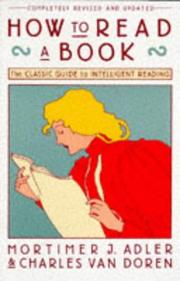
The canonical starting point for serious reading; it defines the four levels of reading (elementary, inspectional, analytical, syntopical) and gives you a shared vocabulary for everything that follows. Read this first so every subsequent book has a framework to land in.
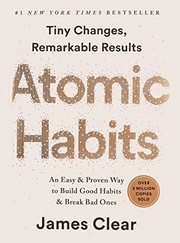
Before speed or retention, you need a consistent reading habit. Clear's system of cues, cravings, and rewards is the most practical modern guide to building any daily practice, and reading is no exception.
Retention: Making What You Read Stick
BeginnerUnderstand how memory actually works, learn evidence-based techniques (retrieval practice, spaced repetition, elaboration) and apply them directly to your reading notes and reviews.
▸ Study plan for this stage
Pace: 6–8 weeks total: Weeks 1–4 for "Make It Stick" (~20–25 pages/day, ~5 days/week), Weeks 5–8 for "How to Take Smart Notes" (~15–20 pages/day, ~5 days/week). Allow 1–2 buffer days per week for review sessions and spaced-repetition practice.
- Desirable difficulties: why effortful retrieval (testing yourself) beats passive re-reading for long-term retention (Make It Stick, Ch. 1–2)
- Retrieval practice / the testing effect: actively recalling information from memory strengthens the memory trace far more than reviewing notes (Make It Stick, Ch. 2)
- Spaced repetition: spreading practice sessions over time — rather than massing them together — dramatically improves durable learning (Make It Stick, Ch. 3)
- Interleaving & varied practice: mixing topics or problem types during study feels harder but produces stronger, more flexible learning (Make It Stick, Ch. 4)
- Elaborative interrogation: connecting new ideas to what you already know by asking 'why?' and 'how does this relate?' deepens encoding (Make It Stick, Ch. 5)
- The Zettelkasten / slip-box method: a network of atomic, linked permanent notes that forces you to restate ideas in your own words and connect them to existing knowledge (How to Take Smart Notes, Ch. 1–4)
- Writing as thinking: Ahrens' core argument that taking notes is not a record of thought but the medium of thought — understanding is built through writing, not before it (How to Take Smart Notes, Ch. 5–7)
- The four note types (fleeting, literature, permanent, project notes) and how each serves a distinct role in moving ideas from reading into lasting, usable knowledge (How to Take Smart Notes, Ch. 3)
- According to Make It Stick, why is re-reading a poor study strategy, and what should replace it?
- What is the testing effect, and how can you apply it immediately after finishing a chapter of any book?
- How do spaced repetition and interleaving work together to combat the 'forgetting curve,' as described in Make It Stick?
- In How to Take Smart Notes, what distinguishes a 'literature note' from a 'permanent note,' and why does that distinction matter for retention?
- How does Ahrens' slip-box system operationalize the elaboration principle Brown describes in Make It Stick?
- What does Ahrens mean when he says 'writing is not the outcome of thinking but the medium of thinking,' and how should this change the way you read?
- Self-test after every chapter: close the book, take out a blank sheet, and write down everything you can recall from that chapter (free recall). Then reopen and check gaps — do this for every chapter of both books.
- Build a spaced-repetition deck (Anki or paper flashcards) as you read Make It Stick. Create at least 2–3 cards per chapter capturing core claims (e.g., 'What is interleaving? Why does it work?'). Review the deck on a schedule: Day 1 → Day 3 → Day 7 → Day 14.
- Start a slip-box while reading How to Take Smart Notes — practice the exact system Ahrens describes. Write fleeting notes during reading, convert them to literature notes (one idea per note, in your own words, with a source reference), then write at least one permanent note per reading session that links a new idea to something already in your box.
- Elaboration journal: after each reading session in either book, write 3–5 sentences answering 'How does this idea connect to something I already know or have experienced?' This directly applies the elaborative interrogation technique from Make It Stick Ch. 5.
- Interleaving review sessions: in Weeks 5–8 (while reading Ahrens), schedule two short review sessions per week where you revisit your Make It Stick flashcards and free-recall key ideas — deliberately mixing the two books' concepts to practice interleaving.
- End-of-stage synthesis note: after finishing both books, write a single 1–2 page permanent note titled 'How memory works and how my note-taking system supports it,' explicitly linking at least four concepts from Make It Stick to four practices from How to Take Smart Notes.
Next up: Mastering how memory works and building a personal note-taking system gives you the cognitive infrastructure to tackle more advanced reading strategies — such as reading analytically and critically across multiple sources — because you now have reliable tools to capture, connect, and retain complex ideas as the texts grow harder.
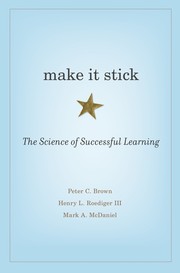
Written by cognitive scientists, this book debunks re-reading and highlighting as retention strategies and replaces them with retrieval practice and interleaving — the single most important upgrade to how you process books.
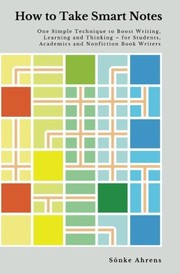
Builds directly on Make It Stick by giving you a concrete note-taking workflow (the Zettelkasten method) that forces elaboration and connection — turning reading into a compounding knowledge base rather than isolated highlights.
Speed & Efficiency: Reading More Without Reading Worse
IntermediateIncrease reading speed through proven techniques — eliminating subvocalization, improving fixation, and strategic skimming — while understanding the hard limits of speed-reading myths so you never trade comprehension for pace.
▸ Study plan for this stage
Pace: 6–8 weeks total: Weeks 1–4 on "Breakthrough Rapid Reading" (~25–30 pages/day, including active drill sessions every other day); Weeks 5–8 on "Ultralearning" (~20–25 pages/day, with one weekly reflection session tying Young's meta-learning principles back to the speed drills practiced in Kump).
- Eliminating subvocalization: Kump's core argument that silently 'pronouncing' words is the single biggest bottleneck to reading speed, and his drills to suppress it
- Hand-pacing and visual guides: using a finger or card as a pacer to force the eye forward and prevent regression
- Fixation and saccades: training the eye to take in wider chunks of text per fixation rather than word-by-word scanning
- Regression elimination: recognizing that re-reading is mostly a habit of distrust, not a necessity, and building confidence to push forward
- Strategic skimming vs. deep reading: Kump's layered approach — preview, skim, read — applied selectively based on material difficulty and purpose
- The comprehension-speed trade-off myth: understanding where genuine speed gains end and where comprehension loss begins, so you never sacrifice understanding for a higher WPM number
- Ultralearning's principle of Directness: Scott Young's insistence that skills must be practiced in the context they'll actually be used — applied here to reading in real books, not just drills
- Metalearning and feedback loops: Young's framework for diagnosing your own skill bottlenecks and designing targeted practice, used to audit which speed-reading weaknesses remain after Kump's program
- After completing Kump's drills, what is your measured WPM baseline versus your post-program WPM, and what does the gap tell you about which bottleneck (subvocalization, regression, or narrow fixation) was most limiting you?
- How does Kump distinguish between skimming for structure and reading for comprehension, and in what real-world situations should you consciously choose each mode?
- What does Scott Young mean by 'Directness,' and why does practicing speed drills on artificial word lists violate this principle compared to drilling on real books you need to read?
- How can Young's concept of 'retrieval practice as feedback' be applied to verify that your speed gains from Kump's techniques are not secretly eroding comprehension?
- What are the physiological hard limits of eye movement that debunk extreme speed-reading claims (e.g., 10,000 WPM), and how does Kump's more conservative program stay within those limits?
- How would you design a personal 'ultralearning sprint' of two weeks to push your reading speed further, drawing on Young's project-planning framework and Kump's specific drills?
- Baseline + weekly WPM log: Before opening Kump, time yourself reading a page of a mid-difficulty book and record WPM + a 5-question comprehension check. Repeat every Friday throughout both books to track honest progress.
- Kump pacer drill (daily, 10 min): Use your finger or a pen as a visual guide under each line, deliberately moving it slightly faster than comfortable. Do this on a real book you are currently reading — not a practice passage — to honor Young's Directness principle.
- Subvocalization suppression experiment: While reading a Kump chapter, hum a continuous note or silently count '1-2-3' to occupy the inner voice. Journal whether comprehension held, dropped, or surprisingly improved, and at what speed.
- Chunking fixation practice: Print or display a short article and draw vertical lines dividing each line into 3 chunks. Practice landing your gaze exactly once per chunk. Gradually widen the chunks over two weeks until you can read a full line in 2 fixations.
- Ultralearning bottleneck audit: After finishing Kump, write a one-page honest diagnosis — in Young's style — identifying your single biggest remaining reading bottleneck. Design three targeted drills to address it, then execute them for one week.
- Comprehension stress-test: After any speed-reading session, close the book and write a 5-sentence summary from memory, then reopen and grade yourself. If you score below 70%, reduce speed by 20% for the next session — building the feedback loop Young prescribes.
Next up: Mastering speed and efficiency establishes the mechanical foundation — how fast and reliably you can process text — which makes the next stage's focus on deep comprehension, critical analysis, and retention far more productive, since you will no longer be spending cognitive energy on the mechanics of reading itself.
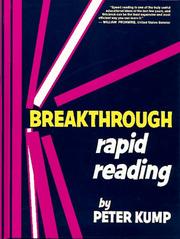
The most evidence-grounded popular guide to genuine speed improvement; it focuses on reducing regression and expanding eye-span rather than pseudoscientific 'photo-reading,' making it the right first text on speed after you have a solid comprehension foundation.
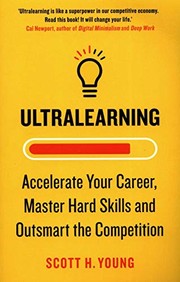
Reframes speed and efficiency as a function of deliberate practice and meta-learning strategy rather than tricks. After Kump's mechanics, Young's principles help you apply efficient reading to any subject you want to master deeply.
Mastery: A Lifelong, Compounding Reading Practice
ExpertSynthesize everything into a personal reading philosophy — choosing the right books, reading across disciplines, and building a practice that compounds in insight and wisdom over a lifetime.
▸ Study plan for this stage
Pace: 5–6 weeks total: Week 1–2 — "The Reading Life" by C.S. Lewis (~20–25 pages/day, savoring essays slowly and journaling between sittings); Week 3–6 — "Antifragile" by Nassim Nicholas Taleb (~30–35 pages/day, pausing at the end of each "Book" section to reflect and connect ideas back to Lewis).
- Reading as a path to transcendence and self-enlargement (Lewis): great books allow us to 'become a thousand men and yet remain ourselves,' expanding consciousness without erasing identity
- The distinction between reading for information vs. reading for transformation — Lewis's insistence that literary experience is irreducible to paraphrase or summary
- Curating a personal canon: Lewis's idea of returning repeatedly to beloved books and why re-reading is a mark of mature readership
- Antifragility vs. robustness vs. fragility (Taleb): systems — including minds and reading practices — that gain from disorder, stress, and variety rather than merely surviving them
- The Barbell Strategy applied to reading: pairing extremely foundational/classic texts with highly experimental or cross-disciplinary ones, avoiding the 'mediocre middle' of safe, trendy reads
- Via Negativa in intellectual life (Taleb): the compounding power of subtracting bad books, bad information, and noise — knowing what NOT to read is as important as knowing what to read
- Optionality and convexity of knowledge: reading across disciplines creates asymmetric upside — unexpected connections yield outsized insight at low cost
- Synthesizing Lewis and Taleb into a personal reading philosophy: the soul needs beauty and meaning (Lewis) while the mind needs robustness through variety and stress-testing (Taleb) — a lifelong practice honors both
- According to C.S. Lewis, what is the fundamental difference between using a book and receiving it — and why does this distinction matter for how you approach your reading list?
- Lewis argues that reading great literature allows us to 'see with other eyes.' How does this idea of perspective-multiplication connect to Taleb's concept of optionality and the asymmetric upside of cross-disciplinary reading?
- How would you apply Taleb's Barbell Strategy to design your personal reading diet for the next year — what would sit on each end of the barbell, and what would you deliberately cut from the middle?
- Taleb distinguishes between things that are fragile, robust, and antifragile. How can a reading *practice* itself be made antifragile — what habits or structures would make it gain from disruption rather than collapse under it?
- Lewis warns against the 'unliterary reader' who reads only for plot or information. How does Taleb's Via Negativa principle reinforce or complicate Lewis's warning when applied to non-fiction and technical reading?
- After reading both books, how would you articulate your own personal reading philosophy in 3–5 sentences — one that is specific enough to guide real decisions about what to read next and how?
- **Write your Personal Reading Manifesto:** After finishing both books, write a 1–2 page document articulating your reading philosophy — your criteria for choosing books, your ideal reading rhythm, and your long-term goal. Draw explicitly on at least one idea from Lewis and one from Taleb.
- **Audit and Barbell your reading list:** List every book on your current to-read list. Using Taleb's Barbell Strategy, categorize each as 'timeless/foundational,' 'experimental/cross-disciplinary,' or 'mediocre middle.' Cut or defer the middle category and rebalance the list toward the two poles.
- **Re-read something:** Honor Lewis's argument for re-reading by returning to one book you read earlier in this curriculum. Write a one-page comparison of what you notice differently now — what new layers appear, and what does that tell you about your growth as a reader?
- **Stress-test your knowledge via a teaching exercise:** Pick one core idea from each book and explain it out loud — to a friend, a journal, or a voice recording — without notes. Taleb's antifragility and Lewis's 'receiving vs. using' are good candidates. Identify where your explanation breaks down; those gaps are your next study targets.
- **Build a 12-month Antifragile Reading Calendar:** Design a reading plan for the next year that deliberately includes: (a) at least 3 re-reads of classics, (b) at least 4 books from disciplines entirely outside your comfort zone, and (c) one 'fallow' month with no assigned reading — only browsing and following curiosity. Annotate why each book earns its place.
- **Cross-pollination journal:** As you read *Antifragile*, keep a running two-column journal — left column for Taleb's ideas, right column for how each idea reframes, challenges, or deepens something Lewis said. Aim for at least 10 paired entries. This becomes the raw material for your Personal Reading Manifesto.
Next up: By crystallizing a personal reading philosophy grounded in Lewis's love of transformative literature and Taleb's antifragile, cross-disciplinary approach, the reader is now equipped not just to read better and faster, but to read with lifelong intentionality — making every future stage of learning a compounding, self-directed investment rather than a passive accumulation of pages.

A short, elegant meditation on why we read and what great reading does to a person — essential for anchoring all the technique you have built in genuine love of the practice.
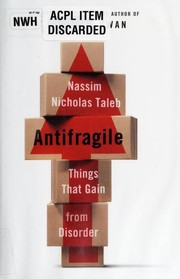
Not a reading book per se, but the capstone of this curriculum: Taleb's model of systems that grow stronger under stress is the best mental model for a reading life that compounds — the more widely and critically you read across disciplines, the more robust and generative your thinking becomes.
Discussion
Keep reading
Paths that share books, cover the same subject, or open a related topic.