Remember more of what you learn
This curriculum moves from intuitive, practical memory techniques to the rigorous cognitive science behind how learning actually works, and finally to advanced synthesis and deliberate practice. Each stage builds on the last: you first gain working tools, then understand why they work, then refine and deepen your mastery with research-level insights.
Foundations: How Memory Works & First Techniques
BeginnerUnderstand the basic architecture of human memory, adopt proven techniques (spaced repetition, active recall, mnemonics), and build an immediately usable learning toolkit.
▸ Study plan for this stage
Pace: 10–12 weeks total (~3–4 weeks per book), reading 20–25 pages/day on weekdays with weekends reserved for review and exercises. Week 1–3: "Moonwalking with Einstein"; Week 4–7: "Make It Stick"; Week 8–11: "Remember It!"; Week 12: full-stage synthesis and review.
- The Memory Palace (Method of Loci): encoding information spatially along a vivid, familiar mental route, as demonstrated through Foer's journey to the U.S. Memory Championship in 'Moonwalking with Einstein'
- Elaborative encoding: transforming abstract or dry information into rich, sensory, emotionally charged images to make it stick — the core mechanism behind all memory techniques in Foer and Dellis
- The spacing effect & spaced repetition: distributing practice sessions over increasing intervals dramatically outperforms massed 'cramming', a central finding in 'Make It Stick'
- Active recall / retrieval practice: testing yourself on material (rather than re-reading) strengthens memory traces far more effectively — the single most evidence-backed technique in 'Make It Stick'
- Interleaving: mixing different topics or problem types within a study session improves long-term retention and transfer, even though it feels harder in the moment ('Make It Stick')
- Desirable difficulties: the counterintuitive principle from 'Make It Stick' that learning feels most productive when it is actually least effective (fluency illusion), and vice versa
- The SMASHIN' SCOPE mnemonic system: Dellis's structured framework in 'Remember It!' for creating memorable images (Size, Motion, Association, Smell, Hearing, Imagination, Number, Symbol, Color, Order, Positive/Negative, Exaggeration)
- Chunking and the limits of working memory: understanding why raw information overloads short-term memory and why encoding into meaningful chunks is essential, threaded through all three books
- After reading 'Moonwalking with Einstein', can you explain in your own words what a Memory Palace is, how you construct one, and why spatial-visual encoding is so powerful for the human brain?
- According to 'Make It Stick', why is re-reading a textbook one of the least effective study strategies, and what should replace it? What does the research say about retrieval practice vs. passive review?
- How does interleaving differ from blocked practice ('Make It Stick'), and why does it feel counterproductive even when it produces better long-term results?
- What is the 'fluency illusion' described in 'Make It Stick', and how can a learner use self-testing to detect and correct it?
- Using Dellis's SMASHIN' SCOPE framework from 'Remember It!', how would you encode a list of 10 unfamiliar vocabulary words or a sequence of historical dates into a Memory Palace?
- How do the three books complement each other? Where does Foer's narrative exploration of memory athletes, Brown's cognitive-science evidence base, and Dellis's practical system overlap and reinforce one another?
- Memory Palace construction (Foer): Choose a familiar route (your home, commute, etc.) with at least 10 distinct 'loci'. Encode a grocery list, then a list of 10 historical dates, placing a vivid image at each locus. Recall without looking 30 minutes later, then again the next morning.
- Retrieval practice log (Make It Stick): After every reading session, close the book and write a free-recall 'brain dump' of everything you remember — no notes. Compare to the text, note gaps, and re-study only the gaps. Do this for all three books throughout the stage.
- Spaced repetition flashcard deck: Create a digital flashcard deck (e.g., Anki) for every key term, technique, and study principle encountered across all three books. Set intervals to the default spaced-repetition algorithm and review daily for the entire 12 weeks.
- Interleaving experiment (Make It Stick): Pick two unrelated subjects you are currently learning (e.g., a language and a technical skill). Spend one week in blocked practice (one subject per session), then one week interleaved (alternating topics within each session). Journal your perceived difficulty and quiz yourself at the end of each week to compare actual retention.
- SMASHIN' SCOPE image workout (Dellis): Take 20 abstract items — names of people you just met, new vocabulary, or a numbered list — and deliberately apply at least 5 SMASHIN' SCOPE attributes to each image. Write out your images, then test recall after 24 hours and 1 week.
- Stage synthesis essay: After finishing all three books, write a 500-word personal 'learning manifesto' that (a) identifies the 3 techniques you will adopt immediately, (b) explains the cognitive science behind each using evidence from 'Make It Stick', and (c) describes exactly how you will implement them using the practical tools from Foer and Dellis.
Next up: Mastering why memory works and how to encode information deliberately sets the foundation for the next stage, where these same principles are applied at scale — to faster reading, deeper comprehension of complex texts, and domain-specific accelerated learning strategies.

A journalist's journey to the USA Memory Championship makes memory techniques viscerally accessible and motivating — the perfect entry point that introduces the method of loci and chunking without overwhelming the beginner.
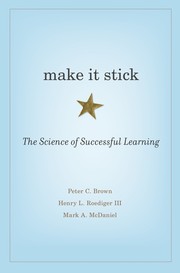
Translates decades of cognitive psychology research into plain language, establishing the core evidence-based principles (retrieval practice, interleaving, spaced practice) that underpin everything else in this curriculum.

A four-time USA Memory Champion provides a structured, step-by-step guide to the major mnemonic systems, giving the beginner concrete drills to practice immediately after reading Foer's narrative.
Going Deeper: The Science of Efficient Learning
IntermediateUnderstand the cognitive and neuroscientific mechanisms behind memory consolidation, forgetting, and skill acquisition, and translate them into a personal study system.
▸ Study plan for this stage
Pace: 10–12 weeks total, reading ~25–35 pages/day. Suggested split: Weeks 1–3 for "A Mind for Numbers" (~250 pages), Weeks 4–6 for "The Memory Book" (~230 pages), Weeks 7–10 for "Ultralearning" (~300 pages), with Weeks 11–12 reserved for review, synthesis, and completing exercises across all three books.
- Focused vs. Diffuse thinking modes (Oakley): how the brain alternates between tight analytical focus and loose background processing, and why both are essential for problem-solving and memory consolidation
- The Pomodoro Technique and deliberate rest (Oakley): using timed work intervals and intentional breaks to exploit diffuse-mode processing and prevent mental fatigue
- Chunking (Oakley): compressing related pieces of information into single cognitive units to reduce working-memory load and enable fluent, expert-level recall
- Illusions of competence (Oakley): why re-reading and highlighting feel productive but produce shallow encoding, and how retrieval practice (self-testing) builds durable memory
- The Link and Story systems (Lorayne): encoding arbitrary information into vivid, absurd, sequential mental images to exploit the brain's superior memory for concrete, visual narratives
- The Peg and Major systems (Lorayne): converting numbers into consonant sounds and then into memorable words/images, enabling reliable recall of ordered lists and numerical data
- Directness and Drill (Young): the principle that skills must be practiced in the context closest to real performance, and how to isolate and attack the specific sub-skills that bottleneck progress
- Meta-learning and the Metalearning Map (Young): surveying a field before diving in to identify the optimal concepts, facts, and procedures to learn — and the best methods to learn them — saving time and preventing wasted effort
- According to Oakley, what is the neurological difference between focused and diffuse thinking modes, and can you give a concrete example of deliberately switching between them in your own study sessions?
- Oakley warns against 'illusions of competence' — what specific study habits create these illusions, and what evidence-backed techniques does she recommend instead?
- Lorayne's system relies on the principle that the brain remembers the unusual over the ordinary. How would you use the Link System to memorize a 10-item list of unrelated vocabulary words, walking through each mental image step by step?
- How does the Major System work, and how would you encode the number 1,492 into a memorable image using it?
- Young defines 'Directness' as one of the core principles of Ultralearning. How does it differ from traditional studying, and why does learning in context accelerate skill acquisition?
- How would you design a complete personal learning project using Young's Metalearning Map — what questions would you ask before starting, and how would you structure the first two weeks?
- Focused/Diffuse switching log (Oakley): For one full study week, use 25-minute Pomodoro sessions. After each session, step away for 5–10 minutes with no screens. Keep a journal noting any insights or solutions that surfaced during the break. Reflect at the end of the week on which problems 'solved themselves' in diffuse mode.
- Chunking audit (Oakley): Pick a subject you are currently learning. Write out everything you know about one core concept from memory (no notes). Identify gaps, then re-study only those gaps. Repeat until you can reproduce a clean, connected 'chunk' without prompting.
- Link System stress test (Lorayne): Ask a friend to give you a random list of 15 unrelated nouns. Using Lorayne's Link System, build a vivid mental story connecting each item to the next. Wait 24 hours, then attempt to recall the full list in order — and in reverse order. Record your accuracy.
- Major System encoding practice (Lorayne): Memorize five important dates or statistics relevant to a subject you are studying (e.g., historical years, scientific constants) by converting each number into a Major System image. Quiz yourself daily for one week without writing the numbers down.
- Directness project (Young): Identify one skill you want to acquire. Instead of studying it abstractly, design a 'direct' practice task that mirrors real-world use (e.g., write in the target language rather than doing grammar drills; code a small real app rather than following tutorials passively). Commit to 4 sessions of direct practice and compare your progress to previous abstract-study attempts
- Personal Metalearning Map (Young): Before your next learning project, spend 2–3 hours building a Metalearning Map. Answer in writing: (1) Why am I learning this, and what does success look like? (2) What are the most important concepts, facts, and procedures? (3) What resources and methods are best suited to each? Review and refine the map after your first two weeks of study.
Next up: By internalizing the cognitive mechanics of memory consolidation (Oakley), the mnemonic encoding toolkit (Lorayne), and the strategic project-design framework (Young), the reader now has both the scientific foundation and the practical systems needed to tackle the advanced stage — where these principles will be stress-tested against complex, long-term knowledge domains and refined into a fully per

Bridges popular science and practical application by explaining focused vs. diffuse thinking, the role of sleep in consolidation, and procrastination — essential context before diving into harder neuroscience.

A classic, systematic treatment of the major mnemonic systems (link method, peg system, phonetic alphabet) that deepens the technique vocabulary introduced in Stage 1 with more rigorous practice structures.

Synthesizes retrieval practice, feedback loops, and deliberate practice into a coherent self-directed learning methodology — the ideal capstone for this stage before moving to pure cognitive science.
The Cognitive Science Core
IntermediateGain a rigorous understanding of how the brain encodes, consolidates, and retrieves information, including the neuroscience of long-term potentiation, the spacing effect, and the limits of working memory.
▸ Study plan for this stage
Pace: 6–8 weeks total: Week 1–2 — "SUMMARY - How We Learn" by Shortcut Edition (~20–25 pages/day, reading the summary in full twice: once for overview, once for detailed note-taking); Weeks 3–8 — "The Art of Changing the Brain" by James E. Zull (~15–20 pages/day, reading slowly and reflectively given its
- The spacing effect and distributed practice: why spreading learning sessions over time dramatically outperforms massed practice (cramming), as outlined in 'How We Learn'
- Interleaving: the counterintuitive benefit of mixing subjects or problem types during practice rather than blocking them, and why it feels harder but produces stronger retention
- The testing effect (retrieval practice): actively recalling information strengthens memory traces far more than passive re-reading
- Working memory limits: the brain's bottleneck for conscious processing — typically 4±1 chunks — and how this constrains the rate at which new information can be encoded into long-term memory
- Long-term potentiation (LTP): the synaptic mechanism by which repeated neural firing strengthens connections between neurons, forming the biological substrate of long-term memory, as detailed in Zull's 'The Art of Changing the Brain'
- The four-phase learning cycle (Zull): concrete experience → reflective observation → abstract hypothesis → active testing, grounded in the biology of the cerebral cortex's sensory, integrative, and motor regions
- Emotion and the limbic system as amplifiers of memory consolidation: Zull's argument that learning is inseparable from feeling, and that the amygdala and dopaminergic reward circuits gate what gets stored
- The role of the learner's agency and meaning-making: Zull's core thesis that genuine learning requires the learner to construct their own neural networks, meaning teachers/systems can only create conditions — not transfer knowledge directly
- According to 'How We Learn', what are the three main desirable difficulties (spacing, interleaving, retrieval practice) and what cognitive mechanism makes each one effective despite feeling harder in the moment?
- How does James Zull map the four stages of Kolb's experiential learning cycle onto specific anatomical regions of the cerebral cortex in 'The Art of Changing the Brain', and why does this biological grounding matter for designing study sessions?
- What is long-term potentiation (LTP), and how does Zull explain the role of repeated activation of synaptic pathways in converting short-term experience into durable long-term memory?
- Why does working memory capacity act as a fundamental constraint on learning speed, and what strategies from 'How We Learn' help a learner work within — rather than against — this limit?
- How does Zull argue that emotion is not separate from cognition but is in fact a prerequisite for deep encoding, and what practical implications does this have for how you structure your own learning environment?
- How do the insights from 'How We Learn' (behavioral/cognitive level) and 'The Art of Changing the Brain' (neurobiological level) complement and reinforce each other in explaining why spaced retrieval practice works?
- Spaced self-testing log: After finishing 'How We Learn', write 10 questions from the summary. Test yourself on Day 1, Day 3, Day 7, and Day 14 — tracking your recall accuracy each time to experience the spacing effect firsthand.
- Cortex mapping diagram: While reading Zull, draw and label a diagram of the four cortical regions he associates with the learning cycle (posterior sensory cortex, temporal/parietal integrative cortex, frontal integrative cortex, pre-motor/motor cortex) and annotate each with a personal learning example.
- Emotion audit journal: For one full week during the Zull reading, keep a daily log noting which study sessions felt engaging vs. flat — then analyze whether your retention (tested via flashcards) correlates with your emotional engagement, as Zull's limbic system argument predicts.
- Chunking stress-test: Design a short memorization task (e.g., a list of 12 unrelated words) and attempt it twice — once as a straight list and once grouped into 3–4 meaningful chunks. Record recall rates to viscerally experience working memory limits.
- Interleaving experiment: Choose two topics from Zull (e.g., LTP and the learning cycle). Study them in blocked fashion for one session, then interleaved in the next. Write a one-page reflection on how difficulty and retention differed between the two approaches.
- Synthesis essay: After completing both books, write a 500-word essay answering: 'How does the neuroscience in Zull's book provide a biological explanation for the learning techniques recommended in How We Learn?' — forcing integration across both texts.
Next up: Mastering how the brain biologically encodes and consolidates memory at the synaptic and systems level sets the essential foundation for the next stage, where these mechanisms will be translated into concrete, optimized learning techniques and tools — such as spaced-repetition software, memory palaces, and deliberate practice frameworks — that are explicitly engineered to exploit LTP, the spacing

A leading neuroscientist distills four pillars of learning (attention, active engagement, error feedback, consolidation) with hard science — this is the theoretical backbone that explains why every earlier technique works.
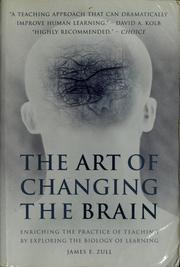
Connects neuroscience directly to learning practice, explaining how experience physically rewires the cortex — deepens Dehaene's framework with a focus on the learner's agency in shaping their own brain.
Mastery: Deliberate Practice & Long-Term Retention Systems
ExpertDesign a personal, evidence-based system for lifelong retention and expertise development, integrating spaced repetition software, deliberate practice theory, and metacognitive self-regulation.
▸ Study plan for this stage
Pace: 5–6 weeks total: Weeks 1–3 cover "Peak" (~25–30 pages/day, including reflection pauses after each chapter); Weeks 4–5 cover "Unlimited Memory" (~20–25 pages/day with active encoding practice during reading); Week 6 is dedicated to integration — no new reading, only system design, review, and exercis
- Deliberate Practice vs. naive practice: Ericsson's distinction between purposeful repetition and structured, feedback-driven improvement with well-defined goals
- Mental representations: how experts build rich, domain-specific cognitive schemas that allow faster pattern recognition and error self-correction (Peak, Ch. 3–5)
- The role of a coach/feedback loop: why solo practice plateaus without external or structured internal feedback, and how to engineer that feedback artificially
- The 10,000-hour myth debunked: quality and structure of practice hours matter far more than raw quantity (Peak, Ch. 2)
- Concentration and the SEE principle (Senses, Exaggeration, Energize) from Unlimited Memory: encoding information vividly to make it memorable by default
- The Car Method and Memory Palace (Method of Loci) as applied in Unlimited Memory: spatial-sequential pegging systems for long-term chunked retention
- Metacognitive self-regulation: monitoring your own comprehension gaps, adjusting practice difficulty, and scheduling reviews based on actual performance data
- Integration of spaced repetition software (SRS) with deliberate practice cycles: using retrieval difficulty as a signal to redesign practice, not just review
- According to Ericsson in Peak, what are the four core characteristics that distinguish deliberate practice from other forms of practice, and why is each necessary for expertise development?
- How do mental representations function as both the product and the engine of deliberate practice — and how can a learner deliberately build them outside a formal coaching environment?
- How does Horsley's SEE principle in Unlimited Memory map onto the cognitive science of elaborative encoding, and how can it be applied to abstract or technical material (not just names and numbers)?
- How would you design a personal 90-day deliberate practice plan for a skill of your choice, incorporating the feedback mechanisms Ericsson describes and the encoding techniques Horsley prescribes?
- What are the failure modes of a spaced repetition system when used without deliberate practice principles, and how do the two books together suggest correcting them?
- How does Horsley's Car Method serve as a portable, always-available alternative to digital SRS tools, and in what learning contexts does each approach have a comparative advantage?
- Deliberate Practice Audit: List a skill you are currently developing. For one week, log every practice session and label each activity as 'naive practice,' 'purposeful practice,' or 'deliberate practice' using Ericsson's definitions from Peak. At the end of the week, redesign at least 50% of your sessions to meet the deliberate practice standard.
- Mental Representation Mapping: After finishing a chapter of Peak, immediately close the book and draw a concept map of the key ideas from memory. Compare it to the text, identify gaps, and re-study only the gaps — simulating the expert feedback loop Ericsson describes.
- SEE Encoding Drill (Unlimited Memory): Take 20 abstract facts from a subject you are studying (vocabulary, formulas, historical dates). Apply Horsley's SEE principle to each — write out the sensory, exaggerated, energized image for every item. Test yourself 24 hours later without notes.
- Build a 10-Station Memory Palace: Using Horsley's Car Method or a familiar physical location, encode a 10-item ordered list (e.g., the stages of a process, a sequence of concepts). Revisit and recall the list at 1 day, 3 days, and 1 week intervals, logging accuracy each time to simulate manual spaced repetition.
- SRS + Deliberate Practice Integration Project: Create a dedicated Anki (or equivalent) deck for your primary learning domain. For every card you rate 'Again' or 'Hard,' write a one-sentence diagnosis of *why* you failed (wrong mental representation, insufficient encoding, no practice context) and schedule a targeted deliberate practice micro-session to fix that specific gap.
- Personal Retention System Design (Week 6 Capstone): Produce a written, one-page 'Learning Operating System' that specifies: your chosen encoding techniques from Unlimited Memory, your deliberate practice feedback mechanism from Peak, your SRS review schedule, and your weekly metacognitive check-in protocol. Share it with a peer or mentor for accountability.
Next up: Mastering deliberate practice structures and long-term retention systems establishes the personal infrastructure needed to tackle any advanced domain — making the reader ready to apply these compounding learning tools to specialized, high-complexity fields where expertise and retention demands are at their highest.

The definitive scientific account of deliberate practice and expert memory by the researcher who coined the concept — essential for understanding how to move beyond technique into genuine, lasting expertise.

Integrates the full range of mnemonic systems with concentration and self-discipline frameworks, serving as a practical capstone that ties the advanced learner's toolkit together into a unified personal system.
Discussion
Keep reading
Paths that share books, cover the same subject, or open a related topic.