SaaS and subscription businesses: an ordered reading list for founders
This curriculum takes you from the core mental models of recurring revenue all the way to advanced growth strategy and scaling — building vocabulary and intuition at each stage before introducing more complex frameworks. Starting with the "why" of subscriptions, you'll progress through the metrics that matter, the product and growth levers that drive expansion, and finally the hard-won operational wisdom of scaling a real SaaS company.
Foundations: The Subscription Mindset
BeginnerUnderstand why the subscription model exists, how it fundamentally differs from traditional business, and what recurring revenue means for customers and companies alike.
▸ Study plan for this stage
Pace: 4–5 weeks, ~40–50 pages/day (approximately 2 weeks per book with time for reflection and exercises)
- The shift from transactional to relationship-based business models and why recurring revenue creates customer lifetime value
- How subscription models reduce customer acquisition pressure and enable predictable, scalable growth
- The psychology of recurring billing: why customers accept subscriptions and how this changes buying behavior
- The importance of customer success and retention in subscription businesses (versus one-time sales focus)
- How to identify and measure key subscription metrics: MRR, churn rate, LTV, and CAC
- The difference between subscription as a pricing model versus subscription as a business philosophy
- Why traditional businesses struggle to transition to subscriptions and what organizational changes are required
- Why does the subscription model fundamentally change the relationship between a company and its customers compared to traditional transactional business?
- What is recurring revenue and why does it matter more to a subscription business than total sales volume?
- How does the subscription model reduce the pressure on customer acquisition, and what does this enable for long-term business strategy?
- What are the key metrics that subscription businesses must track, and why are they different from traditional business KPIs?
- How does customer success and retention become a profit center rather than a cost center in subscription models?
- What psychological and practical factors make customers willing to commit to recurring payments?
- Map out a business you know well (or your own idea): identify whether it could work as a subscription model, what the recurring value would be, and what would need to change operationally
- Calculate a hypothetical subscription business's key metrics: choose a product, estimate CAC, LTV, churn rate, and MRR to understand how these levers interact
- Interview 3–5 people about their current subscriptions: ask why they subscribed, what would make them cancel, and what would increase their perceived value—synthesize patterns
- Create a customer journey map for a subscription product, highlighting the moments where retention and success matter most (onboarding, first value, renewal)
- Write a one-page positioning statement for a subscription business (real or hypothetical) that explains the recurring value to customers, not just the features
- Audit your own subscriptions: list what you pay for monthly, identify which ones deliver clear recurring value and which ones you'd cancel—reflect on what makes the difference
Next up: This foundation in subscription mindset and core metrics prepares you to dive into the operational and strategic execution required to build and scale a subscription business—including pricing strategy, customer acquisition, and building the systems that keep subscribers engaged and retained.

The perfect entry point — it explains the subscription economy in plain language, covers the nine subscription models, and builds the core intuition that everything else in this curriculum depends on.

Written by the CEO of Zuora, this book frames the macro shift from product ownership to service access and introduces the idea that every company must rethink itself around the subscriber relationship — essential context before diving into metrics.
Growth Engines: Acquiring and Retaining Customers
IntermediateLearn the proven playbooks for growing a SaaS business — from product-led growth and viral loops to reducing churn and expanding revenue from existing customers.
▸ Study plan for this stage
Pace: 4–5 weeks, ~25–30 pages/day. Week 1–2: "Product-Led Growth" (320 pages). Week 2–3: "Obviously Awesome" (280 pages). Week 3–5: "Intercom on Customer Engagement" (200 pages) with overlap for review and exercises.
- Product-led growth (PLG) as a customer acquisition strategy: letting the product itself drive adoption rather than relying on sales teams
- The four PLG models: freemium, free trial, open-source, and community-driven growth
- Positioning and messaging clarity: how to articulate what makes your product different and why it matters to customers
- The positioning process: identifying target customers, competitive alternatives, and unique value props
- Customer engagement loops: how to design in-app experiences that guide users toward activation and retention
- Churn reduction through proactive engagement: identifying at-risk customers and intervening before they leave
- Expansion revenue: upselling and cross-selling to existing customers as a growth lever
- Messaging-product fit: ensuring your positioning aligns with what your product actually delivers
- What are the four main PLG models, and which one is most appropriate for your product category and target market?
- How do you identify your target customer segment, and why does this clarity matter for positioning?
- What is the difference between a feature and a benefit, and how should this distinction shape your messaging?
- What are the key moments in a customer's journey where engagement loops should be triggered, and what should those loops accomplish?
- How can you measure churn and identify the leading indicators that a customer is at risk of leaving?
- What are three concrete ways to expand revenue from existing customers, and how does engagement tie into each one?
- Map your product's current customer journey: identify where users drop off, where they activate, and where engagement loops exist (or should exist). Compare it to the PLG models in Bush's framework.
- Conduct a positioning audit: write down your current positioning statement, then work through Dunford's positioning process to identify your target customer, competitive alternatives, and unique value prop. Revise your positioning.
- Create a messaging hierarchy: develop a clear, one-sentence value prop, then three supporting benefit statements that address your target customer's top pain points.
- Design an engagement loop for one critical moment in your product (e.g., onboarding, feature discovery, or re-engagement). Specify the trigger, the action, and the desired outcome.
- Analyze a competitor's positioning: read their website, messaging, and positioning. Identify their target customer and value prop, then articulate how yours differs.
- Build a churn analysis: segment your customer base by cohort, calculate churn rates, and identify the leading indicators (feature usage, support tickets, login frequency) that predict churn. Propose one intervention.
Next up: This stage equips you with the playbooks to acquire and retain customers through product and messaging excellence; the next stage will deepen your financial acumen by teaching you how to model, forecast, and optimize the unit economics that determine whether your growth is actually profitable and sustainable.

Introduces the PLG model — where the product itself is the primary acquisition and retention engine — which is now the dominant growth strategy for modern SaaS; sets up the strategic lens for the books that follow.

Positioning is the hidden lever of SaaS growth; Dunford's framework ensures you can articulate why your product wins for a specific customer, which directly reduces churn and improves conversion — a critical complement to PLG.

A practical, battle-tested guide to onboarding, activation, and retention messaging from a company that built its entire business around reducing churn — bridges strategy and day-to-day execution.
Scaling: From Startup to Repeatable Machine
IntermediateUnderstand how to build the sales, marketing, and operational systems that let a SaaS company scale predictably from early traction to tens of millions in ARR.
▸ Study plan for this stage
Pace: 8–10 weeks, ~40–50 pages/day (both books total ~600 pages; allows time for note-taking and exercises)
- Predictable Revenue model: separating lead generation, sales qualification, and closing into distinct repeatable processes
- Sales development representatives (SDRs) as a dedicated function to create a pipeline of qualified opportunities for account executives
- The importance of sales process documentation and standardization to scale beyond founder-led sales
- Customer segmentation and account-based selling strategies to focus resources on high-value targets
- Marketing's role in demand generation and lead quality, not just lead volume
- From Impossible to Inevitable framework: the transition from chaos to predictable, scalable operations
- Building a sales culture and compensation structure that aligns with repeatable, predictable growth
- Metrics and KPIs that matter: pipeline coverage, sales cycle length, win rates, and customer acquisition cost (CAC)
- What is the Predictable Revenue model, and how does it differ from traditional sales approaches in early-stage companies?
- Why is the SDR/AE split critical for scaling a SaaS company, and what are the key responsibilities of each role?
- How do you design a sales process that can be documented, taught, and repeated across a growing team?
- What metrics should you track to ensure your sales and marketing engine is scaling predictably, and what do they tell you?
- How does customer segmentation and account-based selling improve efficiency and revenue predictability?
- What are the common mistakes companies make when trying to scale sales, and how do the frameworks in these books help avoid them?
- Map your current sales process end-to-end (or a hypothetical one): identify where leads come from, how they're qualified, who closes them, and how long each stage takes. Compare it to the Predictable Revenue model.
- Design a job description and compensation plan for an SDR role in your company, including metrics they'll be measured on and how their performance ties to AE success.
- Document one repeatable sales play or pitch for a specific customer segment, including discovery questions, objection handling, and close criteria.
- Calculate your current (or projected) sales metrics: pipeline coverage ratio, average sales cycle length, win rate, and CAC. Identify the biggest bottleneck.
- Create a customer segmentation strategy: define 2–3 ideal customer profiles (ICPs), their pain points, and how your go-to-market approach differs for each.
- Interview a sales leader at a scaling SaaS company (or study a case from the books) and identify one specific system or process they use to maintain predictability as they grow.
Next up: This stage equips you with the operational and sales infrastructure needed to scale predictably; the next stage will likely focus on optimizing unit economics, expanding into new markets or segments, and managing the organizational complexity that comes with scaling beyond $10M ARR.

The definitive playbook for building a predictable B2B SaaS revenue machine — outbound prospecting, niche domination, and hyper-growth levers — best read once you have the metrics and product foundations in place.
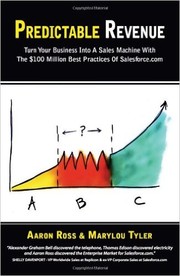
The book that invented the modern SaaS sales development model at Salesforce; read after 'From Impossible to Inevitable' to get the original tactical detail on pipeline generation and sales specialization.
Mastery: Advanced Strategy & the Long Game
ExpertSynthesize everything into a high-level strategic view — how great SaaS companies are built and valued over the long term, and what separates enduring businesses from those that plateau.
▸ Study plan for this stage
Pace: 8–10 weeks, ~25–30 pages/day. "Behind the Cloud" (~400 pages) over 4–5 weeks, then "The SaaS Playbook" (~250 pages) over 3–4 weeks, with 1–2 weeks for synthesis and capstone work.
- Core values and mission-driven culture as the foundation for sustainable SaaS growth (Benioff's 1/1/1 model and stakeholder capitalism)
- The strategic importance of ecosystem partnerships, integrations, and platform thinking in scaling SaaS businesses
- Long-term unit economics: how to build profitable, repeatable revenue models that compound over time
- Customer success and retention as the primary lever for enduring SaaS value creation, not just acquisition
- Navigating the transition from startup to enterprise: organizational structure, leadership, and strategic pivots
- Market positioning and differentiation: how to own a category and defend against competition
- Balancing growth velocity with profitability and sustainability—the strategic trade-offs that separate winners from plateau-ers
- Building a repeatable playbook: productizing your service, systematizing sales, and scaling operations without losing culture
- What is Benioff's 1/1/1 model, and how does it inform long-term SaaS strategy beyond just financial metrics?
- How does 'Behind the Cloud' argue that ecosystem partnerships and platform thinking contribute to Salesforce's sustained dominance?
- What are the key differences between growth-at-all-costs and profitable, sustainable growth as described in 'The SaaS Playbook'?
- How does Walling define the 'SaaS Playbook,' and what are the core repeatable processes that separate enduring SaaS businesses from those that stall?
- What role does customer success and retention play in the long-term valuation and resilience of a SaaS company, according to both books?
- How should a SaaS founder think about organizational structure and hiring as the company scales from startup to enterprise, based on Benioff's experience?
- Read 'Behind the Cloud' with a focus on Benioff's strategic decisions at key inflection points (IPO, major acquisitions, pivots). Create a timeline documenting how Salesforce's mission and values shaped each decision.
- Map Salesforce's ecosystem partnerships (integrations, AppExchange, etc.) as described in the book. Analyze how this platform strategy created defensibility and compounding value.
- Analyze a SaaS company you know well (or choose one) and assess its unit economics using Walling's framework from 'The SaaS Playbook'. Calculate CAC, LTV, payback period, and churn—then identify where it's winning or losing.
- Document the 'playbook' of a SaaS company you admire: What are its repeatable processes for sales, onboarding, customer success, and retention? Compare it to Walling's model.
- Write a 2–3 page strategic memo: If you were advising a 10-person SaaS startup that's hit $1M ARR, what would you prioritize next based on Benioff's and Walling's frameworks? Address culture, customer success, and profitability.
- Conduct a case study comparison: Choose one SaaS company that has sustained growth for 10+ years and one that plateaued. Using concepts from both books, explain the strategic differences.
Next up: This stage equips you with the strategic mental models and long-term playbooks used by enduring SaaS leaders; the next stage will likely focus on execution—translating these principles into specific operational, financial, or go-to-market tactics for your own business or investment decisions.
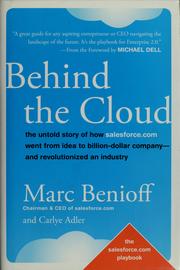
Benioff's first-hand account of building Salesforce from zero to a multi-billion-dollar SaaS pioneer ties together every prior concept — PLG, metrics, sales, positioning — into a real-world narrative of what it actually takes.

A no-nonsense, founder-focused capstone that covers pricing, hiring, fundraising, and exit strategy for bootstrapped and venture-backed SaaS alike — the ideal final read to pressure-test and integrate everything learned.
Discussion
Keep reading
Paths that share books, cover the same subject, or open a related topic.