Pitching and pitch decks: books to tell a story investors fund
This curriculum takes a founder from zero to pitch-ready across four tightly sequenced stages. It begins with the storytelling and communication instincts that underpin every great pitch, then layers on slide design craft, investor-specific fundraising strategy, and finally the real-world deal dynamics that close rooms. Each stage builds the vocabulary and confidence needed for the next, so no book feels premature.
Foundations: Thinking & Communicating Like a Storyteller
BeginnerUnderstand why stories persuade, how to structure a compelling narrative, and how to distill a complex idea into a clear, memorable message — the bedrock of any pitch.
▸ Study plan for this stage
Pace: 4–5 weeks, ~25–30 pages/day. Week 1–2: "Made to Stick" (400 pages); Week 3–4: "The Presentation Secrets of Steve Jobs" (250 pages); Week 5: Review, synthesis, and exercises.
- The SUCCESs framework (Simplicity, Unexpectedness, Concreteness, Credibility, Emotion, Story) as the foundation for making ideas stick
- Why abstract ideas fail to persuade and how concrete, sensory details make messages memorable
- The power of narrative structure: how stories activate emotion and bypass rational resistance
- Steve Jobs' three-act presentation structure: context, content, and conclusion
- The importance of constraint and focus—saying no to complexity to amplify core messages
- How to distill a complex idea into a single, clear headline or core message
- The role of visual simplicity and metaphor in reinforcing storytelling
- Credibility through authenticity: why audiences trust storytellers who show vulnerability and conviction
- What are the six principles of the SUCCESs framework, and how does each one make an idea more persuasive?
- Why do stories persuade audiences better than statistics or abstract claims? Provide an example from either book.
- How would you structure a pitch using Steve Jobs' three-act model, and what should happen in each act?
- What is the difference between a complex message and a sticky message? How do you transform one into the other?
- How do constraint and simplicity strengthen a pitch rather than weaken it?
- What role does emotion play in making a message memorable, and how do you deliberately build it into a narrative?
- Take a complex idea you understand well (your job, a hobby, a belief). Write a one-sentence version, then a three-sentence version. Identify which SUCCESs principles you used.
- Rewrite a piece of business jargon or abstract claim using concrete, sensory language. For example, turn 'increase operational efficiency' into a specific, vivid scenario.
- Analyze a Steve Jobs keynote (available online). Map it to the three-act structure and identify where emotion, simplicity, and credibility appear.
- Write a 2-minute pitch for a product or idea using the SUCCESs framework. Test it on a friend and ask which part they remember most.
- Create a 'headline' for a pitch—a single, clear sentence that captures the core idea. Refine it until it passes the 'sticky' test: would a stranger remember it after hearing it once?
- Identify a story from your own experience that illustrates a key insight or value. Write it out in 3–4 sentences and practice telling it aloud. Notice where the listener's attention peaks.
Next up: With a solid grasp of storytelling fundamentals and the SUCCESs framework, you're ready to move into the next stage: structuring the actual pitch deck, designing visuals, and learning how to handle objections and audience dynamics.
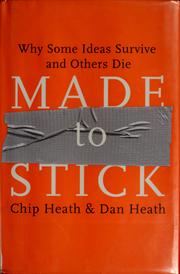
Introduces the core principles of why some ideas survive and others die, giving founders a mental model for making their pitch memorable before a single slide is built.
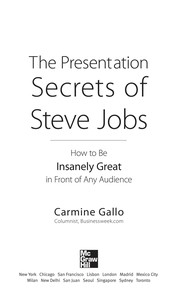
Deconstructs the world's most-watched product pitches into repeatable techniques — headline messages, villain-and-hero arcs, and demo moments — that translate directly to investor presentations.
Narrative Architecture: Building the Pitch Story
BeginnerLearn how to structure a pitch as a cohesive narrative arc — problem, solution, stakes, and call to action — so the story does the selling before the numbers even appear.
▸ Study plan for this stage
Pace: 4–5 weeks, ~25–30 pages/day. Week 1–2: "Pitch Anything" (350 pages); Week 3–5: "The Storyteller's Secret" (300 pages) with overlap for integration exercises.
- The Pitch Frame: How Oren Klaff's concept of 'frame control' shapes the psychological foundation of a winning pitch — establishing authority and managing audience attention from the opening moment
- The Problem-Solution-Stakes Arc: Structuring your pitch narrative around a clear problem your audience recognizes, a compelling solution they haven't considered, and stakes that make them care about the outcome
- The Hot Cognition Principle: Using emotional triggers and concrete details (not abstract features) to make your pitch memorable and persuasive, as detailed in both Klaff's and Gallo's approaches
- The Storyteller's Authenticity: Carmine Gallo's emphasis on personal narrative and vulnerability as the connective tissue that makes audiences trust you and your pitch
- The Call to Action as Narrative Climax: Positioning your ask (funding, partnership, decision) as the natural resolution of the story you've told, not as a separate transaction
- Audience Psychology and Narrative Pacing: Understanding how to sequence information to keep the amygdala engaged and prevent the audience from mentally checking out
- The Elevator Pitch as Narrative Kernel: Distilling your full pitch story into a 30–60 second version that captures the essential arc and hooks the listener
- What is 'frame control' in Klaff's model, and how does establishing it in your opening moments affect the rest of your pitch narrative?
- How do you structure a pitch around problem, solution, and stakes? What makes each element essential to the overall narrative arc?
- Why does Gallo emphasize personal storytelling and vulnerability in pitch narratives, and how does this differ from leading with data or credentials?
- What is the 'hot cognition' principle, and how do you apply it to make your pitch emotionally resonant rather than intellectually abstract?
- How should your call to action function within the narrative arc — what makes it feel like a natural climax rather than a sudden ask?
- How do you condense a full pitch narrative into a compelling 30–60 second elevator pitch without losing the emotional core of your story?
- Read and annotate the opening chapters of 'Pitch Anything' (Chapters 1–3) focusing on Klaff's frame control concept. Identify one pitch you've given or heard and map where frame control was won or lost.
- Write a one-page problem statement for a pitch (real or hypothetical). Then write the solution and stakes in separate paragraphs. Review: Does each element feel necessary to the narrative arc, or could any be cut?
- Extract one personal story from Gallo's 'The Storyteller's Secret' that resonates with you. Rewrite it as a 2–3 minute pitch narrative for a fictional product or idea, embedding the story as your opening hook.
- Record yourself delivering a 60-second pitch. Listen back and count: How many abstract claims vs. concrete, sensory details do you use? Rewrite it using Gallo's principle of specificity and rerecord.
- Create a pitch narrative for something you actually care about (a project, idea, or cause). Structure it as: Hook (personal story) → Problem → Solution → Stakes → Call to Action. Share it with a peer and ask: Did the story make you care before I asked for anything?
- Develop three different 30-second elevator pitches for the same idea, each emphasizing a different element (problem, solution, or stakes). Test them on friends and note which version generates the most follow-up questions.
Next up: Mastering narrative architecture gives you the skeleton of a compelling pitch; the next stage will teach you how to support that story with data, visuals, and slide design that reinforce (rather than distract from) your narrative core.

Introduces frame control and the STRONG method, explaining the neuroscience of how investors actually receive a pitch — essential for understanding what makes a room lean in or tune out.

Bridges general storytelling craft to the business context, showing how founders can use personal and company origin stories to create emotional investment before the financials are discussed.
Slide Craft: Designing Decks That Communicate
IntermediateApply visual communication and slide design principles to build a pitch deck that is clean, investor-grade, and lets the story — not the clutter — do the work.
▸ Study plan for this stage
Pace: 4–5 weeks, ~25–30 pages/day (approximately 10–12 days per book with review and practice time built in)
- The Assertion-Evidence approach: using one clear claim per slide with supporting visuals rather than bullet points
- Visual hierarchy and white space: how to guide the viewer's eye and reduce cognitive load through intentional design
- The power of contrast, alignment, and repetition: core design principles that make slides feel professional and cohesive
- Storytelling structure in pitch decks: the arc of tension and resolution that moves audiences emotionally and intellectually
- Resonance: connecting with your audience's values and aspirations to make your pitch memorable and persuasive
- The relationship between form and content: how design choices reinforce (or undermine) your message
- Slide economy: knowing what to show, what to hide, and when to let silence and visuals speak louder than words
- What is the Assertion-Evidence approach, and how does it differ from traditional bullet-point slides? Why is this difference critical for investor pitches?
- How do white space, contrast, and alignment work together to create visual clarity, and what happens when these principles are ignored?
- Describe the three-act story structure that Duarte outlines in 'Resonate.' How would you apply this to a pitch deck for a startup?
- What does it mean for a pitch to 'resonate' with an audience, and what specific techniques can you use to connect with your audience's values?
- How should you decide what content belongs on a slide versus what should be spoken aloud? What is the cost of over-designing or over-filling a slide?
- Walk through a weak pitch deck slide and redesign it using the principles from both books—what would you change and why?
- Audit 3–5 real pitch decks (from PitchBook, Crunchbase, or your own network) and identify which slides follow Assertion-Evidence principles and which rely on bullet points. Document what works and what doesn't.
- Redesign one weak slide from a real pitch deck using Duarte's visual hierarchy principles: remove clutter, add white space, create a single clear assertion, and pair it with a supporting visual.
- Create a storyboard for a 10-slide pitch deck using Duarte's three-act structure (setup, confrontation, resolution). Map out the emotional arc and key turning points.
- Build 5 slides for a fictional or real startup pitch, applying Assertion-Evidence, visual hierarchy, and resonance principles. Focus on one claim per slide with minimal text and intentional visuals.
- Analyze a TED talk or recorded pitch (video) and identify the story structure, moments of tension, and how the speaker uses visuals (or lack thereof) to reinforce their message.
- Conduct a peer review: swap your 5-slide deck with a partner and critique each other using a checklist based on Duarte's principles (white space, contrast, alignment, one assertion per slide, emotional resonance).
Next up: This stage equips you with the visual and narrative tools to build a deck that communicates with clarity and power; the next stage will focus on the delivery, timing, and audience dynamics that turn a well-designed deck into a compelling live pitch.

The definitive guide to slide design thinking; teaches founders how to treat each slide as a visual argument rather than a bullet-point dump, raising the overall quality of the deck immediately.

Read after Slide:ology, this book zooms out to the full presentation arc, showing how to structure the entire deck as a journey that moves an audience from the status quo to the founder's vision.
Fundraising Tactics: Winning Investors & Closing the Room
IntermediateUnderstand the investor's perspective, learn how to navigate the fundraising process end-to-end, and develop the tactics needed to handle objections, build momentum, and close a round.
▸ Study plan for this stage
Pace: 8–10 weeks, ~40–50 pages/day (mix of dense finance concepts and practical frameworks)
- The investor's decision-making process: what VCs actually evaluate beyond the pitch (team, market, traction, defensibility)
- Term sheets and deal mechanics: understanding dilution, liquidation preferences, anti-dilution clauses, and board composition
- The fundraising funnel and process: how to source investors, navigate due diligence, and manage multiple conversations in parallel
- Negotiation tactics and leverage: how to improve your position without losing the deal, when to push back, and what terms matter most
- Handling objections and momentum-building: techniques to address investor concerns, create FOMO, and move deals forward
- The role of narrative and founder credibility: how to position yourself and your story to align with investor thesis and reduce perceived risk
- Post-close execution: maintaining investor relationships, managing board dynamics, and setting yourself up for future rounds
- What are the key factors VCs evaluate when assessing a startup, and how do these differ from what most founders assume?
- Explain the difference between liquidation preferences, anti-dilution protection, and board control—why does each matter to both founders and investors?
- Walk through the typical fundraising process from sourcing to close: what are the critical milestones and how long does each stage typically take?
- You receive pushback from an investor on valuation. What tactics from the books would you use to negotiate without losing the deal?
- How do you create momentum in a fundraising round, and what role does narrative play in addressing investor objections?
- What are the most important terms to negotiate in a term sheet, and which ones should you concede to close the round?
- Read and annotate a real term sheet (available online or from a mentor): identify each clause, mark which ones favor the investor vs. founder, and note which you'd negotiate
- Create a 'fundraising roadmap' for a hypothetical startup: list 30–50 target investors, segment by stage/thesis, and plan a 6-month outreach and close timeline
- Role-play a difficult investor conversation: practice handling 3–4 common objections (valuation, market size, team gaps) using tactics from Kupor and Feld
- Analyze a pitch deck from a successful Series A or B company: map how the narrative addresses investor concerns and builds credibility (use frameworks from both books)
- Write a 1-page 'investor brief' for a startup you know well: distill the story, traction, and ask in a way that pre-empts objections and clarifies your differentiation
- Interview a founder or investor: ask them to walk through a real fundraising round—what went well, what surprised them, which terms mattered most
Next up: This stage equips you with the investor's playbook and the mechanics of deal-making, preparing you to craft pitches and decks that directly address what VCs actually care about and navigate the full fundraising journey with confidence.

Demystifies term sheets and deal mechanics so founders walk into investor meetings knowing exactly what they're asking for and why — credibility that investors notice immediately.

Written by an Andreessen Horowitz managing partner, this book reveals how VCs evaluate pitches and make decisions — giving founders a rare inside view of the other side of the table.
Discussion
Keep reading
Paths that share books, cover the same subject, or open a related topic.