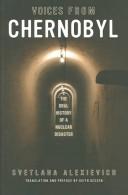
Start with Voices From Chernobyl. It is the shortest, it is the most self-contained, and its opening monologue — a firefighter's widow describing what happened to her husband's body — tells you within ten pages whether you can read this writer at all. Many people find they cannot. Better to learn that from a book you can finish in two sittings.
The obvious alternative is Secondhand Time, which won her the widest audience and is the one most often on a shop table. It is also seven hundred pages of interlocking testimony about the collapse of a country, and it assumes you already know what a Soviet life felt like from the inside. It is the last book of the cycle for a reason.
The Soviet cycle, in order
Unusually, publication order and the historical order of the subjects are nearly the same here, so there is no real controversy to settle. Read them as they were written.
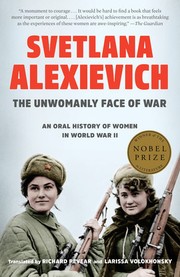
The Unwomanly Face of War was the first, and it is the founding act of the method: hundreds of Soviet women who fought in the Second World War, talking about a war that the official record had made entirely male. Note that it circulated in an earlier English translation under a different title, and that the version now in print is fuller — the Soviet censors cut the first edition, and Alexievich restored the cuts later.
Last Witnesses is its companion, the same war told by people who were children during it. It is the one readers most often say they had to stop reading. Taken with the previous book it forms a single argument about who is allowed to narrate a war.
Zinky Boys moves to Afghanistan, and is sold in Britain as Boys in Zinc — same book, different title, so check before buying twice. The title refers to the sealed zinc coffins that came home. It got her sued in Belarus by some of the mothers she had interviewed, which is worth knowing because it goes to the heart of the argument about her method.
Voices From Chernobyl is also published as Chernobyl Prayer in a separate translation, and the two English versions differ enough that readers notice. Either serves.
Secondhand Time closes the cycle: the 1990s and after, the people who lost the country they had been formed by. Read last, it lands as the summation it was meant to be.
What to read alongside
Alexievich deliberately gives you almost no history — no dates, no chain of causation, no officials. That is the design, and it leaves a gap you may want filled.
Chernobyl by Serhii Plokhy is the archival history of the accident, and reading it after the testimony rather than before is the better order: you already know what it felt like, so the bureaucratic sequence lands harder. The Future Is History: How Totalitarianism Reclaimed Russia by Masha Gessen covers roughly the same decades as Secondhand Time through a handful of individual lives, with the analysis Alexievich withholds.
"The Good War" by Studs Terkel is the obvious ancestor — American oral history of the same war, published decades earlier. Comparing the two is the fastest way to see what is distinctive about Alexievich: Terkel lets his subjects be witnesses, Alexievich composes them into something closer to a chorus.
One honest caveat about the method
She edits heavily. Monologues are shaped, compressed and sometimes composited, and she has revised her own books across editions. Critics have argued that this makes the work literature rather than documentary; her defenders answer that the shaping is what makes the testimony legible at all. That disagreement is live and neither side has retired it. Read her knowing the seams are authored.
The full ordered sequence, with the context books slotted in, is on the path below.
Follow the full ordered path here: Svetlana Alexievich Reading Order: Where to Begin with the Oral Histories.