Speechwriting: an ordered reading list to write great speeches
This curriculum takes you from the ancient roots of persuasion all the way to the craft of writing and delivering speeches that move audiences. Each stage builds on the last: you first absorb the timeless principles of rhetoric, then learn how great speeches are actually structured and written, and finally master the advanced arts of style, storytelling, and performance that separate good speeches from unforgettable ones.
Foundations of Rhetoric & Persuasion
BeginnerUnderstand the core principles of persuasion — ethos, pathos, logos — and why they have driven powerful communication for 2,500 years.
▸ Study plan for this stage
Pace: 6–8 weeks, ~40–50 pages/day. Start with "Thank You for Arguing" (3–4 weeks, ~40 pages/day), then move to "Rhetoric" by Aristotle (3–4 weeks, ~30 pages/day, with re-reading of dense sections).
- Ethos: How a speaker's credibility, character, and trustworthiness persuade an audience
- Pathos: How emotional appeals and audience values drive persuasion
- Logos: How logic, evidence, and reasoning form the backbone of sound arguments
- The three modes of persuasion work together—none stands alone in effective rhetoric
- Kairos: The importance of timing and context in choosing which appeal to emphasize
- The rhetorical situation: understanding your audience, purpose, and constraints before speaking
- Stasis theory: identifying the point of disagreement to focus your argument effectively
- Decorum: matching your language, tone, and style to your audience and occasion
- Define ethos, pathos, and logos, and give a concrete example of each from a real speech or argument you've encountered
- Why does Aristotle argue that ethos is often the most powerful form of persuasion, and how does 'Thank You for Arguing' illustrate this principle in modern contexts?
- What is kairos, and why is timing critical to choosing which rhetorical appeal to emphasize in a given situation?
- Explain stasis theory: how do you identify the point of disagreement in a debate, and why does this matter for structuring your argument?
- How does understanding your rhetorical situation (audience, purpose, constraints) change the way you approach persuasion?
- What does decorum mean, and how does it relate to the three modes of persuasion?
- Analyze a famous speech (e.g., MLK's 'I Have a Dream' or a TED talk) and identify where the speaker uses ethos, pathos, and logos—mark specific passages and explain why each appeal works in that moment
- Write a short persuasive argument (250–300 words) on a topic you care about, then deliberately rewrite it emphasizing a different mode of persuasion (first ethos-heavy, then pathos-heavy, then logos-heavy) and reflect on how each version lands differently
- Conduct a 'stasis analysis' of a current debate or disagreement you observe (in news, social media, or personal life): identify the point of disagreement and explain how each side is arguing from a different stasis
- Record yourself giving a 2–3 minute persuasive pitch (e.g., pitching an idea to a friend or colleague), then watch it back and identify which rhetorical appeals you naturally used—did you rely too heavily on one mode?
- Create a 'rhetorical situation map' for a speech or argument you plan to give: define your audience, their values, your purpose, the occasion, time constraints, and any opposing views—then explain how this shapes your choice of appeals
- Read a passage from Aristotle's 'Rhetoric' and a modern example from 'Thank You for Arguing' that illustrate the same principle, then write a 1-page reflection on how the principle translates across 2,400 years
Next up: This stage anchors you in timeless principles of persuasion, giving you the conceptual toolkit to recognize and deploy ethos, pathos, and logos—preparing you to move into the next stage, where you'll learn how to structure arguments, craft compelling narratives, and adapt these principles to specific speech genres and contexts.
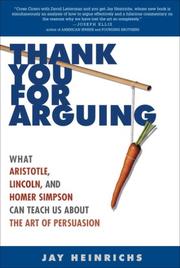
The perfect entry point: a witty, accessible guide to classical rhetoric that makes Aristotle's concepts immediately practical and fun. It builds the essential vocabulary (ethos, pathos, logos, kairos) you'll need for everything that follows.

After Heinrichs makes the concepts approachable, going to the source cements your understanding. Aristotle's three-book framework is the DNA of every speechwriting technique you will ever learn.
The Craft of Speechwriting
BeginnerLearn the practical mechanics of writing a speech — structure, openings, closings, word choice, and the key differences between writing to be read and writing to be heard.
▸ Study plan for this stage
Pace: 6–7 weeks, ~25–30 pages/day (approximately 3–4 days per book, with overlap for practice)
- Clarity and simplicity as the foundation of effective writing: eliminate unnecessary words, use active voice, and prefer concrete nouns and strong verbs
- The distinction between writing for the eye (to be read) and writing for the ear (to be heard): shorter sentences, repetition, rhythm, and phonetic qualities matter in speech
- Speech structure fundamentals: the opening hook, clear thesis, logical body organization, and the closing that reinforces your message
- Rhetorical devices and vocal techniques: parallelism, antithesis, alliteration, pauses, emphasis, and physical presence as tools to amplify meaning
- Word choice and tone in speechwriting: selecting language that resonates with your audience, avoiding jargon, and matching formality to context
- The relationship between preparation and delivery: how a well-crafted script enables confident, authentic performance
- What are the core principles of clarity and conciseness from 'The Elements of Style,' and how do they apply specifically to speech rather than written prose?
- How does writing for the ear differ from writing for the eye, and what specific techniques does Roy Peter Clark recommend to bridge this gap?
- What are the essential components of a strong speech opening, and why do first impressions matter more in oral delivery than in written text?
- How can you use rhetorical devices like parallelism, antithesis, and alliteration to make your speech more memorable and persuasive?
- What role does physical presence, vocal delivery, and body language play in bringing a written speech to life, according to Humes?
- How do you tailor word choice and tone to your specific audience and speaking context?
- Rewrite a passage from a formal document (e.g., a business email or report) using Strunk's principles: cut unnecessary words, convert passive to active voice, and simplify sentence structure. Compare the before and after.
- Take a piece of your own writing and read it aloud. Identify sentences that are too long, words that are hard to pronounce in sequence, or phrases that don't flow naturally. Revise for the ear using Clark's techniques (shorter sentences, varied rhythm, repetition).
- Write a 2–3 minute speech on a topic you know well. Include a hook opening, a clear thesis, 2–3 main points with supporting details, and a closing that circles back to your opening. Practice delivering it aloud and time yourself.
- Analyze a famous speech (e.g., from Churchill, Lincoln, or a modern speaker). Identify the opening technique, the main rhetorical devices used, the structure, and the closing strategy. Note which devices made the speech memorable.
- Write two versions of the same speech: one formal and one conversational. Deliver both aloud and reflect on how tone, word choice, and pacing differ. Which feels more authentic to your voice?
- Record yourself delivering a 1-minute speech. Watch the recording and assess your body language, eye contact, pacing, and vocal emphasis. Revise the script to better support your natural delivery, then re-record and compare.
Next up: This stage equips you with the mechanics of clear, audience-focused speech composition and delivery; the next stage will likely deepen your ability to adapt these tools to specific speech types (persuasive, ceremonial, motivational) and contexts.
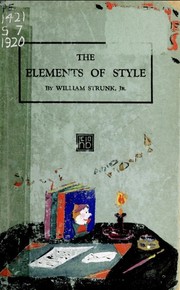
Before writing for the ear, you must master clarity and economy on the page. This slim classic instills the discipline of cutting every unnecessary word — essential for speeches where every second counts.
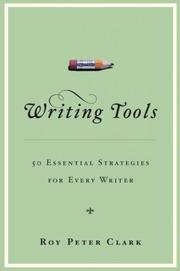
Clark's 50 practical tools translate directly to speechwriting: sentence rhythm, powerful endings, and using the right word in the right place. It bridges general writing craft and the spoken word beautifully.
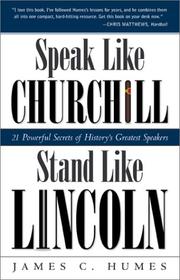
Written by a former White House speechwriter, this book distills the concrete techniques of history's greatest orators into actionable lessons on structure, wit, and delivery — ideal at this stage.
Learning from the Masters
IntermediateAnalyze landmark speeches in depth to internalize how structure, language, and emotion work together in real-world examples across history and culture.
▸ Study plan for this stage
Pace: 6–7 weeks, ~25–30 pages/day (alternating between both books to build comparative analysis skills)
- Rhetoric as a craft: how persuasion operates through deliberate choices in language, rhythm, and structure (Leith's framework)
- The power of metaphor and figurative language to shape audience emotion and belief
- How historical context and political circumstances demand different rhetorical strategies
- The relationship between a speaker's ethos (credibility/character) and their ability to move an audience
- Structural patterns in landmark speeches: openings that establish authority, bodies that build argument, closings that crystallize emotion
- The role of repetition, parallelism, and sonic devices (alliteration, assonance) in making language memorable
- How American presidents adapted rhetoric across different eras and crises (Leuchtenburg's historical lens)
- The tension between authenticity and artifice in political speech—how 'performed' rhetoric can still be genuinely moving
- Using Leith's analytical tools, identify three rhetorical devices in a landmark speech and explain how each one serves the speaker's persuasive goal.
- How did the historical moment (war, economic crisis, social upheaval) shape the rhetorical choices a president made in a specific speech? Cite examples from Leuchtenburg.
- Compare the opening strategies of two speeches from different eras discussed in these books. What does each opening accomplish, and why might those strategies have been necessary for their audiences?
- Explain the relationship between a speaker's ethos and their use of emotional language. How do the presidents Leuchtenburg discusses establish credibility before appealing to emotion?
- What is the difference between rhetoric that relies on metaphor versus rhetoric that relies on logical argument? When is each approach more effective, based on the speeches you've studied?
- How does repetition function differently in a speech meant to inspire (e.g., a wartime address) versus one meant to persuade through policy argument? Provide specific examples.
- Annotate one full speech from Leuchtenburg's book using Leith's rhetorical categories (metaphor, repetition, rhythm, ethos-building, etc.). Mark where each device appears and note its effect.
- Transcribe and perform aloud a 2–3 minute passage from a speech discussed in either book. Record yourself, then listen back and identify which sonic/rhythmic choices made it memorable or moving.
- Write a 1-page comparative analysis of two presidential speeches from different eras in Leuchtenburg, focusing on how their rhetorical strategies reflect their historical contexts.
- Select a metaphor or repeated phrase from one of the speeches studied. Trace how it functions throughout the speech and explain why the speaker chose it for that particular audience and moment.
- Rewrite a paragraph from one of the speeches in a deliberately different rhetorical style (e.g., convert an emotional appeal into a logical argument, or vice versa). Reflect on what is gained and lost.
- Create a 'rhetorical blueprint' for a speech you might give on a topic you care about, using structural and linguistic patterns you've identified in the master speeches. Then draft the opening 300 words.
Next up: This stage equips you with a toolkit for analyzing how master speakers work—the next stage will teach you to synthesize these insights into your own original voice and apply them to contemporary contexts and audiences.

A brilliant literary analysis of rhetoric in action — from Churchill to Obama to advertising — that shows you how the techniques you've learned are deployed in famous speeches. It sharpens your critical eye.

Studying presidential rhetoric in its political and historical context reveals how the greatest speechwriters matched language to moment, audience, and purpose — a masterclass in applied speechwriting.
Storytelling, Emotion & Memorable Language
IntermediateHarness narrative, metaphor, and emotional arc to make speeches not just persuasive but genuinely moving and memorable.
▸ Study plan for this stage
Pace: 4–5 weeks, ~25–30 pages/day (approximately 150–160 pages total for "Story")
- The three-act structure and how it creates narrative momentum and emotional payoff in speeches
- Character desire, motivation, and conflict as the engine of compelling storytelling
- The inciting incident and turning points as moments that shift audience perspective and emotional investment
- Subtext and what remains unspoken—how silence and implication deepen emotional resonance
- Genre conventions and how understanding them allows you to meet or subvert audience expectations strategically
- The principle of 'show, don't tell'—using concrete scenes and sensory detail instead of abstract claims
- Theme as the emotional truth beneath the surface narrative—what the story ultimately means
- Dialogue and action as vehicles for revealing character and advancing emotional stakes
- How does the three-act structure create emotional momentum, and where would you place the inciting incident and climax in a speech you're writing?
- What is the difference between plot and character desire, and why does McKee argue that character motivation drives a compelling story?
- How can you use subtext and implication in a speech to make an emotional point without stating it directly?
- What role does conflict play in storytelling, and how can you introduce meaningful conflict into a narrative speech without it feeling contrived?
- How would you identify the theme or emotional truth of a story you want to tell, and how does that theme connect to your speech's larger argument?
- How does understanding genre conventions help you either meet audience expectations or deliberately subvert them for greater impact?
- Analyze a speech you admire (or a TED talk) and map its narrative structure: identify the setup, inciting incident, rising action, climax, and resolution. Note where emotional peaks occur.
- Write a 2–3 minute personal anecdote for a hypothetical speech. Then rewrite it using McKee's principle of 'show, don't tell'—replace abstract statements with concrete scenes, dialogue, and sensory details.
- Take a story from your own life and identify the central character desire or conflict. Write out what that character (you) wanted, what stood in the way, and how that desire changed by the end.
- Identify the subtext in a scene from a film or book McKee references. What is being said versus what is really meant? Then apply this to a draft speech: where can you add layers of meaning beneath the surface?
- Write three different versions of the same speech moment using different genre conventions (e.g., a dramatic reveal, a comedic deflation, a tragic acceptance). Notice how genre shapes emotional tone.
- Develop a short speech (3–5 minutes) with a clear three-act structure and a specific theme. Have a peer identify the theme without you stating it explicitly—if they can't, revise to make it more evident through story.
Next up: Mastering narrative structure and emotional storytelling provides the foundation for the next stage, where you'll learn to layer in rhetorical devices, persuasive argument, and audience psychology—turning moving stories into speeches that don't just touch hearts but also change minds.
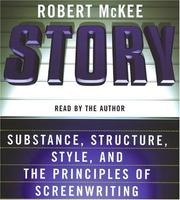
McKee's screenwriting bible is the definitive guide to narrative structure and emotional stakes. Speechwriters who understand story can turn any address into a journey the audience feels, not just hears.
Advanced Delivery, Style & the Professional Craft
ExpertIntegrate everything — rhetoric, structure, story, and style — and master the final mile: how a speech is performed, and how professional speechwriters work with speakers.
▸ Study plan for this stage
Pace: 4–5 weeks, ~25–30 pages/day, with 2–3 days per week dedicated to live speech analysis and practice delivery
- The 'Gallo Framework': how TED speakers structure ideas around a central theme and emotional hook
- Delivery as a core rhetorical tool—vocal variety, pacing, pauses, and body language as meaning-makers
- The power of storytelling in professional contexts: personal narrative, vulnerability, and audience connection
- Visual design principles for slides and stage presence: minimalism, contrast, and intentional movement
- The speaker-speechwriter relationship: how professionals collaborate, iterate, and refine under pressure
- Authenticity and presence: finding your unique voice while serving the message and audience
- The 18-minute constraint as a discipline: how limitations force clarity and impact
- How does Gallo define the relationship between a central theme, emotional resonance, and audience retention in a speech?
- What specific vocal and physical delivery techniques does Gallo highlight as separating memorable speakers from forgettable ones?
- How do TED speakers use personal stories to establish credibility and emotional connection, and what makes these stories effective?
- What role do visuals and stage design play in Gallo's framework, and how do they either enhance or distract from the message?
- How do professional speechwriters and speakers collaborate to refine a talk, and what are the key revision cycles Gallo describes?
- What does Gallo mean by 'authenticity' in the context of professional speaking, and how do speakers balance polish with vulnerability?
- Watch and annotate 3–4 TED talks (from different speakers/topics), identifying Gallo's framework elements: the central theme, emotional hook, story structure, and delivery techniques used
- Record yourself delivering a 5–7 minute talk on a topic you know well, then analyze your vocal variety, pacing, pauses, and body language; re-record with intentional improvements
- Rewrite a section of one of your previous speeches or presentations using Gallo's storytelling principles—add a personal anecdote, vulnerability, or concrete example that illustrates your main point
- Design a minimal, high-contrast slide deck (5–8 slides) for a short talk, following Gallo's visual principles; present it and gather feedback on whether slides enhance or distract
- Conduct a 'speaker interview': ask a colleague or mentor about their speech preparation process, then map their workflow against Gallo's insights on collaboration and iteration
- Deliver a 10–15 minute talk on a topic you're passionate about, deliberately incorporating vocal variety, strategic pauses, and one well-crafted personal story; record and self-assess against Gallo's delivery principles
Next up: This stage equips you to synthesize all prior learning—rhetoric, structure, story, and style—into a cohesive, performance-ready speech, and prepares you to either specialize in speaker coaching, advance to speechwriting for high-stakes contexts (political, corporate, ceremonial), or develop your own signature speaking voice as a thought leader.

Gallo reverse-engineers the world's most-watched talks to reveal the presentation and delivery secrets behind them. At this stage, you're ready to think about how your written words translate into a live performance.
Discussion
Keep reading
Paths that share books, cover the same subject, or open a related topic.