Spanish Literature: Best Books to Read in Order
This curriculum traces the arc of Spanish literature from its medieval and Golden Age roots through the 19th-century novel, the explosive Generation of '98, and the modernist poetry of Lorca, before arriving at the great post-war and contemporary novels. Because the learner starts at an intermediate level, the path begins with the most accessible and celebrated works, building the cultural and literary vocabulary needed to appreciate the denser, more experimental texts that follow. Each stage deepens thematic and stylistic understanding so that later works resonate fully.
The Golden Age: Where It All Begins
IntermediateUnderstand the foundational myths, language, and narrative imagination of Spanish literature through its two supreme Golden Age achievements.
▸ Study plan for this stage
Pace: 8–10 weeks, ~40–50 pages/day (Lazarillo: 2–3 weeks; Don Quixote: 5–7 weeks)
- The picaresque novel as a revolutionary narrative form: how Lazarillo invents the anti-hero protagonist and first-person confessional voice that breaks from chivalric romance
- Social satire and realism: how both works expose corruption, hypocrisy, and the gap between ideals and reality in Spanish society
- The tension between illusion and reality: how Don Quixote's madness becomes a lens for questioning the power of literature and imagination itself
- Language and style as character: how Cervantes and the anonymous author use vernacular speech, irony, and metafictional techniques to create psychological depth
- The decline of chivalric ideals: how these works mark the death of medieval romance and the birth of the modern novel
- Intertextuality and literary consciousness: how Don Quixote explicitly engages with and parodies the books Quixote has read, making literature itself a central theme
- How does Lazarillo's first-person narrative and confessional structure differ from the chivalric romances that preceded it, and why was this innovation significant?
- What is the picaresque tradition, and how does Lazarillo exemplify its key characteristics (social mobility, survival through wit, moral ambiguity)?
- How does Don Quixote's madness function as both a critique of chivalric literature and an exploration of the power of imagination and reading?
- What role does satire play in both works, and what aspects of Spanish society do they target through humor and irony?
- How do Cervantes and the anonymous author use language, dialect, and vernacular speech to develop character and social commentary?
- What is the relationship between illusion and reality in Don Quixote, and how does Cervantes use this tension to comment on the nature of fiction itself?
- Create a character map comparing Lazarillo and Don Quixote as protagonists: list their motivations, moral codes, and how they navigate their respective worlds. What makes each an 'anti-hero'?
- Write a 2–3 page analysis of how the anonymous author uses Lazarillo's voice to expose one specific social institution (the Church, nobility, or poverty). Use direct textual evidence.
- Track the literary allusions in Don Quixote: identify at least 5 books or chivalric romances that Quixote references or has read, and explain how Cervantes uses these to satirize both the books and Quixote himself.
- Perform a close reading of 2–3 key scenes from each work (e.g., Lazarillo's encounter with the blind man; Don Quixote's first sally) and analyze how language, tone, and narrative perspective create meaning and humor.
- Write a dialogue between Lazarillo and Don Quixote in which they discuss their respective approaches to survival and idealism. What would they agree or disagree on?
- Create a visual timeline or infographic showing how the picaresque novel (Lazarillo) evolves into the modern novel (Don Quixote), highlighting key innovations in form, theme, and narrative technique.
Next up: This stage establishes the foundational DNA of Spanish literature—the picaresque form, the critique of idealism, and the self-conscious exploration of fiction—which subsequent stages will build upon, complicate, and transform through Romanticism, Realism, and modernism.
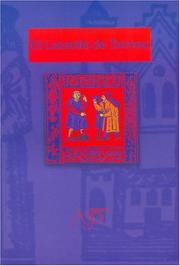
This short, sharp picaresque novel (1554) is the direct ancestor of the Spanish narrative tradition — fast to read, darkly comic, and essential for understanding the social critique that runs through all later Spanish fiction. Its brevity makes it the perfect entry point.
The cornerstone of all Spanish literature and arguably the first modern novel. Reading it after Lazarillo de Tormes lets you see how Cervantes absorbed and transcended the picaresque, inventing irony, metafiction, and the unreliable narrator in one stroke.
The 19th-Century Realist Novel
IntermediateGrasp how Spanish writers used the realist novel to dissect society, religion, and gender in a modernizing but deeply traditional country.
▸ Study plan for this stage
Pace: 8–10 weeks, ~40–50 pages/day. *Fortunata y Jacinta* (~500 pages) over 5–6 weeks; *La Regenta* (~500 pages) over 3–4 weeks, with 1–2 weeks for synthesis and written reflection.
- Social determinism and class mobility: how Galdós uses Fortunata and Jacinta to explore whether individuals can transcend their social origins in 19th-century Madrid
- The realist dissection of marriage and gender: how both novels expose marriage as an economic and social institution that constrains women's agency and identity
- Religion as social control: the role of the Church and religious hypocrisy in maintaining traditional hierarchies in *La Regenta* and the moral ambiguity in *Fortunata y Jacinta*
- Narrative technique and psychological realism: how Galdós and Alas use free indirect discourse, interior monologue, and omniscient narration to reveal characters' inner contradictions
- Adultery and desire as social critique: how infidelity functions as both personal transgression and symptom of systemic injustice in a repressive society
- The modernizing city: Madrid and Vetusta as characters themselves—spaces where tradition and modernity collide, shaping individual destinies
- Gender and economic dependence: how women's lack of legal and financial autonomy drives plot and characterization in both novels
- How do Fortunata and Jacinta's different social origins shape their trajectories, and what does Galdós suggest about the possibility of social mobility through marriage?
- What role does the Church and religious practice play in *La Regenta*, and how does Alas use Ana Ozores's spiritual crisis to critique Spanish society?
- How do both novels use adultery and desire to expose contradictions between public morality and private behavior in 19th-century Spain?
- Compare the narrative techniques in *Fortunata y Jacinta* and *La Regenta*: how do Galdós and Alas use point of view and psychological insight to deepen realist critique?
- What is the relationship between Madrid (in *Fortunata y Jacinta*) and Vetusta (in *La Regenta*) as settings, and how do these cities function as more than mere backdrops?
- How do both novels portray women's economic and legal dependence, and what alternatives—if any—do they suggest for female autonomy?
- Close-read 3–4 key scenes from *Fortunata y Jacinta* (e.g., Fortunata's first encounter with Juanito, the final reconciliation) and annotate for narrative perspective, class markers, and dialogue. Write a 500-word analysis of how Galdós reveals character through indirect means rather than authorial summary.
- Create a detailed social map of the characters in *Fortunata y Jacinta*: plot their class position, wealth, family connections, and moral standing. Then write a 300-word reflection on how Galdós uses this network to show how individual choices are constrained by social structure.
- Track Ana Ozores's spiritual and psychological state across *La Regenta* by selecting 5–6 passages that show her interior conflict. Write a 600-word essay on how Alas uses religious language and imagery to externalize her inner turmoil.
- Compare two scenes of adultery or desire—one from each novel—in a 400-word comparative analysis. Focus on how the narration handles the woman's perspective, shame, and agency.
- Write a character study (500 words) of either Juanito Santa Cruz or Víctor Quintanar, examining how the novel critiques masculine privilege and the male characters' blindness to the women around them.
- Rewrite a key scene from *La Regenta* (e.g., Ana's confession, her final crisis) from a different character's perspective (e.g., Fermín de Pas, Víctor). In 400–500 words, reflect on what this exercise reveals about Alas's narrative choices and his critique of male authority.
Next up: Mastery of how Spanish realist novelists weaponized narrative technique and psychological depth to critique social institutions prepares you to examine how early 20th-century Spanish writers (modernists and the Generation of '98) would either intensify this critique or turn inward toward existential and aesthetic concerns.

Spain's answer to Tolstoy and Dickens, this vast Madrid novel is the peak of Spanish realism. Reading it after Don Quixote shows how the national obsession with illusion versus reality carries forward into a fully modern, socially engaged form.
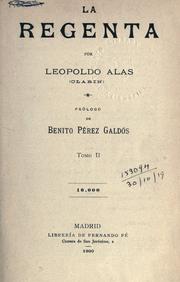
Often called the Spanish Madame Bovary, this novel of provincial suffocation and religious hypocrisy is darker and more psychologically intense than Galdós — the ideal second step to deepen your feel for 19th-century Spanish society and prose.
The Generation of '98: Crisis and Reinvention
IntermediateUnderstand how the trauma of Spain's imperial collapse in 1898 produced a generation of writers who reinvented Spanish prose and philosophy.
▸ Study plan for this stage
Pace: 4–5 weeks, ~40–50 pages/day. Begin with "Mist" (Week 1–2, ~150 pages), then "The Quest" (Week 3–5, ~200 pages). Allocate 2–3 days per book for reflection and note-taking.
- Existential crisis and the 'problem of Spain': how the 1898 defeat shattered national identity and prompted philosophical questioning about existence, meaning, and authenticity
- The dissolution of stable selfhood: Unamuno's exploration of identity as fluid, contradictory, and uncertain (especially through Augusto's psychological unraveling in 'Mist')
- Prose innovation as philosophical method: how both authors abandoned conventional narrative to mirror inner fragmentation and intellectual restlessness
- The tension between action and inaction: Baroja's protagonist in 'The Quest' embodies the Generation's paralysis—the inability to act decisively in a world of collapsed certainties
- Introspection and the interior monologue: the shift from external plot to psychological depth as a way to explore modern consciousness
- Rejection of 19th-century realism: both authors abandoned the omniscient narrator and tidy resolutions in favor of ambiguity and subjective experience
- The search for authentic Spanish identity: both works grapple with what it means to be Spanish after imperial collapse, questioning tradition and modernity
- How does Augusto's psychological journey in 'Mist' reflect the broader existential crisis of the Generation of '98, and what does his final revelation suggest about the nature of identity?
- Compare the narrative techniques in 'Mist' and 'The Quest': how do Unamuno and Baroja use fragmented prose and interior monologue to convey philosophical uncertainty?
- What is the significance of Andrés Hurtado's inability to act or commit to a direction in 'The Quest,' and how does this paralysis embody the Generation's response to Spain's 1898 collapse?
- How do both 'Mist' and 'The Quest' reject the conventions of 19th-century realism, and what philosophical purposes does this rejection serve?
- Discuss the concept of authenticity in both works: what do Unamuno and Baroja suggest about the possibility of finding or maintaining an authentic self or authentic Spanish identity?
- How do the endings of both novels resist closure or resolution, and what does this formal choice communicate about the authors' worldview?
- Create a character map of Augusto's relationships in 'Mist': trace how each encounter (Rosario, Víctor, Liduvina) destabilizes his sense of self, and annotate moments where his identity shifts or contradicts itself.
- Write a 2–3 page analytical response: identify three passages in 'Mist' where Unamuno breaks the fourth wall or addresses the reader directly. What philosophical point is he making by disrupting narrative convention?
- Track Andrés Hurtado's internal contradictions in 'The Quest': create a two-column chart listing his stated desires/values on one side and his actual behaviors on the other. What does the gap reveal about the novel's critique of Spanish society?
- Comparative close reading: select one interior monologue passage from 'Mist' and one from 'The Quest.' Analyze how each author uses syntax, fragmentation, and repetition to convey psychological instability.
- Write a dialogue between Unamuno and Baroja (2–3 pages) in which they discuss their shared concerns about Spanish identity, authenticity, and the role of the writer. Ground it in specific scenes or ideas from both novels.
- Rewrite the ending of either 'Mist' or 'The Quest' in the style of a 19th-century realist novel (Galdós or similar): provide closure, moral clarity, and a resolved plot. Then write a 1-page reflection on what is lost and gained in this revision.
Next up: This stage establishes the philosophical and formal foundations of the Generation of '98—existential crisis, narrative innovation, and the search for authentic identity—preparing you to explore how later Spanish and Latin American writers inherited, challenged, and transformed these concerns in the 20th century.
Unamuno's 'nivola' (his own word for novel) is a philosophical puzzle about free will and existence that consciously echoes Don Quixote — a short, startling book that bridges the 19th century and literary modernism perfectly.

Baroja's lean, unsentimental Madrid trilogy opens here: its spare, modern prose style and existential restlessness were hugely influential on Hemingway and define the Generation of '98's break from ornate realism.
Lorca and the Poetry of the Soul
ExpertExperience the peak of Spanish lyric poetry and drama — the Andalusian imagery, duende, and tragic vision that made Lorca the most internationally celebrated Spanish writer of the 20th century.
▸ Study plan for this stage
Pace: 4–5 weeks, ~25–30 pages/day, with 2–3 days per week dedicated to re-reading passages and reflection
- Duende: the dark, tragic spiritual force that Lorca believed animated authentic art—manifest in the raw emotion and fatalism of Gypsy Ballads
- Andalusian imagery and symbolism: the use of blood, horses, moons, knives, and the natural landscape as vehicles for passion, death, and desire
- The tension between fate and individual will: how characters in Blood Wedding and Yerma are trapped by social convention, desire, and destiny
- Lorca's poetic drama: the fusion of lyric poetry, folk tradition, and theatrical form to create heightened emotional and symbolic intensity
- The feminine tragic protagonist: how Lorca's female characters embody impossible desires and social constraints that lead to spiritual or physical destruction
- Repetition and incantation: the use of recurring images, refrains, and rhythmic language to create hypnotic, ritualistic effects
- The grotesque and the beautiful: Lorca's simultaneous embrace of sensuality, violence, and transcendence in the same image
- What is duende, and how does Lorca manifest it through specific images and scenes in Gypsy Ballads?
- How does Lorca use Andalusian landscape and symbols (blood, horses, the moon, water) to express psychological and spiritual states in both works?
- What role does fate and social constraint play in the tragedies of Blood Wedding and Yerma, and how do the female protagonists respond to their circumstances?
- How does Lorca blend poetic language and dramatic form in Blood Wedding and Yerma to intensify emotional impact?
- What is the relationship between violence, desire, and transcendence in Lorca's work, and how do these themes connect Gypsy Ballads to the two plays?
- How does Lorca's use of repetition, rhythm, and incantation create a ritualistic or dreamlike quality in his poetry and drama?
- Select three ballads from Gypsy Ballads and annotate the recurring symbols (blood, horses, knives, moon, water). Map how each symbol shifts meaning across the poems.
- Read aloud a passage from Blood Wedding or Yerma (at least 2–3 pages) and note where the language becomes most incantatory or rhythmic. Discuss how sound reinforces meaning.
- Write a short character analysis (500–750 words) of either the Bride in Blood Wedding or María Josefa in Yerma, focusing on how social constraint and desire create her tragic trajectory.
- Create a visual mood board or sketch for one ballad from Gypsy Ballads, representing the emotional and symbolic landscape Lorca evokes. Annotate with key images and their meanings.
- Compare a ballad from Gypsy Ballads with a scene from Blood Wedding or Yerma that share similar imagery or emotional tone. Write a 400-word analysis of how the same themes appear across genres.
- Perform or record a dramatic reading of a key monologue or scene from one of the plays, experimenting with pacing, tone, and emphasis to bring out the poetic and emotional layers.
Next up: This stage establishes Lorca as the pinnacle of Spanish lyric and dramatic expression, preparing you to explore how his innovations influenced later 20th-century Spanish and Latin American writers, or to examine how other Spanish authors responded to or diverged from his tragic vision.

The collection that made Lorca famous across the Spanish-speaking world: mythic, musical, and violent. Reading it after Poem of the Deep Song reveals how he transformed folk tradition into high modernist art.
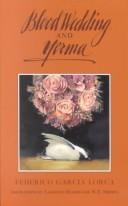
Lorca's greatest tragedy brings his poetic world onto the stage — fate, desire, and death in rural Andalusia. It is the culmination of everything his poetry prepared you for, and one of the essential works of 20th-century world drama.
Modern and Contemporary Novels
ExpertEngage with the great Spanish novels of the post-Civil War era and the late 20th century, seeing how writers processed dictatorship, memory, and identity.
▸ Study plan for this stage
Pace: 6–7 weeks, ~40–50 pages/day. Week 1–2: "The Family of Pascual Duarte" (~300 pages); Week 3–4: "The Shadow of the Wind" (~487 pages); Week 5–7: Review, analysis, and synthesis exercises.
- Narrative voice and unreliability: How Cela's first-person confession and Zafón's nested narratives shape our understanding of truth and memory
- Dictatorship and its aftermath: The Spanish Civil War and Franco regime as historical backdrop and psychological wound in both novels
- Memory as reconstruction: How characters in both works grapple with fragmented, contested, and deliberately obscured pasts
- Identity formation through violence and trauma: Pascual's brutal journey and the Barcelona of secrets in 'The Shadow of the Wind'
- The role of literature and storytelling: How books function as refuge, evidence, and means of survival in both texts
- Existential alienation: The isolation and moral ambiguity of protagonists navigating oppressive or morally compromised worlds
- Temporal structure: How both novels use non-linear time to mirror the disorientation of living under or after dictatorship
- How does Pascual Duarte's confession function as both confession and self-justification? What does Cela suggest about the reliability of first-person narrative?
- What role does the Spanish Civil War play in shaping the moral and psychological landscape of 'The Family of Pascual Duarte'?
- How do the nested narratives in 'The Shadow of the Wind' (Daniel's story, Julián's letters, the Cemetery of Forgotten Books) create layers of meaning about memory and truth?
- Compare how both novels treat violence: Is violence presented as inevitable, justified, or symptomatic of deeper social breakdown?
- What does each novel suggest about the power of literature and books to preserve identity, resist forgetting, or enable escape?
- How do the protagonists (Pascual and Daniel) differ in their responses to the worlds they inherit, and what does this suggest about agency under dictatorship or its shadow?
- Close-read a key confession passage from 'The Family of Pascual Duarte' (e.g., Pascual's account of his mother's death) and annotate for tone shifts, self-deception, and what remains unsaid.
- Create a timeline of events in 'The Family of Pascual Duarte' as Pascual presents them, then research the actual Spanish Civil War chronology (1936–1939) to identify gaps and distortions.
- Write a 2–3 page analysis comparing how each novel uses a protagonist's obsession (Pascual with his family curse; Daniel with Julián Carax) as a lens for exploring larger historical trauma.
- Map the multiple narrative frames in 'The Shadow of the Wind' (who is telling the story, to whom, and when), and explain how each layer complicates our understanding of events.
- Select one scene of violence from each novel and write a comparative analysis of how the author's prose style (Cela's sparse brutality vs. Zafón's gothic lyricism) shapes moral judgment.
- Research the Cemetery of Forgotten Books concept in 'The Shadow of the Wind' and write a reflection on how Zafón uses this metaphor to address historical amnesia and the Franco regime's suppression of memory.
Next up: This stage equips you to recognize how Spanish literature processes dictatorship, trauma, and memory through formal innovation and unreliable narration—skills essential for engaging with even more experimental and politically urgent contemporary Spanish and Latin American works that build on these foundations.
This brutal, Nobel Prize-winning debut (1942) launched 'tremendismo' — a raw, violent realism that was the only honest response to post-Civil War Spain. It is short and devastating, the perfect bridge from Lorca's tragedy to the modern novel.

A love letter to Barcelona, books, and the hidden wounds of the Civil War, this enormously popular novel weaves Gothic mystery with literary history — it rewards every earlier stage of this curriculum by echoing Cervantes, Galdós, and Lorca.
Discussion
Keep reading
Paths that share books, cover the same subject, or open a related topic.