Simon Winchester Reading Order: Where to Start
Winchester writes narrative non-fiction about obsessives — the men who compiled dictionaries, drew the first geological maps, or measured things to a thousandth of an inch. His books vary enormously in scope, from a single biography to the whole Atlantic Ocean, and the best order is not the order he wrote them. Start with the tightest story, widen through the science books, and save the sprawling late works for when you already trust him as a guide.
Start here: the one everybody starts with
BeginnerGet Winchester's method in its purest form — one improbable true story, told at a length it can actually sustain.
▸ Study plan for this stage
Pace: A weekend. The Professor and the Madman is around 240 pages and is the most tightly built thing Winchester has written — most readers finish it in two sittings. Two buying notes before you start. It was published in Britain as The Surgeon of Crowthorne, so check the subtitle before ordering what you
- The reading programme that built the OED — thousands of volunteers posting in quotation slips for individual words, an act of distributed labour with no modern equivalent until crowdsourcing
- William Chester Minor's paradox: the confinement that ruined his life is exactly what gave him the hours, the library and the fixed address the work required
- Winchester's signature structure — open on a scene that appears to be the climax, then spend the book explaining how the pieces arrived there
- The chapter-head epigraph device, each one an OED entry for a word the chapter turns on, which is the neatest formal idea in his whole output
- Murray and Minor as the two halves of the same obsession, one institutional and one pathological, which is the template for almost every later Winchester book
- Where the book is doing history and where it is doing storytelling: the famous first meeting between Murray and Minor is the most-disputed passage in it, and Winchester flags the doubt himself
- Victorian asylum medicine, and how much of Minor's diagnosis is retrospective guesswork
- What specifically about Broadmoor made Minor the most productive contributor the dictionary had?
- How does Winchester withhold the connection between his two men, and how long does he make you wait for it?
- What did the OED's method assume about the English language that a dictionary built by a single lexicographer could not?
- Which parts of this story rest on documents and which on inference? Point to a passage where you can feel the difference.
- Why does the book work at this length when the same material could have been an article or a 500-page history?
- Look up one of the chapter epigraph words in a current dictionary and compare the entry with the OED entry Winchester quotes. The difference in citation practice is the subject of the book in miniature.
- Write down, in one sentence, the shape of the story: who, what obsession, what cost. You will be checking every later Winchester book against that sentence.
- Note every point at which Winchester steps forward as narrator with a personal aside. Some readers find this his charm and some his weakness, and it is worth deciding early which camp you are in.
- Before moving on, find one review that disputes the Murray and Minor meeting scene. Knowing that a Winchester set piece can be too good to be entirely true is the right frame for the rest of the path.
Next up: You now know the shape Winchester keeps building — one monomaniac, one enormous project — which is what the next stage lets you see him do twice more, once at greater length and once in a different discipline.
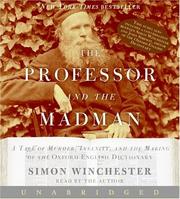
The Oxford English Dictionary's most prolific volunteer contributor was a murderer confined to Broadmoor asylum. It is short, propulsive and perfectly shaped, and it is the book that made Winchester's name. Note that it was published in Britain as The Surgeon of Crowthorne, so do not buy both.
One obsessive and a life's work
BeginnerRead the two books that share the first one's shape — a single person, a monumental project, and the cost of finishing it.
▸ Study plan for this stage
Pace: Three weeks or so for the pair. The Meaning of Everything is short, around 260 pages, and is best read close behind the first book while the OED material is still live; The Map That Changed the World is a similar length but heavier going because the geology needs learning. Read them in this order. I
- The OED as an institutional achievement rather than a personal one: seventy years, several editors, and a first fascicle that got as far as ant before anyone could be sure it would finish
- Why a dictionary on historical principles is a different object from a dictionary of current usage, and why that decision made the project almost unfinishable
- William Smith's insight that strata occur in a fixed order and can be identified by their fossils, which is the founding idea of stratigraphy and the reason geological maps look the way they do
- Deep time as a social problem, not just a scientific one — Smith's map implies an age for the earth that his contemporaries could not accept
- Class as the engine of the Smith story: a canal surveyor without a gentleman's education, robbed by the Geological Society and imprisoned for debt
- Winchester's own geology degree surfacing for the first time, and how much more confident the writing gets when he is on technical ground
- The pattern completed — a monumental work, a man who cannot stop, and an establishment that either absorbs him or destroys him
- Why did the OED take seventy years, and which single editorial decision was most responsible?
- What does The Meaning of Everything add that The Professor and the Madman could only gesture at, and what does it lose by not having Minor at its centre?
- In practical terms, how did Smith know that the same stratum in two distant places was the same stratum?
- How was Smith's work plagiarised, and what did his social position have to do with it going unpunished?
- Both books are about a project that outlives the will of the person doing it. Is Winchester admiring that or diagnosing it?
- Find a reproduction of Smith's 1815 map online and spend ten minutes on it before reading past the first chapter. The book is far more vivid once you have seen the object it is about.
- Keep a short glossary of the stratigraphic terms Winchester introduces — strata, outcrop, unconformity, fossil succession. They recur in Krakatoa and A Crack in the Edge of the World and he does not reintroduce them.
- Compare how the two books handle a technical explanation: one on the OED's slip system, one on strata identification. Winchester is noticeably better at the second, and noticing that tells you where to trust him.
- Write a paragraph on which of the three books so far is the best, and defend it. Most readers pick the first; the interesting question is whether that is because it is best or because it was first.
Next up: You have the geology you need and you have seen Winchester at his most controlled, both of which the next stage puts under pressure by handing him events rather than people.
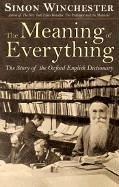
The full story of the OED, written after The Professor and the Madman and covering the seventy years of editorial labour that book could only glance at. Read it second, in that order, or the smaller book loses its surprise.
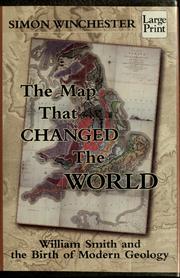
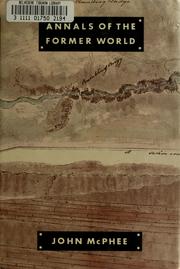
William Smith, a canal surveyor, worked out that rock strata could be mapped and was ruined and imprisoned for his trouble. Same structure as the OED books, but it introduces the geology that dominates the next stage.
When the ground moves
IntermediateSee Winchester handle catastrophe — how he sets a geological event inside its political and human consequences rather than just describing it.
▸ Study plan for this stage
Pace: Four to five weeks. Krakatoa runs to about 400 pages and A Crack in the Edge of the World is similar, and both are noticeably baggier than anything you have read so far — long geological preambles before the event, long consequence chapters after it. Do not fight the digressions; they are what these
- Plate tectonics arriving as the organising theory: both books spend real page count on subduction and transform faults because Winchester wants the events to be consequences, not accidents
- The 1883 eruption as the first global media event, reported by telegraph within hours, which is a genuinely important claim and one of Winchester's better arguments
- Krakatoa's most contested chapter — the case that the eruption and its aftermath fed the rise of a militant Islam in the Dutch East Indies, which specialists have criticised as overreach and which Winchester defends
- Tsunami mechanics and the difference between the eruption's death toll and the wave's, which is the actual horror of 1883
- The San Andreas as a strike-slip boundary rather than a subduction zone, and why San Francisco's shaking behaved as it did
- Fire, insurance and municipal corruption as the real story of 1906 — the earthquake is the first half of the disaster and the city's response is the second
- The road-trip frame of A Crack in the Edge of the World, which readers either enjoy as reportage or resent as padding
- What actually killed most of Krakatoa's victims, and why does the popular memory of the event get this wrong?
- How strong is Winchester's Islam and Krakatoa argument as he presents it, and what would it take to test it?
- Why does he drive the entire plate boundary before arriving in San Francisco, and does the structure earn itself?
- What is the difference between the tectonics of Krakatoa and of San Francisco, and can you explain each without the book in front of you?
- Both books argue that a natural event reshapes a society. Which of the two makes the case better, and what does that tell you about how much event a book like this needs?
- Draw the two tectonic settings — one subduction zone, one transform fault — from memory after finishing each book. If you cannot, reread the relevant chapter, because everything else Winchester writes about the earth assumes them.
- Time yourself on the digressions: note where the narrative leaves the main line and how long it takes to return. This is the measurable difference between early and late Winchester and it will decide how you feel about the next stage.
- Read one specialist review of Krakatoa alongside the book. Learning where a popular historian is stretching is a skill this path is well suited to teaching.
- Follow the 1906 fire on a map of San Francisco. The dynamiting of firebreaks is the part of the story most readers finish the book without having pictured.
Next up: You have now watched Winchester expand from a person to an event, which is the same move he goes on to make again from an event to an entire concept.
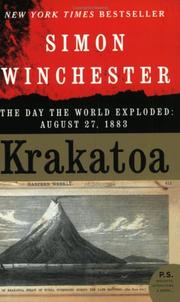
The 1883 eruption, its tsunami, and the argument that it helped radicalise Islam in what became Indonesia. This is Winchester at his most ambitious about consequence, and his geology training shows.
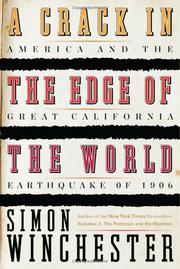
The 1906 San Francisco earthquake, approached via a drive along the whole North American plate boundary. Read it after Krakatoa: it is the same book done on home ground, and the digressions are more forgivable once you know his habits.
The big-canvas late books
IntermediateFollow Winchester as he abandons the single-subject biography for whole-concept histories, and judge where the approach holds and where it thins out.
▸ Study plan for this stage
Pace: Two months, and this is the stage to be selective in. The Perfectionists is around 400 pages and is the strongest of the three; Land and Knowing What We Know are each longer and looser. Read The Perfectionists first regardless of what you do next. If after 100 pages of Land you are checking how much
- Tolerance as an organising spine: The Perfectionists proceeds by shrinking increments of precision, from Wilkinson's cannon-boring in thousandths to the Hubble mirror in nanometres, which gives it a structure the other two lack
- Interchangeable parts as the actual industrial revolution — the argument that precision, not steam, is what made mass manufacture possible
- Land's central move: treating ownership itself as a historical invention, running enclosure, colonial dispossession, cadastral survey and native title as one story
- The recurring criticism of the late books, which is worth holding fairly rather than settling — reviewers have found them digressive and have caught occasional factual slips, while other readers value exactly the associative wandering that produces the complaint
- Knowing What We Know as a history of knowledge transmission from memory palaces to machine learning, and the most goodwill-dependent thing he has written
- The trade-off a concept book makes: the wider the organising idea, the less the individual chapters constrain each other, and the more the book relies on the author being good company
- Winchester's own presence increasing across these books, from narrator to participant
- What is the difference between accuracy and precision as The Perfectionists uses the terms, and why does the distinction matter to manufacturing?
- Which chapter of The Perfectionists is doing the most work for its thesis, and which is there because it is a good story?
- Land covers enclosure, colonisation and restitution. Is it one argument or three subjects under one title?
- Where in these books can you feel the organising idea straining, and does Winchester acknowledge it when it happens?
- Having read both the early and the late work, what exactly changed — the ambition, the research, the editing, or the audience?
- Write down The Perfectionists' thesis in one sentence, then test each chapter against it. Two or three will not fit, and locating them is the most useful exercise in this stage.
- For Land, list the chapters you would cut. The resulting shorter book is a real critical judgement about the concept-book form.
- Read the opening and closing chapters of Knowing What We Know before committing to the middle. If the frame does not hold you, the interior will not either.
- Compare a page of The Professor and the Madman with a page of Land for sentence length and digression rate. The change is measurable and it is the honest basis for any opinion about late Winchester.
Next up: Having seen where the big-concept approach thins out, the last stage goes back to the reporting that underwrites all of it — the working journalist who was collecting this material long before he was a bestselling historian.

A history of precision engineering, from Wilkinson's boring machine to the Hubble mirror, organised by shrinking tolerances. The most successful of his concept books because the organising idea is genuinely load-bearing.

How land came to be owned, surveyed, stolen and restored, spanning enclosure, colonisation and native title. Sprawling by design; read it once you know Winchester well enough to enjoy the wandering.

The transmission of knowledge from memory palaces to machine learning. His loosest book, and the one most dependent on goodwill, which is why it belongs late rather than early.
The travel writer underneath
BeginnerGo back to the reporting that Winchester did before he was famous, and see the foreign correspondent behind the popular historian.
▸ Study plan for this stage
Pace: Six to eight weeks for the three, and this is a stage to savour rather than finish. Take The River at the Center of the World first, then The Man Who Loved China, then Atlantic, which at around 500 pages is the longest book on the path and the right one to end on. Nothing here is a prerequisite for
- Winchester as a working foreign correspondent, which is the biography underneath every book on this path and is only visible here
- The Yangtze journey as an accidental record: he travelled before the Three Gorges Dam filled, so the book preserves towns and gorges that no longer exist
- Joseph Needham as the ultimate Winchester subject — an obsessive, a monumental unfinished project in Science and Civilisation in China, and a life complicated enough that the book cannot fully tidy it
- The question Needham asked, why China invented so much and then did not produce modern science, which is still argued about and which Winchester presents rather than settles
- Atlantic's seven-ages structure, borrowed from Shakespeare, which is either an elegant conceit or a device for holding unrelated chapters together depending on your tolerance
- The ocean as a biography subject, the furthest extension of the concept-book idea, and the one where Winchester's personal crossings do the most work
- How much of the authority in the historical books comes from having actually been in the places — the reason this stage retroactively strengthens the earlier ones
- What does The River at the Center of the World record that could not be written now, and how does knowing that change the reading?
- Needham was a Cambridge biochemist, a Christian, a socialist and a man whose personal life was unusual. How much of that does Winchester include, and what is the effect of the choices he makes?
- Does the Needham question have an answer, and does the book commit to one?
- Is Atlantic held together by its structure or by the author's voice, and would it survive without either?
- Having finished eleven books, which Winchester is the real one — the miniaturist of the first stage or the panoramist of the fourth?
- Read the Yangtze book with a map open. The route is the book's spine and the place names do not stick without it.
- After The Man Who Loved China, look at a contents page of Science and Civilisation in China. The scale of the thing Needham attempted is the part no biography can convey in prose.
- In Atlantic, pick the age you found weakest and articulate why. The book's structure invites exactly this kind of audit and rewards it.
- Rank all eleven books on the path and write two sentences justifying your top and bottom. A career this uneven is best understood by being explicit about the unevenness.
Next up: This is the end of the path. If you want to keep going, the natural next step is not another Winchester but the thing he keeps pointing at — a primary source he worked from, whether that is Smith's map, an OED fascicle, or a volume of Needham — because the pleasure of these books is ultimately borrowed from the objects behind them.

A journey up the Yangtze from Shanghai to its Tibetan source, written before the Three Gorges Dam changed the river permanently. This is his travel writing at full strength and now doubles as a record of something gone.
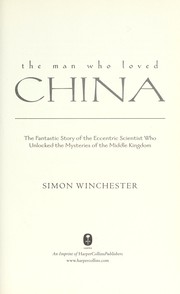
Joseph Needham, the Cambridge biochemist who spent decades documenting Chinese scientific invention. It joins the obsessive-and-his-project template to the China reporting, so it reads best once you have both.
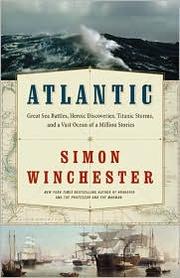
A biography of an ocean, structured on the seven ages of man. The most personal of the big books, drawing on a lifetime of crossings, and a fitting place to stop.
Discussion
Keep reading
Paths that share books, cover the same subject, or open a related topic.