Best Books for Short-Term Rental Investing (in Order)
This curriculum is built for an intermediate learner who already understands basic real estate concepts and wants to systematically master short-term rental (STR) investing — from reading markets and securing financing, through perfecting the guest experience, to running a fully automated, scalable Airbnb business. Each stage sharpens a specific skill set, and the books within each stage are ordered so that foundational vocabulary and mental models are in place before the more tactical or advanced material lands.
STR Business Foundations & Market Analysis
IntermediateUnderstand the short-term rental landscape, learn how to evaluate markets with data, and build a repeatable framework for identifying profitable STR opportunities.
▸ Study plan for this stage
Pace: 4–5 weeks, ~25–30 pages/day, with 2–3 days per week dedicated to market analysis exercises
- The STR market landscape: growth drivers, seasonality patterns, and regional variations in demand and pricing
- Market evaluation frameworks: using data sources (Airbnb, Vrbo, AirDNA, local tourism reports) to assess demand, competition, and pricing power
- Financial fundamentals for STR: revenue projections, expense categories, cash flow modeling, and profitability thresholds
- Property selection criteria: location analysis, property type fit, target guest demographics, and competitive positioning
- Risk assessment and due diligence: identifying market saturation, regulatory headwinds, seasonality risks, and operational challenges
- Building a repeatable opportunity evaluation system: checklists, scoring models, and decision frameworks for comparing markets and properties
- The role of property management and operational efficiency in STR profitability
- What are the primary demand drivers in the STR market, and how do seasonality and regional factors affect pricing and occupancy rates?
- How would you use publicly available data sources to evaluate whether a specific market is oversaturated or has genuine opportunity?
- Walk through the key financial metrics (revenue, expenses, cash flow, ROI) you would calculate when analyzing a potential STR property, and what thresholds indicate a viable investment.
- What property characteristics and location factors should you prioritize when screening potential STR investments, and why?
- What regulatory, competitive, and operational risks should you assess before committing to a market or property, and how would you mitigate them?
- Describe a repeatable framework or checklist you could use to consistently evaluate and compare multiple STR opportunities across different markets.
- Analyze 3 different markets (one in your region, two in growth markets): pull occupancy rates, average daily rates, and competition density from AirDNA or similar tools; document findings in a comparison spreadsheet.
- Create a detailed financial model for a hypothetical STR property in your target market, including revenue projections (based on realistic occupancy/ADR), all expense categories, and 5-year cash flow projections.
- Conduct a competitive analysis: identify 5–8 comparable Airbnb listings in your target market, document their pricing, amenities, reviews, and positioning; identify gaps and opportunities.
- Build a market evaluation checklist or scoring rubric based on Carl's framework; test it by evaluating 2–3 real markets and ranking them by opportunity score.
- Research local regulations, zoning laws, and STR restrictions in your target market; document any compliance requirements, licensing costs, or operational constraints.
- Interview or survey 2–3 STR hosts in your target market about their actual expenses, occupancy rates, and operational challenges; compare their real-world data to your financial models.
Next up: This stage equips you with the analytical tools and frameworks to confidently identify promising markets and properties; the next stage will likely focus on acquisition strategy, property optimization, and scaling your STR portfolio across multiple units or markets.

The definitive starting point for STR investing — Avery Carl lays out her market-selection framework (tourist towns vs. urban markets) and core metrics before any money moves. Reading this first gives you the analytical vocabulary every later book assumes.
Real Estate Financing & Deal Structuring
IntermediateMaster the financing vehicles available to STR investors — from conventional loans and DSCR products to creative strategies — and learn how to run the numbers on a deal before committing capital.
▸ Study plan for this stage
Pace: 6–8 weeks, ~40–50 pages/day (accounting for note-taking and financial calculations)
- Conventional financing vs. DSCR loans: when to use each based on property type, income profile, and investor goals
- Debt Service Coverage Ratio (DSCR) calculation and how it determines loan eligibility and terms for rental properties
- Creative financing strategies: seller financing, private money, partnerships, and joint ventures to minimize down payment requirements
- Underwriting fundamentals: analyzing cap rates, cash-on-cash returns, and net operating income (NOI) to evaluate deal viability
- Leverage mechanics: how to use other people's money (OPM) strategically without overleveraging or destroying cash flow
- Down payment strategies: conventional 20–25%, low-money-down approaches, and no-money-down deal structures
- Loan terms and negotiation: interest rates, amortization periods, prepayment penalties, and how they impact long-term returns
- Deal analysis spreadsheets: building models to compare financing scenarios and project 5–10 year returns before committing capital
- What is DSCR, how is it calculated, and why do lenders use it to qualify short-term rental investors?
- When would you choose a conventional loan over a DSCR loan, and vice versa? What are the trade-offs?
- Explain three creative financing strategies from the books and describe a realistic scenario where each would be advantageous.
- Walk through a complete deal analysis: given a property price, estimated NOI, and financing terms, calculate cash-on-cash return, cap rate, and whether the deal meets your investment criteria.
- How does leverage amplify returns, and what are the risks of over-leveraging in short-term rental investing?
- What is the difference between using other people's money through seller financing, private lenders, and traditional banks? What are the pros and cons of each?
- Build a DSCR calculator in Excel or Google Sheets: input property NOI, loan amount, interest rate, and amortization period; output the DSCR and determine if it meets typical lender thresholds (usually 0.75–1.25 for STR).
- Analyze 3–5 real Airbnb listings in your target market: estimate monthly revenue, subtract operating expenses (cleaning, management, utilities, maintenance reserves), calculate NOI, then run two financing scenarios (conventional 20% down vs. DSCR 25% down) and compare cash-on-cash returns.
- Create a deal comparison matrix for a single property using three different financing strategies (e.g., conventional bank loan, seller financing, private money partnership); calculate total cash required, monthly cash flow, and 5-year equity position for each.
- Interview or research one local private lender or hard money lender: document their typical terms (interest rate, points, loan-to-value ratio, prepayment penalties) and write a 1-page summary of when you'd use them vs. a bank.
- Model a no-money-down or low-money-down deal: identify a property, structure a creative financing arrangement (seller carry-back, partnership, etc.), and document how you'd cover closing costs and reserves without personal capital.
- Run a sensitivity analysis on a deal model: vary the purchase price, NOI, interest rate, and down payment percentage; identify which variables have the biggest impact on cash-on-cash return and cap rate.
Next up: Understanding how to finance deals and run accurate numbers positions you to evaluate properties in your target market with confidence, setting the stage for market selection, property evaluation, and execution strategies in the next stage.

Turner's canonical guide covers financing strategies, deal analysis, and cash-flow math in plain language. Reading it here bridges general rental-property finance to the STR context established in Stage 1.

Follows naturally from Turner's first book by detailing creative financing — seller financing, partnerships, HELOCs, and house-hacking — tactics especially useful for STR investors who want to scale without tying up all their capital.
Listing Optimization, Design & Guest Experience
IntermediateLearn how to furnish and stage a property for maximum guest appeal, write high-converting listings, price dynamically, and earn the reviews that drive organic Airbnb ranking.
▸ Study plan for this stage
Pace: 4–5 weeks, ~25–30 pages/day. Start with "The Airbnb Story" (weeks 1–2, ~200 pages) to build context and design philosophy, then move to "Optimize YOUR Bnb" (weeks 3–5, ~150–180 pages) for tactical optimization techniques.
- Airbnb's design-first philosophy and how it shapes guest expectations for property presentation and user experience
- The psychology of listing photography, staging, and visual storytelling that converts browsers into bookers
- Dynamic pricing strategies and market positioning to maximize revenue while maintaining occupancy rates
- Writing compelling listing descriptions and headlines that highlight unique value propositions and address guest pain points
- The review cycle: how guest experience design directly drives ratings, which feed into Airbnb's ranking algorithm
- Property furnishing and layout optimization to balance aesthetics, functionality, and operational efficiency
- Seasonal and demand-based pricing adjustments and competitor analysis techniques
- Building a repeatable system for continuous listing improvement based on guest feedback and performance data
- How does Airbnb's founding philosophy around design and belonging influence the way you should stage and present your property?
- What are the key elements of a high-converting listing description, and how do you identify and communicate your property's unique value proposition?
- How does the review system function as a ranking signal on Airbnb, and what guest experience factors most directly impact review scores?
- What is dynamic pricing, and how do you use competitor analysis, seasonality, and demand data to set prices that maximize revenue without sacrificing occupancy?
- How should you furnish and stage a property to create an Instagram-worthy experience that guests want to photograph and review positively?
- What metrics should you track to measure listing performance, and how do you use that data to iterate on your listing and property design?
- Photograph and audit your own listing (or a competitor's): identify 5–10 gaps in visual appeal, staging, or clarity, then create a concrete improvement plan with before/after photos.
- Rewrite your listing headline and first 100 words using persuasive copywriting principles; A/B test the new version against your current listing and track click-through rates over 2 weeks.
- Conduct a competitive pricing analysis: identify 10–15 comparable properties in your market, map their pricing over 4 weeks, and build a dynamic pricing model for your property based on seasonality and demand.
- Design a property staging plan: sketch your layout, identify 3–5 high-impact furnishing or decor changes that align with your target guest persona, and implement at least two before the next review cycle.
- Write detailed guest journey narratives for 2–3 different guest personas (e.g., business traveler, family, couples retreat); map pain points and design property features/messaging to address each.
- Review your last 10 guest reviews and code them by theme (cleanliness, communication, amenities, etc.); identify the top 2–3 drivers of 5-star vs. 4-star reviews, then create an action plan to reinforce strengths and fix weaknesses.
Next up: This stage equips you with the tactical skills to attract and delight guests through compelling listings and optimized properties; the next stage will build on this foundation by teaching you how to systematize operations, manage guest communication, and scale multiple properties profitably.

Understanding Airbnb's platform philosophy and how the company thinks about hosts and guests sharpens every design and listing decision you make. Read this first in the stage to frame the guest-centric mindset.

A tactical, step-by-step playbook for photography, listing copy, pricing strategy, and review generation — the practical complement to the platform mindset built in the previous book.
Automation, Systems & Scaling
ExpertBuild the operational infrastructure — SOPs, property management software, virtual teams, and channel management — needed to run multiple STR properties with minimal hands-on time.
▸ Study plan for this stage
Pace: 8–10 weeks, ~40–50 pages/day. Read "The E-Myth Revisited" (weeks 1–3), "Buy It, Rent It, Profit!" (weeks 4–6), then "The 4-Hour Workweek" (weeks 7–10) to move from systems thinking → STR-specific operations → personal delegation frameworks.
- Systems and processes as the foundation of scalable business (E-Myth's core thesis: the business must work without you)
- The importance of documenting SOPs (Standard Operating Procedures) for every repeatable task in STR management
- Hiring and training virtual teams and property managers to handle day-to-day operations remotely
- Channel management and revenue optimization across Airbnb, VRBO, and other platforms (Chavis's multi-channel strategy)
- Automation tools for guest communication, cleaning schedules, maintenance requests, and financial tracking
- Delegation frameworks and identifying which tasks to outsource vs. keep in-house (Ferriss's elimination and automation principles)
- Scaling from 1–2 properties to a portfolio of 5+ properties without proportional increase in your time investment
- What is the core difference between a business that depends on the owner vs. one that runs on systems, and why does this matter for STR investing?
- What are the key SOPs you need to document for a short-term rental property, and how would you train a property manager to execute them?
- How would you structure a virtual team (property manager, cleaner, maintenance person, guest communicator) for a 3–5 property portfolio, and what tools would you use to coordinate them?
- What is a multi-channel distribution strategy for STRs, and how do you optimize pricing and availability across Airbnb, VRBO, and direct bookings?
- How would you automate guest communication, check-in/check-out, and maintenance request handling to reduce your daily workload?
- What metrics should you track to know whether your STR operations are truly scalable and hands-off?
- Document 5–7 core SOPs for your STR (or a hypothetical property): guest communication, cleaning, maintenance requests, check-in/check-out, damage reporting, refund handling, and emergency protocols. Write each as a step-by-step checklist a new hire could follow.
- Set up a property management software stack (e.g., Hostaway, Guesty, or Airbnb's tools) and configure automated messages for pre-arrival, check-in, post-checkout, and review requests.
- Create a hiring and training plan for a virtual property manager: write a job description, list 5 interview questions, and draft a 2-week onboarding checklist.
- Map out your ideal virtual team structure for managing 3 properties: identify roles (property manager, cleaners, maintenance, guest support), responsibilities, and tools for coordination (Slack, Asana, etc.).
- Conduct a time audit: track every task you do for your STR(s) for one week, categorize as 'eliminate,' 'automate,' or 'delegate,' and create a 90-day action plan to reduce your hands-on hours by 50%.
- Design a multi-channel distribution strategy: list your properties on Airbnb, VRBO, and one alternative platform; set up synchronized calendars and pricing rules to avoid overbooking and optimize revenue.
- Build a simple dashboard (Google Sheets or Tableau) to track key metrics: occupancy rate, average daily rate (ADR), revenue per available room (RevPAR), response time, guest satisfaction, and team productivity.
Next up: This stage equips you with the operational backbone—systems, teams, and automation—to scale your STR portfolio efficiently, preparing you to move into financial optimization, tax strategy, and portfolio diversification in the next advanced stage.
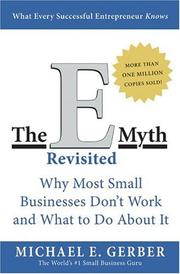
Before automating an Airbnb business, you must think like a systems designer rather than a technician. Gerber's framework for building businesses that run without the owner is the essential mental model for everything that follows in this stage.

Chavis provides a landlord-operations playbook — screening, maintenance systems, vendor management, and scaling — that translates directly to building a professional STR management operation across multiple units.

Ferriss's outsourcing, automation, and elimination frameworks are widely used by STR operators to design remote-managed businesses; read last as the capstone mindset for building a location-independent Airbnb portfolio.
Discussion
Keep reading
Paths that share books, cover the same subject, or open a related topic.