Get started in real estate investing
This four-stage curriculum takes a complete beginner from mindset and vocabulary all the way through deal analysis, financing, and active landlording. Each stage builds directly on the last — you won't be asked to evaluate a cap rate before you know what one is, or manage a tenant before you understand the lease. Expect roughly 10 books total, chosen because they are canonical, widely read, and honest about both the upside and the real risks of rental real estate.
Foundations & Mindset
BeginnerUnderstand why rental real estate builds wealth, how it fits into personal finance, and the basic vocabulary (cash flow, equity, leverage, appreciation) needed for every later stage.
▸ Study plan for this stage
Pace: 4–5 weeks total (~20–25 pages/day). Week 1–2: Read "Rich Dad, Poor Dad" in full (roughly 200 pages); aim for 2–3 sittings of ~30–40 pages. Week 3–5: Read "Set for Life" (roughly 260 pages) at a slightly slower pace to absorb the personal-finance action steps; take notes on every budgeting framework
- Assets vs. Liabilities (Kiyosaki's core distinction): an asset puts money IN your pocket; a liability takes money OUT — your primary residence is a liability, a rental property is an asset.
- The Cashflow Quadrant mindset shift: moving from Employee/Self-Employed thinking toward Business Owner/Investor thinking, and why that shift is prerequisite to real estate success.
- Cash flow: the monthly net income a rental property produces after all expenses (mortgage, taxes, insurance, maintenance, vacancy) — the primary metric of a healthy rental.
- Equity & leverage: equity is the ownership stake you build over time; leverage means using borrowed money (a mortgage) to control a large asset with a small down payment, amplifying both gains and risks.
- Appreciation: the long-term increase in property value, distinguished from cash flow — Kiyosaki warns against betting solely on appreciation ('speculating').
- The wealth-building sequence from 'Set for Life': ruthlessly cut expenses → maximize savings rate → house-hack or invest in low-cost index funds → scale into real estate — each step funds the next.
- House hacking as a beginner's entry point (Trench): living in one unit of a small multi-family property to eliminate or drastically reduce personal housing costs while generating rental income.
- Financial independence math: understanding your 'FI number,' savings rate, and how rental income can replace a W-2 salary — giving context for WHY real estate is a vehicle, not just a hobby.
- In Kiyosaki's framework, why is a personal residence classified as a liability rather than an asset, and how does that change the way you should think about your first property purchase?
- What are the four core wealth-building mechanisms of rental real estate (cash flow, equity pay-down, appreciation, tax benefits), and which does Kiyosaki emphasize most cautiously — and why?
- According to Trench's wealth-building sequence in 'Set for Life,' what must you accomplish with your personal finances BEFORE aggressively pursuing real estate, and what is the recommended first real estate move for someone starting from zero?
- How does leverage amplify returns in real estate — and what specific risks does it introduce that a beginning investor must plan for?
- What is house hacking, how does it reduce the barrier to entry for a first-time real estate investor, and what type of property does Trench recommend for it?
- After reading both books, how would you define 'financial independence' in your own words, and what role does rental real estate play in reaching it faster than a traditional savings-only approach?
- Build your personal 'Asset vs. Liability' balance sheet: list every item you own and every debt you carry, then label each using Kiyosaki's definitions. Identify one liability you could convert into an asset or eliminate within 12 months.
- Run a savings-rate audit using Trench's framework: track every dollar of income and spending for one full month, calculate your current savings rate (savings ÷ gross income), and set a target savings rate that would fund a house-hack down payment within 24–36 months.
- Model a simple rental property on paper: find one real listing in your target market (Zillow, Realtor.com), estimate monthly rent, subtract a realistic mortgage payment (use an online calculator), property tax, insurance, and a 10% vacancy + maintenance reserve — determine whether it cash-flows positively or negatively.
- Define your personal 'FI number': estimate your annual living expenses, multiply by 25 (the 4% rule), and calculate how many rental units — at a conservative $200/month cash flow each — would be needed to cover those expenses without a day job.
- Write a one-page 'Investor Identity Statement' inspired by Kiyosaki's mindset chapters: describe the beliefs about money you grew up with, which ones are limiting, and the specific mindset shifts you are committing to before buying your first property.
- Research house hacking in your local market: find at least two duplex, triplex, or quadplex listings, estimate the rent for the unit(s) you would NOT occupy, and calculate whether that rent would cover most or all of your mortgage payment — document your findings in a simple spreadsheet.
Next up: By internalizing the asset/liability mindset from Kiyosaki and building the savings-rate and house-hacking foundation from Trench, the reader now has the 'why' and the personal-finance runway needed to absorb the analytical and deal-evaluation skills taught in the next stage — where the focus shifts from mindset to mechanics: how to find, analyze, and finance actual properties.

The classic entry point that reframes assets vs. liabilities and explains why cash-flowing real estate is a wealth-building vehicle — read first to get the 'why' before the 'how'.

A grounded, math-honest follow-up that shows how to build the savings rate and financial base needed to fund a first investment property — bridges personal finance directly into real estate investing.
The Investor's Roadmap
BeginnerLearn the full lifecycle of a rental property investment — how to find, evaluate, and close on a deal — and understand the different strategies available to a first-time investor.
▸ Study plan for this stage
Pace: 8–10 weeks total. Week 1–5: Brandon Turner's "The Book on Rental Property Investing" (~25–30 pages/day, ~5 days/week). Week 6–10: Gary Keller's "The Millionaire Real Estate Investor" (~20–25 pages/day, ~5 days/week). Reserve one day per week for review, note consolidation, and exercises.
- The BRRRR mental framework and buy-and-hold philosophy introduced by Turner — understanding why rental properties build long-term wealth through cash flow, appreciation, loan paydown, and tax benefits (the 'four wealth generators')
- Deal analysis fundamentals from Turner: calculating Net Operating Income (NOI), cap rate, cash-on-cash return, and the 50% Rule and 1% Rule as quick screening tools
- Property types and their trade-offs (single-family vs. small multifamily vs. large multifamily) as laid out by Turner, and how a beginner should choose their first asset class
- Finding and evaluating deals: Turner's methods for building a pipeline — MLS, wholesalers, direct mail, driving for dollars — and how to run comparative market analysis (CMA)
- The financing landscape for rental investors: conventional loans, FHA house-hacking, private money, and seller financing, as covered across both books
- Keller's 'Three Models' framework — the Economic Model, the Financial Model, and the Network Model — and how they work together to scale a rental portfolio systematically
- Keller's concept of 'thinking like a millionaire investor': criteria-driven buying, the importance of having written investment criteria before making any offer, and avoiding emotional decisions
- The full deal lifecycle end-to-end: from setting investment criteria and sourcing leads, through due diligence and making offers, to closing, tenant placement, and property management basics
- After reading Turner, can you explain the 'four wealth generators' of rental real estate and give a concrete numerical example of how each one builds net worth over a 10-year hold?
- Using Turner's 50% Rule and 1% Rule, can you quickly screen three real listings in your target market and explain why each does or does not pass the initial filter?
- Can you build a full pro-forma for a hypothetical duplex — including gross rents, vacancy allowance, operating expenses, NOI, mortgage payment, and monthly cash flow — using the framework Turner provides?
- How does Keller's 'Economic Model' define the relationship between leads, listings, sales, and income, and how does a rental investor adapt this model to acquisitions rather than home sales?
- What are Keller's recommended criteria for defining your 'buy box,' and how would you write out your own personal investment criteria based on your local market and financial situation?
- How do the financing strategies discussed by Turner (house-hacking with FHA, the BRRRR method, seller financing) each affect cash-on-cash return differently, and which would be most appropriate for a first deal with limited capital?
- Market Immersion Exercise (Turner): Spend two weeks tracking 10–15 active rental property listings on the MLS or Zillow in a target zip code. Apply the 1% Rule and 50% Rule to each one and log the results in a spreadsheet — note how many pass, how many fail, and what patterns emerge in your market.
- Full Deal Analysis (Turner): Pick one listing that passed your initial screen and build a complete pro-forma from scratch: gross scheduled rent, vacancy (use 8–10%), all operating expense line items, NOI, cap rate, estimated mortgage payment, and final cash-on-cash return. Compare your numbers to Turner's benchmarks.
- Write Your Personal 'Buy Box' (Keller): Using Keller's criteria framework, write a one-page investment criteria document that specifies: target market(s), property type, minimum cash-on-cash return, maximum purchase price, preferred financing method, and non-negotiables. Treat this as a living document you will refine throughout the curriculum.
- Network Mapping Exercise (Keller): Draw out your current real estate network on paper — agents, lenders, contractors, property managers, fellow investors. Identify the three most critical gaps (e.g., no lender contact, no contractor) and make a concrete plan to fill each gap within 30 days (attend a local REIA meeting, reach out on BiggerPockets, etc.).
- Strategy Comparison Matrix: Create a side-by-side comparison table of at least three investing strategies discussed across both books (e.g., straight buy-and-hold, house-hacking, BRRRR). For each strategy, document: required capital, expected timeline to first cash flow, risk level, and scalability. Decide which strategy fits your current situation and write a one-paragraph justification.
- Simulated Offer Walkthrough: Using a real or hypothetical property that passes your buy box criteria, draft a mock Letter of Intent (LOI) or purchase offer, including your proposed price (justified by your pro-forma), earnest money amount, inspection period, and financing contingency. Walk through what due diligence steps you would take between contract and closing, referencing the checklists and
Next up: Mastering the deal lifecycle and investment criteria in this stage gives the reader the analytical foundation and strategic vocabulary needed to tackle more advanced topics — such as creative financing, portfolio scaling, and market-level analysis — that a more intermediate stage of the curriculum will build upon.

The most comprehensive beginner-to-intermediate guide on the market; covers strategy selection, property analysis, and financing in plain language — the single best 'start here' book for rental real estate.
Provides a proven mental model and criteria-based framework for building a portfolio, reinforcing and expanding on Turner's tactical advice with data from hundreds of successful investors.
Deal Analysis & Financing
IntermediateRun the real numbers on a rental property — NOI, cap rate, cash-on-cash return, GRM — and understand every financing tool available to a first-time investor, from conventional loans to creative strategies.
▸ Study plan for this stage
Pace: 8–10 weeks total. Weeks 1–6: Gallinelli's "Cash Flow & 36 Key Financial Measures" (~20–25 pages/day, working through each metric deliberately with a calculator in hand). Weeks 7–10: Turner's "No (and Low) Money Down" (~25–30 pages/day, pausing after each financing strategy chapter to map it to a rea
- Net Operating Income (NOI): calculating gross income minus all operating expenses, excluding debt service — the foundation of every other metric in Gallinelli's framework
- Capitalization Rate (Cap Rate): NOI ÷ Property Value, and how to use it to compare properties and back-calculate value independent of financing
- Cash-on-Cash Return (CoC): annual pre-tax cash flow ÷ total cash invested, the true measure of your equity's productivity as emphasized by Gallinelli
- Gross Rent Multiplier (GRM): a quick-screen valuation tool (Price ÷ Gross Annual Rents) and its limitations vs. deeper DCF analysis
- Debt Service Coverage Ratio (DSCR): NOI ÷ annual debt service, and why lenders use it as a primary underwriting threshold
- Discounted Cash Flow (DCF) & Net Present Value (NPV): Gallinelli's core argument that a dollar today is worth more than a dollar tomorrow, and how to project multi-year returns
- Conventional & FHA Financing: loan-to-value ratios, PMI, owner-occupant vs. investor pricing, and how Turner frames them as the baseline before creative strategies
- Creative Financing Strategies from Turner: house hacking, seller financing, subject-to, lease options, private money, hard money, partnerships, and the BRRRR method — and the specific conditions under which each is appropriate
- Given a property's gross rents, vacancy rate, and itemized operating expenses, can you calculate NOI, Cap Rate, GRM, and Cash-on-Cash Return from scratch — and explain what each number tells you that the others don't?
- How does Gallinelli define 'cash flow' differently from 'profit,' and why does that distinction matter when evaluating a rental property?
- What is the relationship between cap rate and property value, and how would you use a market cap rate to determine whether an asking price is justified?
- According to Turner, what are the key legal, ethical, and financial risks of a 'subject-to' deal, and under what circumstances does it make sense for a first-time investor?
- How does the BRRRR strategy (Buy, Rehab, Rent, Refinance, Repeat) allow an investor to recycle capital, and what metrics from Gallinelli would you use to evaluate each phase?
- If you have limited cash, how would you use Turner's framework to rank your financing options — and what due-diligence steps must you complete before approaching a private money lender or negotiating seller financing?
- Build a Deal Analysis Spreadsheet: Using Gallinelli's formulas, create a reusable spreadsheet that auto-calculates NOI, Cap Rate, GRM, Cash-on-Cash Return, DSCR, and NPV. Input at least three real listings from Zillow or LoopNet and compare the results.
- The '10-Property Quick Screen': Find 10 active rental property listings in a market of your choice. Use GRM and Cap Rate as first-pass filters (as Gallinelli recommends) to eliminate weak deals in under 5 minutes each, then do a full NOI/CoC analysis on the top 2 survivors.
- Financing Strategy Matrix: After finishing Turner's book, create a one-page matrix listing every financing strategy he covers (conventional, FHA, house hack, seller finance, subject-to, lease option, private money, hard money, partnership, BRRRR). For each, note: minimum cash required, credit requirements, best property type, and biggest risk.
- Run a BRRRR Pro Forma: Pick a distressed property (real or hypothetical). Model the full BRRRR cycle — purchase price, rehab budget, ARV, refinance proceeds, and final CoC return on remaining cash — using Gallinelli's metrics at each stage.
- Interview or Shadow a Local Investor: Reach out to a local REIA (Real Estate Investors Association) and ask an active investor how they analyze deals and what financing they used on their first property. Map their answers back to specific concepts from both books.
- Stress-Test a Deal: Take your best deal from the spreadsheet exercise and deliberately break it — raise vacancy to 15%, increase expenses by 20%, raise the interest rate by 2 points. Identify at what point the deal goes cash-flow negative, and write a one-paragraph risk summary as if presenting to a private lender.
Next up: Mastering deal analysis and financing gives you the analytical language and capital toolkit to confidently move into the next stage — finding, evaluating, and negotiating actual acquisitions — because you'll know exactly what numbers a deal must hit before you ever make an offer.
The definitive guide to investment math; teaches every key metric from first principles with worked examples — read this before you make a single offer so you can stress-test any deal.
Follows naturally from the math book by detailing creative financing strategies (house hacking, seller financing, partnerships, FHA loans) that make a first deal accessible even with limited capital.
Landlording, Management & Long-Term Ownership
IntermediateOperate a rental property professionally — screen tenants, write leases, handle maintenance, manage cash flow, and understand the legal and tax landscape — so the investment performs as modeled.
▸ Study plan for this stage
Pace: 10–12 weeks total, ~25–35 pages/day. Week 1–4: "Every Landlord's Legal Guide" (read carefully; flag jurisdiction-specific sections for your state). Week 5–8: "The Book on Managing Rental Properties" (read actively with a notebook open — treat every system as a template to adapt). Week 9–12: "Tax-Fre
- Fair Housing Act compliance — the protected classes, what advertising language is lawful, and how screening criteria must be applied uniformly (Every Landlord's Legal Guide)
- Tenant screening systems — credit, criminal, eviction, and income checks; written criteria set before the first application arrives (Every Landlord's Legal Guide & The Book on Managing Rental Properties)
- Lease construction — essential clauses (rent, late fees, security deposit, maintenance responsibilities, entry notice, lease-break penalties) and what makes a clause unenforceable (Every Landlord's Legal Guide)
- Security deposit law — state-mandated limits, itemization deadlines, and the paper trail required to make deductions stick (Every Landlord's Legal Guide)
- The landlord operations playbook — move-in/move-out inspections, maintenance request workflows, vendor relationships, and rent collection systems (The Book on Managing Rental Properties)
- Tenant relations and conflict de-escalation — communicating professionally, documenting everything in writing, and knowing when to begin the eviction process vs. when to negotiate a cash-for-keys exit (The Book on Managing Rental Properties)
- Depreciation as a wealth-building tool — how cost segregation and accelerated depreciation legally shelter rental income from taxation (Tax-Free Wealth)
- The tax-code-as-incentive mindset — understanding that the tax code rewards real estate investors for behaviors the government wants (housing provision, job creation) and how to structure ownership to maximize those incentives (Tax-Free Wealth)
- After reading Every Landlord's Legal Guide, can you list every step — and the legally required timeline — for returning a security deposit in your specific state, including what documentation you must provide if you make deductions?
- What written tenant-screening criteria would you put in place before advertising your first vacancy, and how does Every Landlord's Legal Guide say those criteria must be applied to avoid a Fair Housing violation?
- Using the systems described in The Book on Managing Rental Properties, walk through your complete move-in process from lease signing to handing over keys — what forms are signed, what photos are taken, and what is communicated in writing?
- How does The Book on Managing Rental Properties recommend handling a tenant who is 10 days late on rent for the first time versus one who is a chronic late-payer — and at what point does the eviction clock start?
- According to Tax-Free Wealth, what is the difference between a tax deduction and a tax credit, and why does Wheelwright argue that depreciation is one of the most powerful tools available to a real estate investor?
- How would you use the concepts in Tax-Free Wealth to structure your rental property ownership (entity type, bookkeeping habits, professional relationships) to legally minimize your tax burden year over year?
- Draft a complete tenant-screening criteria document before you advertise a vacancy — include minimum income ratio, credit score floor, eviction history policy, and criminal background policy. Cross-check every line against the Fair Housing chapter in Every Landlord's Legal Guide to confirm it is legally defensible.
- Using the lease checklist in Every Landlord's Legal Guide, audit a real lease (your own, a template, or one found online for your state) and mark every clause that is missing, weak, or potentially unenforceable. Rewrite the three weakest clauses.
- Build a move-in/move-out inspection form and a photo-documentation checklist inspired by The Book on Managing Rental Properties. Walk through an actual unit (or your own home) using the form to practice the process end-to-end.
- Create a one-page Landlord Operations Manual for a single property: rent collection method and late-fee trigger date, maintenance request intake process, preferred vendors for plumbing/HVAC/electrical, and the communication log format — all drawn from the systems in The Book on Managing Rental Properties.
- Run a depreciation and cash-flow tax model for one real or hypothetical property: calculate annual depreciation (land value excluded, 27.5-year schedule), subtract it from net operating income, and determine the taxable income vs. actual cash flow — applying the framework from Tax-Free Wealth to see how paper losses shelter real income.
- Schedule a 30-minute conversation with a CPA who specializes in real estate and bring a list of questions generated from Tax-Free Wealth: ask about cost segregation feasibility for your property size, entity structuring options, and the real estate professional tax status qualification.
Next up: Mastering operations and tax efficiency transforms a rental property from a speculative asset into a reliable cash-flow engine — the proven track record and financial literacy built here are the exact foundation needed to confidently analyze, finance, and scale into multi-property or commercial portfolios in the next stage.
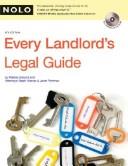
The authoritative plain-English reference on landlord-tenant law, leases, security deposits, and evictions — essential reading before you hand over a single key.

Covers the full operational side — tenant screening, move-in/move-out, maintenance systems, and self-management vs. property managers — turning the theory of ownership into day-to-day practice.

Explains how depreciation, cost segregation, and real estate professional status legally reduce your tax bill — understanding this at the ownership stage ensures you capture the full financial benefit of your investment.
Discussion
Keep reading
Paths that share books, cover the same subject, or open a related topic.