Seamus Heaney Reading Order: Where to Start
Heaney is best read collection by collection in publication order, because his career has a genuine shape: farm ground first, then the bog and the Troubles, then a lightening in middle age, then the luminous late books written in the shadow of his own mortality. Reading a Collected or Selected first flattens all of that into one undifferentiated voice, which is why this path uses the individual books he actually published. The Beowulf translation sits outside the sequence and is worth saving until you can hear how much of his own diction he put into it.
Start With The First Book
BeginnerMeet the young Heaney of farm work, digging and rural County Derry, in the collection that made his name.
▸ Study plan for this stage
Pace: 2 weeks for 57 pages, and that ratio is not a mistake. A poetry collection is not read at prose speed: three or four poems a sitting, each read aloud twice, is the right rate, and a thin book will still take a fortnight. Heaney's early poems are heavily consonantal - they were built to be spoken and
- The 1966 debut that made his name: mud, frogspawn, a father digging, a boy's small terrors, all in County Derry
- Digging as the book's founding metaphor - the pen against the spade, and the son who will not inherit the trade
- Heaney's ear: thick clusters of consonants, Anglo-Saxon rather than Latinate diction, words chosen for weight as much as meaning
- Rural Catholic Northern Ireland of the 1940s and 50s, rendered without nostalgia and with a persistent undertow of fear
- The physical labour of farm work treated as a craft standard against which writing is measured, which stays true for fifty years
- This ground is the reference point for the entire career - the late books return to it deliberately, and the return only registers if you started here
- Published in 1966, two or three years before the Troubles began, which makes it the last book he wrote from an unpolitical position
- What is the argument of the opening poem about the pen and the spade, and is the son's substitution convincing or defensive?
- How does the collection handle fear? Trace where a childhood scene turns frightening and how quickly.
- What kind of words does Heaney choose, and what would be lost if you replaced them with smoother synonyms?
- How is the rural community characterised - as a source of authority, of constraint, or both?
- The book was published just before Northern Ireland went into crisis. Does anything in it anticipate that, or does it read as a world about to be interrupted?
- Read every poem aloud, twice. Heaney's early work is unusually dependent on physical sound and silent reading loses most of it.
- Copy out the first poem by hand. Its line breaks and stanza shape are the argument and transcription forces you to notice them.
- Mark the poems where a child does not understand something the adult narrator now does. That gap is the collection's basic technique.
- Note ten words you had to look up or had never seen in a poem. Heaney's vocabulary is a deliberate claim about what belongs in verse and the list makes it visible.
Next up: You now have the ground - the farm, the diction, the ear - that the next three books will carry into a political situation nobody in this collection can see coming.
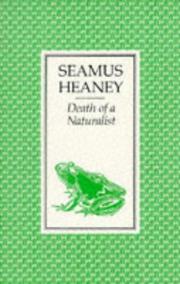
His first collection, and the most immediately accessible: mud, frogspawn, a father digging, a boy's small terrors. Everything later in the career refers back to this ground, so it has to come first.
The Bog Poems
IntermediateFollow the turn from rural memory to the Northern Irish present, and the bog-body poems that made it possible to write about it at all.
▸ Study plan for this stage
Pace: 5-6 weeks for about 210 pages across three collections. The pace stays slow: three or four poems a sitting, aloud, reread. Door into the Dark and Wintering Out can each take two weeks; North needs longer, because it is the most contested book he wrote and the poems are dense. Before starting North,
- The transition from rural memory to the Northern Irish present, which happens across these three books rather than in one
- Door into the Dark stays close to the first book in subject but is darker and more inward - the necessary hinge
- Wintering Out turns to place-names, language and the sectarian geography they encode; a townland name becomes evidence of who was there first
- The bog as preservative and as archive: things go into it and come out unchanged centuries later, which is Heaney's model for historical memory
- North uses Iron Age bodies found preserved in Jutland bogs - sacrificial victims of ritual killing - as a way of looking at contemporary sectarian murder
- The controversy is real and worth engaging: Heaney has been accused of aestheticising violence and of giving atrocity a mythic frame that excuses it
- The counter-argument is that no other available register let a poet write about it at all, and that the book knows its own risk
- Fifty years of argument have not settled it, and reading North without the argument in view is reading half of it
- What is happening in the place-name poems of Wintering Out, and what does a name tell Heaney that a history book would not?
- How does the bog work as a metaphor - what does it preserve, and what does that imply about how the past behaves?
- State the case that North aestheticises violence. Then state Heaney's defence. Which do you find stronger?
- What does the Iron Age framing let him say that a directly contemporary poem could not?
- Where in North does he write about his own position as a poet rather than about the killings? What is he anxious about?
- Read a short account of the Troubles between 1969 and 1975 before opening North. The poems were written into a specific sequence of events and they assume it.
- Look at photographs of the preserved bog bodies Heaney is describing. He is writing about real, viewable objects and the poems change when you have seen them.
- Take one bog poem and write out, in plain prose, what it says about the contemporary killings. Doing this yourself is how you find out whether the objection to the book has force.
- Read Wintering Out and North back to back in a single week if you can. The argument North makes is only fully legible as an escalation of what the previous book set up.
- Keep a note of every poem in which Heaney doubts his own right to the subject. There are more than most readers expect.
Next up: North left Heaney under attack from several directions at once, and the middle books are his response - a deliberate loosening and then a self-interrogation.
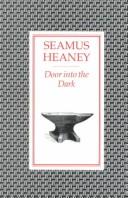
The second collection, still close to the first in subject but darker and more inward. It is the transition book, and reading it in place makes the swerve in the next two feel earned.
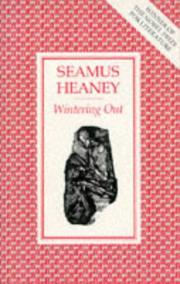
Where place-names, language and sectarian division become the subject, and where the first bog poems appear. It sets up North's argument rather than making it.
His most famous and most contested book: Iron Age sacrificial victims used as a way of looking at the Troubles. It has been argued over for fifty years, and it is much clearer once Wintering Out has prepared the ground.
The Middle Books
IntermediateRead the collections where Heaney examines his own position as a poet under political pressure, and finds a way out of it.
▸ Study plan for this stage
Pace: 5-6 weeks for about 235 pages. Field Work is 61 pages and feels like a release after North - longer lines, more air, and the elegies are among his best poems. Station Island is the longest single collection in the path at 123 pages and the hardest structurally, because its central sequence is a pilg
- Field Work was written after Heaney left Belfast for County Wicklow in the Republic, a move that was itself read politically
- The elegies in Field Work are for real people killed in the Troubles, and they are personal rather than mythic - the opposite of North's method
- Station Island is a Dantean pilgrimage in which dead friends, relatives and writers interrogate the poet about his own choices
- The most self-accusing thing he wrote: a murdered relative accuses him of having 'saccharined' his death in an earlier poem, which is North's critics' charge put into a poem
- The Sweeney material at the end of Station Island offers an alternative self - the exiled, birdlike outsider - as a way out of the representative-poet role
- The Haw Lantern is spare and parable-like, with poems that read as small allegories, plus the great sonnet sequence on his mother
- Across these three books Heaney finds a way to be a political poet without being a spokesman, which is the career's central problem solved
- How do the Field Work elegies handle sectarian killing differently from North, and which approach do you think works better?
- What is the accusation made against the poet in Station Island, and does the sequence let him answer it?
- Why a pilgrimage? What does the borrowed Dantean structure give him that a lyric sequence would not?
- What does the Sweeney figure offer Heaney as an alternative to being a public voice?
- In The Haw Lantern, how do the parable poems relate to the mother sonnets - are they the same book?
- Read the Station Island sequence in order in as few sittings as possible. It is a narrative and reading it a poem an evening dismantles it.
- Identify each speaker in the Station Island sequence before reading commentary. Working out who is talking is most of the poem's design.
- Put a Field Work elegy beside a bog poem and compare how each handles a death. This is the single most useful comparison in the whole path.
- Read the mother sonnets aloud as one continuous poem. They are eight parts of one thing and are usually anthologised apart, which flattens them.
- Write a paragraph on what Heaney decided he owed his readers by the end of Station Island. The late books all proceed from that decision.
Next up: Having settled his account with the public role, Heaney is free to write the lighter, stranger poems of the last two decades - and Seeing Things is where the ground gives way.

Written after leaving Belfast for County Wicklow, and a deliberate loosening after North's density. The elegies here are among his best poems and are a relief after the bog.

A Dantean pilgrimage sequence in which dead friends and writers interrogate him about his own choices. The most self-accusing thing he wrote, and it depends on knowing what North was accused of.
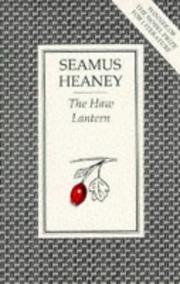
Spare, parable-like poems plus the great sonnet sequence on his mother's death. It marks the move toward the airier late manner.
The Late Radiance
IntermediateRead the four late collections, where the writing gets lighter, stranger and more openly transcendent.
▸ Study plan for this stage
Pace: 7-8 weeks for four collections totalling roughly 300 pages. The same slow, aloud, reread discipline applies throughout, and the late poems in particular reward being read twice in a sitting - they are lighter on the surface and denser underneath. Seeing Things deserves the longest stay of the four.
- Seeing Things is the hinge of the late career: after his father's death the poems literally start to float, and weight gives way to air
- The marvellous is admitted as a subject - visions, apparitions, boats in the sky - after twenty-five years of insisting on the physical
- The Spirit Level, published around his Nobel, balances the new lightness against renewed political weight and reads as a settling
- District and Circle returns to the tools and turf of the first book with fifty years of hindsight, plus a shadow of post-2001 unease - the rhyme with the debut is the whole point
- Human Chain, written after a stroke, is about frailty, inheritance and what gets handed on, and it is the correct final book of the sequence
- The late Heaney is technically freer: looser forms, longer sequences, translations folded in among original poems
- This is where reading in publication order pays off completely - the lightness only reads as achievement if you carried the weight of the earlier books
- What changes in Seeing Things after his father's death, and why does lightness become available at that moment?
- How does The Spirit Level hold political weight and the new lightness in the same book?
- Which poems in District and Circle answer poems in Death of a Naturalist directly, and what has changed in the answer?
- What does Human Chain say about inheritance, and how does the stroke enter the poems without becoming their subject?
- Across four late books, has Heaney become a religious poet, a metaphysical one, or neither?
- Read the title poem of Seeing Things and the opening poem of Death of a Naturalist on the same day. Twenty-five years apart, they are about the same father.
- Find every poem in District and Circle that names a tool. Then find the corresponding tools in the first collection. The correspondence is deliberate and dense.
- Read Human Chain in a single week and then leave it alone for a month. It is a last book and it does not want to be studied immediately.
- Pick the five poems from these four collections you would put in a selected Heaney. Doing it yourself is the point - the published selections all disagree.
- Note where the late poems get their light: literal light appears constantly in these books and tracking it maps the whole late manner.
Next up: With the collections finished you can hear his voice clearly enough to recognise it inside a translation, which is exactly what the last stage asks you to do.
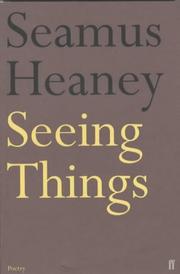
The hinge of the late career: after his father's death the poems literally start to float. If any single Heaney book rewards having read the earlier ones, it is this one.
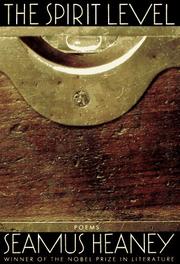
The collection published around his Nobel, balancing the new lightness against renewed political weight. It reads as a settling after Seeing Things.
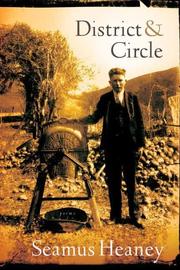
Late poems that return to the tools and turf of the first book with fifty years of hindsight, plus a shadow of post-2001 unease. The rhyme with Death of a Naturalist is the whole point.
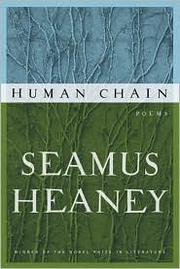
His last collection, written after a stroke, and unbearably good on frailty and inheritance. The correct final book of the sequence.
Beyond The Collections
IntermediateRead the translation and the prose that stand outside the sequence of collections.
▸ Study plan for this stage
Pace: 4-5 weeks for about 480 pages (Beowulf 256, Preoccupations 224). Beowulf is a narrative poem and reads far faster than a collection - twenty or thirty pages a sitting works, and reading long stretches aloud is worth the effort, since it was composed for the ear. Preoccupations is prose and can be re
- Heaney's Beowulf became an unlikely bestseller and is a genuine Heaney poem as much as a translation
- The Ulster idiom in it is unmistakable once you know the collections - the diction is the same thick consonantal English he built in the 1960s
- Old English alliterative verse and Heaney's ear were an unusually good match, which is the technical reason the translation works
- Placing it last is deliberate: the pleasure of the book is hearing how much of his own voice he put into someone else's poem
- Preoccupations collects his prose from the first decade, including the essays on his own beginnings and on the bog poems
- Heaney explaining his own method is the best available gloss on the early and middle books, and it is far more useful after them than before
- His essays on other poets double as a statement of what he thought a poet owed a community under pressure
- Where in Beowulf can you hear Heaney rather than the Old English? Find three specific word choices.
- What does his introduction claim about the translation's diction, and does the poem bear it out?
- In Preoccupations, how does Heaney account for the bog poems, and is his account a defence?
- What does he say a poet owes a community in crisis, and does the career you have just read match the statement?
- Having read everything, which single collection would you now give to someone starting Heaney - and is it still the first one?
- Read the opening lines of Beowulf aloud, then read a stanza from Death of a Naturalist aloud. The continuity of the ear across thirty-four years is audible in about a minute.
- Compare a passage of Heaney's Beowulf with another available translation of the same lines. It is the clearest demonstration in the whole path of how much a translator supplies.
- Read the Preoccupations essays on his own early work immediately after rereading North. The self-account and the poems argue with each other.
- Write a one-page account of the shape of Heaney's career. Anyone who has read the collections in order can write one that no anthology introduction will give them.
Next up: The path ends here, and the natural next step is the other Northern Irish poets Heaney was read against - or a second, slower pass through North with fifty years of argument in view.
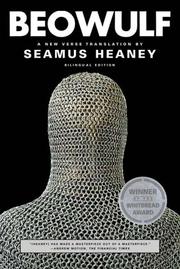
The translation that became a bestseller, and a genuine Heaney poem in its own right — the Ulster idiom in it is unmistakable once you know the collections. That is exactly why it comes last.
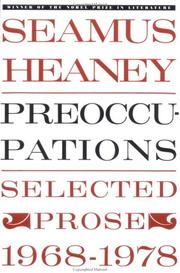
Selected prose from his first decade, including the essays on his own beginnings and on the bog poems. The best gloss on the early and middle books, and best read after them.
Discussion
Keep reading
Paths that share books, cover the same subject, or open a related topic.