Become a real estate agent: the best books to start and sell
This curriculum takes a beginner from zero real estate knowledge to a confident, business-savvy agent across four progressive stages. It starts with mindset and industry fundamentals, moves through licensing and transactional mechanics, then builds advanced skills in lead generation and negotiation, and finally focuses on building a sustainable, referral-driven business.
Foundations: Mindset & Industry Basics
BeginnerUnderstand how the real estate industry works, what agents actually do day-to-day, and develop the entrepreneurial mindset needed to succeed before investing in a license.
▸ Study plan for this stage
Pace: 6–8 weeks, ~40–50 pages/day (accounting for note-taking and reflection)
- The real estate agent's role: transaction facilitator, market expert, and trusted advisor—not just a salesperson
- Day-to-day activities: lead generation, client meetings, showings, negotiations, paperwork, and continuous learning
- The business model: commission-based income, irregular cash flow, and the need for financial discipline and reserves
- Entrepreneurial mindset: self-discipline, accountability, resilience, and treating real estate as a business, not a job
- Systems and processes: why successful agents build repeatable systems for lead generation, client management, and transactions
- The importance of specialization and niche selection: focusing on a specific market, price range, or property type for efficiency
- Time management and leverage: how to scale your business through delegation, technology, and strategic focus
- Mindset shifts: moving from scarcity thinking to abundance, from activity to results, and from independence to building a team
- What are the primary daily responsibilities of a real estate agent, and how do they differ from what you might have assumed before reading?
- Why is the first year in real estate particularly challenging, and what are the most common mistakes new agents make according to Zeller?
- Explain the business model of real estate: how do agents earn money, and why is financial planning critical in the first year?
- What is the 'millionaire real estate agent' philosophy, and how does it differ from the typical approach most agents take?
- How do systems and processes contribute to scaling a real estate business, and what are examples from Keller's framework?
- What mindset shifts are necessary to transition from thinking like an employee to thinking like an entrepreneur in real estate?
- Shadow a local real estate agent for a full day (or interview one for 1–2 hours) and document their actual activities, time allocation, and challenges—compare your findings to what Zeller describes
- Create a personal financial plan for your first year in real estate: project income conservatively, list essential expenses, and calculate how many months of living expenses you need in reserves
- Map out your ideal client profile and niche market (e.g., first-time homebuyers in a specific neighborhood, luxury properties, investment properties) and explain why this focus aligns with Keller's specialization principle
- Design a simple lead generation system for yourself: choose 2–3 methods (e.g., sphere of influence, online marketing, door knocking) and outline how you would execute them weekly
- Write a personal mission statement and business vision for your real estate career that reflects the entrepreneurial mindset discussed in both books—revisit this quarterly
- Analyze a successful local agent's business: research their specialization, marketing approach, and online presence, then identify which Keller principles they appear to be using
Next up: This stage equips you with realistic expectations about the industry and the entrepreneurial foundation needed to succeed; the next stage will likely focus on acquiring your real estate license and mastering the legal, regulatory, and technical skills required to operate as a licensed agent.
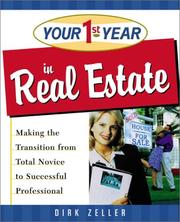
The ideal starting point for a complete beginner — it demystifies the agent career, explains how commissions, brokerages, and client relationships work, and sets realistic expectations for the first 12 months.
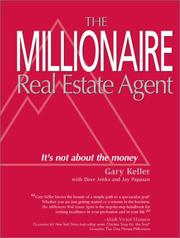
Read second to absorb the big-picture economic model of a real estate business; it gives beginners a mental framework (leads → listings → leverage) that makes every later book more meaningful.
Getting Licensed & Understanding Transactions
BeginnerPass the licensing exam with confidence and understand the full anatomy of a real estate transaction — contracts, disclosures, financing, and closing.
▸ Study plan for this stage
Pace: 6–8 weeks, ~40–50 pages/day. Start with "Real Estate License Exams for Dummies" (weeks 1–4, covering exam fundamentals, law, and practice tests), then transition to "The Real Estate Agent's Guide to FSBOs" (weeks 5–8, applying transaction knowledge to for-sale-by-owner scenarios).
- Real estate licensing exam structure, content domains, and test-taking strategies from Yoegel's framework
- Property law fundamentals: ownership, rights, liens, easements, and title issues covered in licensing material
- Contract essentials: offer, acceptance, contingencies, and standard clauses in residential transactions
- Disclosure requirements and fiduciary duties agents must understand before licensing
- Financing basics: mortgages, loan types, and how financing affects transaction timelines and contingencies
- The closing process: escrow, title insurance, prorations, and final settlement procedures
- FSBO-specific dynamics: working with unrepresented sellers, managing expectations, and navigating without broker support
- Transaction anatomy: how all components (contracts, disclosures, financing, closing) interconnect in real deals
- What are the main domains tested on your state's real estate licensing exam, and what study strategies does Yoegel recommend for each?
- Explain the difference between actual authority, apparent authority, and implied authority in a real estate agent's fiduciary relationship with clients.
- Walk through a complete residential transaction from offer to closing, identifying where contracts, disclosures, financing contingencies, and title issues arise.
- What are the key disclosure requirements an agent must understand before licensing, and what happens if disclosures are omitted or falsified?
- How do mortgage contingencies, inspection contingencies, and appraisal contingencies protect buyers, and why must agents understand their mechanics?
- What unique challenges arise when representing a buyer or seller in a FSBO transaction, and how do you manage those without broker infrastructure?
- Take all practice exams in 'Real Estate License Exams for Dummies' under timed conditions (simulate actual test environment); review every wrong answer and note patterns in weak areas.
- Create a transaction timeline flowchart: map out a hypothetical residential purchase from initial offer through closing, marking where each contract, disclosure, and financing milestone occurs.
- Draft a sample purchase agreement using your state's standard form, filling in all contingencies, earnest money, and closing date details; compare against Yoegel's contract guidance.
- Write a disclosure checklist for a residential property (property condition, lead-based paint, HOA, etc.) based on your state's requirements; cross-reference with Yoegel's disclosure sections.
- Role-play a FSBO negotiation scenario using Maloof's framework: practice explaining financing contingencies, inspection timelines, and closing procedures to an unrepresented seller.
- Analyze a real closing statement (HUD-1 or Closing Disclosure): identify all line items, prorations, and title insurance charges; trace them back to the original contract and financing terms.
Next up: This stage equips you with exam-ready licensing knowledge and a working understanding of transaction mechanics, preparing you to move into the next stage—likely focused on client acquisition, marketing, and negotiation—with confidence that you understand the legal and procedural backbone of every deal you'll handle.

A plain-language, nationally recognized exam-prep guide that covers the key legal, financial, and ethical concepts tested on licensing exams in every state.
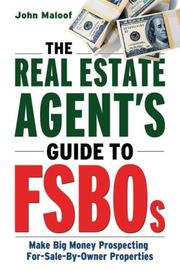
Bridges the gap between exam knowledge and real transactions by walking through how deals are structured and how agents add value at each step of the process.
Lead Generation & Prospecting
IntermediateBuild a reliable, repeatable system for finding buyers and sellers, mastering both digital and relationship-based prospecting methods.
▸ Study plan for this stage
Pace: 4–5 weeks, ~25–30 pages/day. Week 1: Keller (tough times mindset & systems). Week 2–3: Lesniak (hyperlocal strategies & digital prospecting). Week 4: Jones (scripting & language). Week 5: Integration & practice.
- Building a resilient prospecting mindset during market downturns (Keller's counter-cyclical approach)
- Creating hyperlocal market dominance through geographic farming and deep community positioning (Lesniak's core framework)
- Mastering digital lead generation channels: social media, email, and online advertising (Lesniak's digital toolkit)
- Using precise, psychology-backed language to overcome objections and convert prospects (Jones's exact-words methodology)
- Developing repeatable scripts and conversation frameworks for consistent prospecting conversations
- Integrating relationship-based prospecting with systematic follow-up and CRM discipline
- Understanding the psychology of buyer and seller pain points to craft compelling messaging
- What is Gary Keller's counter-cyclical prospecting strategy, and why does he advocate prospecting harder during market downturns?
- How does Daniel Lesniak define 'hyperlocal' market dominance, and what are the three core pillars of his prospecting system?
- What are the main digital lead generation channels Lesniak covers, and how do you prioritize them for your market?
- According to Phil Jones, why does the exact wording of your prospecting message matter more than the effort you put in?
- What is the difference between relationship-based and system-based prospecting, and how do you combine them?
- How do you use objection-handling language (Jones) to move a prospect from 'no' to 'maybe' in a prospecting conversation?
- Read Keller's tough-times case studies and identify 3 counter-cyclical prospecting tactics you'll implement immediately; document your 'recession playbook.'
- Map your local market using Lesniak's hyperlocal framework: define your farm area, identify 5 key community touchpoints, and create a 30-day geographic farming plan.
- Audit your current digital presence (social media, email, website) against Lesniak's digital lead generation checklist; identify 2–3 quick wins to implement this week.
- Record yourself doing 5 prospecting calls using Jones's exact-words scripts; listen back and identify where you deviate, then re-record with precision.
- Create a 'prospecting conversation playbook' combining Lesniak's hyperlocal angles with Jones's exact language for 3 scenarios: cold call, social media DM, and referral follow-up.
- Run a 2-week prospecting sprint using one Lesniak digital channel + one relationship-based method; track conversations, objections, and conversions to measure system effectiveness.
Next up: Mastering lead generation and prospecting systems positions you to move into the next stage—converting those leads into signed contracts—by ensuring you have a consistent, qualified pipeline of motivated buyers and sellers ready for your sales process.
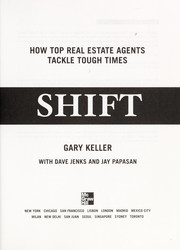
Focuses intensely on lead generation tactics and cost-per-lead thinking; reading it after the foundations stage means you can immediately apply its 12 tactics to a real pipeline.

A modern, data-driven playbook for dominating a geographic farm area using both digital marketing and community presence — a natural next step after learning classic prospecting.

Provides word-for-word scripts and conversational frameworks for turning cold leads into warm conversations, making it the perfect companion to any prospecting strategy.
Negotiation, Closing & Building a Referral Business
ExpertMaster the art of closing deals through principled negotiation, and transition from chasing leads to building a self-sustaining business driven by repeat clients and referrals.
▸ Study plan for this stage
Pace: 8–10 weeks, ~25–30 pages/day. Week 1–4: "Never Split the Difference" (approximately 360 pages); Week 5–10: "The Referral of a Lifetime" (approximately 250 pages), with 1–2 weeks overlap for integration exercises.
- Tactical empathy and active listening as tools to understand the other party's true interests and constraints in negotiations
- The power of 'no' and how to reframe negotiations to get genuine 'yes' commitments rather than forced agreements
- Mirroring, labeling emotions, and summarizing to build rapport and uncover hidden objections in deal conversations
- The difference between transactional deals and relationship-based business; why repeat clients and referrals are more profitable than constant lead chasing
- Creating a referral-generating system by delivering exceptional service, asking strategically, and making referrals easy for past clients
- Building trust and positioning yourself as a trusted advisor rather than a salesperson to attract organic referrals
- The economics of referral-based business: lower acquisition costs, higher lifetime value, and sustainable growth
- How does tactical empathy differ from traditional negotiation tactics, and why is it more effective in real estate deals?
- What are the key techniques from 'Never Split the Difference' (mirroring, labeling, summarizing) and how would you apply each to overcome a buyer's objection about price?
- Why does saying 'no' sometimes lead to better outcomes than pushing for 'yes,' and how does this apply to negotiating with sellers or buyers?
- What is the core difference between a transactional real estate business and a referral-based one, and what are the long-term advantages of the latter?
- Describe the step-by-step process for building a referral system according to 'The Referral of a Lifetime.' What are the critical moments to ask for referrals?
- How do you position yourself as a trusted advisor rather than a salesperson, and why does this positioning generate more referrals?
- Record yourself in a mock negotiation (with a colleague or mentor) using mirroring and labeling techniques from Voss. Listen back and identify moments where you genuinely understood the other party's emotional state.
- Conduct three real client conversations (closing calls, objection handling, or listing presentations) where you intentionally use tactical empathy. Document what you learned about their true concerns versus stated objections.
- Create a written 'referral system playbook' for your business: define your ideal referral source, the exact moments you'll ask for referrals, your referral request script, and how you'll make it easy for clients to refer.
- Practice the 'no' technique: role-play a scenario where a seller resists your listing strategy or a buyer pushes back on price. Use Voss's approach to reframe and find the real constraint.
- Audit your current client relationships: identify 5–10 past clients and assess whether you've positioned yourself as a trusted advisor or just a transactional agent. Plan outreach to shift the relationship.
- Design a 'client appreciation and referral generation' campaign: outline how you'll stay in touch with past clients, deliver unexpected value, and create natural opportunities for referrals without being pushy.
Next up: This stage transforms you from a deal-closer into a business builder, establishing the foundation for sustainable, scalable growth through relationships—preparing you for the next stage, which will likely focus on systems, leverage, and scaling your referral-based business to reach six or seven figures without burning out.
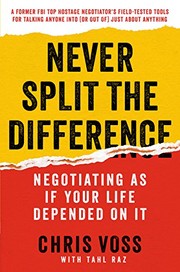
Written by a former FBI hostage negotiator, this is the most practical and widely respected negotiation book available — its tactics translate directly to offer negotiations and listing presentations.

Teaches a systematic, relationship-first approach to generating a steady stream of referrals, which is the hallmark of a mature, sustainable agent business and the natural capstone of this curriculum.
Discussion
Keep reading
Paths that share books, cover the same subject, or open a related topic.