Starting a small business: the best books to launch and survive year one
This curriculum takes a first-time entrepreneur from raw idea to a running, financially healthy small business. The four stages build deliberately: you first learn to think like an entrepreneur and stress-test your idea cheaply, then write a focused plan and understand your numbers, then attract and keep customers, and finally develop the resilience and operational habits needed to survive and grow through year one and beyond.
Foundations: Mindset & Idea Validation
BeginnerDevelop an entrepreneurial mindset, learn how to test a business idea before spending money, and understand the lean startup loop of build–measure–learn.
▸ Study plan for this stage
Pace: 4–5 weeks, ~25–30 pages/day (approximately 10–12 days per book with review time)
- The entrepreneurial mindset: moving from technician to entrepreneur by building systems and delegating rather than doing everything yourself
- The E-myth: understanding why most small businesses fail because they are built around the owner's personal skills rather than scalable systems
- The build–measure–learn feedback loop: testing assumptions quickly with minimal resources before committing capital
- Validated learning: using real customer data and experiments to validate or invalidate business hypotheses
- Minimum Viable Product (MVP): creating the simplest version of your product to test core assumptions with real users
- Actionable metrics vs. vanity metrics: focusing on metrics that directly inform business decisions
- Lean experimentation: running low-cost, rapid tests to discover what customers actually want
- Business model simplicity: starting with a clear, testable value proposition and revenue model before scaling
- What is the E-myth, and why do most small business owners fall into the trap Gerber describes?
- How does the build–measure–learn loop work, and why is speed of iteration critical in validating a business idea?
- What is the difference between validated learning and vanity metrics, and why does Ries emphasize this distinction?
- What is a Minimum Viable Product (MVP), and how does Guillebeau's $100 startup approach align with the MVP concept?
- How can you test a business idea with minimal financial investment, and what are the key assumptions you should validate first?
- What systems and processes should an entrepreneur build into their business from the start to avoid becoming a technician trapped in their own business?
- Document your business idea and list 5–10 core assumptions (e.g., 'customers will pay $X for this', 'target market is Y'). Rank them by risk and importance.
- Design a simple MVP for your business idea: describe the absolute minimum feature set needed to test your riskiest assumption with real customers.
- Conduct 5–10 customer interviews or surveys using Guillebeau's low-cost methods (email, social media, in-person conversations) to validate or challenge your assumptions.
- Run a 'fake door' or landing page test: create a simple one-page description of your product and measure genuine interest (email signups, pre-orders, or survey responses) without building anything.
- Create a one-page business model canvas or lean startup plan that clearly states your value proposition, target customer, revenue model, and key metrics you'll measure.
- Document one complete build–measure–learn cycle: build a small test, measure results with real data, and describe what you learned and how you'll iterate next.
Next up: This stage equips you with the mindset and validation tools to move forward with confidence, preparing you to dive into the operational and strategic details of building, marketing, and scaling your business in the next stage.
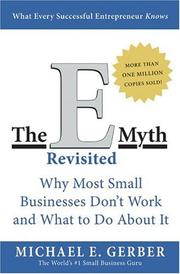
Shatters the most dangerous beginner myth — that being good at a craft means you can run a business around it. Reading this first reframes how you think about owning vs. working in a business before any planning begins.
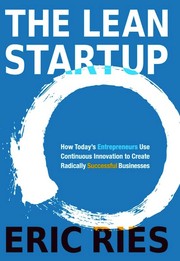
Introduces the validated-learning framework and the concept of the Minimum Viable Product, giving you a rigorous, low-cost method to test whether your idea has real demand before committing resources.
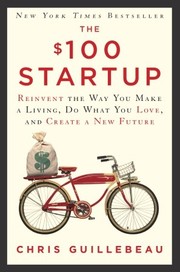
Grounds the lean philosophy in concrete, real-world micro-business case studies, showing beginners exactly how ordinary people launched profitable ventures with minimal capital — a confidence-building bridge from theory to action.
Planning: Strategy, Structure & Finances
BeginnerWrite a practical, actionable business plan, choose the right legal and financial structure, and build enough financial literacy to manage cash flow and avoid early failure.
▸ Study plan for this stage
Pace: 6–8 weeks, ~25–30 pages/day (with 2–3 days per week for exercises and planning work)
- A business plan is a practical roadmap, not a lengthy document—it should articulate your value proposition, target market, revenue model, and competitive advantage in clear, actionable terms
- Profit First methodology: prioritize profit as a business owner by setting aside money upfront before paying expenses, using separate accounts to enforce financial discipline
- Cash flow management is critical to survival—understanding the difference between profit and cash, managing receivables/payables, and maintaining adequate reserves prevents business failure
- Legal structure (sole proprietorship, LLC, S-corp, C-corp) has major implications for personal liability, taxes, and operational complexity—choose based on your risk profile and growth plans
- Financial literacy fundamentals: reading income statements and balance sheets, understanding tax obligations, managing business banking, and knowing when to hire professional help
- Compliance and risk management: contracts, intellectual property, employment law, and insurance protect your business and personal assets from common legal pitfalls
- What are the core components of a business plan, and why does Rhonda Abrams emphasize simplicity and actionability over length?
- How does the Profit First system work, and what is the key insight about separating profit from operating expenses?
- What is the difference between profit and cash flow, and why do many small businesses fail despite being profitable on paper?
- What are the main legal structures for a small business, and what are the liability, tax, and operational trade-offs of each?
- What financial documents should you monitor regularly, and what do they tell you about your business health?
- What are the most critical legal protections and compliance steps a new business owner must take to avoid costly mistakes?
- Draft a one-page business plan for your business idea using Abrams' framework: problem/opportunity, solution, target customer, revenue model, and competitive advantage
- Set up a Profit First account structure (Owner's Pay, Profit, Tax, Operating Expenses) and allocate percentages based on your projected revenue
- Create a 12-month cash flow projection showing monthly revenue, expenses, receivables, and payables to identify cash crunches
- Compare two legal structures (e.g., sole proprietorship vs. LLC) for your business and document the liability, tax, and compliance implications of each
- Build a simple income statement and balance sheet for a hypothetical first year of operation, then interpret what the numbers tell you
- Review a sample business contract (service agreement, vendor agreement, or terms of service) and identify key clauses that protect your business
- Interview a small business owner or accountant about their cash flow challenges and how they solved them—document lessons learned
Next up: This stage equips you with a written business plan, a financial management system, and legal/structural foundations—preparing you to move into execution and growth stages where you'll learn to market, sell, and scale your operations.
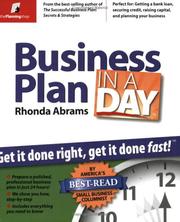
Provides a step-by-step, template-driven approach to writing a lean, investor-ready business plan — the natural next step after validating your idea, turning your concept into a structured document.
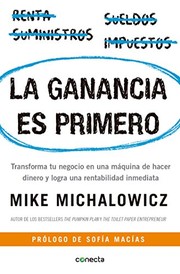
Replaces the intimidating accounting mindset with a simple cash-management system purpose-built for small business owners, ensuring you pay yourself and stay solvent from day one.
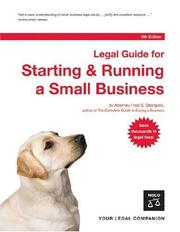
Covers entity choice, contracts, licenses, and liability in plain English — essential reading alongside financial planning so legal and structural decisions are made correctly before launch, not corrected expensively afterward.
Marketing & Sales: Finding and Keeping Customers
IntermediateBuild a repeatable system for attracting your ideal customers, communicating your value clearly, and converting interest into revenue.
▸ Study plan for this stage
Pace: 8–10 weeks, ~40–50 pages/day (mix of reading and note-taking)
- Marketing as a system for finding and serving your ideal customer (not manipulation or mass broadcasting)
- The importance of identifying your smallest viable audience and serving them deeply before scaling
- Creating a repeatable marketing system that integrates all channels and touchpoints (Duct Tape approach)
- The power of narrative: positioning your customer as the hero and your business as the guide
- Value communication through clarity, consistency, and emotional resonance across all marketing materials
- Converting interest into revenue through strategic positioning, trust-building, and clear calls-to-action
- Permission-based marketing and building lasting customer relationships rather than one-time transactions
- Testing, measuring, and refining your marketing approach based on what actually works
- How does Seth Godin define marketing, and how does this differ from traditional advertising?
- What is your smallest viable audience, and why does serving them deeply matter more than reaching everyone?
- How do you map out a complete marketing system that connects all your customer touchpoints (from awareness to loyalty)?
- What is the StoryBrand framework, and how do you position your customer as the hero and your business as the guide?
- How do you communicate your unique value proposition clearly and consistently across all marketing channels?
- What specific strategies convert interested prospects into paying customers, and how do you measure success?
- Define your smallest viable audience: Write a detailed profile of your ideal customer (demographics, pain points, aspirations, where they gather) based on Godin's concept of finding people who care.
- Create a marketing system map: Document all touchpoints where your customer interacts with your business (website, email, social media, sales calls, etc.) and identify gaps or disconnects using Jantsch's framework.
- Audit your current messaging: Collect all your marketing materials (website copy, social posts, email templates, sales pitch) and evaluate whether they clearly communicate value or rely on jargon and assumptions.
- Build your StoryBrand framework: Write out your one-sentence positioning statement, identify the customer's problem, clarify how you guide them to success, and define the stakes of not working with you.
- Develop a 90-day marketing action plan: Choose 3–4 high-impact marketing activities (e.g., email nurture sequence, content series, partnership outreach) and schedule them with specific metrics to track.
- Create a customer journey narrative: Write a short case study or customer story that demonstrates how your business solves a real problem, following Miller's storytelling principles.
Next up: This stage equips you with a clear, customer-centric marketing system and the ability to communicate your value compellingly; the next stage will likely focus on scaling that system, managing operations efficiently, and building sustainable profitability as your customer base grows.
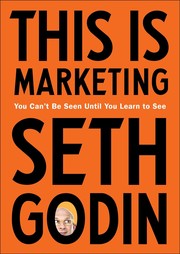
Reframes marketing as serving a specific audience rather than shouting at everyone — the foundational philosophy a small business owner needs before choosing any tactic or channel.
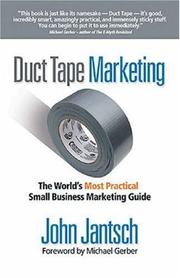
Translates marketing strategy into a practical, affordable system designed specifically for small businesses, covering referrals, local SEO, and content — the tactical playbook that follows Godin's strategic mindset.

Teaches you to clarify your message using a narrative framework so that every piece of marketing — your website, emails, and pitches — instantly communicates why customers should choose you.
Survival & Growth: Thriving Through Year One and Beyond
IntermediateDevelop the operational habits, leadership skills, and personal resilience to navigate the chaos of the first year, avoid common failure traps, and build a business that can grow without depending entirely on you.
▸ Study plan for this stage
Pace: 8–10 weeks, ~40–50 pages/day (mix of reading and reflection). Week 1–4: "The Hard Thing About Hard Things" (344 pages); Week 5–8: "Traction" (320 pages); Week 9–10: Integration and application exercises.
- The CEO's role during chaos: making hard decisions with incomplete information and managing your own psychology under pressure (Horowitz)
- Building a strong company culture and retaining talent when resources are scarce (Horowitz)
- The importance of transparency and radical honesty with your team during crises (Horowitz)
- The Entrepreneurial Operating System (EOS) framework: Vision, People, Data, Issues, Process, Traction (Wickman)
- Creating systems and processes that scale without you: the foundation for delegation and growth (Wickman)
- Running effective meetings and accountability structures to keep the business on track (Wickman)
- Personal resilience: managing the emotional and psychological toll of entrepreneurship (Horowitz)
- Avoiding the trap of being the bottleneck: building a leadership team that can execute without you (Wickman)
- What are the key responsibilities of a CEO during a crisis, and how does managing your own psychology differ from managing the business itself?
- How does Horowitz define 'the hard thing' and what are 3–4 specific examples from his experience?
- What is the Entrepreneurial Operating System (EOS), and what are its six key components?
- How does Wickman's 90-day planning cycle help prevent the chaos that Horowitz warns about?
- What systems and processes must you put in place in year one to avoid becoming the business's single point of failure?
- How do transparency and radical honesty (Horowitz) connect to the accountability structures Wickman recommends?
- Document your current decision-making process: For one week, log every significant decision you make (or would make if running a business). Identify which ones you made with incomplete information. Reflect on Horowitz's advice about speed vs. perfection.
- Conduct a 'culture audit': Define your company's core values and cultural priorities. Write down 3–5 behaviors that reinforce your culture and 3–5 that undermine it. Compare this to Horowitz's emphasis on culture as a retention tool.
- Create a 90-day plan using the EOS framework: Define your Vision (3-year, 1-year, 90-day goals), identify your core team (People), establish 3–5 key metrics (Data), list your top 3 issues to solve (Issues), document your core processes (Process), and set accountability measures (Traction).
- Map your current bottlenecks: List all tasks that only you can do right now. For each, identify what system, process, or person could take it over. Create a 6-month delegation plan.
- Run a 'Level 10 Meeting' (from Wickman): Facilitate a 60-minute meeting with your leadership team using the EOS structure (Segue, Scorecard, Metrics, To-Do List, IDS, Cascade, Conclude). Document what worked and what didn't.
- Write a 'hard things' reflection: Identify the three hardest decisions you've faced or anticipate facing in year one. For each, write down: the decision, the incomplete information you had, the emotional toll, and what you learned (or would learn) from Horowitz's framework.
Next up: This stage equips you with the psychological resilience, operational systems, and leadership practices to survive year one; the next stage will build on this foundation by teaching you how to scale those systems, expand your team strategically, and transition from founder-driven to organization-driven growth.
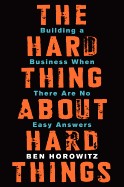
Delivers an unflinching, experience-based account of the brutal decisions every business owner faces — hiring, firing, pivoting under pressure — building the mental toughness needed to survive year one.

Introduces the Entrepreneurial Operating System, a practical framework for setting priorities, running meetings, and building accountability — the operational backbone that transforms a chaotic startup into a scalable, manageable business.
Discussion
Keep reading
Paths that share books, cover the same subject, or open a related topic.