Trace your family history
This curriculum takes a beginner from zero genealogical knowledge to confident, evidence-based family history research using records, methodology, and modern DNA tools. Each stage builds on the last: first establishing core habits and vocabulary, then mastering document types and research strategy, and finally applying advanced DNA analysis and scholarly standards used by professional genealogists.
Foundations: Getting Started Right
BeginnerUnderstand how genealogical research works, build good habits from day one, and learn to organize what you find before diving into records.
▸ Study plan for this stage
Pace: 6–8 weeks, ~20–25 pages/day (the book runs ~500 pages in most editions); read 5 days a week, leaving 2 days for review, note-taking, and exercises. Suggested breakdown: Weeks 1–2 for Part I (research methodology & principles), Weeks 3–5 for Part II (vital & church records), Weeks 6–8 for Part III (l
- The Genealogical Proof Standard (GPS): what constitutes a reasonably exhaustive search and a soundly written conclusion
- Working from the known to the unknown: always anchoring new research in verified facts before reaching further back
- Source evaluation: distinguishing original vs. derivative sources, and primary vs. secondary information
- Evidence analysis: understanding how to weigh direct, indirect, and negative evidence
- Research planning: forming a specific research question, selecting record types strategically, and documenting every step
- Record keeping and organization: maintaining a research log, source citations, and a consistent filing system from day one
- Understanding the major American record types covered by Greenwood — vital records, church records, census records, land and probate records, and military records — and what each can and cannot prove
- The importance of context: understanding historical migration patterns, naming conventions, and jurisdictional boundaries that affect where records were created and survive
- What are the five elements of the Genealogical Proof Standard, and why does each matter in everyday research?
- How does Greenwood distinguish between an original source, a derivative source, primary information, and secondary information — and how should each affect your confidence in a finding?
- Why must you always work from the known to the unknown, and what risks arise when researchers skip this principle?
- What is a research log, what information belongs in every entry, and why is maintaining one considered a non-negotiable habit?
- For at least three record types discussed by Greenwood (e.g., census, vital, land), what genealogical questions can each answer, and what are its typical limitations?
- How do historical context factors — such as county boundary changes, migration waves, or naming customs — influence where and how you search for an ancestor?
- Start your own family group: Interview one living relative (parent, grandparent, or aunt/uncle), record everything they share, and immediately document it with a proper source citation following Greenwood's guidelines — noting that it is an oral/personal communication.
- Build a research log template: Create a spreadsheet or paper log with columns for date, repository/database, record type, search terms used, result found (or not found), and source citation. Use it for every search you conduct during this stage.
- Source-type audit: Gather 5–10 documents you already have (birth certificates, obituaries, old letters, census images, etc.) and classify each one using Greenwood's framework — original or derivative source, primary or secondary information, direct or indirect evidence.
- Research question drill: For one ancestor you want to learn more about, write a single, specific research question (e.g., 'When and where was [Name] born?'), then list — before searching — which record types Greenwood describes that could answer it and why.
- Record-type deep dive: For one record type per week (census, vital record, land deed, probate, military), find a real example for any ancestor or a sample document online, identify every data point it contains, and note what follow-up questions it raises.
- Organize what you have: Using the organizational principles Greenwood advocates, create a consistent folder structure (physical or digital) for your family history files — one folder per family unit or surname line — and re-file everything you already own into that system.
Next up: Greenwood's thorough grounding in research methodology and American record types gives you the critical-thinking framework and vocabulary needed to move confidently into intermediate-level study, where you will dive deeper into specific record repositories, regional research strategies, and more complex problem-solving techniques.

The foundational textbook of American genealogy, introducing every major record type and the logic of working backward through generations; reading it early sets the framework for everything that follows.
Core Records: Vital, Civil & Church Sources
BeginnerKnow where birth, marriage, death, census, and church records are held, how to find them, and how to read and evaluate what they say.
▸ Study plan for this stage
Pace: 6–8 weeks total: Weeks 1–4 on "Finding Your Roots, Season 2" (~25–30 pages/day, including time to pause and cross-reference the case studies); Weeks 5–8 on "The Family Tree Guide to DNA Testing and Genetic Genealogy" (~20–25 pages/day, with slower reading around technical chapters on DNA types and e
- The five core record categories — birth, marriage, death, census, and church records — and the distinct information each one captures, as illustrated through the celebrity lineage investigations in Finding Your Roots, Season 2
- How to locate repositories (courthouses, archives, churches, online databases) that hold vital and civil records, using the research trails modeled in Finding Your Roots, Season 2
- Critical reading of primary vs. derivative sources: assessing informant knowledge, transcription errors, and gaps as demonstrated when Gates's team evaluates conflicting documents
- How church registers (baptism, marriage, burial) predate and often supplement civil registration, and how to bridge the gap between the two record types
- The basics of DNA evidence as introduced in The Family Tree Guide to DNA Testing and Genetic Genealogy — autosomal, Y-DNA, and mtDNA — and how each type corresponds to specific lines of descent
- How DNA results interact with and corroborate (or challenge) paper-trail records, a theme Bettinger develops throughout The Family Tree Guide
- Evaluating record quality and resolving conflicts: understanding why two documents about the same person can disagree and how to weigh the evidence
- Building a research log: tracking sources consulted, citations formed, and next steps — a habit reinforced by the systematic approach shown in both books
- After reading Finding Your Roots, Season 2, can you name at least three different record types the research team used to document a single individual, and explain what unique information each record provided?
- How do you determine whether a vital or church record is a primary source, and what questions should you ask about the informant's knowledge at the time the record was created?
- What is the difference between autosomal DNA, Y-DNA, and mtDNA as explained in The Family Tree Guide to DNA Testing and Genetic Genealogy, and which ancestral lines does each test illuminate?
- How does Bettinger recommend using DNA evidence alongside traditional documentary sources rather than as a standalone proof?
- In what situations would a church baptismal register be more reliable or more complete than a civil birth certificate, and how would you locate each type of record?
- What steps would you take if two records found in Finding Your Roots, Season 2-style research gave conflicting birth years for the same ancestor?
- Record-type inventory: Choose one ancestor you already know something about and list every record type covered in Finding Your Roots, Season 2 that could theoretically document that person's birth, marriage, and death. Then search one free repository (FamilySearch, Ancestry free trial, or a state archive website) to see which of those records actually survive.
- Source citation practice: Find one birth or marriage record online and write a full citation for it following the format modeled in the research notes style of Finding Your Roots, Season 2. Note whether it is a primary or derivative source and identify the informant.
- Church vs. civil record comparison: Locate both a civil registration and a church register entry (baptism or marriage) for the same individual or family unit. Write a one-page comparison noting agreements, discrepancies, and what each record reveals that the other does not.
- DNA concept map: After reading the relevant chapters in The Family Tree Guide to DNA Testing and Genetic Genealogy, draw a four-generation pedigree chart and color-code which lines each DNA test type (autosomal, Y-DNA, mtDNA) can and cannot reach. Annotate with Bettinger's caveats about inheritance patterns.
- Conflict-resolution worksheet: Using a real or hypothetical ancestor, create a simple evidence-correlation table listing at least three sources with conflicting or complementary data points (e.g., age, birthplace). Apply Bettinger's framework for weighing evidence quality to reach a reasoned conclusion.
- Research log setup: Create a research log template (spreadsheet or notebook) with columns for date, repository, record type, call number/URL, search terms, result, and next steps. Populate it with at least five entries from your searches during this stage.
Next up: Mastering how vital, civil, church, and DNA records are found and evaluated gives you a reliable documentary foundation, which directly prepares you to tackle more specialized or geographically specific record sets — such as immigration, land, probate, and military sources — in the next stage of the curriculum.

Uses compelling real case studies to show how census, vital, and immigration records combine to reconstruct families — making abstract record types concrete and motivating.
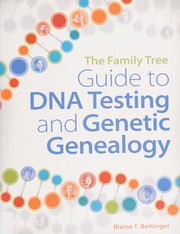
Introduces DNA as a record type alongside paper records early enough that the learner sees both as complementary tools from the start, before deeper methodology is tackled.
Research Methodology: Thinking Like a Genealogist
IntermediateApply a rigorous, evidence-based research process — formulating questions, evaluating sources, resolving conflicts, and documenting conclusions properly.
▸ Study plan for this stage
Pace: 10–12 weeks total. Weeks 1–8: "Evidence Explained" by Elizabeth Shown Mills — focus on the QuickStart Guide and chapters relevant to your own research lines (~20–25 pages/day, using it as a reference manual rather than cover-to-cover). Weeks 9–12: "Mastering Genealogical Proof" by Thomas W. Jones —
- The GPS (Genealogical Proof Standard): its five elements and why all five must be satisfied before a conclusion is considered 'proven'
- Source taxonomy in Evidence Explained: original vs. derivative sources, primary vs. secondary information, and direct vs. indirect vs. negative evidence — and why each layer of the distinction matters independently
- Citation as a research tool, not just a formality: how a complete citation in Mills's model allows any researcher to re-examine the same source and evaluate its reliability
- The Research Work Cycle (Jones): cycling through planning, searching, analyzing, and reporting as an iterative, not linear, process
- Correlation and conflict resolution: how to weigh competing evidence, identify the most likely explanation, and document your reasoning transparently
- Reasonably exhaustive search: what 'exhaustive' means in practice, why gaps in the search invalidate a conclusion, and how to document negative searches
- Written proof arguments and proof summaries: when each is appropriate and how to construct a logically sound genealogical narrative
- Cluster research and FAN clubs (Family, Associates, Neighbors) as a methodology for breaking through brick walls using indirect evidence
- Given a single genealogical source, can you correctly classify it as original or derivative, identify the information within it as primary or secondary, and label each assertion as direct, indirect, or negative evidence — and explain why those three classifications are independent of one another?
- What are the five elements of the Genealogical Proof Standard as defined by Jones, and what specific failure in your own recent research would disqualify a conclusion from meeting the standard?
- Using Mills's citation models, how would you construct a full citation (first reference note, subsequent note, and source list entry) for a digitized image of a county deed book accessed through a subscription database?
- How do you resolve a conflict between two sources that give different birth years for the same individual — what steps does Jones prescribe, and what must your written conclusion include to be considered sound?
- What distinguishes a 'proof summary' from a 'proof argument' in Jones's framework, and under what research circumstances would you choose one over the other?
- Why is a 'reasonably exhaustive search' a prerequisite for the GPS rather than a best-practice add-on, and how would you document that your search meets that threshold for a specific research question?
- Select one family relationship you have already 'proven' informally. Run it through all five GPS elements using Jones's checklist. Write a one-page proof summary documenting where it passes and where it fails, then design a search plan to fill any gaps.
- Take five sources you have previously cited informally (e.g., 'Find A Grave,' a census image, a church register). Rewrite each citation from scratch using the appropriate template in Evidence Explained, producing a first reference note, a subsequent note, and a source list entry for each.
- Deliberately find two conflicting records for the same ancestor (different ages, name spellings, or birthplaces are common). Write a structured conflict-resolution analysis following Jones's model: list each source's classification, weigh reliability, propose the most probable explanation, and state what additional evidence would resolve it definitively.
- Choose a brick-wall ancestor and map their FAN club (Family, Associates, Neighbors) using cluster research principles from Jones. Identify at least five associated individuals, locate one record for each, and explain what each record indirectly reveals about your target ancestor.
- Write a full proof argument (not just a summary) for a moderately complex kinship claim — one requiring at least three indirect-evidence sources. Follow Jones's structure: research question, exhaustive search narrative, evidence correlation, conflict resolution if needed, and conclusion with reasoning.
- Create a personal Research Log template grounded in the GPS framework: columns for the research question, repositories/databases searched (including negative results), source classifications per Mills, evidence type, and how each find advances or challenges your working hypothesis. Use it actively for two weeks of real research.
Next up: Mastering the GPS and Mills's citation standards gives the reader the analytical and documentary infrastructure needed to tackle advanced record types and jurisdictional research strategies — the natural focus of the next stage — because they can now evaluate any new source class with a consistent, rigorous framework rather than accepting records at face value.
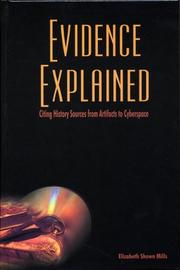
The definitive reference on citing and evaluating genealogical sources; after learning what records exist, this book teaches how to assess their reliability and document them to professional standards.

A concise but rigorous guide to the Genealogical Proof Standard — the logical framework serious researchers use to move from clues to proven conclusions.
Advanced DNA Analysis
ExpertUse autosomal, Y-DNA, and mtDNA results to break through brick walls, identify unknown relatives, and integrate genetic evidence with documentary research.
▸ Study plan for this stage
Pace: 6–8 weeks, ~20–25 pages/day (the book is ~200 pages of dense, exercise-driven content); plan for an extra 30–60 min per session to work through the embedded workbook exercises as you read each chapter
- Autosomal DNA (atDNA) inheritance patterns, recombination, and the statistical limits of relationship prediction across generations
- Shared centimorgan (cM) values and how to interpret them using probability tools (e.g., the Shared cM Project data referenced throughout the book)
- Chromosome mapping and building a chromosome browser segment map to assign DNA to specific ancestral lines
- Y-DNA STR and SNP testing: haplogroups, surname projects, and using Y-DNA to confirm or challenge a patrilineal line
- Mitochondrial DNA (mtDNA) haplogroups, full sequence testing, and the narrow but powerful use cases for breaking matrilineal brick walls
- The Leeds Method and other clustering techniques for sorting unknown matches into family groups without known trees
- Triangulation — distinguishing identical-by-descent (IBD) from identical-by-chance (IBC) segments and building a triangulation group
- Integrating genetic evidence with documentary evidence: writing a reasonably exhaustive GPS-compliant conclusion that cites both DNA and records
- Given a shared cM value between two people, what is the range of possible relationships, and what additional evidence (segment data, tree overlap, other matches) would you use to narrow it down?
- How does Y-DNA differ from autosomal DNA in what it can and cannot prove about a family line, and when would you recommend each type of test to a client or research subject?
- What is a triangulation group, and why does triangulating a segment across three or more matches on the same chromosome increase confidence that the segment is IBD rather than IBC?
- Walk through the Leeds Method step by step: what does each color cluster likely represent, and what are its known limitations with endogamy or pedigree collapse?
- How would you use mtDNA full-sequence results to address a brick wall on a direct maternal line, and what level of proof can mtDNA realistically provide?
- How do you write a GPS-compliant research conclusion that integrates a DNA match, a triangulated segment, and a corroborating documentary record into a single coherent argument?
- Work every embedded workbook exercise in 'Genetic Genealogy in Practice' as you encounter it — do not skip ahead; treat each exercise as a lab assignment and keep a dedicated notebook or spreadsheet for your answers
- Download your own raw atDNA data (or use a publicly shared kit with permission) and build a chromosome map in a spreadsheet, assigning at least 10 confirmed segments to a specific grandparent or great-grandparent line using known matches
- Apply the Leeds Method to your own match list (or a practice dataset): create color-coded clusters, hypothesize which ancestral couple each cluster represents, and document your reasoning in writing
- Choose one unknown or uncertain DNA match of 50–200 cM, gather all available evidence (shared matches, segment data, any available trees), and write a short research report (~1–2 pages) that argues for the most probable relationship using the Shared cM Project probabilities and at least one corroborating documentary source
- If you have or can access Y-DNA results, join or review the relevant surname project on FamilyTreeDNA, compare STR marker values to other project members, and write a paragraph explaining what the results confirm, contradict, or leave unresolved about the patrilineal line
- Select one brick wall ancestor and draft a DNA-integrated research plan: specify which test type(s) would be most useful, which living relatives should be tested, what match threshold you would use, and how you would document a positive or negative result under the Genealogical Proof Standard
Next up: Mastering the analytical frameworks in 'Genetic Genealogy in Practice' — clustering, triangulation, and GPS-compliant DNA reporting — equips the reader to tackle the next stage's focus on complex case studies, collaborative research networks, and publishing or presenting genetic genealogy conclusions to professional and public audiences.
Though framed around adoptees, this is the most practical deep-dive into using DNA matches to reconstruct unknown family lines — essential skills for any brick-wall problem.

A workbook-style advanced text co-authored by the field's leading DNA educator; it systematically covers segment analysis, chromosome mapping, and triangulation with hands-on exercises.
Mastery: Writing, Publishing & Professional Standards
ExpertSynthesize research into well-written, properly sourced family histories and understand the standards expected of professional and published genealogical work.
▸ Study plan for this stage
Pace: 8–10 weeks, ~25–35 pages/day (the book is dense and reference-heavy; plan for re-reading key chapters on standards, writing, and ethics at least once)
- The Genealogical Proof Standard (GPS): the five-element framework that defines sound, defensible conclusions in genealogical research
- Reasonably exhaustive search: why breadth and depth of source consultation is a professional obligation, not optional
- Evidence analysis and correlation: distinguishing original vs. derivative sources, primary vs. secondary information, and direct vs. indirect evidence, and synthesizing conflicting evidence into a coherent conclusion
- Proof summaries and proof arguments: when each is appropriate and how to construct them with proper citations and logical reasoning
- Citation mechanics and the purpose of citations: using Evidence Explained principles embedded in Professional Genealogy to document sources so any reader can relocate and evaluate them
- Writing the family history narrative: organizing research into readable prose, handling uncertainty honestly, and distinguishing proven fact from working hypothesis in the text
- Professional and ethical standards: client reports, confidentiality, copyright, conflict of interest, and the code of conduct expected of credentialed genealogists (BCG, APG)
- Peer review, publication, and credentialing pathways: understanding how genealogical journals, the BCG portfolio process, and professional organizations evaluate and validate work
- Can you articulate all five elements of the Genealogical Proof Standard and explain why omitting any single element undermines a conclusion's credibility?
- What is the difference between a proof summary and a proof argument, and how do you decide which form a specific research conclusion requires?
- How does Mills distinguish original sources from derivative sources, and primary information from secondary information — and why does that matrix matter when weighing conflicting evidence?
- What ethical obligations does a professional genealogist have toward a client, including issues of confidentiality, conflict of interest, and honest reporting of negative findings?
- What are the structural and stylistic hallmarks of a well-written genealogical narrative, and how should the author signal degrees of certainty without misleading the reader?
- What does the BCG credentialing portfolio require, and how do the standards described in Professional Genealogy map onto that evaluation process?
- GPS self-audit: Take one conclusion from your own prior research (any stage) and run it through all five elements of the Genealogical Proof Standard as described by Mills. Write a one-page assessment identifying which elements are satisfied and which require additional work.
- Proof argument draft: Select a research problem involving at least two conflicting sources and write a full proof argument — with inline citations formatted to Mills's standards — that resolves the conflict and states a defensible conclusion.
- Citation reconstruction: Choose five sources you have previously cited informally (e.g., 'Find A Grave' or 'census record') and rewrite each citation in the layered format Mills prescribes, ensuring a stranger could locate and evaluate each source independently.
- Client report simulation: Write a 3–5 page professional research report as if delivered to a paying client: include a research objective, methodology, findings with sourced evidence, a conclusion meeting GPS, and a recommendation for next steps — following the report-writing guidelines in Professional Genealogy.
- Narrative chapter draft: Write a 1,000–1,500 word narrative chapter about one family unit from your research, integrating sourced facts, handling gaps and uncertainties explicitly in the prose, and applying the writing and organization principles Mills outlines.
- Ethics case studies: Using the professional standards and ethics sections of the book, write brief responses (one paragraph each) to three hypothetical dilemmas: (1) a client asks you to suppress an unflattering finding; (2) you discover a source you used was a known forgery; (3) a colleague asks to co-publish work where contributions are unequal. Cite the relevant standards Mills references.
Next up: Mastering the writing, citation, and professional standards in this stage equips the researcher to contribute original findings to the broader genealogical community — whether through journal submission, BCG credentialing, or collaborative DNA and archival projects — making it the natural launchpad for any continuing education, specialization, or professional practice that follows.
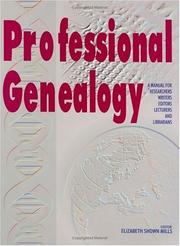
Edited by the field's foremost methodologist, this comprehensive guide covers every aspect of serious genealogical practice — from client work to writing and publishing — cementing mastery.