Richard Wright Reading Order: Where to Start
Richard Wright's career splits cleanly in two: the American books that made him the most famous Black writer in the country, and the fifteen expatriate years in Paris that most readers never reach. This path follows that arc — the early stories and Native Son first, then the autobiography in both its halves, then the philosophical novel and the travel and political writing from exile, and finally the novel that was only published in full in 2021. The later work is uneven and often argued about; it is included because reading Wright as only the author of Native Son is how his reputation got stuck.
The American fiction
IntermediateRead the work that made Wright's name, and see the move from short-form naturalism to the full-length novel that changed American publishing
▸ Study plan for this stage
Pace: 3 weeks. Uncle Tom's Children is 246 pages of novellas — one per sitting, about a week. Native Son's 399 pages divide into three named books; read each as a unit at ~30 pages a night, and expect the courtroom material in the last third to slow you down considerably.
- Naturalism as method: environment treated as determinant, characters shaped by forces they cannot see. Wright took it from Dreiser and aimed it at Jim Crow
- The famous self-criticism — Wright judged Uncle Tom's Children a book that comfortable readers could weep over, and wrote Native Son specifically so that no one could
- Bigger Thomas built to refuse sympathy: the withholding of likability is the argument, not a failure of characterisation
- Native Son's three-part shape, and the shift in the final part from event to explanation, which is where most readers part company with the novel
- Violence used as analysis rather than spectacle — the accidental killing and the deliberate one, and the difference the book insists you notice
- Editorial history: the 1940 text was cut for a book club, and restored editions differ. Check which one you are holding
- Communism in the fiction as both frame and problem — sympathetically drawn, useful to the plot, and never quite adequate to it
- What does Wright change between the novellas and Native Son, and what reason did he give?
- Why is one death accidental and the other deliberate, and what is the novel arguing with that pairing?
- What does the long courtroom speech add, and what does it cost the book as a novel?
- Where can you feel the naturalist machinery working — moments where the environment is visibly being made to determine the outcome?
- Which of the novellas comes closest to Native Son's method, and how?
- Read the first novella and then Native Son's opening section back to back: the same flight, at ten times the pressure.
- Mark every point where you are invited to sympathise with Bigger and then blocked. That pattern is the design of the book.
- Read the last five pages twice and write down what you think Bigger finally understands. Readers disagree violently — have your own answer.
- Establish whether your edition is the restored text or the cut one, and read a restored passage against an account of what was removed.
Next up: Native Son's Chicago and its argument came straight out of Wright's own life, which he set down next — and the memoir is where his prose is at its very best.
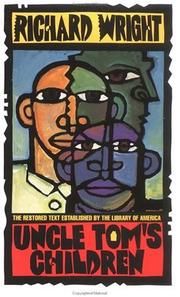
The 1938 novellas about violence and resistance in the Jim Crow South, and the book Wright later said was too easy to weep over. Start here because it is shorter, and because Native Son was written specifically to be harder to sentimentalize.

The 1940 novel that made Bigger Thomas an argument nobody could ignore, deliberately built so that no reader can comfortably sympathize. Read it second so you can feel Wright correcting his own earlier book.
The autobiography
IntermediateRead Wright's account of his own formation in both its published halves, including the Communist Party years that were cut from the original edition
▸ Study plan for this stage
Pace: 2–3 weeks. Black Boy is 290 pages and moves fast — 30 a night finishes it in ten days. American Hunger is only 146 pages and is literally the continuation of the same manuscript, so read it in the same fortnight, ideally starting the day you finish the first half.
- These are two halves of one book: the manuscript was split before publication and the Chicago half issued separately after Wright's death
- Why the split happened — a book club's preference for the Southern childhood, and the political awkwardness of the Communist Party material in 1945
- Hunger as literal and figurative at once: for food, for books, and for a self the South would not permit him to have
- The scenes of reading — the borrowed library card obtained by deception, the discovery of Mencken, and the realisation that words could be used as weapons
- The disputed factuality: Wright compresses, rearranges and invents. This is autobiography written by a novelist, and scenes should be read as constructed
- The Party years in the second half — the club, the discipline, the break — and how much of the later expatriate fiction is already present in them
- The prose here is his best: sharper and less argumentative than the fiction, because he is not building a case
- What does Wright get from Mencken, and how does he get hold of him?
- Which scenes read as constructed rather than remembered, and what tells you?
- Why was the Chicago half cut, and how does the whole book read differently once it is restored?
- What draws Wright to the Communist Party, and what specifically breaks the relationship?
- How much of Bigger Thomas is in the young Richard of the memoir, and how much is invention?
- Read the library-card scene and write down every deception it required. The passage is the whole memoir in miniature.
- Read the last page of Black Boy and the first of American Hunger consecutively. The join is visible, and it makes its own argument for reading them together.
- Keep a note of every food and every book named. The two lists are the memoir's spine.
- Compare the Chicago of American Hunger with the Chicago of Native Son — the same city put to two entirely different purposes.
Next up: The break with the Party at the end of the second half is the hinge: everything after it was written outside America and out of a different set of ideas.
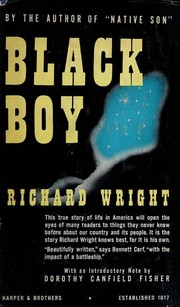
The Southern childhood memoir, and probably his best-written book — hungrier and more precise than the fiction. Read it after Native Son so you recognize how much of the novel was drawn from it.
The Chicago second half, cut from Black Boy before publication and issued separately after his death, covering the years in and out of the Communist Party. Read it immediately after Black Boy; it is literally the rest of the same manuscript.
The expatriate years
IntermediateFollow Wright out of the United States into existentialism, decolonization, and reportage, and judge the late work on its own terms
▸ Study plan for this stage
Pace: 4–5 weeks. The Outsider is 440 pages and argumentative — 25 a night for a little over two weeks, and its long philosophical exchanges want you fresh. Black Power reads as travel reportage and its 358 pages go faster, about ten days. White Man, Listen! is 142 pages of lectures and can be finished in
- Existentialism entering the fiction: Sartre and Camus in postwar Paris, and a protagonist who acts because nothing forbids him to
- Cross Damon as a deliberate departure from Bigger — educated, articulate, and free in a way that makes him worse rather than better
- What is lost along with the naturalism: many readers find The Outsider talkier and less alive than Native Son. Decide for yourself, and be able to say why
- Black Power as an encounter that fails to deliver belonging — Wright in the Gold Coast discovers he is an American, and says so uncomfortably
- The tension that makes the late nonfiction hard to place politically: a fierce critique of colonial rule combined with a modernist impatience toward tradition
- White Man, Listen! as the compressed statement of the whole late position — race, colonialism, and the psychology of the colonised, delivered to European audiences
- Why this work was dismissed for decades and is now being reassessed: the charge of expatriate irrelevance, and what that charge missed
- What does Cross Damon want, and what does the novel suggest freedom without constraint produces?
- Where does The Outsider stop dramatising and start arguing, and does the book survive the transition?
- What does Wright expect to find in the Gold Coast, and what does he actually report?
- What is his attitude to traditional African societies, and what tension does it create with his anti-colonial case?
- Which of these three books best explains the other two?
- Read the opening sixty pages of The Outsider and of Native Son on consecutive evenings. The change in what Wright thinks a novel is for is unmistakable.
- Mark every passage in Black Power where Wright is uncomfortable. They are the most valuable pages in the book.
- Reduce the lectures to five propositions in your own words, then test them against the reporting in Black Power.
- Write 300 words on whether the late work is a decline or a redirection. This path exists partly so that you can answer that question with evidence.
Next up: With the late politics in view, the recovered novel and the biography let you settle what the career actually was, rather than what the Native Son reputation made of it.
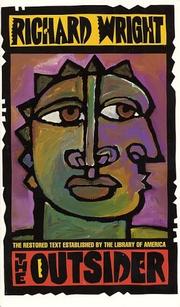
The 1953 Paris novel, saturated in the existentialism of Sartre and Camus, and the clearest break with the naturalism of Native Son. First in this stage because it is the bridge between the American and European halves of the career.

His account of travelling in the Gold Coast on the eve of Ghanaian independence, and one of the first books by an African American writer reckoning firsthand with Africa. Read it for the discomfort as much as the reporting — Wright does not find the belonging he expected.
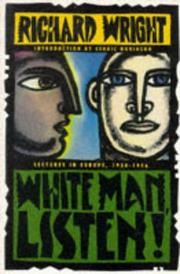
The lectures on race, colonialism, and the psychology of the colonized, and the most concentrated statement of his late political thinking. Placed last because it summarizes arguments the travel books arrive at the long way round.
The recovered novel and the life
IntermediateRead the major work restored after Wright's death and set the whole career into biographical context
▸ Study plan for this stage
Pace: 4–5 weeks. The Man Who Lived Underground is 187 pages and is best taken in one or two sittings, with the accompanying essay read afterwards rather than first. Hazel Rowley's biography is 632 pages — ~25 a night for about a month, slowing down for the Paris chapters, which earlier accounts skipped an
- The novel's publishing history: written in the early 1940s, refused by publishers who wanted another Native Son, and published in full only in 2021 — and now argued by many to be his best work
- The move underground: a police-brutality opening that turns into something surreal and metaphysical, breaking the naturalist contract entirely
- The coerced confession as the realistic core of the book, and the awkward fact that 1940s publishers were less comfortable with it than they had been with Bigger's murder
- The chronology worth having straight: this underground man precedes the better-known one by roughly a decade
- Rowley's even-handedness about the exile years, which makes her much better than older accounts on the final decade
- Wright's death in Paris in 1960 and the rumours around it — Rowley handles these carefully, and it is worth noticing exactly where the evidence stops
- The whole shape: a career boxed in by its own first success, and a body of work that only looks coherent once the suppressed and late material is restored to it
- What does this novel do that Native Son could not, and why would that have been unpublishable in the 1940s?
- Where does the book stop being realistic, and what does it become instead?
- What does Wright's accompanying essay claim he was doing, and does the fiction bear the claim out?
- How does Rowley account for the reception of the late work, and do you accept her account?
- Having read the whole path, which single book would you now give to someone who has read only Native Son?
- Read the police-station section and Native Son's middle book consecutively — the same subject, two decades of technique apart.
- Read Rowley's chapters on the 1940s rejections immediately after finishing the novel. The publishing history is the story.
- Build a one-page timeline of the career: books, moves, breaks. The shape only becomes visible once it is written down.
- Revisit the answer you wrote in the previous stage about decline versus redirection. Change it if the evidence has moved you, and note precisely what moved it.
Next up: That is the whole arc, suppressed books included — enough to argue with anyone who still describes Wright as the author of one novel.

Rejected in the 1940s and published in full only in 2021, this is now widely argued to be among his best work — a police-brutality novel that turns into something stranger. Read it late, when you can see how badly it fits the box his publishers wanted him in.
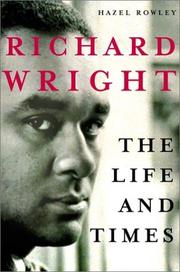
The standard modern biography, even-handed about the exile years that earlier accounts dismissed. Last because it depends on your having read enough of the work to have your own view to test.
Discussion
Keep reading
Paths that share books, cover the same subject, or open a related topic.