Become a paralegal: the best books to break into the career
This four-stage curriculum takes a complete beginner from "what is a paralegal?" all the way to confident legal research, professional writing, and day-to-day practice alongside attorneys. Each stage builds directly on the last — first establishing career awareness and vocabulary, then developing core legal skills, then mastering the written work product paralegals produce, and finally deepening specialty knowledge and professional polish.
Career Foundations
BeginnerUnderstand what paralegals do, how the profession is structured, what education and certification paths exist, and whether this career is the right fit.
▸ Study plan for this stage
Pace: 4–5 weeks, ~25–30 pages/day
- Definition and scope of paralegal work: what paralegals do versus what lawyers do
- The paralegal profession structure: employment settings (law firms, corporations, government, nonprofits) and career paths
- Education and certification requirements: formal paralegal programs, ABA approval, and credential options (NFPE, PACE)
- Ethical and professional responsibilities: confidentiality, unauthorized practice of law, and professional conduct rules
- Skills required for paralegal success: legal research, writing, client communication, and organizational abilities
- Career planning and specialization options: practice areas and how to identify your niche
- The job market and employment trends: demand, salary expectations, and advancement opportunities
- What are the key differences between paralegal responsibilities and attorney responsibilities, and why does this distinction matter legally and ethically?
- What are the main employment settings for paralegals, and how do job responsibilities differ across these environments?
- What are the primary education and certification pathways for paralegals, and what does ABA approval signify?
- What ethical rules and professional responsibilities are paralegals bound by, and what constitutes unauthorized practice of law?
- What core skills must a paralegal develop, and how do these skills translate across different practice areas?
- How can you assess whether a paralegal career aligns with your strengths, interests, and long-term professional goals?
- Create a detailed job description comparison: list 5–7 specific tasks a paralegal performs versus tasks reserved for attorneys, then explain the legal reasoning behind each boundary
- Research and profile three law firms or legal employers in your area: document their paralegal roles, required qualifications, and career progression paths
- Take a practice ethics scenario (e.g., a client calls asking for legal advice): write a 1–2 page response explaining what a paralegal can and cannot do, citing relevant ethical rules from the book
- Develop a personal career assessment: identify your top 3 practice area interests and research the paralegal skills and experience needed in each
- Interview a working paralegal (in person, by phone, or via email): ask about their education path, daily responsibilities, biggest challenges, and career advice
- Create a 2–3 year career development plan: outline education/certification goals, skills to build, and milestones to track your progress toward your paralegal career goals
Next up: This foundation stage equips you with a clear understanding of the paralegal profession's scope, structure, and expectations, preparing you to dive into specialized legal knowledge and technical skills in subsequent stages.
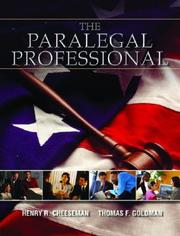
Expands on the first book by adding practical workplace context, attorney-paralegal relationships, and an overview of major practice areas, building the vocabulary needed for every later stage.
Legal System & Vocabulary
BeginnerGrasp how the U.S. legal system works — courts, sources of law, civil vs. criminal procedure — so that later skill-building books make immediate sense.
▸ Study plan for this stage
Pace: 4–5 weeks, ~25–30 pages/day. Week 1–2: "Introduction to Law" (Hames); Week 3–5: "Law 101" (Feinman). Allocate 2–3 days per chapter for review and exercises.
- The three-branch structure of U.S. government and how each branch creates or interprets law
- Primary sources of law: constitutional, statutory, common law, and administrative law, and their hierarchy
- The dual court system (federal and state) and jurisdiction—which court handles which cases
- Civil procedure: pleadings, discovery, trial, and judgment in private disputes
- Criminal procedure: arrest, arraignment, discovery, plea bargaining, and trial in prosecutions
- The distinction between civil and criminal liability, burden of proof, and remedies
- Key legal vocabulary: tort, contract, property, precedent, jurisdiction, venue, and standing
- How paralegals fit into the legal system and the types of cases they support
- Explain the three branches of U.S. government and describe how each creates or interprets law.
- What is the hierarchy of sources of law, and why does the U.S. Constitution rank at the top?
- Distinguish between federal and state courts, and explain how jurisdiction determines which court hears a case.
- What are the main stages of civil procedure, and how do they differ from the stages of criminal procedure?
- Define the key differences between civil and criminal cases in terms of parties, burden of proof, and remedies.
- Why is precedent important in common law, and how does it shape paralegal research and writing?
- Create a visual flowchart showing the three branches of government and how they interact to create and enforce law.
- Map out the federal and state court hierarchy in your jurisdiction; identify which courts handle small claims, felonies, and appeals.
- Read a real court decision (available free on Google Scholar or your state court website) and identify the parties, jurisdiction, and precedent cited.
- Draft a simple civil complaint and criminal charging document side-by-side; annotate the procedural differences.
- Build a glossary of 30–40 legal terms from both books (e.g., tort, contract, discovery, arraignment, venue) with definitions and examples.
- Interview a local paralegal or attorney about a recent case; ask them to walk you through the procedural stages and explain how they used legal research.
Next up: Mastering the structure and vocabulary of the U.S. legal system equips you to understand the specific procedural rules, ethical obligations, and practical skills—such as legal research, writing, and document drafting—that the next stage will demand.
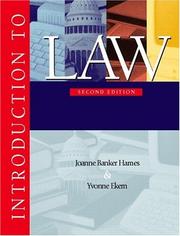
A standard paralegal-program textbook that walks through constitutional law, court structure, and the litigation process in plain language, providing the legal framework every paralegal must internalize.

A highly readable, non-textbook survey of American law that reinforces and deepens the legal concepts from the previous book, making abstract doctrine feel concrete and approachable.
Legal Research & Writing
IntermediateDevelop the ability to find authoritative legal sources, evaluate them, and translate findings into the memos, briefs, and correspondence that paralegals produce every day.
▸ Study plan for this stage
Pace: 8–10 weeks, ~40–50 pages/day. Allocate 5–6 weeks to Bouchoux's "Legal Research and Writing for Paralegals" (primary text covering research methods, memo/brief structure, and correspondence), then 2–3 weeks to Garner's "Redbook" (focused reference work on citation and style refinement).
- Primary vs. secondary legal sources: identifying which sources carry binding authority and when to use each in research
- Legal research strategy and source hierarchy: understanding how to navigate case law, statutes, regulations, and finding tools (Westlaw, LexisNexis, free resources)
- Memorandum structure and analysis: IRAC method (Issue, Rule, Analysis, Conclusion) as the foundation for legal writing
- Briefs and case summaries: extracting holdings, reasoning, and precedential value from judicial opinions
- Legal correspondence: demand letters, opinion letters, and client communications that balance formality with clarity
- Citation mechanics and Bluebook/Redbook standards: proper formatting of cases, statutes, and secondary sources to ensure credibility and compliance
- Editing and proofreading for legal documents: precision in language, consistency, and elimination of ambiguity
- Ethical considerations in legal research and writing: candor to the tribunal, avoiding misrepresentation, and confidentiality
- What is the difference between primary and secondary sources, and when should a paralegal rely on each in a legal research project?
- How does the IRAC method structure a legal memorandum, and why is each component (Issue, Rule, Analysis, Conclusion) essential?
- What steps should you follow to brief a court opinion, and what information must a brief contain to be useful in legal analysis?
- How do you construct a demand letter or opinion letter, and what tone and content distinguish these from internal memoranda?
- What are the key citation rules in the Bluebook/Redbook for cases, statutes, and secondary sources, and why does citation accuracy matter in legal practice?
- How do you evaluate the credibility and persuasiveness of a legal source, and what red flags indicate unreliable authority?
- Conduct a full legal research project on a hypothetical issue: identify the relevant jurisdiction, locate primary sources (cases and statutes), and evaluate secondary sources for background and analysis.
- Write a 3–5 page legal memorandum using the IRAC structure on a fact pattern provided by your instructor or from the textbook; have a peer or mentor review for clarity and logical flow.
- Brief 5–10 court opinions from different practice areas, extracting the holding, key facts, reasoning, and dissent (if any); compare your briefs to published summaries to refine accuracy.
- Draft a demand letter and an opinion letter on related fact patterns; ensure proper formatting, tone, and legal analysis appropriate to the audience.
- Practice citation formatting: take 20 mixed citations (cases, statutes, regulations, law review articles) and correct them using Redbook standards; verify against a citation checker tool.
- Revise a poorly written legal memo or brief for clarity, precision, and conciseness; identify and correct common errors (ambiguity, passive voice, jargon, citation mistakes).
Next up: Mastery of legal research and writing equips you to support attorneys in substantive legal work and client communication, preparing you to specialize in specific practice areas (litigation, corporate, estate planning) where these foundational skills are applied to real-world matters.

The most widely used paralegal-specific research and writing text; it covers primary and secondary sources, citation (Bluebook and ALWD), and every major document type — read first to build method.

After learning what to write, this authoritative style guide by the foremost expert on legal language teaches paralegals how to write with precision, clarity, and professional credibility.
Day-to-Day Practice & Professional Mastery
ExpertInternalize the real workflow of a working paralegal — case management, ethics in practice, specialty area skills — and develop the professional identity needed for a long-term career.
▸ Study plan for this stage
Pace: 8–10 weeks, ~40–50 pages/day, with 1–2 days per week for review and exercises. Allocate roughly 3 weeks to Larbalestrier, 2.5 weeks to Mongue, and 2.5 weeks to Orlik, with final week for integration.
- Case management systems and document organization workflows that paralegals use daily to track deadlines, discovery, and client communications
- The scope of paralegal authority: what tasks paralegals can and cannot perform independently, and how to work effectively within attorney supervision
- Ethical obligations specific to paralegals, including confidentiality, conflicts of interest, and unauthorized practice of law
- Specialty area competencies (litigation, corporate, real estate, etc.) and how to develop deep expertise in your practice domain
- Professional identity and career longevity: building reputation, managing client relationships, and advancing within a firm or solo practice
- Time management, billing, and business acumen as a paralegal—understanding the economic realities of legal practice
- Communication and collaboration with attorneys, clients, and opposing counsel while maintaining professional boundaries
- Continuing education and staying current with legal developments, technology, and ethical standards
- What are the core components of an effective case management system, and how do you use it to prevent missed deadlines and lost documents?
- What tasks can a paralegal perform independently versus those requiring attorney supervision, and what are the consequences of overstepping?
- Describe three specific ethical dilemmas a paralegal might face in practice and explain how the rules of professional conduct apply to each.
- How do you build and maintain professional credibility and a strong reputation as a paralegal, and why does this matter for long-term career success?
- What are the key differences in paralegal responsibilities across different practice areas (e.g., litigation vs. corporate), and how do you develop expertise in your specialty?
- How should a paralegal approach billing, time tracking, and understanding the business side of legal practice?
- Create a detailed case management workflow for a hypothetical case (e.g., a contract dispute or personal injury claim), including document organization, deadline tracking, and communication logs, using principles from Larbalestrier.
- Write a 2–3 page reflection on a real or hypothetical ethical scenario a paralegal might encounter (e.g., a client requesting you to contact opposing counsel directly, or discovering a conflict of interest), and explain how Orlik's framework would guide your response.
- Conduct a mock client intake interview and prepare a case summary memo, demonstrating the communication and organizational skills outlined in Mongue and Larbalestrier.
- Develop a personal professional development plan for the next 2–3 years, identifying a specialty area, relevant certifications (e.g., NALA, NFPA), and continuing education goals aligned with Mongue's concept of the 'empowered paralegal.'
- Review a sample retainer agreement or engagement letter and identify the ethical and practical implications for paralegal scope of work, referencing Orlik and Larbalestrier.
- Create a time-tracking and billing exercise: log a week of hypothetical paralegal tasks with realistic time estimates, then analyze profitability and efficiency using business principles from Mongue.
Next up: This stage transforms you from a procedurally competent paralegal into a professionally mature practitioner with ethical grounding and business acumen, positioning you to either specialize deeply in a practice area, take on leadership or mentoring roles, or transition into solo/contract work with confidence in your judgment and professional identity.

A practical desk reference covering the actual tasks paralegals perform across practice areas — drafting pleadings, managing discovery, handling closings — bridging classroom knowledge and the real office.

Focuses on professional effectiveness, communication with attorneys, and career development, giving the reader the soft-skill and organizational framework to thrive long-term in the role.
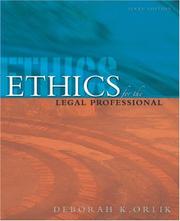
Ethics violations are the fastest way to end a paralegal career; this comprehensive, scenario-driven text is read last so the learner can apply ethical reasoning to the full range of tasks they now understand.
Discussion
Keep reading
Paths that share books, cover the same subject, or open a related topic.