Learn Spanish: methods that work
This curriculum moves from understanding *how* adult language acquisition actually works, through building a principled Spanish input habit, into deliberate practice strategies, and finally into the mindset and community tools needed to push through the long middle to fluency. Each stage builds on the last: you won't waste time on ineffective methods because you'll understand the science first, then apply it with increasingly sophisticated tools and self-awareness.
Foundations: How Language Acquisition Really Works
BeginnerUnderstand the science of adult language acquisition — comprehensible input, the role of grammar study, and why most traditional methods fail — so every hour you invest is grounded in evidence.
▸ Study plan for this stage
Pace: 6–8 weeks total: Weeks 1–4 for "Fluent Forever" (~25–30 pages/day, ~5 days/week), then Weeks 5–8 for "The Input Hypothesis" (~15–20 pages/day — denser academic prose, so slower pace with note-taking sessions after each chapter).
- Comprehensible Input (i+1): Krashen's core claim that we acquire language only when we understand messages slightly beyond our current level — not by memorizing rules.
- The Acquisition vs. Learning Distinction (Krashen): Subconscious acquisition (natural, fluency-building) is fundamentally different from conscious learning (grammar rules), and only acquisition drives real communication.
- The Monitor Hypothesis: Consciously learned grammar acts only as an editor/monitor, not as a fluency engine — over-reliance on it slows and stiffens speech.
- The Affective Filter Hypothesis: Anxiety, low motivation, and low self-confidence raise a mental 'filter' that blocks input from being acquired, explaining why stress kills progress.
- Why Traditional Methods Fail (Wyner): Rote vocabulary lists, translation-based study, and grammar drills build fragile, slow-access memories because they bypass the brain's natural image-sound-meaning wiring.
- Pronunciation First (Wyner): Training your ear and mouth to the sounds of Spanish before tackling vocabulary or grammar creates a phonetic foundation that accelerates everything downstream.
- Spaced Repetition Systems (SRS) as an Acquisition Tool (Wyner): Flashcard systems like Anki, built around images and personal connections rather than translations, align with how long-term memory is actually consolidated.
- The Natural Order Hypothesis (Krashen): Grammatical structures are acquired in a largely predictable sequence regardless of the order they are taught — implying that forcing grammar instruction out of sequence is ineffective.
- According to Krashen's Input Hypothesis, what does 'i+1' mean, and why is input that is too easy or too hard equally ineffective for acquisition?
- How does Krashen distinguish 'acquisition' from 'learning,' and what practical consequence does this distinction have for how you should spend your Spanish study time?
- Wyner argues that most learners form weak memories because they study words through translation. What alternative memory-formation strategy does he propose, and what is the cognitive science behind it?
- What is the Affective Filter, and what are two concrete steps Wyner or Krashen suggest to keep it low during Spanish study?
- Why does Wyner insist on tackling Spanish pronunciation before vocabulary or grammar, and how does this connect to Krashen's idea that acquisition requires meaningful, comprehensible exposure?
- What is the Monitor, and can you give an example of a situation where using it is helpful versus a situation where it actively harms your Spanish performance?
- Sound Inventory Audit: Using Wyner's pronunciation-first framework, find the International Phonetic Alphabet (IPA) chart for Spanish and identify the 5–7 sounds that do not exist in English (e.g., the rolled /r/, the soft /d/). Record yourself attempting each sound daily for one week and compare Day 1 vs. Day 7 recordings.
- Anki Deck Build (Wyner Method): Create a starter Anki deck of 50 Spanish words using ONLY images and audio — no English translations on any card. Source images from a Google Image search and audio from Forvo.com. Review daily using Anki's spaced repetition algorithm and journal how retrieval feels compared to any translation-based studying you've done before.
- Acquisition vs. Learning Journal: For one full week, log every Spanish study activity you do and label it as 'Acquisition' or 'Learning' using Krashen's definitions. At the end of the week, calculate the percentage split and write a one-paragraph reflection on whether your habits align with the evidence from The Input Hypothesis.
- Comprehensible Input Experiment: Find three YouTube videos in Spanish — one clearly too hard (fast native speech, unknown topic), one roughly at your level (slow, visual context, familiar topic), and one too easy (children's counting songs). Watch each for 10 minutes and write a brief note on your comprehension level and engagement. Identify which one best represents 'i+1' and explain why using Kr
- Affective Filter Self-Assessment: After reading Krashen's Affective Filter Hypothesis, write a personal inventory of your top three anxiety triggers around learning Spanish (e.g., fear of speaking aloud, comparison to others). For each trigger, draft one concrete mitigation strategy grounded in either Wyner's or Krashen's recommendations.
- Traditional Method Autopsy: Think back to any prior language learning experience (a school class, an app, a phrasebook). Write a one-page critique of that method using specific arguments from both Fluent Forever and The Input Hypothesis — identifying exactly which hypotheses or principles it violated and what you would do differently now.
Next up: By internalizing why comprehensible input and memory-friendly study habits are the engine of acquisition, you are now equipped to move into the next stage — where you will build the actual Spanish vocabulary, phonetic base, and beginner input sources that put these principles into daily, living practice.

A practical, science-backed introduction to how memory and pronunciation work in language learning. Reading this first reframes the entire project: you learn to build a pronunciation base and use spaced-repetition flashcards correctly before picking up bad habits.
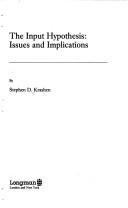
Krashen's foundational academic work explaining why comprehensible input — not grammar drilling — is the engine of acquisition. Reading it second gives you the theoretical backbone that justifies every method choice that follows.
Strategy: Building Your Spanish Input Machine
BeginnerTranslate acquisition theory into a concrete daily system — choosing the right materials, structuring listening and reading sessions, and making Spanish unavoidable in your life.
▸ Study plan for this stage
Pace: 5–6 weeks total: Weeks 1–2, read "How to Learn Any Language" (~20–25 pages/day, paired with active note-taking on Farber's multi-front system); Weeks 3–6, read "Dreaming in Cuban" (~15–20 pages/day in a bilingual read-along format — read each chapter in English, then re-read key passages in a Spanis
- Farber's 'multi-front attack': attacking a language simultaneously through listening, reading, speaking, and vocabulary rather than one skill at a time
- The 'hidden moments' principle from Farber — converting dead time (commutes, chores, waiting) into Spanish input opportunities using flashcards, audio, and self-talk
- Spaced repetition and vocabulary chunking: Farber's method of building a personal word list and reviewing it in short, frequent bursts rather than marathon sessions
- Comprehensible input as the engine of acquisition: choosing materials that are just above your current level (i+1) so meaning can be inferred from context
- Authentic literary input vs. textbook input: García's 'Dreaming in Cuban' exposes you to real Spanish-inflected English prose, Cuban cultural vocabulary, and emotionally resonant storytelling that textbooks cannot replicate
- Building a personalized 'input machine': curating a daily stack of materials (podcasts, graded readers, music, one literary text) so Spanish surrounds you rather than being a scheduled chore
- The role of emotional engagement in retention: García's vivid characters and family drama create the affective hooks that make vocabulary and phrases stick
- Consistency over intensity: Farber's core argument that 30 focused minutes daily outperforms sporadic 3-hour sessions
- According to Farber, what is the 'multi-front attack' and why does he argue it accelerates language acquisition compared to a single-skill focus?
- How does Farber suggest you exploit 'hidden moments' in your day, and what specific Spanish input habits could you realistically attach to your own daily routine?
- What makes 'Dreaming in Cuban' a useful input text for a beginner building a Spanish input system, even though it is written primarily in English?
- How does García's portrayal of Cuban Spanish culture, family letters, and code-switching model the kind of bilingual mental flexibility you are trying to build?
- What is the difference between 'studying Spanish' and 'building an input machine,' and how do Farber's strategies help you make that shift?
- After reading both books, what does your personal daily Spanish input stack look like — what materials, in what order, for how long?
- Farber's Multi-Front Audit: After finishing 'How to Learn Any Language,' map out your own multi-front plan on paper — list one specific resource for each front (listening, reading, vocabulary, speaking) that you will use this week. Be concrete: name the podcast, the app, the playlist.
- Hidden Moments Log: For one full week, carry a small notebook or use your phone to log every 'dead moment' (commute, queue, cooking). Next to each, write the Spanish input habit you will attach to it (e.g., 'subway ride → 15 Anki cards'). Review and refine at the end of the week.
- Dreaming in Cuban Vocabulary Harvest: As you read each chapter of García's novel, flag 10–15 Spanish words, Cuban cultural terms, or Spanish-inflected English phrases (e.g., 'abuela,' 'Santería,' 'mi amor'). Add them to a running Anki or paper flashcard deck and review daily using Farber's spaced repetition approach.
- Bilingual Re-Read Exercise: Choose 3 emotionally powerful passages from 'Dreaming in Cuban' (e.g., Celia's letters, the family reunion scenes). Find the Spanish-language edition ('Soñar en cubano') and read those same passages in Spanish. Note which words you can guess from context — this is your i+1 in action.
- Build Your Input Stack: Design a written 7-day Spanish input schedule inspired by Farber's system. Each day should include at least three 'fronts' and total no more than 60 minutes. Include the specific materials (e.g., 'Coffee Break Spanish podcast, Episode 1 — 20 min'), and stick to it for the full week before adjusting.
- Character-Driven Storytelling Reflection: Write a short paragraph (in English) about one character from 'Dreaming in Cuban' — Celia, Pilar, or Felicia — and explain what Spanish words or Cuban cultural concepts you learned through their story. Then try to rewrite two sentences of your paragraph using any Spanish words you have acquired so far.
Next up: By the end of this stage, you have a functioning daily input system and a felt sense of what authentic Spanish-inflected language sounds and reads like — the next stage will deepen your grammatical scaffolding and active production so that the input you are absorbing can begin flowing back out as real Spanish speech and writing.
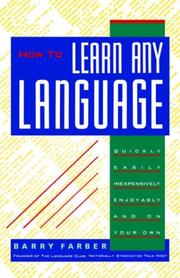
A veteran polyglot's highly practical playbook for surrounding yourself with a language using real media. It bridges theory and daily habit, showing beginners exactly how to assemble a self-study routine from authentic materials.

Your first sustained encounter with authentic literary Spanish — a widely taught, beautifully written novel with enough English context to stay comprehensible. Reading real Spanish prose at this stage trains your brain to tolerate ambiguity and absorb patterns naturally.
Deliberate Practice: Speaking, Grammar as a Tool, and Output
IntermediateLayer structured output and targeted grammar awareness on top of your input base — learning when and how to use deliberate practice without abandoning acquisition principles.
▸ Study plan for this stage
Pace: 6–8 weeks total: Weeks 1–4 on "Practice Makes Perfect" (~20–25 pages/day, working through grammar chapters actively with pen in hand); Weeks 5–8 on "Peak" (~15–20 pages/day, reading reflectively and pausing to map Ericsson's principles back to your Spanish practice log).
- Deliberate practice vs. naive practice: Ericsson's core distinction in 'Peak' — mindless repetition builds habits, but only focused, feedback-driven practice with specific goals builds expertise.
- Mental representations: 'Peak' argues that experts build rich internal models of their domain; for Spanish learners, this means building a felt sense of correct grammar and natural phrasing, not just rule memorization.
- Grammar as a diagnostic tool: 'Practice Makes Perfect' reframes grammar rules not as ends in themselves but as lenses for noticing and self-correcting errors in your own output.
- Structured output cycles: Using 'Practice Makes Perfect' exercises as deliberate output drills — write or speak a sentence, compare to the answer key, identify the gap, and repeat the targeted structure.
- The role of a coach/feedback loop: Ericsson emphasizes that deliberate practice requires immediate, accurate feedback; learners without a tutor must engineer feedback through answer keys, recordings, and native-speaker correction.
- Staying inside the acquisition envelope: Deliberate grammar drills (from 'Practice Makes Perfect') should complement, not replace, comprehensible input — output practice surfaces gaps that more input then fills.
- Pushing just beyond the comfort zone: 'Peak' insists that effective practice targets the edge of current ability; in Spanish, this means choosing grammar structures and speaking tasks that are slightly beyond automatic control.
- Purposeful repetition with variation: 'Practice Makes Perfect' exercises should be revisited with variations (negation, different tenses, new vocabulary) to build flexible, transferable command of each structure.
- According to Ericsson in 'Peak,' what separates deliberate practice from simply putting in hours — and how does that distinction apply to doing the written exercises in 'Practice Makes Perfect'?
- How does 'Practice Makes Perfect' treat grammar rules — as goals to memorize or as tools for self-correction — and what does that mean for how you should use the answer key?
- What is a 'mental representation' in Ericsson's framework, and what would a strong mental representation of, say, the Spanish subjunctive actually feel like in practice?
- How can you engineer the feedback loop that Ericsson says is essential, given that 'Practice Makes Perfect' is a self-study workbook with no live coach?
- Where is the boundary between deliberate grammar output practice and the acquisition-based input work from earlier stages — and how do you keep the two in productive balance?
- How do you identify which specific grammar structures from 'Practice Makes Perfect' deserve the most deliberate practice time, using Ericsson's principle of targeting current weaknesses?
- Daily output drill with self-audit: Complete one 'Practice Makes Perfect' exercise section, then record yourself speaking 5–10 sentences using the same structure. Play it back, compare to the written answers, and write down every gap you notice — this creates the feedback loop 'Peak' demands.
- Weakness inventory: After finishing each chapter of 'Practice Makes Perfect,' list the three structures where you made the most errors. Rank them by difficulty and dedicate the next day's drill exclusively to those — applying Ericsson's principle of targeting the edge of competence.
- Mental representation journal: After reading each chapter of 'Peak,' write a one-paragraph description of what a 'strong mental representation' of a specific Spanish grammar point (e.g., ser vs. estar, preterite vs. imperfect) would look, sound, and feel like. Refine it as your practice improves.
- Spaced deliberate repetition: Revisit any 'Practice Makes Perfect' exercise you previously completed but with a twist — rewrite every sentence in a new tense, negate it, or change the subject pronoun. This builds the flexible command Ericsson associates with genuine expertise.
- Feedback engineering session (weekly): Once a week, post 5–10 sentences produced from your drills to a language exchange partner (italki, Tandem, or HelloTalk) and ask specifically for grammar corrections — then map each correction back to a chapter in 'Practice Makes Perfect' and redo that section.
- Peak principle reflection (bi-weekly): Every two weeks, write a short self-assessment (one page) asking: Am I practicing at the edge of my ability or in my comfort zone? Am I getting real feedback? Am I building richer mental representations? Adjust your 'Practice Makes Perfect' chapter selection based on the answers.
Next up: By completing this stage, you will have a systematic method for turning grammar awareness and deliberate output into genuine fluency gains — equipping you to engage confidently with more advanced, authentic Spanish materials and real-time conversation in the next stage.

A reference-style grammar workbook used as a *tool*, not a syllabus — you dip in to resolve specific gaps exposed by your input practice. Placed here so you have enough exposure to recognize what you don't know before drilling it.

Ericsson's research on deliberate practice gives you a rigorous framework for designing speaking and writing sessions that actually improve performance. Applying its principles to Spanish conversation practice separates purposeful output from mere repetition.
Motivation, Identity, and the Long Game
IntermediateDevelop the psychological resilience, learner identity, and community strategies needed to sustain effort through the long intermediate plateau all the way to genuine conversational fluency.
▸ Study plan for this stage
Pace: 6–8 weeks total: Weeks 1–3 cover "Mindset" (~25–30 pages/day, including reflection time); Weeks 4–7 cover "Ultralearning" (~20–25 pages/day, with heavier note-taking on project design); Week 8 is a synthesis and planning week — no new reading, just consolidation and building your personal Spanish le
- Fixed vs. Growth Mindset (Dweck): The belief that language ability is innate and fixed is the single greatest psychological threat to long-term Spanish progress — recognizing and reframing this belief is foundational.
- The Power of 'Yet' (Dweck): Reframing failure ('I can't hold a conversation') as a temporary, process-solvable state ('I can't hold a conversation yet') sustains motivation through the intermediate plateau.
- Effort and Process Praise (Dweck): Valuing the process of studying Spanish — consistency, strategy-switching, recovery from gaps — over outcome metrics like test scores or fluency labels.
- Learner Identity (Dweck + Young): Internalizing 'I am someone who learns Spanish' rather than 'I am trying to learn Spanish' creates behavioral consistency and resilience against setbacks.
- Ultralearning Principles (Young): Scott Young's nine principles — Metalearning, Focus, Directness, Drill, Retrieval, Feedback, Retention, Intuition, and Experimentation — provide a concrete architecture for designing an aggressive, self-directed Spanish learning project.
- Directness (Young): The principle that you learn Spanish best by doing Spanish — speaking with natives, consuming authentic media, writing real messages — not by studying about Spanish in the abstract.
- Drill and Retrieval (Young): Isolating and attacking your weakest Spanish sub-skills (e.g., subjunctive triggers, fast listening comprehension) through targeted, spaced repetition and active recall rather than passive review.
- Metalearning and the Learning Map (Young): Before and during a learning project, mapping out what Spanish actually requires (phonology, grammar, vocabulary, pragmatics) and researching how expert learners have navigated each component saves enormous time and prevents plateau-inducing blind spots.
- After reading Dweck, can you identify a specific fixed-mindset belief you have held about your own Spanish ability, articulate where it likely came from, and write a concrete growth-mindset reframe for it?
- How does Dweck's research on effort and praise explain why intermediate Spanish learners often plateau or quit — and what does that imply about how you should talk to yourself after a bad conversation or a failed grammar drill?
- Using Young's Ultralearning framework, what would a 3-month 'Spanish Ultralearning Project' look like for you specifically? Which of the nine principles would you prioritize first, and why?
- Young argues that 'Directness' is the most commonly violated principle in language learning. What does direct practice look like for Spanish at the intermediate level, and how does it differ from what most classroom or app-based learners actually do?
- How do the concepts of 'Drill' and 'Retrieval' from Ultralearning map onto specific Spanish study tools or habits (e.g., Anki, shadowing, output journaling), and how would you redesign your current routine to apply them more rigorously?
- How do Dweck's identity-level mindset shifts and Young's project-based ultralearning methodology complement each other — and where might they create tension that you need to manage as a Spanish learner?
- Mindset Audit Journal (Week 1–2): Keep a daily 5-minute log during your Spanish study sessions. Each entry: one fixed-mindset thought that surfaced, the trigger, and a written growth-mindset reframe. After two weeks, identify your top three recurring fixed-mindset patterns.
- 'Yet' Inventory (Week 2): Write a list of 10 things you currently cannot do in Spanish. Rewrite every single one with 'yet' appended and a one-sentence process note (e.g., 'I can't understand fast native speakers yet — I will add 10 minutes of unscripted YouTube daily'). Post it somewhere visible.
- Metalearning Research Sprint (Week 4–5, during Ultralearning): Spend 3–4 hours researching how successful intermediate-to-advanced Spanish learners structured their journey. Use polyglot blogs, r/Spanish, italki community posts, and YouTube. Produce a one-page 'learning map' that breaks Spanish into its key components and notes the most effective methods for each.
- Design Your Ultralearning Project (Week 6–7): Using Young's project template, draft a full 90-day Spanish Ultralearning Project. Include: a clear goal (specific fluency benchmark), a schedule (hours/week, session structure), which of the nine principles you'll emphasize, your directness activities, your drill targets, and your feedback sources (e.g., a weekly italki tutor session).
- Directness Challenge (Ongoing from Week 5): Commit to at least one 'direct' Spanish activity every single day — a real conversation (italki, Tandem, HelloTalk), writing a message to a native speaker, or watching a full episode of a Spanish-language show without subtitles. Log it. No passive study counts toward this streak.
- Identity Statement and Community Commitment (Week 8): Write a 1-paragraph 'Spanish Learner Identity Statement' grounded in Dweck's identity work. Then join or create one accountability structure — a language exchange partner, a Discord server, a weekly conversation group — and make a written commitment to it. This is your bridge into the next stage.
Next up: By internalizing a growth mindset (Dweck) and designing a structured, direct-practice-first learning project (Young), the reader is now psychologically and strategically equipped to engage with the intensive grammar, vocabulary, and immersion methods that the next stage will demand in concrete, skill-building detail.
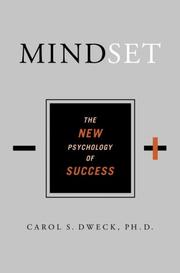
Dweck's growth-mindset research directly addresses the self-defeating beliefs that kill adult language learning — fear of mistakes, fixed-ability thinking, and giving up after plateaus. Reading it mid-journey recharges motivation at exactly the right moment.

Young's framework for aggressive, self-directed learning projects — including his own MIT curriculum and language immersion experiments — gives you a complete project-management lens for designing a sprint to conversational fluency and holding yourself accountable.
Fluency: Immersion, Culture, and Crossing the Finish Line
ExpertUse deep cultural immersion through literature and structured immersion methodology to close the gap between 'pretty good' and genuinely fluent, natural Spanish.
▸ Study plan for this stage
Pace: 10–12 weeks total. Weeks 1–7: Read "Cien años de soledad" at ~15–20 pages/day in Spanish (no translation crutch — use context and a Spanish-only dictionary). Weeks 8–10: Read "Becoming Fluent" at ~25–30 pages/day, actively mapping Roberts' cognitive and immersion strategies onto your lived experienc
- Magical realism as a linguistic and cultural lens: García Márquez's prose demands tolerance for ambiguity, non-linear time, and culturally embedded metaphor — the same cognitive flexibility required for true fluency.
- Passive vs. active vocabulary at the advanced level: 'Cien años de soledad' surfaces rare, archaic, and regional Spanish vocabulary that forces learners to expand beyond textbook registers.
- Roberts' cognitive framework for adult language acquisition: understanding how adult brains form new linguistic habits differently from children, and using that to your strategic advantage rather than fighting it.
- The 'fluency gap' — the psychological and neurological distance between 'advanced' and 'native-like': Roberts identifies why plateau-breaking requires deliberate discomfort, not just more input.
- Structured immersion methodology: moving beyond passive consumption to creating an environment where Spanish is the operating language of your daily cognitive life.
- Cultural schema and world knowledge: fluency in Spanish requires internalizing the historical, political, and social context of the Spanish-speaking world — Macondo is a microcosm of Latin American identity.
- Code-switching resistance: training yourself to think, dream, and self-narrate in Spanish rather than translating from your native language.
- Self-monitoring and metacognition: Roberts' emphasis on learners becoming their own diagnosticians — identifying specific gaps rather than vaguely 'practicing more'.
- After reading 'Cien años de soledad' entirely in Spanish, which recurring stylistic features of García Márquez's prose (e.g., hypotaxis, magical juxtaposition, use of the imperfect) gave you the most difficulty, and what does that reveal about your specific fluency gaps?
- According to Roberts in 'Becoming Fluent,' why do adult learners have unique cognitive advantages over children in language acquisition, and how did you leverage those advantages while reading García Márquez?
- How does the Buendía family's cyclical history in 'Cien años de soledad' reflect broader Latin American cultural narratives, and why does understanding this cultural context matter for achieving natural, fluent Spanish?
- What specific immersion strategies does Roberts recommend for closing the advanced plateau, and which three did you implement during your reading of 'Cien años de soledad'?
- How does Roberts define 'fluency' as distinct from 'proficiency,' and do you agree with his definition after your experience with García Márquez's novel?
- What is one passage from 'Cien años de soledad' that you could not have fully understood without cultural knowledge beyond the language itself, and how did you resolve that gap?
- 'Spanish-only dictionary' discipline: For every unknown word encountered in 'Cien años de soledad,' look it up exclusively in a monolingual Spanish dictionary (e.g., RAE's Diccionario de la lengua española). Write the definition in Spanish in a vocabulary journal — never in your native language.
- Oral retelling sessions: After each chapter of 'Cien años de soledad,' spend 5 minutes giving an unscripted spoken summary in Spanish (record yourself). Review recordings weekly to track fluency, filler words, and grammatical self-correction in real time.
- Roberts' 'deliberate discomfort' log: Each week, following Roberts' framework, identify one specific area where you are NOT fluent (e.g., subjunctive in complex subordinate clauses, García Márquez-style long sentences) and spend 20 minutes daily on targeted drills or imitation writing for that exact gap.
- Cultural immersion deep-dive: Choose three culturally significant references from 'Cien años de soledad' (e.g., the banana plantation massacre, the civil wars, Remedios la Bella's ascension) and research each one in Spanish — read a Spanish-language Wikipedia article, watch a related Spanish-language documentary clip, then write a 150-word reflection in Spanish connecting the cultural context to t
- Imitation writing exercise: Select one paragraph of García Márquez's prose that you find particularly complex or beautiful. Analyze its sentence structure, verb tenses, and rhythm. Then write your own original paragraph in the same style about a real event from your own life — in Spanish.
- Roberts-guided immersion audit: Using the immersion methodology outlined in 'Becoming Fluent,' conduct a full audit of your daily environment. Redesign at least five daily routines (e.g., phone language settings, internal monologue, journaling, music, social media) to operate entirely in Spanish, and keep a two-week log of how this affects your comfort and spontaneity with the language.
Next up: By wrestling with the linguistic density of García Márquez and internalizing Roberts' strategic immersion framework, the reader has moved from rule-following to instinct-driven Spanish — the ideal foundation for any subsequent stage focused on professional mastery, regional specialization, or creative production in the language.

Reading García Márquez's masterpiece in the original Spanish is a landmark fluency test and reward — rich, idiomatic, and culturally essential. Tackling it signals you have crossed into advanced comprehension and exposes you to the full expressive range of the language.

Written by a cognitive scientist and a diplomat specifically for adult learners, this book synthesizes neuroscience and real-world immersion strategies to help you make the final push from advanced intermediate to true fluency — the perfect capstone for the curriculum.
Discussion
Keep reading
Paths that share books, cover the same subject, or open a related topic.