Keep a journal worth rereading
This curriculum moves from the simple joy of putting pen to paper all the way to building a sophisticated, interconnected knowledge system. Each stage builds on the last: first you establish a daily writing habit, then you deepen your reflective practice, and finally you construct a lasting commonplace and note-taking architecture that compounds over a lifetime.
Foundations: Starting the Habit
BeginnerUnderstand why journaling matters, overcome the blank-page fear, and establish a consistent daily writing practice with zero friction.
▸ Study plan for this stage
Pace: 6–8 weeks total: Weeks 1–4 for "The Artist's Way" (~20–25 pages/day, including weekly tasks), Weeks 5–8 for "One Year to an Organized Life" (~15–20 pages/day, reading January–June chapters and adapting the monthly frameworks to your journaling habit)
- Morning Pages (The Artist's Way): writing three longhand, stream-of-consciousness pages every morning as a non-negotiable daily ritual to silence the inner critic
- The Inner Critic / Censor: Cameron's concept of the internal voice that blocks creative output, and how Morning Pages act as a drain for that noise before it can sabotage the day
- Artist Dates: scheduled, solo excursions to feed creative input — reinforcing that journaling is a two-way practice of output AND replenishment
- Creative Unblocking as a 12-Week Journey: the idea that habit formation requires structured, progressive commitment rather than a single decision
- The Blank Page as a Threshold, Not a Wall: reframing the fear of starting as a normal creative experience that dissolves through low-stakes, judgment-free writing
- Organizational Rhythms from Leeds: using monthly and weekly planning rituals (from 'One Year to an Organized Life') to anchor journaling sessions to existing routines, reducing friction to near zero
- Time-Blocking and Environment Design: Leeds's principle of assigning a specific time, place, and container for each habit — applied here to protect daily writing time
- Progress Over Perfection: both books converge on the idea that consistency and showing up matter infinitely more than the quality of any single entry
- After reading 'The Artist's Way,' can you explain in your own words what Morning Pages are, why Cameron insists they be done longhand, and what specific psychological function they serve?
- What is the 'inner censor' according to Cameron, and what two core tools does she prescribe to dismantle it over the 12-week program?
- How does 'One Year to an Organized Life' define a sustainable habit, and what structural elements (time, place, trigger) does Leeds say must be in place before a new routine can stick?
- How do the monthly planning frameworks in Leeds's book translate into a practical weekly journaling schedule — what would January's setup look like for a brand-new journaler?
- What strategies from both books would you use to recover after missing several days of journaling, without abandoning the habit entirely?
- How do the philosophies of Cameron and Leeds complement each other in this stage — where do they agree, and where does each fill a gap the other leaves?
- Start Morning Pages on Day 1 of reading 'The Artist's Way' — three pages, longhand, immediately upon waking, every day for the full 8 weeks. Do not wait until you finish the book.
- Complete each of the 12 weekly check-in tasks Cameron provides at the end of every chapter (e.g., listing 'imaginary lives,' writing a letter to your inner critic) in a dedicated section of your journal.
- After finishing Week 4 of 'The Artist's Way,' do a single Artist Date — a solo outing of at least one hour with no phone — and write a one-page debrief entry immediately afterward describing what you noticed.
- Using Leeds's January chapter as a template, design a one-page 'Journaling Setup Sheet': your chosen time slot, physical location, journal type, and a 'minimum viable entry' definition (e.g., even one sentence counts) to eliminate blank-page paralysis.
- At the end of each week, write a 'Week in Review' entry with three fixed prompts borrowed from Leeds's organizational check-ins: (1) What did I actually write this week? (2) What got in the way? (3) What one friction point will I remove next week?
- On the final day of the stage, write a two-page 'Foundations Letter' to your future self: summarize what you learned from both books, describe your current journaling habit in concrete terms (when, where, how long), and name the single biggest mindset shift you experienced.
Next up: Completing this stage gives you a running daily writing practice and a friction-free routine — the essential infrastructure needed to move from simply showing up on the page to deliberately curating and organizing what you capture, which is the core skill of commonplace-book keeping explored in the next stage.

Cameron's 'Morning Pages' concept is the single most accessible on-ramp to daily writing — three longhand pages every morning strips away self-censorship and builds the muscle of showing up. Starting here makes every later system feel natural rather than forced.
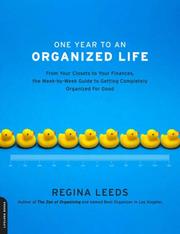
Provides gentle structure around daily habits and reflection routines, helping the beginner see journaling not as a chore but as an anchor inside a broader intentional life — a crucial mindset before diving into method.
Reflective Practice: Writing That Thinks
BeginnerMove beyond free-writing into purposeful reflection — using prompts, structured entries, and self-inquiry to extract genuine insight from daily experience.
▸ Study plan for this stage
Pace: 6–8 weeks total: Weeks 1–4 for "Journal to the Self" (~20–25 pages/day, including pausing to try each technique as introduced); Weeks 5–8 for "The Bullet Journal Method" (~15–20 pages/day, with daily BuJo practice running alongside reading)
- Kathleen Adams's 'Journal Ladder' — a spectrum of 17+ techniques (lists, captured moments, unsent letters, dialogues, etc.) that match different emotional and cognitive needs
- Structured vs. free-form entries: how adding a prompt or frame transforms venting into genuine self-inquiry
- The 'Write fast, write everything, write without judgment' triad from Adams — suspending the inner critic to access authentic reflection
- Dialogue writing as a tool for externalizing inner conflict — conversing on the page with people, body parts, emotions, or abstract concepts
- Ryder Carroll's core philosophy: the Bullet Journal is a mindfulness practice disguised as a productivity system — intention over information
- The BuJo architecture: Index, Future Log, Monthly Log, Daily Log, and Collections — and how each layer supports a different reflective timescale (day → month → year → life)
- Rapid Logging and the five key symbols (task, event, note, migrate, schedule) as a minimalist language for capturing experience without over-processing it
- The Monthly and Daily Reflection ('Migration') ritual — Carroll's built-in mechanism for reviewing, culling, and extracting meaning from logged experience
- According to Adams, why is a single journaling technique insufficient, and how does the Journal Ladder help a writer choose the right tool for a given moment or emotional state?
- How does Adams distinguish a 'captured moment' entry from ordinary diary writing, and what makes it a vehicle for insight rather than mere record-keeping?
- What does Carroll mean when he says the Bullet Journal is about 'living intentionally,' and how does the system's design enforce reflection rather than just task management?
- Walk through the Migration process in Carroll's system: what questions does the writer ask during migration, and why is the act of rewriting (rather than copying) tasks central to the method's reflective purpose?
- How do Adams's dialogue technique and Carroll's Collections serve a similar cognitive function — and where do they differ in approach and use case?
- After working with both books, how would you design a single weekly journaling routine that incorporates at least one Adams technique and one BuJo structural element?
- **The Technique Sampler (Adams):** Over the first two weeks, try one new technique from Adams's Journal Ladder each day — lists, captured moments, unsent letters, perspectives, dialogues — and write a one-sentence meta-note afterward on what each technique revealed that free-writing alone would not have.
- **Dialogue on the Page (Adams):** Choose an unresolved tension in your life (a relationship, a decision, a fear). Write a structured dialogue between yourself and the other 'party' (a person, an emotion, or even your future self) for at least 15 minutes, following Adams's guidance on letting both voices speak fully without editing.
- **Build Your First BuJo (Carroll):** Set up a physical notebook with all four core modules — Index, Future Log, Monthly Log, and Daily Log — exactly as Carroll prescribes. Use it as your only task/event capture system for the entire duration of reading the book.
- **The Migration Ritual (Carroll):** At the end of each week during Weeks 5–8, perform a full Migration: review every incomplete task, ask Carroll's key question ('Does this matter enough to rewrite?'), and note in a separate Collection what you chose to drop and *why* — turning the cull itself into a reflective entry.
- **Prompt-Driven Captured Moment (Adams + Carroll):** Once a week, use an Adams captured-moment prompt ('Describe a moment from today when you felt most like yourself') and log the insight as a BuJo Collection entry, practicing the bridge between Adams's depth-oriented writing and Carroll's structured capture.
- **End-of-Stage Synthesis Entry:** After finishing both books, write a 2–3 page journal entry (using any Adams technique you choose) that answers: 'What do I now believe purposeful reflection requires — and what single habit will I carry forward?' Keep this entry; it will serve as a baseline for comparing growth in later stages.
Next up: Mastering Adams's structured techniques and Carroll's intentional logging gives the reader a reliable daily practice and a personal archive of insights — the raw material needed to move into deeper creative and analytical writing, where that self-knowledge is shaped into work meant for an audience beyond the self.
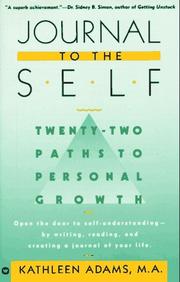
Adams catalogs dozens of concrete journaling techniques (lists, captured moments, dialogue, unsent letters) and explains when to use each — giving the learner a full toolkit rather than a single method.
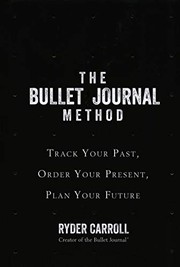
Carroll's system introduces intentional logging, migration, and reflection cycles (daily, monthly, future). Reading it after Adams means the learner can map Adams's techniques onto a practical, repeatable structure.
The Commonplace Book Tradition
IntermediateUnderstand the centuries-old practice of collecting and organizing the best ideas you encounter — quotes, passages, observations — and why it accelerates thinking and creativity.
▸ Study plan for this stage
Pace: 5–6 weeks total: Week 1 — "Steal Like an Artist" (~30 pages/day, finish in 3–4 days, then spend 2–3 days reflecting and journaling); Week 2 — "Keep Going" (~25 pages/day, finish in 4–5 days, then 2 days of practice); Weeks 3–6 — "How to Take Smart Notes" (~20 pages/day, slower and more deliberate, w
- The 'genealogy of ideas' — nothing is original, all creative work builds on what came before (Kleon, Steal Like an Artist): collecting influences is not theft but the foundation of original thought
- Curation as a creative act — choosing what to save, copy, and return to is itself a form of thinking and taste-building (Steal Like an Artist)
- The 'logbook' and daily creative rituals — Keep Going introduces the practice of recording what you do each day as a way to sustain momentum and notice patterns over time
- Analog vs. digital thinking spaces — Kleon's 'two desks' concept in Keep Going (one analog, one digital) as a model for separating collection from production
- The Zettelkasten method — Ahrens' system of atomic, linked notes (literature notes, permanent notes, index notes) as a modern, rigorous commonplace book
- Writing to think, not writing to record — Ahrens' core argument that notes are not storage but a thinking tool; elaboration and connection are what create insight
- The slip-box as a conversation partner — how a well-maintained note collection talks back, generates surprise, and surfaces ideas you didn't know you had (Ahrens)
- Fleeting → Literature → Permanent notes: the three-stage processing pipeline that transforms raw encounters with ideas into durable, reusable intellectual capital (Ahrens)
- According to Kleon in 'Steal Like an Artist,' why is copying and collecting the work of others a legitimate — even necessary — starting point for original thinking, and how does this reframe the purpose of a commonplace book?
- What daily and weekly rituals does Kleon recommend in 'Keep Going' for sustaining a creative practice, and how do his logbook and 'bliss station' ideas function as a personal commonplace system?
- How does Ahrens distinguish between fleeting notes, literature notes, and permanent notes in 'How to Take Smart Notes,' and why does this three-layer structure matter for long-term knowledge building?
- What does Ahrens mean when he says writing is not the outcome of thinking but the medium of thinking — and how does this challenge the way most people use journals or highlight books?
- How do the ideas in all three books converge on the principle that a collection of notes should be a living, connected system rather than a static archive?
- What concrete features of the Zettelkasten (atomicity, linking, indexing) make it a more powerful tool than a traditional highlight-and-forget reading habit?
- 'Steal Like an Artist' exercise — Build your first 'swipe file': for one full week, collect 1–3 quotes, images, or passages per day that genuinely excite you. Write one sentence next to each explaining WHY it resonates. At the end of the week, look for a theme you didn't expect.
- 'Keep Going' exercise — Start a daily logbook for the duration of this stage. Each evening, write 3–5 bullet points: what you read, what you made or thought, and one idea you want to return to. At the end of week 2, review the log and write a short paragraph about any patterns you notice.
- Two-desk experiment (from Keep Going) — Designate one physical space (even just a notebook and pen) as your analog thinking zone and keep it screen-free. Use it exclusively for handwriting quotes, sketching connections, and free-associating. Notice how your thinking differs from when you type.
- 'How to Take Smart Notes' exercise — Process the last book you read (or 'Steal Like an Artist' itself) through Ahrens' three-note pipeline: write fleeting notes while reading, convert the best into literature notes in your own words, then write at least 3 permanent notes that connect those ideas to something you already know.
- Link-building sprint — After finishing all three books, write 10 permanent notes (one idea per note, in your own words). Then spend 30 minutes doing nothing but drawing connections between them — use arrows, tags, or a simple index. Write a reflection: which connections surprised you?
- Commonplace book audit — Review any existing journals, highlights, bookmarks, or saved articles you have. Using Ahrens' framework, categorize them: which are fleeting (unprocessed)? Which are literature notes? Which have been truly internalized as permanent knowledge? Set a goal to process at least five into permanent notes.
Next up: Mastering the commonplace tradition — especially Ahrens' insistence that notes must be written in your own words and actively linked — naturally raises the question of *how* to write well under pressure and in depth, setting the stage for exploring long-form journaling, reflective writing, and personal essay as the next level of the curriculum.
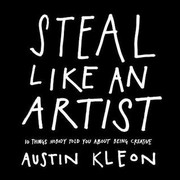
A short, visual manifesto on collecting influences and remixing ideas — it reframes the commonplace book as a creative act rather than mere archiving, providing the motivational 'why' before the practical 'how.'

Kleon's follow-up digs into the daily rituals — including his own analog note and clipping practices — that sustain a creative commonplace habit over years, bridging inspiration and long-term consistency.

Ahrens introduces the Zettelkasten method (the intellectual heir to the commonplace book) and explains how linking atomic notes generates original ideas. This is the pivotal book that elevates collecting into genuine knowledge-building.
Deep Systems: Building a Second Brain
ExpertDesign a personal knowledge management system that integrates journaling, commonplace collecting, and note-linking into one cohesive, searchable, ever-growing external mind.
▸ Study plan for this stage
Pace: 8–10 weeks total: Weeks 1–4 on "Building a Second Brain" (~25–30 pages/day, including time to set up a digital PKM tool like Notion, Obsidian, or Evernote in parallel); Weeks 5–9 on "Antinet Zettelkasten" (~20–25 pages/day, slower pace to allow for physical card creation and linking); Week 10 reserv
- CODE Workflow (Capture, Organize, Distill, Express) from Forte — the four-stage lifecycle every piece of information passes through in a Second Brain
- PARA Organization System (Projects, Areas, Resources, Archives) from Forte — a universal folder/tag structure that organizes information by actionability rather than topic
- Progressive Summarization from Forte — layered highlighting and distillation that makes notes increasingly scannable and useful over time without re-reading everything
- Intermediate Packets from Forte — breaking creative and intellectual work into discrete, reusable chunks that can be recombined across projects
- The Antinet's Analog Logic from Scheper — why Scott Scheper argues that a physical, address-based card system produces deeper thinking than purely digital tools
- Numeric-Alpha Addressing & Branching from Scheper — the unique ID scheme (e.g., 3141/1A2) that allows infinite non-linear branching and creates an organic, ever-growing structure
- The Notecard as a Unit of Thought from Scheper — writing each card as a standalone, permanent note in your own words to force genuine comprehension and synthesis
- Linking, Indexes, and the Bibliographic Layer from Scheper — how the register/index and source cards tie the Antinet together into a navigable, self-referencing knowledge network
- After reading Forte, can you explain the difference between organizing information by topic (a traditional folder system) versus organizing by actionability (PARA), and why Forte argues the latter is superior for knowledge workers?
- How does Progressive Summarization in 'Building a Second Brain' relate to the act of distilling a commonplace book entry — and at what layer does a note become 'ready to use' in a project?
- Scheper argues the Antinet produces a 'conversation with a second self' over time. What structural features of the numeric-alpha address system make this possible, and how does it differ from digital backlinking?
- What is an Intermediate Packet, and can you identify three specific Intermediate Packets you have already created (or could create) from your own journaling and commonplace collecting practice?
- How do Forte's PARA system and Scheper's Antinet handle the same core problem — information retrieval under uncertainty — differently, and what are the trade-offs of each approach?
- Having read both books, how would you personally integrate or reconcile a digital Second Brain with an analog Antinet — or argue for choosing one over the other — based on your own thinking and writing goals?
- PARA Audit (Week 2): Take every note, journal entry, and commonplace book excerpt you currently own and sort it into Forte's PARA structure inside your chosen digital tool. Notice what resists categorization — those friction points reveal gaps in your system.
- Progressive Summarization Sprint (Week 3): Select 10 older commonplace entries or journal reflections. Apply all four layers of Progressive Summarization (full text → bold passages → highlighted passages → executive summary) to each. Compare how the meaning shifts at each layer.
- Intermediate Packet Inventory (Week 4): Review one completed project (personal or professional). Reverse-engineer it into Intermediate Packets — outlines, drafts, reference lists, diagrams. Store each as a discrete, reusable note in your Second Brain and tag it for future recombination.
- First 20 Antinet Cards (Weeks 5–6): Following Scheper's method exactly, hand-write 20 notecards on ideas from 'Building a Second Brain' itself. Assign each a numeric-alpha address, write a source card for Forte's book, and create at least three branching sequences (e.g., 1/1, 1/1A, 1/1A1). This forces you to use one system to process the other.
- Index & Register Build (Week 8): After accumulating 40+ Antinet cards, build a handwritten register/index as Scheper instructs. Attempt to look up a concept using only the index — note where it fails and add missing entry points. This stress-tests your linking logic.
- System Integration Manifesto (Week 10): Write a 1–2 page personal document (digital or analog) titled 'My PKM Constitution.' Define: which tool handles which type of content, how your journal feeds into your commonplace book, how your commonplace book feeds into your Second Brain/Antinet, and what your weekly review ritual looks like. This becomes your living operating manual.
Next up: By completing this stage, the reader has moved from collecting and reflecting to architecting — they now possess a functioning, personalized knowledge system, which positions them to explore the advanced output side of PKM: how a mature Second Brain or Antinet becomes the engine for long-form writing, creative synthesis, and publishing original ideas.
Forte's CODE framework (Capture, Organize, Distill, Express) is the most complete modern synthesis of journaling and note systems — it directly applies everything learned in prior stages into a unified digital and analog workflow.

Scheper makes the case for a fully analog, numbered Zettelkasten and provides the deepest practical guide to the method. Reading it last lets the learner consciously choose between digital and analog approaches from a position of full understanding.
Discussion
Keep reading
Paths that share books, cover the same subject, or open a related topic.