How to learn Screenwriting
This curriculum takes a beginner from zero screenwriting knowledge to a sophisticated, professional-level craft, building in four deliberate stages. Each stage assumes mastery of the previous one — starting with story fundamentals, moving into screenplay-specific form and technique, then deepening with character and dialogue, and finally tackling the professional realities of the industry.
Foundations: Story Before Script
BeginnerUnderstand the universal principles of storytelling — structure, conflict, and dramatic need — before touching screenplay format. These concepts are the bedrock everything else is built on.
▸ Study plan for this stage
Pace: 8–10 weeks total: Weeks 1–5 for "Story" by Robert McKee (~25–30 pages/day, 5 days/week), then Weeks 6–10 for "The Writer's Journey" by Christopher Vogler (~20–25 pages/day, 5 days/week). Reserve one day per week for review, journaling, and exercises. No screenplay software needed yet — just a notebo
- Story vs. Plot: McKee's distinction between the raw events of a story (story) and the structured, causally linked sequence presented to an audience (plot/design) — understanding that great screenwriting is about selection and arrangement, not just invention.
- The Controlling Idea: McKee's concept that every story must express a single, irreducible meaning — a sentence that unites theme and value change — which becomes the moral compass guiding every scene decision.
- Structure Spectrum & the Five-Part Archplot: McKee's framework of Classical (Archplot), Minimalist (Miniplot), and Anti-Structure (Antiplot) designs, and the five-part Archplot shape — Inciting Incident, Progressive Complications, Crisis, Climax, Resolution — as the backbone of mainstream dramatic s
- Gap, Conflict, and Turning Points: McKee's core engine of scene construction — the Gap between expectation and result, the three levels of conflict (inner, personal, extra-personal), and how turning points (reversals and revelations) generate genuine surprise and inevitability.
- The Hero's Journey (Monomyth): Vogler's adaptation of Joseph Campbell's universal story pattern — the 12-stage circular journey from the Ordinary World through the Supreme Ordeal and back — as a diagnostic and generative tool for story structure.
- The 12 Archetypes: Vogler's character archetypes (Hero, Mentor, Threshold Guardian, Herald, Shapeshifter, Shadow, Trickster, Ally) not as rigid roles but as psychological functions and energies that different characters — or even the same character — can embody at different moments.
- Dramatic Need vs. Want: The distinction (reinforced by both McKee and Vogler) between what a protagonist consciously wants (outer goal) and what they unconsciously need (inner wound/transformation), and how the gap between the two drives the entire story.
- Universal vs. Cultural Story: Both authors argue that certain story structures resonate across all cultures and eras because they mirror the architecture of the human psyche — giving the reader a framework that transcends genre, medium, or era.
- According to McKee, what is the difference between 'story' and 'plot,' and why does that distinction matter when designing a screenplay?
- What is a Controlling Idea, how do you construct one, and how should it influence decisions made at the scene level?
- Walk through the five stages of McKee's Archplot structure. What is the specific dramatic function of the Inciting Incident, and why must it be an event rather than a mood or atmosphere?
- What is a 'Gap' in McKee's terms? Describe a scene — from a film you know — where a Gap occurs and explain how it creates conflict and propels the story forward.
- List Vogler's 12 stages of the Hero's Journey and identify which stages correspond to the three-act structure. Where does the 'Ordeal' fall, and why is it the emotional centerpiece?
- Choose three of Vogler's eight archetypes and explain their psychological function. How might a single character shift between two archetypes across a story, and what does that shift reveal about theme?
- Controlling Idea Autopsy: Pick three films you know well (different genres). Write a one-sentence Controlling Idea for each using McKee's formula (Value + Cause). Then test your sentences: does every major scene in the film either build toward or complicate that idea? Revise until it holds.
- Gap Mapping: Watch a 10-minute sequence from any film with the sound off. Pause at each scene transition and write down: (a) what the character expected to happen, (b) what actually happened, and (c) what level of conflict (inner/personal/extra-personal) the Gap opened. Identify the turning point.
- Hero's Journey Beat Sheet: Take the same film you used above (or a different one) and map it against all 12 of Vogler's stages. Note any stages that are compressed, expanded, or absent. Write a paragraph explaining what that tells you about the film's priorities.
- Archetype Casting: Take a story you love (film, novel, myth, or fairy tale) and cast every significant character into one or more of Vogler's eight archetypes. Then ask: which archetype is missing? What would the story gain or lose if you added it?
- Original Story Seed (No Format Yet): In plain prose — no slug lines, no action lines — write a 1-page description of an original story idea that includes: a protagonist with a clear Want and a hidden Need, an Inciting Incident that creates an irreversible Gap, and a Controlling Idea you can state in one sentence. This is story thinking, not screenwriting yet.
- McKee vs. Vogler Synthesis Journal: After finishing both books, write a 1–2 page personal essay answering: 'Where do McKee's structural principles and Vogler's archetypal journey reinforce each other, and where do they seem to be in tension?' This forces active synthesis rather than passive reading.
Next up: Mastering story architecture and character psychology in prose form here gives you the dramatic instincts needed to make intentional, meaningful choices when you encounter screenplay format and scene-level craft in the next stage — so that format becomes a tool for expressing story, never a substitute for it.
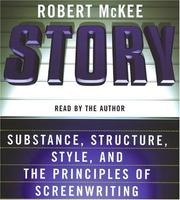
The definitive master class in story structure, genre, and dramatic principle. Reading this first gives you the conceptual vocabulary (inciting incident, turning points, climax) that every other screenwriting book assumes you already have.
Translates Joseph Campbell's hero's journey into a practical storytelling framework used throughout Hollywood. It deepens McKee's structural ideas by adding a mythic, archetypal layer that helps you understand WHY certain story beats resonate.
The Screenplay: Form and Structure
BeginnerLearn the specific format, conventions, and structural architecture of a screenplay — how a story becomes a script — and write your first properly formatted pages.
▸ Study plan for this stage
Pace: 6–8 weeks total: Weeks 1–3 on "Screenplay" by Syd Field (~20–25 pages/day, reading actively with notes); Weeks 4–6 on "Save the Cat!" by Blake Snyder (~15–20 pages/day, lighter and faster-paced); Weeks 7–8 reserved for review, revision of exercises, and integrating both frameworks side by side.
- The Three-Act Structure (Setup, Confrontation, Resolution) as defined by Syd Field — the foundational spine of a Hollywood screenplay
- The Paradigm: Field's visual model of a ~120-page screenplay with precise structural turning points at pages 25–27 (Plot Point I) and 85–90 (Plot Point II)
- Scene, sequence, and act as distinct units of dramatic action — understanding how each level of structure nests inside the next
- Proper screenplay format: slug lines (INT./EXT.), action lines, character cues, dialogue blocks, parentheticals, and transitions — the professional page as a visual contract with the reader
- The Pinch: Field's mid-act pressure points (around pages 45 and 75) that keep tension escalating between the major plot points
- Blake Snyder's Beat Sheet (the '15 Beats'): a more granular structural map layered on top of the three-act framework, from Opening Image to Final Image
- The 'Save the Cat!' moment and the concept of making the audience root for your protagonist — character likeability as a structural tool, not just a character trait
- Genre awareness via Snyder's 10 genre categories: understanding that structure is not one-size-fits-all and that genre sets the audience's structural expectations
- According to Syd Field's Paradigm, at what approximate page numbers do Plot Point I and Plot Point II occur, and what is the dramatic function of each turning point?
- What is the difference between a scene and a sequence in Field's framework, and how do sequences build toward an act?
- Can you name and briefly describe all 15 beats of Blake Snyder's Beat Sheet, and map them onto Field's three-act structure?
- What does 'Save the Cat!' mean as a storytelling principle, and why does Snyder argue it must happen early in Act One?
- What are the non-negotiable elements of professional screenplay format on a single page — and why does correct formatting matter beyond aesthetics?
- How do Field's 'Pinches' and Snyder's 'Midpoint' beat serve a similar structural purpose, and where do they differ in emphasis?
- FORMAT DRILL — Write 3–5 pages of a scene you know well (adapt a scene from a film or book you love) using only proper screenplay format: slug lines, action lines, dialogue, and transitions. The goal is muscle memory for the page, not original story yet.
- PARADIGM MAPPING — Choose any film you know well and map it onto Field's Paradigm: identify the Setup, Act One Plot Point, Midpoint, Act Two Plot Point, and Resolution with approximate timestamps. Write a one-paragraph justification for each beat you identify.
- BEAT SHEET BREAKDOWN — Using Snyder's 15-beat sheet, do the same exercise with a second film (ideally a different genre). Print or draw the Beat Sheet template and fill it in scene by scene. Compare how closely the film adheres to Snyder's page-count targets.
- SAVE THE CAT MOMENT — Write a single original scene (1–2 pages, properly formatted) whose sole purpose is to make us like, pity, or root for a protagonist. No plot — just character revelation through action. Then write a one-sentence explanation of why your chosen action earns audience sympathy.
- ORIGINAL OUTLINE — Using both Field's Paradigm and Snyder's Beat Sheet as parallel scaffolding, outline an original feature film idea. Identify all 15 Snyder beats AND Field's two plot points and two pinches. Resolve any conflicts between the two frameworks in writing.
- FIRST PAGES — Write the first 10 pages of your original idea in proper screenplay format, ensuring your Opening Image (Snyder) and the establishment of your protagonist's ordinary world (Field's Setup) are both present and doing double duty.
Next up: Mastering format and macro-structure gives you the architectural blueprint; the next stage builds on this foundation by diving into the craft of scene-level writing — character psychology, dialogue, subtext, and conflict — turning a correctly structured outline into pages that are alive on a moment-to-moment basis.
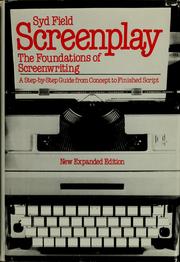
The book that codified the three-act paradigm for screenwriting. It is the essential primer on format, scene construction, and page-count structure — the industry's shared language for decades.

Introduces the 15-beat 'Blake Snyder Beat Sheet,' a highly practical and widely-used structural map. After Field's paradigm, Snyder's beats give you a granular, scene-by-scene scaffolding to actually draft your first script.
Deepening Craft: Character, Scene, and Dialogue
IntermediateMove beyond structure into the moment-to-moment craft of writing compelling characters, subtext-rich dialogue, and scenes that do multiple jobs at once.
▸ Study plan for this stage
Pace: 10–13 weeks total: ~3–4 weeks on "Writing Drama" by Lavandier (dense theory, ~20–25 pages/day), ~3 weeks on "The Screenwriter's Bible" by Trottier (~30 pages/day, treating it as a craft workshop reference), and ~3–4 weeks on "Adventures in the Screen Trade" by Goldman (~25–30 pages/day, reading anal
- Dramatic want vs. need: Lavandier's distinction between what a character consciously pursues (want) and what they truly require for growth (need), and how tension between the two drives character arcs
- The three-dimensional character: using Lavandier's framework of physiology, sociology, and psychology to build characters whose behavior is internally consistent and surprising at the same time
- Obstacle and conflict as the engine of drama: Lavandier's rigorous taxonomy of conflict types (inner, relational, situational) and how every scene must contain genuine resistance
- Scene as multi-tasker: Trottier's principle that every scene must simultaneously advance plot, reveal character, and plant/pay off information — cutting any scene that does only one job
- Subtext and the iceberg principle in dialogue: Trottier's guidance on writing dialogue where characters talk around what they mean, and Goldman's real scripts showing how the best lines carry emotional weight beneath the surface
- The professional's instinct for 'what a movie is about': Goldman's case studies (Butch Cassidy, All the President's Men, Marathon Man) demonstrating that a screenplay's core idea must be expressible in a single, visceral image or question
- Formatting and economy as craft, not bureaucracy: Trottier's detailed breakdown of how white space, action-line rhythm, and slug-line choices are themselves expressive tools that control pace and reader experience
- Nobody knows anything — and the craft response to uncertainty: Goldman's hard-won lesson that commercial unpredictability makes rigorous scene-level craft the only thing a writer can control
- After reading Lavandier, can you articulate the difference between a character's dramatic want and their dramatic need in one of your own script ideas — and explain how keeping them in conflict sustains the story?
- Trottier argues every scene must do multiple jobs. Pick any scene from a produced film you admire: what are the three or more jobs that scene is performing simultaneously, and how would you rewrite it if one job were removed?
- Goldman describes the experience of writing Butch Cassidy and the Sundance Kid and the studio's resistance to its unconventional choices. What does his account reveal about the relationship between a writer's craft convictions and the industrial pressures of Hollywood?
- Using Lavandier's conflict taxonomy, how would you diagnose a scene that feels dramatically flat — and what specific intervention (inner, relational, or situational conflict) would you prescribe to fix it?
- Trottier dedicates significant attention to dialogue economy. What are the concrete techniques he recommends for trimming dialogue without losing character voice, and how does Goldman's own screenplay work illustrate those techniques in practice?
- Across all three books, a consistent theme emerges: great screenwriting is about what is left out. How do Lavandier, Trottier, and Goldman each approach the concept of omission or restraint, and where do their perspectives differ?
- Character want/need stress test (Lavandier): Take a protagonist from a script idea you have. Write two separate half-page monologues — one in which they articulate their want with total conviction, and one in which a scene forces them to confront their need. Then write the scene where those two things collide head-on.
- Scene autopsy (Trottier): Choose three scenes from any produced screenplay you can find online. For each scene, list every job it is doing (plot, character revelation, theme, setup/payoff, tonal shift, etc.). Then rewrite one of the scenes so it picks up a job it was missing — without adding a single line of dialogue.
- Subtext dialogue rewrite (Trottier + Goldman): Write a two-character scene (1–2 pages) in which two people need to discuss something emotionally charged (a betrayal, a goodbye, a confession) but never say the real thing directly. Every line must be about something else. Then annotate each line with what is actually being communicated beneath it.
- Conflict injection drill (Lavandier): Write the same scene three times — once with only inner conflict, once with only relational conflict, once with only situational conflict. Compare how each version changes the reader's experience of the characters and the stakes.
- Goldman's 'what is it about' exercise: For five films you know well, write a single sentence — not a logline, but a core dramatic question or image — that captures what the film is truly about at its deepest level, the way Goldman does for his own work. Then apply the same exercise to your own script idea.
- Full scene workshop (all three books): Write a new scene (2–3 pages) from scratch using a checklist drawn from all three authors: Does it have a clear want driving the scene? Is there genuine obstacle/conflict (Lavandier)? Is it doing at least three jobs (Trottier)? Is the dialogue carrying subtext and could any line be cut (Goldman/Trottier)? Revise until every item on the checklist is satisfied.
Next up: Mastering moment-to-moment craft in character, scene, and dialogue creates the foundation for the next stage, where the focus shifts to rewriting, feedback, and the professional process — because you can only revise with precision what you first understand how to build with intention.

A rigorous, example-packed analysis of dramatic construction at the scene level. It bridges the gap between macro-structure and the micro-craft of writing individual scenes with tension and purpose.
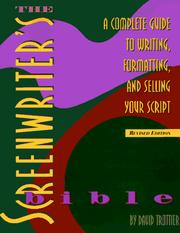
The most comprehensive single-volume reference for professional format, style, and technique. At this stage it serves as both a craft deepener and a go-to reference manual for polishing your work.

Goldman's memoir-meets-craft-book reveals how a master screenwriter actually thinks — about character, adaptation, and the gap between the page and the screen. It adds irreplaceable real-world wisdom to the theoretical knowledge built so far.
Advanced Mastery: Voice, Rewriting, and the Profession
ExpertDevelop a distinctive authorial voice, master the rewriting process, and understand the professional landscape — how scripts are sold, developed, and produced.
▸ Study plan for this stage
Pace: 8–10 weeks total: Weeks 1–5 on "Making a Good Script Great" (~25–30 pages/day, including active annotation and rewriting exercises); Weeks 6–10 on "Which Lie Did I Tell?" (~20–25 pages/day, with slower reading to absorb Goldman's industry anecdotes and craft dissections). Reserve the final 3–4 days
- Structural diagnosis and rewriting — Seger's systematic method for identifying what is broken in a script (story, character, theme, structure) before touching a single line of dialogue
- The three-act paradigm as a diagnostic tool — using act breaks, midpoints, and turning points not just to build a script but to audit and repair one
- Character transformation arcs — Seger's framework for ensuring every major character has a clear, earned emotional journey that serves the story's thematic spine
- Theme as a rewriting compass — articulating the central question or statement of a script and using it to cut scenes, lines, and subplots that don't serve it
- Subtext and layered writing — Seger's techniques for embedding meaning beneath surface dialogue and action so the script rewards multiple readings
- Distinctive authorial voice — Goldman's demonstration, through personal war stories, that a writer's singular perspective and obsessions are a marketable, irreplaceable asset, not an indulgence
- The professional development process — Goldman's insider account of how scripts move from spec to sale to development hell to production, including the roles of agents, producers, studios, and directors
- The rewrite-for-hire reality — Goldman's candid lessons on rewriting other people's material, protecting your vision under notes pressure, and knowing when to fight versus when to fold
- According to Seger, what are the four primary problem areas a writer should diagnose before beginning a rewrite, and what specific questions does she recommend asking about each?
- How does Seger define a 'turning point,' and how can a writer use the absence or weakness of turning points as a rewriting roadmap?
- What does Seger argue is the relationship between theme and structure — and how should a clearly articulated theme change decisions made during a rewrite?
- Goldman describes numerous projects that went sideways in development; what recurring professional lessons does he draw from these experiences about the writer's power (and powerlessness) once a script leaves their hands?
- How does Goldman characterize 'voice' in practical terms — what makes one writer's pages instantly distinguishable from another's, and can it be taught or only developed?
- What strategies do Seger and Goldman collectively suggest for surviving and benefiting from notes — distinguishing useful feedback from noise — and where do their perspectives agree or diverge?
- The Script Autopsy (Seger-driven): Take a feature-length script you have already drafted (or a produced script you admire). Apply Seger's diagnostic checklist chapter by chapter — map every turning point, test every character arc for transformation, and write a one-page 'script doctor's report' identifying the three most critical structural problems and a proposed fix for each.
- Theme Surgery: Write a single, precise thematic statement for your current script (one declarative sentence, no 'and'). Then go scene by scene and mark each scene as 'serves the theme,' 'neutral,' or 'contradicts the theme.' Cut or rewrite every scene in the third category and justify each decision in a margin note.
- The Goldman Voice Audit: Select three pages of your own dialogue. Rewrite them twice — once stripping all personality to a flat, functional baseline, then again pushing your natural voice to its most extreme, idiosyncratic expression. Compare all three versions and write a paragraph identifying what specific choices (rhythm, diction, humor, darkness) define YOUR voice.
- Development Hell Simulation: Using Goldman's case studies as a model, write a one-page 'producer's note memo' on your own script — adopt the perspective of a risk-averse studio executive and generate five notes that would compromise your vision. Then write a one-page rebuttal from the writer's perspective, defending each choice with craft-based arguments.
- The Seger Rewrite Pass: Choose one act of your script and perform a full Seger-method rewrite pass: tighten the act break, strengthen the midpoint, deepen subtext in at least three scenes, and ensure every scene has a clear function (plot, character, or theme). Document every change and why you made it.
- Voice Comparison Study (Goldman-inspired): Find the first ten pages of three produced screenplays by writers with famously distinct voices (e.g., Sorkin, Tarantino, Ephron). Annotate what specific, repeatable craft choices create each voice. Then write the same scene — a character receiving bad news — in each of the three voices, and finally in your own.
Next up: Mastering rewriting and understanding the professional pipeline through Seger and Goldman equips the reader with both the craft precision and industry literacy needed to move into the next stage — whether that means writing for television, adapting source material, or actively pitching and marketing their work — because a writer who can diagnose their own pages and navigate professional pressures
The definitive book on rewriting and script development, written by Hollywood's most respected script consultant. At this advanced stage, learning to diagnose and fix problems in your own drafts is the most critical skill to acquire.

Goldman's follow-up goes even deeper into the professional realities of Hollywood screenwriting — development hell, rewrites for hire, and the brutal gap between intention and execution. It is the ideal capstone, grounding all prior craft knowledge in hard-won professional truth.
Discussion
Keep reading
Paths that share books, cover the same subject, or open a related topic.