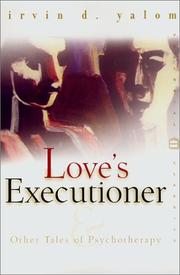
Start with The examined life and Love's Executioner, not with Freud. Stephen Grosz gives you thirty-one very short case studies from twenty-five years of London practice, no jargon and no theory; Irvin Yalom gives ten longer American ones and is unusually frank about his own boredom, attraction and irritation in the room. Those two will tell you within an evening whether this way of working interests you, which reading The Interpretation of Dreams cold will not.
Here is the state of the argument, stated once and then left alone, because you deserve it before you invest a month of reading. Psychodynamic therapy and classical Freudian theory are two different claims and are contested in different ways. On the therapy: outcome research, most prominently Jonathan Shedler's 2010 review, reports effect sizes broadly comparable to those of other talking therapies; critics respond that the trials are fewer and smaller, that active control conditions are often missing, and that meta-analyses pool treatments too heterogeneous to summarise as one thing. That dispute is live and is not settled by either side asserting it more loudly. On the theory: most of contemporary academic psychology does not treat Freud's apparatus — drive theory, the dream theory, the psychosexual stages, repression as a mechanism — as established science, and the recovered-memory episode of the 1980s and 1990s did documented harm that nobody now defends. Read this path to understand a practice and a body of ideas that shaped a century of thinking about minds, and to meet the criticism directly; the final stage exists for exactly that. And read it knowing that books about therapy are not therapy, and choosing a treatment is a decision to make with a clinician.
What happens in the room
The examined life first, Love's Executioner second — Yalom introduces countertransference, the therapist's own reactions treated as clinical data, which the later books formalise. Maybe You Should Talk to Someone third: Lori Gottlieb is a therapist in therapy, so you see both chairs at once, and it is the best account here of what a patient experiences week to week. One catalogue warning on that record specifically — it carries a Spanish publisher's ISBN, so check the language of the edition before you order. Susie Orbach's In Therapy, built from session transcripts, is a good alternative and is not in our catalogue.
Freud in his own words
Studies on Hysteria is the 1895 starting point, co-written with Josef Breuer, whose patient Anna O named the talking cure. Read it first among the primary texts because the method is invented on the page — and knowing that the cases have been re-examined critically ever since, with several of the reported cures not holding up. The Interpretation of Dreams was Freud's own choice for his most important book and introduces the unconscious, condensation, displacement and wish fulfilment. It is long and uneven, its central theory of dreams is not accepted by contemporary sleep science, and the first two chapters and the last carry the load. Civilization and Its Discontents is short, late and the most rewarding Freud for a general reader, but it is speculative social theory rather than clinical work and should not be mistaken for evidence.
The clinical tradition after Freud
Playing and reality is the central text of British object relations — transitional objects, the good-enough mother, the capacity to be alone. Winnicott was a paediatrician first, which is why the writing stays concrete. On learning from the patient is Patrick Casement on internal supervision: noticing your own assumptions mid-session and correcting them, and the point where this path stops being for spectators. Psychoanalytic diagnosis is the standard graduate text on personality organisation and character structure, unusually humane for a diagnostic book, and it names the patterns the case books showed you. Long-Term Psychodynamic Psychotherapy is Glen Gabbard's compact technical primer on assessment, the frame, resistance and termination — written for clinicians, so it is the least literary book here and the most practical.
The critics and the evidence
Psychoanalysis, the impossible profession is Janet Malcolm's 1981 portrait of the profession from inside, sceptical without being hostile, and still the sharpest thing written about what analysts believe they are doing. The memory wars collects Frederick Crews's essays and the furious correspondence they set off, on repression and the recovered-memory movement — the most consequential attack on psychoanalysis in practice rather than in theory. Secrets of the soul is Eli Zaretsky's social history of how psychoanalysis captured American psychiatry, then lost that position to medication and cognitive behavioural therapy. The Hidden Spring closes with the live rejoinder: Mark Solms, a neuropsychologist with an analytic training, argues that affective neuroscience vindicates a version of Freud's basic picture. It is one researcher's programme, contested within its own field, and is here as an open question rather than a verdict. For adjacent modern modalities, see family therapy.
Follow the full ordered path here: Psychoanalysis and Psychodynamic Therapy: The Best Books to Read First.
Ready to learn something deeply?
Build a reading path — free