Existential Therapy: The Best Books on Meaning, Death and the Therapy Room, in Order
Existential therapy starts from a different place than almost every other model: not from a symptom, a diagnosis or a faulty thought, but from four facts that are true of every client who ever walks in — that they will die, that they are free and therefore responsible, that they are ultimately alone, and that the universe supplies no meaning. Anxiety, on this account, is not a malfunction; it is an accurate response to being alive, and the work is helping someone live with it rather than removing it. This path opens with case studies, because the approach is most legible in practice, then takes the field's standard text, then the two national traditions that actually train practitioners — American and British — and closes with the philosophy the whole thing was built out of. It describes the approach and its intellectual roots; it is not a self-treatment plan and no book here substitutes for a therapist.
Start with the Cases
BeginnerSee existential work happening in a room with two people in it before you read a word of theory. After this stage you should be able to describe how an existential therapist's attention differs from a cognitive or psychodynamic one.
▸ Study plan for this stage
Pace: 2–3 weeks. Love's Executioner is ten self-contained case histories of roughly thirty pages each — one an evening is the natural pace. The Gift of Therapy is eighty-five pieces of two or three pages and can be read in a weekend or dipped into across the same fortnight. Both books are written for clin
- The four ultimate concerns — death, freedom, isolation, meaninglessness — visible in Yalom's ten patients before they are ever named as a theory
- Here-and-now work: what happens between therapist and patient in the room treated as the primary clinical material
- Therapist self-disclosure as deliberate method rather than a lapse of technique
- The aim as helping someone bear existential anxiety rather than removing it, which is why there is no symptom checklist
- Why the approach looks unstructured beside a manualised protocol, and what it claims to gain by that
- That both books are practitioner training literature, not self-help — every encounter in them is supervised professional work
- How little outcome evidence either book offers: Yalom argues from cases he selected and wrote up himself
- In 'Fat Lady', what is Yalom attending to that a cognitive therapist working with the same patient would not have recorded?
- What does Yalom do with his own irritation, attraction and boredom, and where in Love's Executioner does he show that going wrong?
- Which of the ten cases turn on death, and which on freedom and responsibility? Which resist a single category?
- The Gift of Therapy insists a therapist should never be afraid to raise death. What does Yalom claim happens in a therapy where it is avoided?
- What can you not conclude from these two books about whether existential therapy works, and why not?
- Read 'Fat Lady' and mark every sentence in which Yalom reports his own reaction rather than the patient's. Count them, then rewrite the case as a clinical note with all of them removed, and write a paragraph on what disappears.
- Take three instructions from The Gift of Therapy — engage the here-and-now, acknowledge your own errors, let the patient matter to you — and find the case in Love's Executioner where each is being demonstrated. Where a case violates the instruction, say so.
- Write one of the ten cases up as a CBT case formulation: presenting problem, maintaining cognitions, measurable treatment target. Keep a list of what had to be discarded to fit the form.
- List every piece of evidence in these two books that any of the ten patients improved, and how that improvement was established. Keep the list; it is the honest baseline against which the rest of the path should be read.
Next up: Having watched the four concerns operate in ten specific people, you can read Yalom's 1980 theory as a description of what those cases were already doing rather than as an abstraction imposed on them.
Ten case histories, written as narrative, and by a distance the best entry point to the whole subject: an obese patient, a dying woman, a man who cannot stop grieving. Yalom is candid about his own reactions, which is the method rather than a stylistic flourish. Read it first; everything later in this path will make sense against these ten people.
Eighty-five short pieces of advice to a new therapist, written late in Yalom's career. Read it second: it converts the cases into practice principles — engage the here-and-now, acknowledge your own mistakes, never be afraid to raise death — without yet needing the theoretical apparatus.
The Standard Text
IntermediateGet the field's actual architecture: the four ultimate concerns, the defences people build against each, and the clinical implications of taking death seriously as a therapeutic subject.
▸ Study plan for this stage
Pace: 5–6 weeks. Existential Psychotherapy runs well past five hundred dense pages with a research literature attached to each of its four parts — about a hundred pages a week, taking one ultimate concern at a time, is realistic and it is not a book to skim. Staring at the Sun is short and follows in thre
- The four givens as an organising architecture, each with its characteristic defences and clinical presentations
- The two death defences Yalom names: specialness, and belief in an ultimate rescuer
- Freedom as groundlessness — responsibility, willing, wishing, and the problem of decision
- Existential isolation as distinct from both loneliness and interpersonal isolation
- Meaning as constructed rather than found, and the paradox that it cannot be pursued head-on
- Rippling and the awakening experience, which Staring at the Sun develops from hints in the 1980 volume
- Where Yalom is citing controlled research and where he is asserting from clinical experience — the two are interleaved on the same page throughout
- What does Yalom claim a defence against death anxiety looks like when it is working, and how would you tell it from ordinary confidence?
- How does his treatment of responsibility differ from the ordinary moral sense of the word?
- Why does Yalom argue that meaninglessness is the concern with the weakest clinical yield of the four?
- What is an awakening experience, and what does Staring at the Sun say makes one therapeutically usable rather than merely frightening?
- Take any one chapter: which of its claims would survive if only the empirical citations were admitted as evidence?
- Where is this model's evidence base thinner than its reputation, and does Yalom concede it?
- Re-file the ten cases of Love's Executioner under the four-part structure of Existential Psychotherapy. Write down the two or three that will not sit in a single part and say why.
- For one chapter of Existential Psychotherapy, split the references into controlled studies, uncontrolled clinical reports and philosophical sources. Tally them and write one sentence on what that ratio means for the chapter's conclusions.
- Find the passage in the 1980 volume that Staring at the Sun's account of rippling grows out of, and write out both, side by side. Note what Yalom added in the intervening twenty-eight years and what he quietly dropped.
- Read the death-anxiety chapter and Staring at the Sun's opening together, then write the same clinical advice twice — once as Yalom's 1980 research prose and once as his late trade-book prose — and decide which you would actually give a supervisee.
Next up: With the standard text in place you can now see May's earlier work for what it is — the tradition Yalom systematised — rather than reading it as a lesser version of him.

The field's standard text, organised around death, freedom, isolation and meaninglessness, with the clinical and research literature for each. Long and dense — read it after the case books, because it is essentially the theory those cases were demonstrating. This is the one book on the path a practitioner is expected to have read.

Yalom's later, shorter book on death anxiety alone, and the most useful single treatment of the concern that the other three orbit. Read directly after the big text: it develops the ideas of rippling and awakening experiences that the 1980 volume only gestures at.
The American Existential Tradition
IntermediateTrace the line that brought European existential philosophy into American clinical psychology, and see the version of the approach that predates and shaped Yalom's.
▸ Study plan for this stage
Pace: 4–5 weeks. The Discovery of Being is short and direct, about a week. Existence is a 1958 multi-author volume of nearly five hundred pages, and the two long editorial essays plus the Binswanger 'Case of Ellen West' are the parts to read closely — the rest can be sampled. Love and Will is a fortnight.
- Being-in-the-world, and the Umwelt / Mitwelt / Eigenwelt division May imports from Binswanger and Heidegger
- May's objection to Freud and to behaviourism: that both explain the person away rather than meeting them
- Ontological anxiety as distinct from neurotic anxiety, and why May thinks the distinction is clinical rather than philosophical
- Daseinsanalysis as the European practice that Existence introduced to American readers
- The daimonic, and May's account in Love and Will of what happens when love and will are reduced to technique
- That Existence is a historical document — a 1958 argument in a 1958 psychiatric context — as much as a clinical text
- How much of this tradition rests on case interpretation rather than on outcome data
- What does May mean by being-in-the-world, and what does a therapist do differently who takes it seriously?
- How does May distinguish ontological from neurotic anxiety, and can a clinician actually tell them apart in a session?
- In Existence, what is Binswanger claiming to have understood about Ellen West that a diagnostic formulation would miss — and what did that understanding not prevent?
- What is Love and Will diagnosing: individual patients, or a culture? What kind of evidence would settle it either way?
- Which of Yalom's four ultimate concerns is already fully present in May, and which is not?
- Read May's two editorial essays in Existence and list every European figure he introduces — Binswanger, Minkowski, Straus, Heidegger. For each, write one sentence on what specifically he imports and one on what he leaves behind.
- Take 'The Case of Ellen West' and write two accounts of the same patient: one in Binswanger's world-design language, one as a modern eating-disorder formulation. Then state plainly what each account can and cannot do for her.
- Set The Discovery of Being's definition of existential therapy beside Yalom's opening chapter and mark every point of disagreement. There are more than the two books admit.
- Pick one chapter of Love and Will and test its cultural claim against a specific decade of evidence you can look up. Write down whether the claim is checkable at all — that judgement is the exercise.
Next up: Having seen one national tradition whole, you are ready for Cooper's map, which will show you that it is one of at least five and not the field itself.
The clearest short statement of the American existential position, and the right first book on May: what existential therapy is, what it is reacting against in Freud and behaviourism, and the concept of being-in-the-world imported from Heidegger and Binswanger.

The 1958 collection May edited with Ernest Angel and Henri Ellenberger, which is where existential analysis entered American psychology — it includes the Binswanger and Minkowski case material that started it. A historical document as much as a clinical one; read it after The Discovery of Being for context.

May's most read book, on the collapse of both love and will into technique, and the anxiety that follows. Read it third: it is the American tradition applied to a cultural diagnosis rather than to individual cases, and it shows how far the approach reaches beyond the consulting room.
The British School, and the Survey of Approaches
IntermediateLearn that there is no single existential therapy but a family of them, and get the practical training literature used by practitioners who work this way day to day.
▸ Study plan for this stage
Pace: 4 weeks. Existential Therapies is a compact comparative survey and takes a week. Existential Counselling and Psychotherapy in Practice is the training text and deserves two weeks read slowly, with the four-worlds material worked rather than read. Skills in Existential Counselling and Psychotherapy i
- That there is no single existential therapy: Cooper separates daseinsanalysis, logotherapy, the American tradition, the British school and existential-phenomenological practice
- Van Deurzen's four dimensions — physical, social, personal, spiritual — as a working structure for a session rather than a philosophy
- Phenomenological method in practice: bracketing, description before explanation, staying with what the client says
- The client's values and worldview as the actual object of the work, and how they are elicited
- Existential practice broken into teachable competencies, which is what Skills adds and the philosophical texts never attempt
- Cooper's own outcome-research position: he is one of the few writers here who takes seriously how thin the evidence for these approaches is
- What does Cooper identify as the substantive practical difference between daseinsanalysis and the British school — not the vocabulary, the behaviour?
- How would you take a first session through van Deurzen's four dimensions, and what does each one reliably surface that the others miss?
- What is bracketing, and what does van Deurzen say a therapist has actually done wrong when they fail at it?
- Which of the approaches Cooper surveys has the most outcome evidence behind it, and how strong is 'most' here?
- Where does the Skills book make a competency teachable that van Deurzen's Practice leaves as a sensibility?
- Build Cooper's comparison as a table of your own: one row per approach, columns for what the therapist attends to, what they say, and what would count as progress. Cooper gives you all three; assembling them is where the distinctions become real.
- Take one transcript excerpt from Skills in Existential Counselling and Psychotherapy and annotate every therapist response with the competency van Deurzen names for it — then mark the responses that fit no competency in the book.
- Map a single case from Love's Executioner onto van Deurzen's four dimensions. Write down which dimension Yalom hardly touches; it is the same one in most of his cases.
- Using Cooper's chapter on outcome and evidence, write a one-page honest answer to a prospective client who asks whether this approach has been shown to work. Cite only what Cooper cites.
Next up: You now know what practitioners actually do, which is the only position from which the philosophical sources can be judged rather than merely admired.

The essential map: Cooper sets out the daseinsanalytic, logotherapeutic, American-existential, British-school and existential-phenomenological approaches side by side, with what each actually does differently. Read it first here — it stops you mistaking one tradition for the whole field.
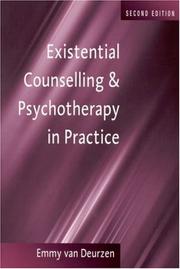
The standard British practice text, published as Existential Counselling and Psychotherapy in Practice, and the fullest account of the four-worlds model — physical, social, personal and spiritual dimensions — used to structure a session. The most directly usable book on this path for someone training.

Van Deurzen with Martin Adams, and deliberately last in this stage: it breaks the approach down into teachable competencies with transcript material, which is the level of granularity the philosophical texts never reach. Read it once the model is familiar.
The Roots, and the Neighbours
IntermediateRead the philosophy the therapy is derived from, plus the two adjacent books it constantly cites, and judge for yourself how much of the clinical model survives contact with its sources.
▸ Study plan for this stage
Pace: 8–10 weeks, and the pace varies wildly by book. The Doctor and the Soul is a fortnight of ordinary reading. Being and Nothingness is a seven-hundred-page work of philosophy — read the sections on bad faith and on the look closely over three or four weeks and leave the rest, because a cover-to-cover
- Logotherapy's meaning-centred model, and its three routes to meaning — creative, experiential, attitudinal
- Frankl as a participant rather than a neutral theorist: the model is inseparable from what he survived, and he says so
- Sartre's bad faith, and why the therapy's language of responsibility is unintelligible without it
- The look, and Sartre's account of being made an object by another consciousness — the source of what therapists call the encounter going wrong
- Buber's I–Thou versus I–It, and the claim that a person can be met or used but not both at once
- Becker's thesis that character is a defence against the knowledge of death, and heroism its social form
- Terror management theory as the experimental research programme Becker's argument generated, and the one strand of this stage with a real empirical literature
- Where the clinical model has quietly simplified its sources — most obviously Sartre on freedom
- Frankl says meaning cannot be given, only found. What does a logotherapist do in a session that a Yalomian therapist would not?
- State Sartre's bad faith in your own words from the waiter and the woman-on-the-date passages. How much of the therapy's 'responsibility' talk survives contact with it?
- What does Buber mean by saying I–Thou cannot be sustained, and what does that imply about a therapeutic relationship that claims to be one?
- How does Becker's argument differ from Yalom's first ultimate concern — is it the same claim, or a stronger one?
- Which claims in this stage have been tested, and which are philosophical positions that no experiment could settle?
- Having read the sources, which parts of the clinical model in stages two to four do you now think are borrowed and which are invented?
- Read only the bad-faith section of Being and Nothingness and Yalom's chapter on responsibility, then write a page on what Yalom has taken and what he has dropped. The dropped part — Sartre's denial that there is any human nature to be responsible to — is the interesting half.
- Take the Kaufmann translation of I and Thou and one recorded session transcript from van Deurzen's Skills, and mark where the exchange is I–Thou and where it is I–It. Most of it is I–It; that is the finding.
- Read The Doctor and the Soul's account of the attitudinal route to meaning and set it against one of Yalom's dying patients in Love's Executioner. Write the case as Frankl would have handled it.
- Look up two terror-management experiments cited as descending from The Denial of Death, read their method, and write down what they actually manipulated and measured. Then say which of Becker's claims that supports and which it leaves untouched.
- Write a final one-page statement, for a supervisor, of what you would tell a client this approach offers and what it does not — grounded only in what the books on this path establish.
Next up: This is the end of the path: you have the practice, the traditions and the sources, and enough sense of the evidence to say where the model is strong and where its reputation runs ahead of what has been shown.
Frankl's clinical statement of logotherapy — the meaning-centred sibling tradition — and a better starting point for it than the famous memoir, which resolves here only as a young-adult adaptation. Read it first in this stage: it is philosophy already translated into practice.

The primary source for radical freedom, responsibility and bad faith — the ideas every book above uses as if they were settled. Difficult and worth it in extracts rather than cover to cover; the sections on bad faith and on the look are the ones the therapy actually draws on.

The source of the distinction between meeting a person and using one, which is what existential therapists mean by the therapeutic encounter. Short, difficult and poetic. The record here is the Walter Kaufmann translation, which is the one to read.
The best closing book: Becker's argument that almost all human activity is a defence against the knowledge of mortality, which is the theoretical backbone of Yalom's first ultimate concern and the origin of an entire experimental research programme in terror management theory.
Discussion
Keep reading
Paths that share books, cover the same subject, or open a related topic.