Build a personal brand that opens doors
This curriculum moves from identity clarity → strategic positioning → content and writing craft → platform-specific visibility → long-term reputation building. Each stage gives you the vocabulary and confidence to tackle the next, so you never feel like you're performing a persona — you're articulating who you already are, then making that visible with integrity.
Know Who You Are First
BeginnerUncover your authentic strengths, values, and the unique angle you bring — the raw material every personal brand is built on.
▸ Study plan for this stage
Pace: 4–5 weeks total: Week 1–2 — Read "StrengthsFinder 2.0" (~20–25 pages/day, including taking the online CliftonStrengths assessment mid-week 1); Week 3–5 — Read "Design Your Life" (~15–20 pages/day, pausing regularly to complete the built-in workbook exercises).
- Strengths vs. weaknesses focus: Tom Rath's core argument that investing in natural talents yields far greater returns than fixing weaknesses — a mindset shift essential for authentic branding
- The 34 CliftonStrengths themes: Understanding the taxonomy of talent themes (Executing, Influencing, Relationship Building, Strategic Thinking) and locating your personal Top 5
- Talent × Investment = Strength: Rath's formula showing that raw talent only becomes a true strength when paired with knowledge and practice
- Signature strengths as brand raw material: Recognizing that your Top 5 are not just career assets but the authentic differentiators that make a personal brand believable and sustainable
- The Workview and Lifeview reflections (Design Your Life): Burnett & Evans's journaling framework for articulating what work is for and what life means — the philosophical bedrock of a coherent brand story
- Energy and Engagement tracking (Good Time Journal): Burnett's practice of logging activities by energy level and absorption to reveal where you are most naturally 'in flow' — corroborating and enriching your StrengthsFinder results
- Reframing dysfunctional beliefs: Design Your Life's 'gravity problem' concept — identifying self-limiting narratives (e.g., 'I'm not creative') that would otherwise distort your brand identity before it is built
- Odyssey Plans: Burnett's three 5-year life-design scenarios as a tool for prototyping possible selves, helping you see which version of your identity has the most authentic energy behind it
- After taking the CliftonStrengths assessment, can you name your Top 5 themes and explain in your own words — not the report's words — what each one looks and feels like in your daily life?
- According to Tom Rath, why is doubling down on strengths more strategically valuable for building an identity than eliminating weaknesses? How does this reframe the way you talk about yourself?
- What do your Workview and Lifeview (from Design Your Life) reveal about the deeper 'why' behind your work — and where do they align or conflict with each other?
- After keeping a Good Time Journal for at least one week, which activities consistently gave you energy AND full engagement? How do these overlap (or not) with your CliftonStrengths Top 5?
- Can you identify at least one 'gravity problem' or dysfunctional belief you hold about yourself that could undermine an authentic personal brand if left unexamined?
- Looking at your three Odyssey Plans, which version of your future self feels most congruent with the strengths and values you uncovered — and what does that tell you about your authentic brand direction?
- Take the official CliftonStrengths online assessment (access code included in new copies of StrengthsFinder 2.0) and read the full personalized report. Highlight every sentence that makes you think 'yes, that's exactly me' — these phrases become early brand-voice vocabulary.
- Write a 'Strengths Story' for each of your Top 5 themes: a specific, real-life anecdote (2–3 sentences) where that strength showed up naturally and produced a result you were proud of. This builds the story bank your brand will draw from.
- Keep a Good Time Journal (as prescribed in Design Your Life) for 7–10 consecutive days. Log every significant activity with two ratings: E for energy (draining → energizing) and A for absorption (distracted → fully immersed). At the end, circle the ENGAGER activities — these are your flow fingerprints.
- Write your Workview (why you work, what work is for — aim for one page) and your Lifeview (your beliefs about the world and your place in it — one page), then place them side by side and write a short paragraph on where they connect. This narrative is the philosophical core of your brand.
- Identify 3 'gravity problems' — beliefs about yourself you treat as fixed facts but that are actually assumptions (e.g., 'I'm too introverted to put myself out there'). For each one, write the reframe that Design Your Life's authors would suggest: turn it from a constraint into a design problem with possible solutions.
- Draft all three Odyssey Plans from Design Your Life (three distinct 5-year paths). Then read them aloud and notice which one you defend most passionately or feel most excited about. Annotate it with the specific CliftonStrengths themes and Good Time Journal ENGAGER activities that show up in that plan — this annotated Odyssey Plan is your Stage 1 'brand identity map.'
Next up: With a clear, evidence-based picture of your authentic strengths, values, and energizing activities now documented, the next stage can build outward — translating this rich self-knowledge into a distinct positioning, a compelling narrative, and a visible presence that others can recognize and remember.

Before you can position yourself, you need a clear-eyed inventory of what you're genuinely great at. This book gives you a concrete, named vocabulary for your top strengths — the foundation of authentic positioning.
Helps you prototype and articulate a coherent professional narrative from your real experiences, so your brand reflects an intentional direction rather than a random résumé.
Positioning & Strategy
BeginnerUnderstand how to carve out a distinct, credible niche so you stand for something specific in your audience's mind — without overhyping yourself.
▸ Study plan for this stage
Pace: 4–5 weeks total: Week 1–2 — "Positioning" by Al Ries (~20–25 pages/day, including re-reading key chapters on ladders and repositioning); Week 3–4 — "KNOWN" by Mark W. Schaefer (~25–30 pages/day); Week 5 — review, reflection, and completing all exercises.
- The mind as the battlefield: Positioning is not about what you do to a product or yourself — it is about what you do to the perception in the audience's mind (Ries).
- The Positioning Ladder: People rank brands/people in mental hierarchies; owning a rung — especially #1 — is more powerful than being objectively better (Ries).
- Repositioning the competition: You can create space for yourself not only by promoting your own strengths but by shifting how others perceive your competitors (Ries).
- The power of a narrow focus: Trying to stand for everything means standing for nothing; a tightly defined niche makes you memorable and referable (Ries).
- The four steps to becoming KNOWN: Identify a sustainable interest, find your 'Intersection' (passion meets audience need), create consistent content, and build a network that amplifies you (Schaefer).
- The Intersection concept: Your personal brand sweet spot lives where your authentic interests overlap with an underserved audience need — not where you think you should be (Schaefer).
- Consistency over intensity: Schaefer's research shows that showing up reliably over time beats any single viral moment for building a recognized personal brand.
- Credibility without overhype: Both books converge on the idea that a specific, honest, and consistently demonstrated claim of expertise earns trust far more than broad self-promotion.
- After reading Ries, can you explain in one sentence why being first in the mind is more valuable than being first in the marketplace — and give a real-world example from your own field?
- What is 'the ladder' metaphor in Positioning, and how would you apply it to map where you currently sit in your target audience's mind relative to others in your niche?
- Using Schaefer's Intersection framework, what is the specific overlap between your genuine interests and an underserved audience need that could anchor your personal brand?
- Schaefer identifies consistency as the single biggest differentiator among people who become KNOWN. What does a realistic, sustainable content cadence look like for you specifically?
- Both Ries and Schaefer warn against trying to be everything to everyone. Where are you currently too broad, and what would you have to give up to sharpen your positioning?
- How do the strategies in these two books complement each other — and where, if anywhere, do they tension or contradict each other?
- Positioning Audit (Ries): List 5–8 people or brands in your niche and draw their 'ladder' as your target audience would rank them. Then honestly place yourself on that ladder. Write one paragraph on what it would take to move up one rung — or own a new ladder entirely.
- One-Sentence Position Statement (Ries): Draft a positioning statement using the format: 'For [specific audience], I am the [category] who [unique differentiator], unlike [alternative].' Rewrite it at least three times, making it narrower each iteration until it feels uncomfortably specific.
- The Intersection Map (Schaefer): Draw a two-circle Venn diagram. Label one circle 'What I genuinely love talking/writing about' and the other 'What my target audience urgently needs but isn't getting.' List 10 items in each circle, then identify 2–3 overlapping ideas. Choose one as your working Intersection.
- Competitor Repositioning Exercise (Ries): Pick one direct 'competitor' in your space. Write a short paragraph (as if for an audience) that honestly reframes what they stand for in a way that naturally creates a gap your positioning can fill — without disparaging them.
- Content Consistency Prototype (Schaefer): Commit to publishing one piece of content per week for the next four weeks on your chosen Intersection topic. It can be a LinkedIn post, a short article, or a newsletter. After four weeks, note what resonated, what felt forced, and refine your Intersection accordingly.
- Personal Brand One-Pager: Synthesize both books into a single page that captures: (1) your chosen niche/ladder, (2) your Intersection, (3) your one-sentence positioning statement, (4) your target audience, and (5) your planned content format and cadence. Share it with one trusted peer for honest feedback.
Next up: Completing this stage gives you a clear, written positioning foundation — a defined niche and a credible claim — which is the essential raw material for the next stage, where you will learn how to express and communicate that positioning through a consistent voice, visual identity, and storytelling across real channels.

The canonical text on how minds categorize people and products; reading this first reframes personal branding as a strategic communication problem, not a vanity exercise.
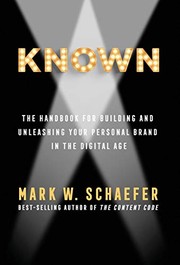
Directly applies positioning strategy to individuals building a professional reputation online, with a practical framework (find your area, create content, find your audience) that structures the rest of this curriculum.
Writing & Content That Builds Trust
IntermediateDevelop the writing and thinking skills to produce a consistent body of work that demonstrates expertise and earns trust — without sounding salesy.
▸ Study plan for this stage
Pace: 8–10 weeks total. Week 1–2: "Show Your Work!" (~30 pages/day, short book — finish in 3–4 sittings, then spend remaining days journaling and applying). Week 3–5: "Building a StoryBrand" (~20–25 pages/day, with active note-taking on your own brand narrative). Week 6–10: "On Writing Well" (~15–20 pages
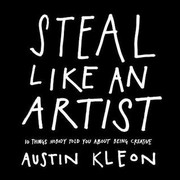
- Share the process, not just the product — Kleon's core argument that documenting your work-in-progress builds authentic audience trust over time
- The 'scenius' mindset — positioning yourself as a contributor to a creative community rather than a lone genius, which removes the 'salesy' pressure
- The StoryBrand 7-Part Framework (SB7) — casting your audience as the Hero and yourself as the Guide, not the protagonist, to make your content immediately relevant to readers
- Clarifying your message — Miller's principle that 'if you confuse, you lose,' and how a single clear through-line must run through all written content
- The Guide's two traits — empathy and authority — and how every piece of writing must demonstrate both without self-promotion
- Clutter is the enemy — Zinsser's foundational principle that every unnecessary word dilutes trust and expertise; simplicity signals confidence
- Writing with a consistent human voice — Zinsser's insistence that personality and warmth on the page are not optional extras but the primary vehicle for credibility
- Nonfiction as service — the synthesis of all three books: great personal-brand writing teaches, clarifies, and solves problems for the reader first
- After reading Kleon, can you describe in one sentence what you are currently working on and why it would interest someone who doesn't already know you?
- Using Miller's SB7 framework, can you map your personal brand onto the full story arc — who is the Hero, what is their problem, who are you as the Guide, and what is the transformation you promise?
- Can you identify the single 'villain' (external, internal, and philosophical problem) your audience faces, as Miller defines it, and explain how your content defeats it?
- After reading Zinsser, can you take a 200-word paragraph you've written and cut it to 120 words without losing a single idea — only clutter?
- How do Kleon's 'share your process' philosophy and Zinsser's 'write for the reader' discipline reinforce each other, and where might they create tension?
- What does a consistent writing voice look like for YOUR personal brand — and can you point to three specific word-level or sentence-level choices that define it?
- 'Daily Dispatch' habit (Kleon): For 14 consecutive days, share one small thing you learned, made, or noticed — in writing, 100–200 words. No polishing allowed. The goal is volume and honesty, not perfection.
- StoryBrand BrandScript for yourself (Miller): Complete Miller's full one-page BrandScript template using YOUR personal brand as the subject. Write every section — character, problem, guide, plan, call to action, success, failure. Pin it above your desk.
- Headline audit (Miller + Zinsser): Rewrite the headline or opening line of your last 5 pieces of content so that each one names the reader's problem or desired transformation in plain language — no jargon, no 'I' statements.
- The Zinsser red-pen drill: Take any 3 pieces of writing you've already published or drafted. Print them out. Cross out every word that does not earn its place — adverbs, throat-clearing openers, redundant phrases. Rewrite each piece from the marked-up draft.
- Voice portrait exercise (Zinsser): Find 3 writers whose voice you admire. Write one paragraph imitating each. Then write a fourth paragraph that is purely your own. Compare all four and write a short note identifying what makes yours distinct.
- Content pillar mapping (synthesis of all three books): Define 3–5 recurring themes or 'pillars' your writing will return to. For each pillar, write one 'process post' (Kleon), one 'problem-solution post' structured with SB7 (Miller), and edit both ruthlessly for clarity (Zinsser).
Next up: Mastering trust-building writing creates the consistent body of work that the next stage will teach you to strategically distribute, amplify, and turn into a visible platform — because great content is only half the equation if no one knows where to find it.
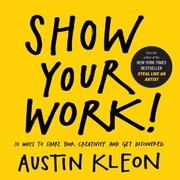
Reframes sharing your work as generosity rather than self-promotion — a crucial mindset shift that makes consistent content creation feel natural and ethical.

Teaches you to frame your message around your audience's needs (not your own achievements), so your content attracts rather than repels — essential before you scale up on LinkedIn.

The craft backbone of the curriculum: clear, honest, non-jargon writing is the single biggest differentiator in professional content, and this is the definitive guide to achieving it.
Visibility & Platform Mastery
IntermediateTranslate your positioning and content skills into a deliberate LinkedIn and online presence strategy that grows your audience and opens real opportunities.
▸ Study plan for this stage
Pace: 4–5 weeks total: Week 1–2 — "Superfans" by Pat Flynn (~20–25 pages/day, including reflection time); Week 3–4 — "Jab, Jab, Jab, Right Hook" by Gary Vaynerchuk (~25–30 pages/day, studying platform-specific examples closely); Week 5 — integration week: revisit highlights, complete exercises, and audit
- The Superfan Pyramid (Flynn): moving an audience from casual visitors → active followers → connected community → superfans through progressive trust-building
- The 'Active Listener' mindset: deeply knowing your audience's language, fears, and desires so every piece of content feels personally crafted for them
- Touchpoints and micro-moments: how small, consistent acts of genuine engagement (shout-outs, replies, personalized responses) compound into fierce loyalty
- Community as a moat: why a tight, engaged audience of 1,000 superfans outperforms a passive audience of 100,000 followers for real opportunities
- The Jab vs. Right Hook framework (Vaynerchuk): jabs are value-giving content (entertainment, education, inspiration); right hooks are calls-to-action — and the ratio must heavily favor jabs
- Platform-native storytelling: each platform (LinkedIn, Instagram, X, etc.) has its own culture, format, and 'native language' — content must be reformatted, not just reposted, to perform
- Context is king: Vaynerchuk's core argument that great content fails when it ignores the context (platform norms, timing, format) in which it is delivered
- The long game of giving: both Flynn and Vaynerchuk converge on the idea that sustained, generous value delivery is what earns the right to ask for attention, action, or business
- According to Flynn's Superfan Pyramid, what specific actions can you take at each level to move someone from a passive visitor to a true superfan — and which level are most of your current followers at?
- What does Vaynerchuk mean when he says 'the right hook always loses without the jabs,' and how does this principle apply to your current LinkedIn content mix?
- How does Flynn define the difference between an audience and a community, and what structural or behavioral changes would you need to make to shift yours from one to the other?
- Vaynerchuk argues that context matters more than content quality — what does 'platform-native' content look like specifically on LinkedIn, and how does it differ from other channels you use?
- Which of Flynn's touchpoint strategies (e.g., personalized replies, surprise-and-delight moments, community rituals) are most realistic for your current bandwidth, and how would you systematize them?
- After reading both books, how would you design a one-month content calendar that balances Flynn's community-deepening tactics with Vaynerchuk's jab-heavy, platform-specific posting strategy?
- Superfan Audit: Map your current audience (LinkedIn connections, email list, social followers) onto Flynn's Pyramid. Estimate what percentage sits at each level and write a one-paragraph plan to move 10 people up one level this month.
- Jab Ratio Audit: Review your last 20 LinkedIn posts (or create a hypothetical set if you're starting fresh). Label each as a 'jab' or 'right hook.' If right hooks exceed 20%, rewrite three of them as pure value-giving jabs in a platform-native LinkedIn format.
- Platform-Native Reformat: Take one piece of content you've already created (an article, a talk, a newsletter). Following Vaynerchuk's platform-native principles, reformat it into three distinct versions: a LinkedIn text post, a LinkedIn carousel concept, and a short video script — each tailored to LinkedIn's specific culture and feed behavior.
- Superfan Touchpoint Sprint: For one full week, implement Flynn's 'active listening' practice — spend 15 minutes daily leaving thoughtful, personalized comments on 5 target audience members' posts. Log the responses and note any relationship shifts.
- Right Hook Design: Write one 'right hook' post for LinkedIn (a clear CTA — newsletter sign-up, discovery call, download, etc.) that is preceded by a documented sequence of at least 3 jabs. Publish the sequence and track engagement metrics versus your baseline.
- Community Ritual Design: Drawing on Flynn's community-building principles, design one repeatable weekly or monthly ritual for your LinkedIn presence (e.g., a recurring content series, a weekly question post, a 'feature a follower' segment) and run it for the remainder of the stage.
Next up: Mastering the give-first content rhythm and platform-native visibility in this stage builds the engaged audience and credibility base you'll need to confidently monetize, pitch, and convert that attention into concrete career or business outcomes in the next stage.

Shifts the goal from chasing follower counts to building a small, deeply loyal audience — the right mental model for sustainable LinkedIn growth and beyond.

Provides a practical, platform-aware content cadence (give value repeatedly before making any ask) that prevents the self-promoter feeling and teaches how to adapt your message to each channel's native format.
Long-Game Reputation & Thought Leadership
ExpertUnderstand how credibility compounds over time, how to become a genuine authority in your field, and how to protect and evolve your reputation as you grow.
▸ Study plan for this stage
Pace: 6–8 weeks total: Weeks 1–3 cover "Expert Secrets" (~25–30 pages/day, including reflection time); Weeks 4–7 cover "The Long Game" (~20–25 pages/day, with journaling sessions); Week 8 is a synthesis week — no new reading, only review, exercise completion, and integration of both books.
- The 'Expert' Identity Shift (Expert Secrets): Transitioning from practitioner to recognized authority requires an internal belief shift before any external positioning — Brunson's 'Epiphany Bridge' framework explains how to make others feel the same conviction you feel about your ideas.
- Mass Movements & Cause-Based Branding (Expert Secrets): Lasting thought leadership is built around a movement, not just a product or service — the three elements of a mass movement are a charismatic leader, a future-based cause, and a new opportunity (not an improvement offer).
- The New Opportunity Framework (Expert Secrets): Positioning yourself as a thought leader means offering a genuinely new vehicle for transformation, not a better version of what already exists — this distinction defines whether you become a category creator or a commodity.
- The Stack & Value Ladder (Expert Secrets): Authority compounds when your expertise is packaged in ascending levels of value — understanding how to architect your knowledge into offers, content, and community creates a self-reinforcing reputation engine.
- Patient Strategy Over Tactical Urgency (The Long Game): Dorie Clark's central thesis is that most people overestimate what they can do in one year and underestimate what they can do in a decade — reputation is a lagging indicator that rewards consistent, strategic patience.
- Becoming a Recognized Expert: The 'Reframe' Technique (The Long Game): Clark outlines how to reframe your existing experience and knowledge into a unique intellectual contribution — identifying your 'proprietary lens' is the mechanism by which practitioners become authorities.
- The 20% Project & Protecting White Space (The Long Game): Sustained thought leadership requires deliberately protecting time for long-horizon thinking, experimentation, and skill-building — Clark's 20% rule operationalizes this as a non-negotiable career practice.
- Reputation Protection & Evolution (The Long Game): As your brand grows, so does its fragility — Clark addresses how to gracefully evolve your positioning, handle public missteps, and ensure your reputation stays aligned with who you are actually becoming, not just who you were.
- After reading Expert Secrets, can you articulate the single 'new opportunity' you are offering your audience — and explain why it is a category creation rather than an improvement on something existing?
- What is your 'Epiphany Bridge' story? Can you tell it in under three minutes in a way that transfers your core belief to a skeptical listener, as Brunson prescribes?
- Using Dorie Clark's framework from The Long Game, what is your 'proprietary lens' — the unique intellectual framework or perspective that only you, given your specific background, could offer your field?
- How are you currently allocating your time between short-term deliverables and long-horizon reputation-building activities? What would Clark's 20% rule look like concretely in your weekly schedule?
- How do the two books' philosophies complement each other — where does Brunson's movement-building urgency meet Clark's patient compounding strategy, and how do you reconcile any tension between them?
- What is your plan for evolving your personal brand over the next 5–10 years without losing the credibility you've built — drawing specifically on Clark's advice about reputation protection and reinvention?
- Epiphany Bridge Script (Expert Secrets, Week 2): Write and record a 3-minute video of your personal Epiphany Bridge story — the moment you discovered your core idea. Watch it back and assess: Does it transfer belief, or does it just inform? Revise and re-record once.
- New Opportunity Audit (Expert Secrets, Week 3): List every piece of content, service, or offer you currently put into the world. For each one, label it either 'New Opportunity' or 'Improvement Offer.' Redesign at least one 'Improvement Offer' into a 'New Opportunity' framing and write the new positioning statement.
- Movement Blueprint (Expert Secrets, Week 3): Draft a one-page 'movement manifesto' for your personal brand — define your future-based cause, name your in-group (who your followers are), and identify the 'enemy' or status quo your movement stands against. Share it with one trusted peer for feedback.
- Proprietary Framework Design (The Long Game, Week 5): Following Clark's reframing method, develop your own named intellectual framework — a 2x2 matrix, a three-step model, or a named spectrum — that organizes your core expertise in a way no one else has articulated. Give it a name and sketch how you'd explain it in a LinkedIn article or talk.
- 10-Year Reputation Roadmap (The Long Game, Week 6): Write a 500-word narrative set 10 years from now describing what you are known for, what you have published or built, and who considers you a go-to authority. Work backward to identify the three most important long-game bets you need to start making today.
- White Space Audit & 20% Commitment (The Long Game, Week 7): Audit one full week of your calendar. Calculate what percentage of your time went to long-horizon thinking, learning, or reputation-building versus reactive/short-term work. Redesign next month's calendar to protect a genuine 20% block and document what you will use it for.
Next up: By internalizing how credibility compounds through movement-building (Brunson) and patient strategic positioning (Clark), the reader is now ready to explore the tactical distribution and amplification layer — how to systematically get your established authority in front of the right audiences at scale.

Deconstructs how recognized experts build movements around their ideas — useful at this stage once you have a body of work and need a framework for turning followers into a community.

The ideal capstone: Clark synthesizes positioning, patience, and strategic visibility into a philosophy of career-long reputation building, directly addressing the fear of self-promotion that the learner started with.
Discussion
Keep reading
Paths that share books, cover the same subject, or open a related topic.